

Published: April 18, 2023 | Last Updated: June 22, 2026

What are Women-in-prison films? Definition & Meaning
Women-in-prison films are a subgenre of exploitation cinema that focus on female characters confined in prison-like settings, often mixing themes of punishment, rebellion, and sexual violence. They typically feature abuse by guards, nudity, catfights, and escape plots, using shock and sensationalism as the main draw.
Regular FilmDaft readers might have spotted that I have a weakness for campy B-movies from the 1960s, 1970s, and 1980s. A central concept for many B movies of the era was exploitation.
Those decades saw an explosion in genres such as grindhouse movies, sexploitation, blaxploitation, Nazisploitation, and martial arts movies, thanks to the popularity of Bruce Lee (Bruceploitation), sci-fi, superhero, and action movies.
Exploitation films piggyback on popular trends and niches, adding some skin to lure viewers in. The exploitation genre is essentially sex, drugs, and rock n’ roll for the silver screen – and later for VHS.
This article primarily focuses on the best campy female prison movies from the 1960s to the 1980s, although I have also included some classic films and more serious dramas. Now, let’s take a look at some of the best female prison movies and visit the women behind bars.
1. Female Prisoner #701: Scorpion (1972)
A landmark in Japanese exploitation cinema, Female Prisoner #701: Scorpion mixes revenge storytelling with surreal visuals and anti-authoritarian rage. It helped define the women-in-prison subgenre in Japan and introduced one of cinema’s most iconic antiheroines. The film’s blend of stylized violence, gender politics, and raw emotion has made it a lasting cult classic.

- Director: Shunya Itō
- Runtime: 87 minutes
- Country: Japan
- Language: Japanese
- Genre: Exploitation / Revenge Thriller
- Starring: Meiko Kaji, Isao Natsuyagi, Akemi Negishi
- Tone: Stylized, brutal, poetic
Synopsis:
Nami Matsushima is betrayed by her corrupt cop boyfriend and sent to a violent women’s prison. After surviving humiliation and torture, she escapes and seeks revenge. Meiko Kaji’s cold stare and silent fury turn this stylized prison revenge tale into a feminist cult classic.
Content Warnings & Viewer Guidance
- Content Warnings: Sexual assault, nudity, torture, sadism, violence
- Tags: Feminist revenge • Stylized violence • Power abuse • Institutional cruelty
- Viewer Note: Graphic and disturbing and not for sensitive viewers. But an important reference point in Japanese exploitation and feminist film history.
Historical & Thematic Context
Female Prisoner #701: Scorpion launched a wave of women-in-prison films in Japan. Shunya Itō’s direction blends avant-garde visuals with exploitation tropes, using surreal color palettes and symbolic staging. Despite its brutal content, the film is often read as a feminist statement: Nami obliterates the system from within.
The film critiques patriarchy and state power through stylized rage, and Meiko Kaji’s performance became a cultural icon, influencing later revenge heroines like Kill Bill’s Beatrix Kiddo.
2. Brokedown Palace (1999)
Released at the end of the 1990s, Brokedown Palace blends the women-in-prison formula with real-world legal drama. Unlike exploitation films, it focuses on the emotional toll of incarceration, injustice, and friendship under pressure. Its serious tone and international setting make it a key example of the genre shifting toward global, socially grounded storytelling.
- Director: Jonathan Kaplan
- Runtime: 100 minutes
- Country: USA
- Language: English
- Genre: Drama / Legal Thriller
- Starring: Claire Danes, Kate Beckinsale, Bill Pullman, Daniel Lapaine
- Tone: Emotional, realistic, tense
Synopsis:
Two American friends, Alice and Darlene, take a vacation to Thailand but are tricked by a drug smuggler and arrested with heroin hidden in their luggage. Sentenced to 33 years in a Thai prison, they face violence, language barriers, and a harsh legal system. As they struggle to survive, a burned-out lawyer tries to prove their innocence.
Content Warnings & Viewer Guidance
- Content Warnings: Drug use, wrongful imprisonment, institutional abuse, physical intimidation
- Tags: Legal injustice • Female friendship • Prison trauma • Cultural clash
- Viewer Note: Less graphic than traditional exploitation films, but emotionally intense. Based loosely on real cases of Western travelers imprisoned abroad.
Historical & Thematic Context
Brokedown Palace reflects a late-’90s shift toward more grounded, character-driven prison stories. Instead of focusing on eroticism or violence, it explores how travel, privilege, and justice intersect. The film gained attention for its parallels to real-life cases involving drug mules and the ethical grey areas of international law.
Director Jonathan Kaplan, known for The Accused (1988), uses restraint to highlight systemic cruelty without exploitation. The result is a cautionary tale that fits squarely within the women-in-prison tradition, but from a realist, almost documentary perspective.
3. Caged (1950)
One of the earliest and most influential women-in-prison dramas, Caged helped define the subgenre before it became associated with exploitation. Its focus is on emotional trauma, institutional failure, and the transformation of a naïve young woman into a hardened inmate. The film critiques the prison system with a strong social message, making it essential viewing for understanding the genre’s origins.
- Director: John Cromwell
- Runtime: 96 minutes
- Country: USA
- Language: English
- Genre: Drama / Prison Film
- Starring: Eleanor Parker, Hope Emerson, Agnes Moorehead, Ellen Corby
- Tone: Bleak, psychological, socially conscious
Synopsis:
After a failed robbery leaves her husband dead, 19-year-old Marie Allen is sentenced to prison. Pregnant, alone, and unprepared for the cruelty of incarceration, she faces corrupt officials, unsympathetic family, and a brutal prison matron. As her hope fades, Marie slowly transforms into a different person: less innocent, more dangerous.
Content Warnings & Viewer Guidance
- Content Warnings: Psychological abuse, miscarriage risk, solitary confinement, infant separation
- Tags: Systemic critique • Loss of innocence • Motherhood • Institutional cruelty
- Viewer Note: Emotionally intense but non-graphic. A powerful early example of prison drama with strong performances and moral weight.
Historical & Thematic Context
Caged was nominated for three Academy Awards and is widely considered the prototype for the modern women-in-prison film. Unlike later exploitation entries, its focus is on realism and systemic critique.
Director John Cromwell and screenwriter Virginia Kellogg present prison as a place that strips identity rather than rehabilitates. Eleanor Parker’s transformation is subtle and tragic, showing how incarceration hardens rather than heals. This moral seriousness sets Caged apart, making it a key film in both women’s cinema and early American film noir traditions.
4. Ilsa: She Wolf of the SS (1975)
One of the most infamous exploitation films ever made, Ilsa: She Wolf of the SS is less a traditional women-in-prison film and more a hybrid of sexploitation, Nazisploitation, and shock cinema. Banned in several countries upon release, it became a cult favorite for its taboo subject matter, aggressive tone, and over-the-top performances. The film is deeply controversial but often cited as a defining entry in the roughest end of 1970s exploitation filmmaking.
- Director: Don Edmonds
- Runtime: 96 minutes
- Country: USA
- Language: English
- Genre: Sexploitation / Nazisploitation
- Starring: Dyanne Thorne, Gregory Knoph, Tony Mumolo
- Tone: Shocking, extreme, transgressive
Synopsis:
During the final years of World War II, Ilsa, the sadistic commandant of a Nazi medical camp, uses prisoners for brutal experiments designed to prove women can endure more pain than men. At night, she seduces and kills male inmates until she meets Wolfe, a prisoner who resists her control. As Allied forces approach, a violent uprising erupts and the camp is destroyed, but not before Ilsa is confronted with the consequences of her actions.
Content Warnings & Viewer Guidance
- Content Warnings: Sexual violence, torture, nudity, medical experimentation, fascist imagery, graphic executions
- Tags: Sadomasochism • Power and cruelty • Hypersexuality • Cult exploitation
- Viewer Note: Extremely graphic and disturbing. This film is intended for mature viewers only and remains controversial for its use of Nazi aesthetics and sexualized violence. It should be approached as historical exploitation cinema, not mainstream drama.
Historical & Thematic Context
Ilsa: She Wolf of the SS was produced independently and filmed on the leftover sets of Hogan’s Heroes. It’s a clear example of 1970s sexploitation pushing taboos to their limit, blending sexualized violence with fascist imagery to provoke outrage and attention.
Dyanne Thorne’s portrayal of Ilsa became iconic in cult circles and a symbol of twisted female authority. Though morally indefensible by today’s standards, the film’s legacy lies in how it exaggerated genre tropes to absurd extremes, opening discussions on censorship, shock value, and the limits of exploitation as entertainment. Film scholars often cite it when analyzing the aesthetics of cruelty in cinema.
5. Ladies They Talk About (1933)
Made during the pre-Code era, Ladies They Talk About blends crime, romance, and prison drama at a time when Hollywood could still openly show women with guns, attitude, and moral ambiguity. Starring Barbara Stanwyck, the film uses a women’s prison as both setting and symbol for gender double standards, making it a key early example of the genre before strict censorship reshaped Hollywood storytelling.
- Directors: Howard Bretherton, William Keighley
- Runtime: 69 minutes
- Country: USA
- Language: English
- Genre: Crime Drama / Pre-Code Prison Film
- Starring: Barbara Stanwyck, Preston Foster, Lillian Roth, Ruth Donnelly
- Tone: Witty, cynical, fast-paced
Synopsis:
Nan Taylor, a tough-talking bank robber, lands in San Quentin after taking the fall for her crew. She captures the attention of radio evangelist David Slade, who falls in love and tries to save her. But Nan isn’t easily redeemed. Inside, she gets involved in a failed prison break, serves more time, and ultimately confronts Slade with a gun in hand—only to discover he still loves her.
Content Warnings & Viewer Guidance
- Content Warnings: Gun violence, prison conflict, implied moral manipulation
- Tags: Pre-Code cinema • Female agency • Romance and crime • Power dynamics
- Viewer Note: Though mild by modern standards, the film pushed boundaries in its day. Features strong female characters who drive the plot without conforming to morality tropes.
Historical & Thematic Context
Released just before the Hays Code was strictly enforced, Ladies They Talk About is notable for its open portrayal of women as both criminals and romantic leads. Barbara Stanwyck’s performance captures the wit and moral ambiguity that defined early 1930s Hollywood.
The film uses the women’s prison as a backdrop for social commentary on reform, gender, and personal freedom, while still delivering sharp dialogue and dramatic pacing. It remains a valuable case study in how early American cinema framed criminal women long before the exploitation era took over the genre.
6. Women’s Prison (1955)
Women’s Prison takes the women-in-prison formula into harder territory for 1950s Hollywood, blending melodrama with increasingly brutal imagery. It bridges the gap between classic prison reform films and the rawer exploitation titles of the 1960s and 70s. Ida Lupino’s performance as a tyrannical prison official pushes the boundaries of what audiences expected from female authority on screen.
- Director: Lewis Seiler
- Runtime: 79 minutes
- Country: USA
- Language: English
- Genre: Prison Drama / Melodrama
- Starring: Ida Lupino, Phyllis Thaxter, Audrey Totter, Howard Duff
- Tone: Harsh, dramatic, socially critical
Synopsis:
Helene Jensen, convicted of manslaughter, enters a women’s prison run by the cold-blooded Amelia van Zandt. While Helene struggles to adjust, another inmate, Joan Burton, is secretly pregnant after visits from her husband in the adjacent men’s wing. When van Zandt beats Joan to death, the inmates riot. As the prison erupts, a doctor exposes van Zandt’s mental collapse, and justice begins to unfold from within the system.
Content Warnings & Viewer Guidance
- Content Warnings: Physical abuse, forced confinement, miscarriage, police violence
- Tags: Institutional cruelty • Prison rebellion • Corrupt authority • Reform and resistance
- Viewer Note: For a 1950s film, this is unusually harsh. While not graphic by modern standards, its depiction of mental and physical abuse can still be disturbing.
Historical & Thematic Context
Released during a period when postwar Hollywood was beginning to show cracks in its moral surface, Women’s Prison brought noir intensity and melodramatic plotting into the women-in-prison genre. Ida Lupino, who often played vulnerable or rebellious women earlier in her career, flips expectations here as a sadistic authority figure.
The film critiques state violence and psychiatric abuse in ways that feel surprisingly modern, foreshadowing the more radical prison films of the 1970s. It’s also an early case of female characters revolting not just against the system, but against other women in power.
7. Reform School Girl (1957)
Part juvenile delinquent cautionary tale, part early women-in-prison drama, Reform School Girl represents 1950s American moral anxiety in drive-in form. Released by American International Pictures, it mixes pulp sensationalism with real fears about youth crime, sexuality, and female independence. The film plays to genre expectations while also exploring social paranoia, making it a valuable piece of mid-century exploitation cinema.
- Director: Edward Bernds
- Runtime: 71 minutes
- Country: USA
- Language: English
- Genre: Juvenile Delinquent Drama / Women-in-Prison
- Starring: Gloria Castillo, Ross Ford, Edd Byrnes
- Tone: Pulp, moralistic, melodramatic
Synopsis:
Donna Price is arrested after a car chase involving a hit-and-run. Though innocent, she refuses to name the real killer, fearing for her life. Sent to a reform school, she’s attacked by other inmates who believe she’s a police informant. As Donna faces punishment and isolation, her past catches up with her when the real culprit breaks in to silence her permanently.
Content Warnings & Viewer Guidance
- Content Warnings: Violence, wrongful imprisonment, bullying, attempted murder
- Tags: Juvenile justice • Misidentification • Fear and silence • 1950s morality
- Viewer Note: Framed as a cautionary tale, the film uses sensationalism to explore justice and repression. It’s tame by modern standards, but its cultural messages are sharp and worth unpacking.
Historical & Thematic Context
Reform School Girl is a textbook example of the 1950s juvenile delinquency film boom. While marketed with sensational taglines and poster art, its plot reflects real anxieties about teenage rebellion, sexuality, and law enforcement. Gloria Castillo’s character functions as both scapegoat and moral lesson, showing how easily the justice system punishes silence and misjudgment.
Produced by AIP, a company known for low-budget genre hits, the film also helped define a tone that would influence later women-in-prison exploitation films of the 1960s and 70s.
8. Olga’s House Of Shame (1964)
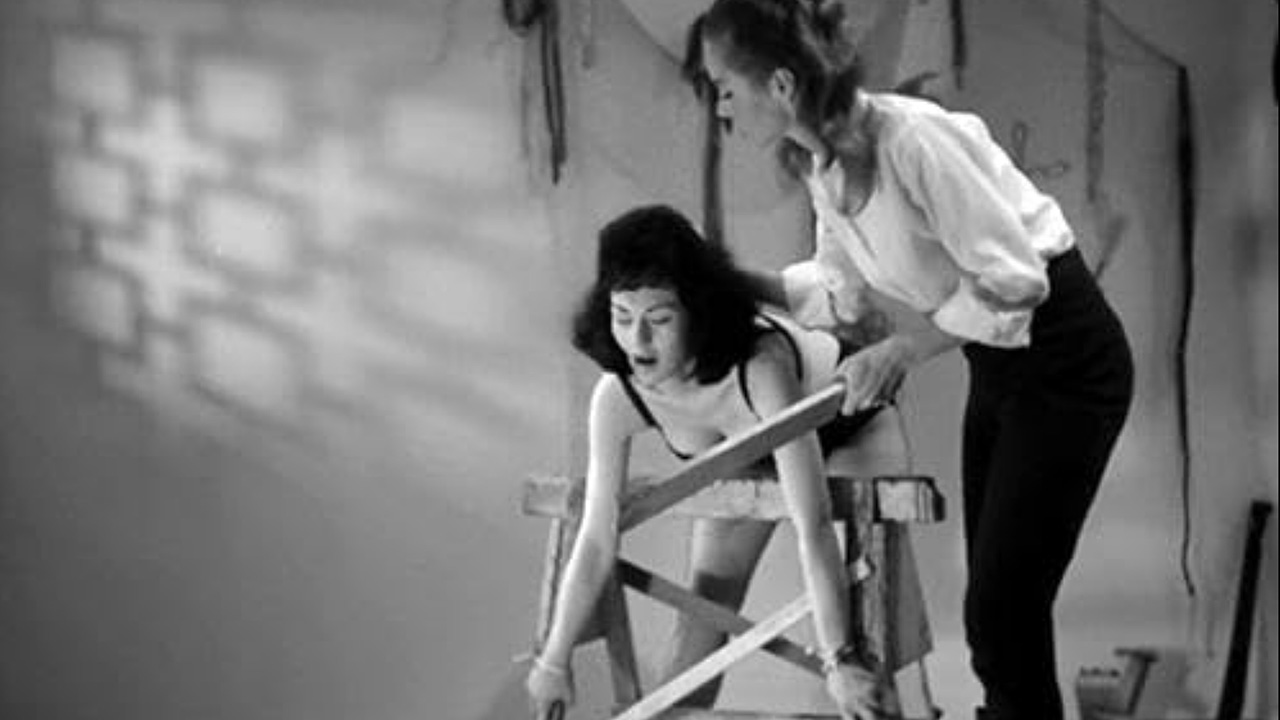
Grimy, confrontational, and deliberately transgressive, Olga’s House of Shame is a key title in the 1960s “roughie” cycle, low-budget exploitation films that blended sadism, nudity, and faux-moral messaging. The film marks the third entry in the notorious ‘Olga’ series and helped define the aesthetics and structure of underground sexploitation. While never mainstream, it became a cult object for its rawness, underground appeal, and blunt display of power and control.
- Director: Joseph P. Mawra
- Runtime: 70 minutes
- Country: USA
- Language: English
- Genre: Roughie / Sexploitation
- Starring: Audrey Campbell, Judy Young, Ella Daphni, Alice Denham, Brenda Denaut
- Tone: Sadistic, voyeuristic, underground
Synopsis:
In an abandoned mining shack turned brothel, Madame Olga expands her criminal enterprise to include jewel smuggling, drug pushing, and sex trafficking. Young women are “trained” through torture, humiliation, and bondage. Olga’s power is absolute, until a rival gang threatens her control, forcing a violent confrontation that pushes the film to its brutal conclusion.
Content Warnings & Viewer Guidance
- Content Warnings: Torture, sadomasochism, non-consensual acts, misogynistic violence, sexual humiliation
- Tags: Power and domination • Roughie cinema • Exploitation through morality poses
- Viewer Note: Extremely graphic and intentionally provocative. These films feigned moral warnings while showcasing prolonged scenes of abuse. Intended for exploitation audiences, not casual viewing.
Historical & Thematic Context
Olga’s House of Shame emerged from the early 1960s underground New York scene, where “roughie” films occupied a space between burlesque and horror. It pushed past the tease of nudie-cuties into the realm of cruelty-as-spectacle. Audrey Campbell’s performance as Olga became a prototype for the dominatrix-warden archetype found in later women-in-prison films.
While marketed as cautionary tales, these films were more about control, punishment, and voyeurism. Their legacy lives on in how they shaped taboo aesthetics and influenced later exploitation subgenres, especially in grindhouse circuits and feminist film studies.
9. The Big Doll House (1971)
A breakthrough entry in the women-in-prison genre, The Big Doll House was part of Roger Corman’s early 1970s push into grindhouse-style international productions. Shot in the Philippines on a low budget, it mixes action, nudity, and rebellion with just enough style to turn pulp into pop. It also marked Pam Grier’s rise as a cult icon, setting the tone for dozens of tropical-prison revenge films that followed.
- Director: Jack Hill
- Runtime: 95 minutes
- Country: USA / Philippines
- Language: English
- Genre: Women-in-Prison / Exploitation / Action
- Starring: Judy Brown, Pam Grier, Roberta Collins, Pat Woodell, Kathryn Loder, Brooke Mills, Sid Haig
- Tone: Sleazy, campy, fast-paced
Synopsis:
In a remote jungle prison, five inmates plot a daring escape from the brutal guards and the mysterious overseer who stages public torture rituals. Led by Collier, who’s serving time for killing her husband, the group fights back using sex, cunning, and raw violence. With the help of Grear and her heroin-addicted lover, they take hostages and try to reclaim their freedom, if they can survive the chaos.
Content Warnings & Viewer Guidance
- Content Warnings: Torture, drug use, sexual coercion, nudity, gendered violence
- Tags: Jungle prison • Sadism and revolt • Female empowerment • Exploitation feminism
- Viewer Note: A high-energy, sexed-up cult classic. Though exploitative, it helped open space for strong Black and female leads in genre cinema.
Historical & Thematic Context
The Big Doll House launched a wave of Filipino-shot women-in-prison films produced by American indie studios. Director Jack Hill’s sharp pacing and character focus elevated it above many of its imitators. Pam Grier’s performance in a supporting role introduced her to international audiences and led to a new era of action heroines.
The film’s mix of sexploitation and female rebellion made it a commercial hit, even as critics dismissed it. Today, it’s studied for its role in shaping 1970s exploitation aesthetics and introducing race and gender politics into pulp narratives, however imperfectly.
10. Caged Heat (1974)
Caged Heat marked the directorial debut of Jonathan Demme and remains one of the most stylish, subversive entries in the women-in-prison genre. While it follows the typical exploitation formula (think nudity, abuse, rebellion) it also sneaks in political commentary, surreal fantasy sequences, and absurdist humor. It’s a rare case of a WIP film doubling as both pulp and early auteur work.
- Director: Jonathan Demme
- Runtime: 83 minutes
- Country: USA
- Language: English
- Genre: Women-in-Prison / Exploitation / Black Comedy
- Starring: Erica Gavin, Barbara Steele, Roberta Collins
- Tone: Irreverent, surreal, rebellious
Synopsis:
Jacqueline Wilson is sent to a brutal women’s prison after a drug conviction, where she discovers the warden and medical staff are conducting unethical experiments on inmates. As tensions rise, the women organize a revolt against the abusive authorities, culminating in an explosive prison break that turns the institution’s cruelty back on itself.
Content Warnings & Viewer Guidance
- Content Warnings: Sexual assault, electroshock therapy, drugged exploitation, nudity, medical abuse
- Tags: Institutional revolt • Surrealist subversion • Women’s solidarity • Exploitation with satire
- Viewer Note: Blends genre sleaze with pointed satire. Viewers should expect disturbing material, but also ironic commentary that distances it from straightforward sexploitation.
Historical & Thematic Context
Produced by Roger Corman and directed by a young Jonathan Demme, Caged Heat plays with the genre’s rules while also undermining them. Unlike earlier WIP films, this one emphasizes collective resistance and psychological escape, not just physical suffering.
Barbara Steele’s performance as a repressed, wheelchair-bound warden adds gothic flair, while dream sequences and absurdist humor suggest a director already experimenting with form. The film stands at the intersection of 1970s exploitation and the emerging American New Wave, i.e., low-budget, provocative, and deceptively smart.
11. Women In Cages (1971)
Shot in the Philippines and produced by Roger Corman, Women in Cages is one of the core texts of 1970s women-in-prison sexploitation. It follows the familiar formula—sadistic guards, jungle settings, and betrayal—but stands out for casting Pam Grier as the main villain. With its tropical setting and brutal tone, the film helped solidify the genre’s tropes and exported them to grindhouse theaters worldwide.
- Director: Gerardo de Leon
- Runtime: 81 minutes
- Country: USA / Philippines
- Language: English
- Genre: Women-in-Prison / Sexploitation
- Starring: Jennifer Gan, Pam Grier, Roberta Collins, Judy Brown, Sofia Moran
- Tone: Harsh, exploitative, tense
Synopsis:
After being framed by her boyfriend, Carol Jeffries is locked away in a brutal prison ruled by the sadistic Alabama, played by Pam Grier. Alongside fellow inmates, Jeff is subjected to forced labor, betrayal, and psychological torment. As she plans a jungle escape, she discovers the outside world may be just as deadly—filled with mercenaries who hunt down runaways for sport.
Content Warnings & Viewer Guidance
- Content Warnings: Torture, sexual coercion, betrayal, jungle violence, nudity
- Tags: Jungle prison • Female betrayal • Sadistic authority • Escape and survival
- Viewer Note: Follows the standard exploitation formula with extreme content and little restraint. Pam Grier’s role as the villain is notable for reversing expectations.
Historical & Thematic Context
Women in Cages is part of a trilogy of Filipino-shot WIP films that included The Big Doll House and The Big Bird Cage, all released by New World Pictures. Directed by Gerardo de Leon, a respected Filipino filmmaker, the film pairs local production with American exploitation sensibilities.
Pam Grier’s performance as the authoritarian Alabama helped reshape her on-screen persona, and the movie became a cult staple for its cruelty, fast pacing, and sweaty jungle aesthetic. It’s also cited by Quentin Tarantino as a key influence on his appreciation for grindhouse cinema.
12. Sweet Sugar (1972)
Sweet Sugar is a full-throttle entry into the 1970s women-in-prison exploitation cycle, swapping jungle prisons for tropical sugar-cane plantations. The film leans into absurdity (read: voodoo, drugged jungle cats, and machete justice) but also reflects the period’s obsession with rebellion, sexual control, and pseudo-science. It’s a grimy mix of pulp, sleaze, and grindhouse spectacle, headlined by Phyllis Davis as a classic antiheroine.
- Director: Michel Levesque
- Runtime: 88 minutes
- Country: USA
- Language: English
- Genre: Women-in-Prison / Exploitation / Jungle Labor Camp
- Starring: Phyllis Davis, Ella Edwards, Timothy Brown, Angus Duncan, Cliff Osmond
- Tone: Wild, lurid, over-the-top
Synopsis:
Framed for a drug crime, prostitute Sugar Bowman is sentenced to two years of hard labor on a corrupt plantation. Alongside her cellmate Simone, she endures brutal guards, sadistic doctors, and voodoo-inspired experiments. After multiple betrayals, uprisings, and jungle rituals gone wrong, the women fight back with machetes and fire, culminating in a fiery escape and Sugar’s ironic return to city life.
Content Warnings & Viewer Guidance
- Content Warnings: Sexual violence, drug use, animal violence (fictionalized), voodoo stereotypes, nudity, torture
- Tags: Plantation labor • Revenge uprising • Medical abuse • Voodoo exploitation
- Viewer Note: This is peak grindhouse excess. While it plays everything for pulp, it’s packed with exploitation triggers and racially charged imagery that should be viewed in historical context.
Historical & Thematic Context
Sweet Sugar reflects the extremes of early ’70s sexploitation, where women-in-prison tropes were relocated to plantations and jungle camps for more exoticized danger. Phyllis Davis, best known for her later TV work, brings star presence to a film more remembered for its shock value than structure.
The character of Mojo reflects problematic voodoo stereotypes common in pulp cinema of the time, and the whole film blends fantasy, misogyny, and revenge in a way that typifies grindhouse logic. It’s loud, chaotic, and undeniably part of the WIP exploitation canon.
Sweet Sugar has all the tropes of the 1970s WiP movie – plus machine guns!
13. Terminal Island: Intro (1973)
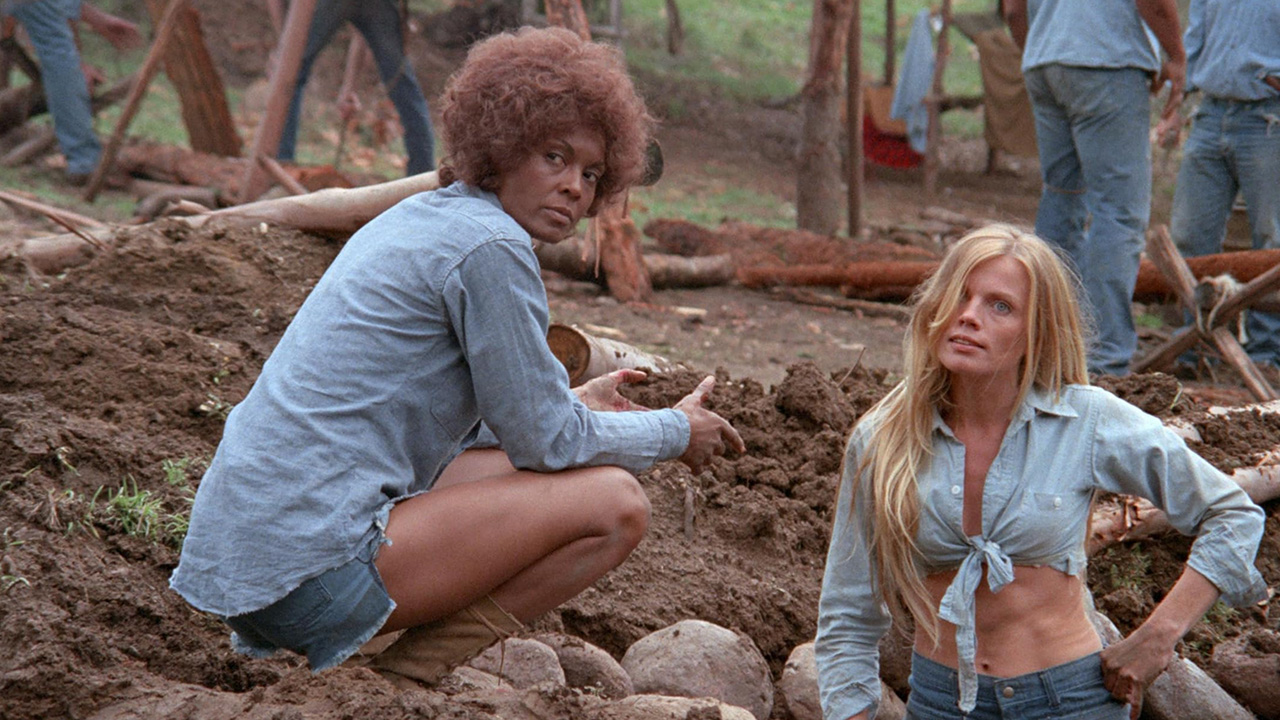
Terminal Island flips the typical women-in-prison setup by removing the walls—and the guards. Directed by Stephanie Rothman, one of the few women working in 1970s exploitation, the film replaces sadistic wardens with lawless male captors and offers its female characters the chance to reclaim power. While marketed like other WIP films of the era, it’s far more interested in survival, autonomy, and collective resistance.
- Director: Stephanie Rothman
- Runtime: 88 minutes
- Country: USA
- Language: English
- Genre: Women-in-Prison / Dystopian Action
- Starring: Phyllis Davis, Ena Hartman, Marta Kristen, Barbara Leigh, Don Marshall
- Tone: Gritty, survivalist, political
Synopsis:
In a near-future America where the death penalty has been abolished, violent criminals are exiled to Terminal Island—a prison colony with no rules, guards, or oversight. Carmen arrives to find the island controlled by Bobby, a brute who forces the women into sexual slavery. But when A.J. and a group of rebels intervene, the women break free and join a new resistance. A full-scale guerrilla war erupts between the factions.
Content Warnings & Viewer Guidance
- Content Warnings: Sexual violence, coercion, brutality, misogynistic abuse, gun violence
- Tags: Survival dystopia • Rebellion • Power reversal • Feminist revenge
- Viewer Note: While it contains exploitation elements, the film has a strong feminist core. Its treatment of sexual abuse is blunt but followed by collective resistance and female-led retribution.
Historical & Thematic Context
Terminal Island was released during the peak of New World Pictures’ drive-in reign, but director Stephanie Rothman used the genre format to critique power structures. The film is often cited for its early intersection of feminist politics with action cinema.
Unlike most women-in-prison films, the women become part of the fight. Rothman’s direction favors action over titillation and presents the island as a collapsed society where gendered power is brutally exposed. It’s a notable shift from domination to organized revolt, and one of the genre’s few truly progressive turns.
14. Chained Heat (1983)
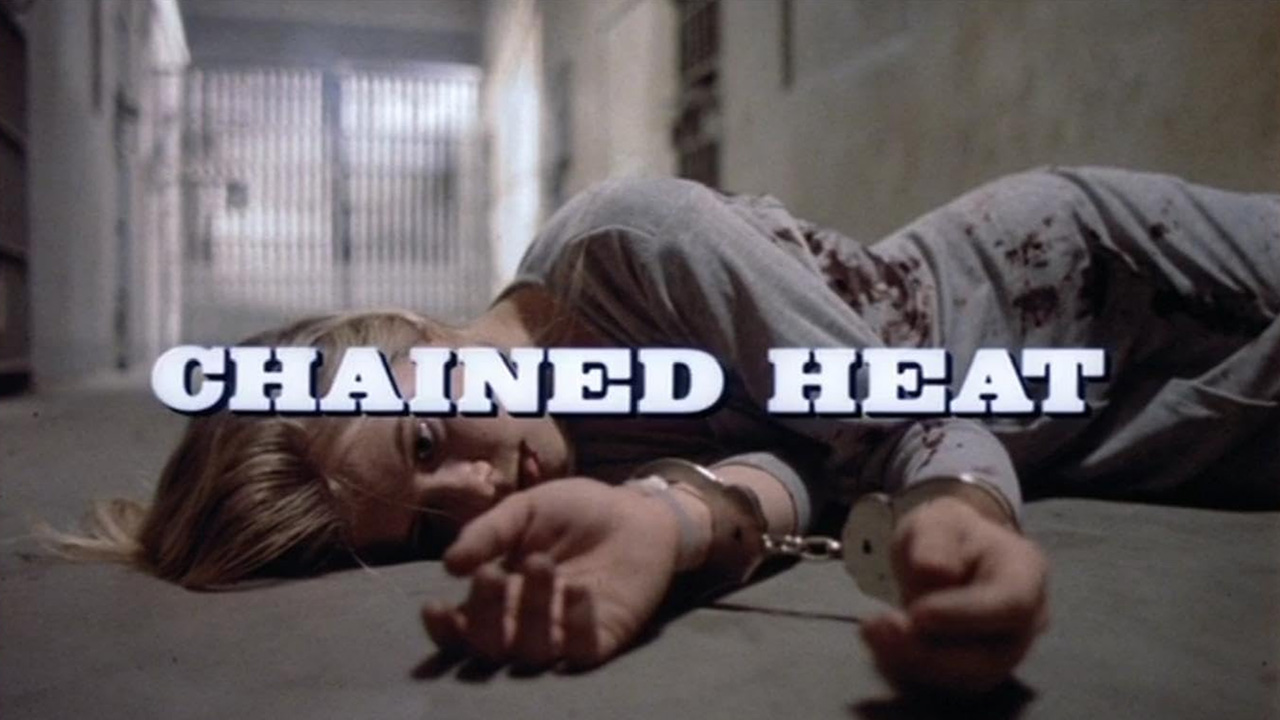
One of the most commercially successful women-in-prison films ever released, Chained Heat took the genre’s sleazy core and pushed it into overdrive. With an ensemble cast led by Linda Blair and Sybil Danning, the film blended brutal violence, racial tension, and over-the-top sexual exploitation. Its scale and production values brought the WIP genre into multiplexes, making it a landmark in the genre’s mainstream crossover.
- Director: Paul Nicholas
- Runtime: 95 minutes
- Country: USA
- Language: English
- Genre: Women-in-Prison / Exploitation / Action Drama
- Starring: Linda Blair, John Vernon, Stella Stevens, Sybil Danning, Tamara Dobson
- Tone: Sleazy, extreme, confrontational
Synopsis:
After killing a man in a traffic accident, Carol Henderson is sentenced to a California women’s prison ruled by corruption. Warden Backman films sex tapes with the inmates, while Captain Taylor manages a prostitution ring. Inside, the prisoners are divided by race, with rival factions led by Ericka and Duchess. But when abuse turns deadly, the women band together for a full-blown revolt against the system that’s been exploiting them.
Content Warnings & Viewer Guidance
- Content Warnings: Sexual violence, racial slurs, drug use, nudity, brutal beatings
- Tags: Prison revolt • Exploitation excess • Power and corruption • Female solidarity
- Viewer Note: Highly exploitative and graphically sexualized, but historically significant for showing how the genre reached peak visibility in the early 1980s. Not for casual viewers.
Historical & Thematic Context
Chained Heat represents the final phase of the classic women-in-prison cycle, where sexploitation crossed into mainstream genre cinema. With its larger budget and star power, particularly Linda Blair in her post-Exorcist career, the film attracted a wider audience while sticking closely to genre formula.
It capitalizes on racial division, power abuse, and voyeuristic tension, but ends with a moment of female unity rarely seen in earlier entries. Critics panned it, but it was a financial success, spawning multiple sequels and cementing its place as one of the genre’s most recognizable titles.
15. Black Mama, White Mama (1973)

Inspired by The Defiant Ones (1958) but set in a tropical prison landscape, Black Mama, White Mama combines political rebellion, chase scenes, and exploitation tropes. It’s one of the rare WIP films to fully embrace the chain-gang structure, pairing a militant white revolutionary with a no-nonsense hustler played by Pam Grier. Shot in the Philippines on a tight budget, it became a cult favorite for its mix of gunfights, social tension, and sweaty camp.
- Director: Eddie Romero
- Runtime: 87 minutes
- Country: USA / Philippines
- Language: English
- Genre: Women-in-Prison / Action / Blaxploitation
- Starring: Pam Grier, Margaret Markov, Sid Haig, Eddie Garcia, Vic Diaz
- Tone: Fast-paced, exploitative, politically charged
Synopsis:
Lee Daniels and Karen Brent, two women from different worlds, are chained together and on the run after a failed prison transfer. Hunted by military police, rebel fighters, and bounty killers, they must rely on each other to survive the jungle, dodge crossfire, and escape the cycle of captivity. As the bodies pile up, the film races toward a final showdown that leaves few standing.
Content Warnings & Viewer Guidance
- Content Warnings: Violence, sexual coercion, racial slurs, nudity, torture
- Tags: Chain gang • Female fugitives • Racial tension • Jungle survival
- Viewer Note: A mix of chase film and exploitation, with moments of unexpected solidarity between its leads. Known for its political edge, but still rooted in sexploitation and genre spectacle.
Historical & Thematic Context
Black Mama, White Mama is one of the earliest WIP films to fuse blaxploitation elements with the jungle-prison cycle popularized by New World Pictures. Pam Grier was already becoming a breakout star, and her presence added credibility and energy to what could’ve been another formulaic prison escape film.
The dynamic between her and Margaret Markov loosely comments on race, class, and gender (though filtered through pulp storytelling and grindhouse aesthetics). Director Eddie Romero, a key figure in Philippine exploitation cinema, brings chaotic momentum and practical staging to this low-budget, high-impact action ride.
6. The Bamboo House Of Dolls (1973)
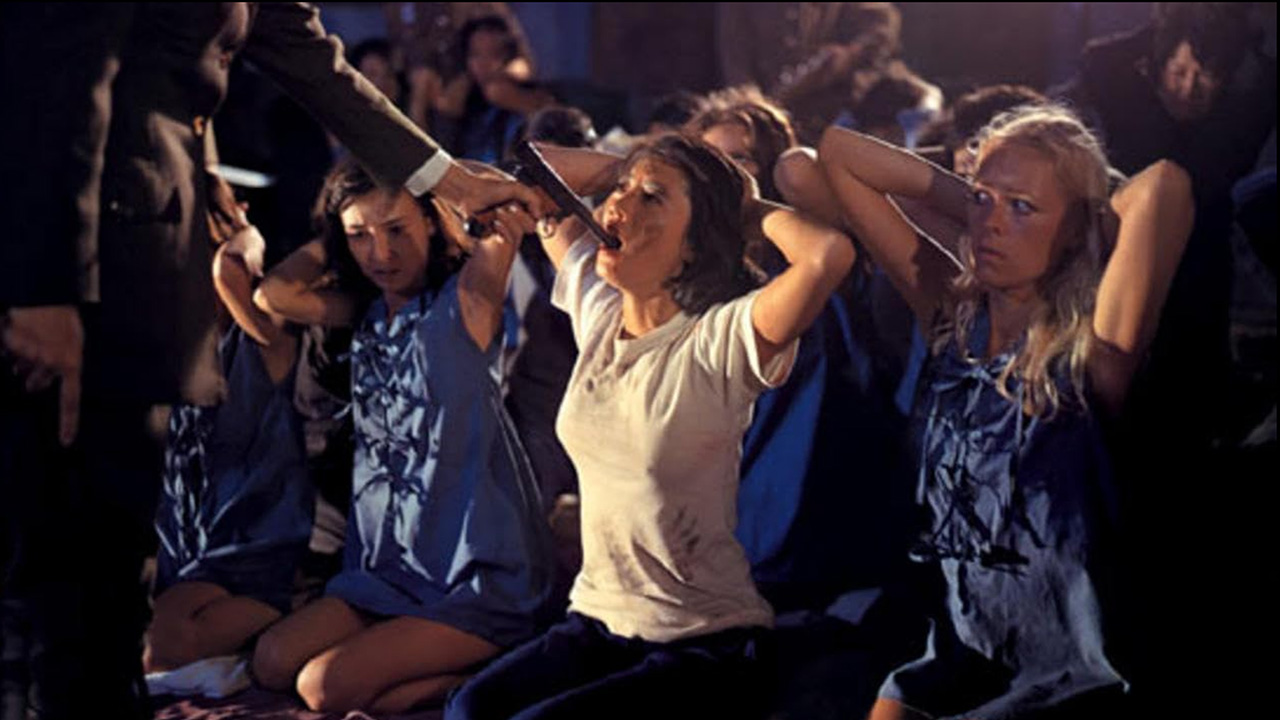
One of the most brutal and controversial films in the women-in-prison canon, The Bamboo House of Dolls blends wartime POW drama with sexploitation in typical Shaw Brothers fashion. Set during the Second Sino-Japanese War, it draws from real historical trauma but filters everything through pulp violence, stylized cruelty, and exploitative set pieces. While visually striking and narratively chaotic, the film gained cult status for pushing the WIP genre into historical war settings.
- Director: Kuei Chi-hung
- Runtime: 101 minutes
- Country: Hong Kong
- Language: Mandarin (original)
- Genre: Women-in-Prison / War Exploitation / Sexploitation
- Starring: Birte Tove, Niki Wane, Roska Rozen, Lieh Lo, Terry Liu Wai Yue
- Tone: Grim, stylized, aggressive
Synopsis:
During World War II, a group of female nurses are captured by Japanese soldiers and held in a POW camp. Among them is Jennifer, a foreign nurse caught in a violent power struggle. As the guards abuse and torture the women, rumors spread of hidden wartime gold stashed in nearby mountains. With the sadistic warden Mako overseeing daily punishments, the prisoners must decide whether escape is possible, or even worth it.
Content Warnings & Viewer Guidance
- Content Warnings: Graphic sexual violence, torture, war trauma, nudity, racial stereotypes
- Tags: War prison • Survival horror • Sadistic authority • Treasure subplot
- Viewer Note: While a cult object, the film is extremely violent and exploits real historical suffering for pulp. It contains scenes of assault and dehumanization that require viewer discretion.
Historical & Thematic Context
The Bamboo House of Dolls is one of the most intense exploitation films produced by Hong Kong’s Shaw Brothers studio. While many WIP films rely on fictional prison settings, this one places its narrative within the trauma of World War II and Japanese occupation.
Director Kuei Chi-hung was known for his work in horror and crime, and here he uses striking compositions, jarring tonal shifts, and blunt cruelty to push emotional extremes.
The film echoes themes of systemic brutality and domination, but never stops to reflect on the real history it borrows from. For film students, it’s a prime example of how exploitation can frame real-world tragedy through stylized and morally complex storytelling.
17. House Of Whipcord (1974)
Part horror film, part moral panic satire, House of Whipcord trades jungle prisons and tropical heat for foggy English countryside and repressed authoritarianism. Directed by Pete Walker, it reinvents the women-in-prison formula through a British lens, replacing corrupt wardens with moral fundamentalists and state brutality with vigilante “correction.” Though marketed as exploitation, the film critiques right-wing puritanism and state-sanctioned violence in post-war Britain.
- Director: Pete Walker
- Runtime: 102 minutes
- Country: United Kingdom
- Language: English
- Genre: Horror-Thriller / Women-in-Prison
- Starring: Penny Irving, Barbara Markham, Sheila Keith, Robert Tayman, Patrick Barr
- Tone: Psychological, slow-burning, bleak
Synopsis:
After being publicly shamed for a nude photo incident, young model Ann-Marie is lured to a countryside estate by her boyfriend. There, she’s imprisoned by his mother, Margaret Wakehurst, a former reform school matron who now runs a secret correctional facility. Young women are subjected to harsh discipline and executions after receiving three demerits. Ann-Marie tries to escape but is repeatedly captured. As friends close in, the system collapses in violence and death.
Content Warnings & Viewer Guidance
- Content Warnings: Torture, public shaming, authoritarian violence, psychological abuse, off-screen executions
- Tags: Moral punishment • Sadistic reform • Institutional control • British horror
- Viewer Note: Less graphic than many exploitation films but deeply disturbing. The psychological tone and slow dread make it closer to horror than sleaze. For viewers interested in feminist horror or state critique.
Historical & Thematic Context
House of Whipcord was Pete Walker’s breakout film in the British exploitation scene and a major entry in what’s sometimes called “punishment horror.” Unlike many WIP films, it use violence to critique. Margaret Wakehurst represents a reactionary nostalgia for rigid morality, and her secret prison is a stand-in for the darker side of discipline-based institutions.
The film’s pacing, domestic setting, and blend of horror and commentary align it more with repulsion horror than grindhouse fare. It’s one of the rare women-in-prison films that fits equally well in British film history and horror studies syllabi.
18. The Big Bust Out (1972)
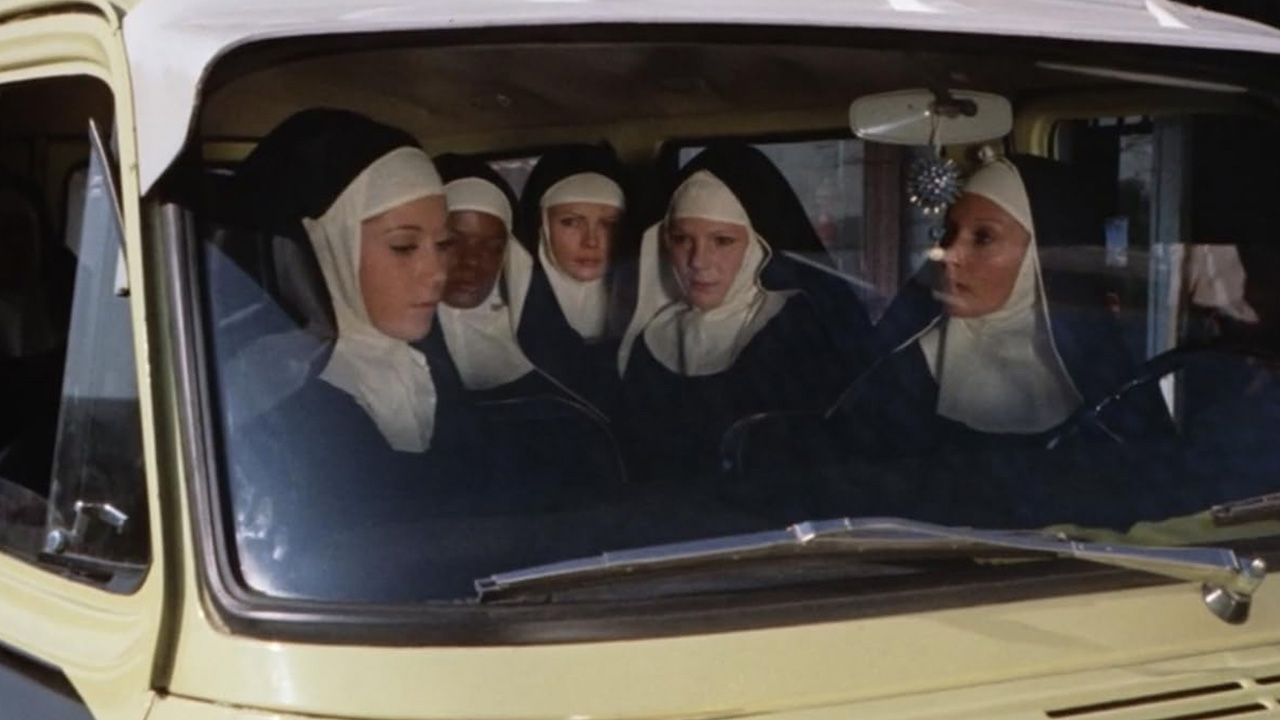
One of the more chaotic blends of women-in-prison and nunsploitation tropes, The Big Bust-Out pushes shock value over structure. With women disguised as nuns, desert gunfights, and sexual slavery, the film rides a wave of early 1970s exploitation where narrative coherence takes a backseat to provocation. It’s an Italian-German co-production with international stars and heavy emphasis on pulp spectacle, moral outrage, and taboo-breaking visuals.
- Director: Ernst Ritter von Theumer
- Runtime: 88 minutes
- Country: Italy / West Germany
- Language: English (dubbed)
- Genre: Women-in-Prison / Nunsploitation / Action Exploitation
- Starring: Monica Teuber, Vonetta McGee, Margaret Rose Keil, William Berger, Tony Kendall, Nuccia Cardinali
- Tone: Unhinged, sensational, pulp-heavy
Synopsis:
In a brutal prison-convent hybrid, Sister Maria tries to maintain order while the inmates are subjected to daily abuse. When the women revolt, they disguise themselves as nuns and escape, only to fall into the hands of traffickers. Fleeing across desert terrain, they face gun smugglers, religious mobs, and rogue militias. In a final standoff, Sister Maria snaps and leads the charge with a machine gun, mowing down their captors in a surreal climax of pulp vengeance. I mean, nuns with machine guns? What’s not to like?

Content Warnings & Viewer Guidance
- Content Warnings: Sexual violence, nudity, religious parody, racial stereotypes, gendered torture, gun violence
- Tags: Nunsploitation • Escape and pursuit • Religious inversion • Eurocult pulp
- Viewer Note: This film revels in bad taste, designed to shock more than engage. While sometimes played for absurdity, the material is often deeply uncomfortable and relies on racial and religious stereotypes.
Historical & Thematic Context
The Big Bust-Out represents a cross-section of early 1970s Eurocult cinema, where women-in-prison storylines were exported, dubbed, and infused with regional myths, sexual taboos, and sensational violence. Its mix of exploitation subgenres (read: WIP, nunsploitation, desert adventure) reflects a commercial strategy rather than narrative logic.
Director Ernst Ritter von Theumer leans into excess: religious iconography is stripped for fetish, and trauma is rendered as camp. The result is an absurd, disjointed experience that nevertheless stands as a case study in transnational pulp filmmaking and the limits of genre fusion.
19. The Hot Box (1972)
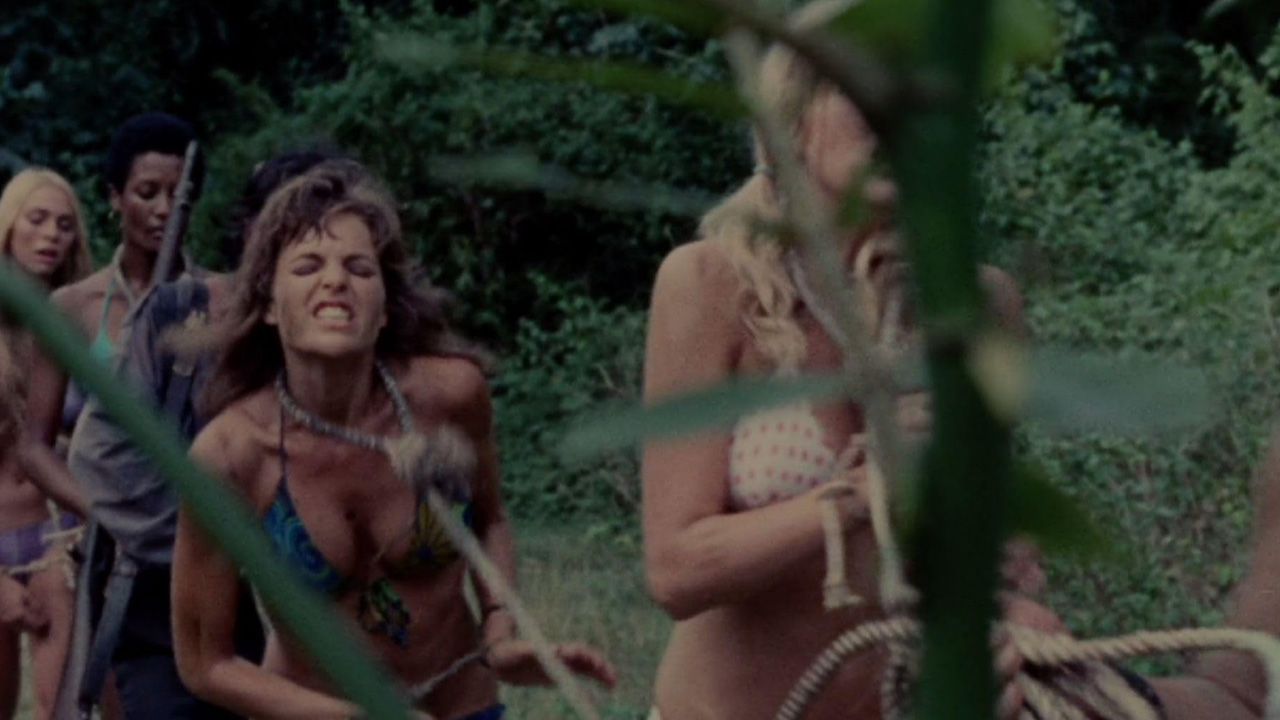
The Hot Box blends the women-in-prison formula with jungle rebellion tropes, creating a fast-paced, politically loose action film soaked in sex and spectacle. Co-written by Jonathan Demme and directed by Joe Viola, it straddles the line between parody and exploitation. With nurses in bikinis, jungle patrols, and government torture, it’s less about realism and more about turning genre clichés into drive-in entertainment.
- Director: Joe Viola
- Runtime: 88 minutes
- Country: USA / Philippines
- Language: English
- Genre: Women-in-Prison / Jungle Action / Exploitation
- Starring: Andrea Cagan, Margaret Markov, Laurie Rose, Carmen Argenziano
- Tone: Campy, political, pulpy
Synopsis:
Four American nurses arrive in the fictional republic of San Rosario for humanitarian work, but are quickly kidnapped by local bandits. After being handed over to a rebel group, they’re forced to help treat wounded fighters. Eventually recaptured by the military, they’re tortured inside a scorching metal box and threatened with execution. As the violence escalates, a revolutionary rescue mission gives the women a shot at revenge and escape. Of course, there’s plenty of hot action and clothes-ripping galore. Oh, and does the plot sound familiar?
Content Warnings & Viewer Guidance
- Content Warnings: Torture, sexualized violence, nudity, state brutality, gendered power dynamics
- Tags: Jungle prison • Rebel warfare • Torture cages • Nurses as captives
- Viewer Note: Equal parts parody and pulp, the film plays its violence and nudity for maximum exploitation. Scenes may be over-the-top, but the tone can still be disturbing in how it sexualizes captivity.
Historical & Thematic Context
The Hot Box is a classic New World Pictures production, low budget, high concept, and designed for the grindhouse circuit. While the plot mimics other jungle prison films, its rebel subplot and medical setting allow for satirical undertones.
Co-writer Jonathan Demme, who would go on to direct Silence of the Lambs, later reflected on the absurdity of this early work. For students of genre cinema, it’s a case study in how exploitation films blend real-world settings (like Cold War Latin America) with fantastical violence and sexual spectacle. The film’s hybrid of political commentary and pulp excess makes it both chaotic and culturally revealing.
20. Ilsa, Harem Keeper Of The Oil Sheiks (1976)
The first sequel to Ilsa, She Wolf of the SS, this 1976 entry drops Nazi imagery in favor of Middle Eastern fantasy, but the formula stays the same: sadism, sex, and spectacle. Ilsa, Harem Keeper of the Oil Sheiks expands the infamous franchise by placing its antiheroine in a lavish yet brutal harem, turning torture and power games into pulp theater. The result is a deeply controversial film that plays up Orientalist stereotypes while dialing exploitation tropes up to eleven.
- Director: Don Edmonds
- Runtime: 94 minutes
- Country: Canada / USA
- Language: English
- Genre: Sexploitation / Women-in-Prison / Action Thriller
- Starring: Dyanne Thorne, Max Thayer, Jerry Delony, Su Ling, Bobby Woods
- Tone: Graphic, campy, offensive
Synopsis:
Ilsa, once again alive and thriving, now runs a luxurious harem for the ruthless Sheikh El-Sharif. When a belly dancer is caught spying, she’s tortured until she reveals a plot involving American commander Adam Scott. Ilsa seduces the commander but is punished when her loyalty wavers. After surviving public humiliation and a leper rape scene, she turns against her captors, freeing the rightful heir to the throne. The film ends with a bomb hidden in a sex slave’s body and a final betrayal that seals Ilsa’s fate.
Content Warnings & Viewer Guidance
- Content Warnings: Graphic sexual violence, torture, public humiliation, forced intercourse, suicide bombing, racial and cultural stereotypes
- Tags: Orientalist fantasy • Sexual sadism • Power reversal • Ilsa franchise
- Viewer Note: This film is deliberately provocative and laced with extreme content. It exploits Middle Eastern tropes and features some of the most graphic material in the WIP subgenre. It is not suitable for general viewing and should be approached as a historical object of 1970s exploitation excess.
Historical & Thematic Context
Ilsa, Harem Keeper of the Oil Sheiks was part of a wave of 1970s sexploitation films that used exoticized settings to frame sexual domination and rebellion. Dyanne Thorne’s performance as Ilsa became iconic not for depth, but for how she embodied violent female power through hypersexualized control.
The sequel replaced Nazi sadism with Orientalist imagery, swapping one set of cultural taboos for another. Its legacy is divisive: while some view it as camp or satire, others cite it as a prime example of cinematic misogyny and racist caricature. For film students, it stands as a case study in how far exploitation cinema was willing to go, and why those limits mattered.
21. Red Heat (1985)

Red Heat puts the women-in-prison genre into a Cold War setting, blending political thriller with familiar exploitation elements. With Linda Blair returning to WIP cinema a decade after Chained Heat, the film repackages female captivity through the lens of East-West paranoia. While the plot leans on genre tropes—sadistic guards, prison gangs, forced confinement—it also borrows from political thrillers of the era, creating a hybrid that feels both familiar and newly propagandistic.
- Director: Robert Collector
- Runtime: 96 minutes
- Country: USA / West Germany
- Language: English
- Genre: Women-in-Prison / Cold War Thriller
- Starring: Linda Blair, Sylvia Kristel, Sue Kiel, William Ostrander
- Tone: Gritty, political, stylized
Synopsis:
While visiting her fiancé in West Germany, American student Christine Carlson is kidnapped by East German secret police and imprisoned on false espionage charges. Inside the prison, she faces interrogations, isolation, and constant surveillance. After clashing with a dominant inmate, Sofia, she becomes a target of abuse and power games. Meanwhile, her fiancé works with U.S. and German forces to rescue her before the prison breaks her completely.
Content Warnings & Viewer Guidance
- Content Warnings: Psychological torture, sexual intimidation, political imprisonment, forced confinement
- Tags: Cold War paranoia • Institutional control • False charges • Western anxiety
- Viewer Note: While less sexually explicit than earlier WIP films, Red Heat still features aggressive scenes of restraint, interrogation, and helplessness. Its Cold War setting adds ideological weight to genre clichés.
Historical & Thematic Context
Red Heat updates the women-in-prison formula for the 1980s, replacing jungle camps and sadistic wardens with Soviet-style detention and surveillance. Linda Blair plays another wrongfully imprisoned woman, but this time the violence is framed as political rather than purely exploitative.
The film reflects Reagan-era anxieties about Eastern Bloc oppression, turning the prison into a metaphor for state control and American vulnerability abroad. It’s also notable for casting Sylvia Kristel (best known for the Emmanuelle series) as a prison gang leader, further blurring the line between erotica and authority. For students of Cold War cinema, it’s a key case of genre bending in the exploitation market.
22. Barbed Wire Dolls (1976)
Directed by Jesús Franco, Barbed Wire Dolls is one of the most notorious entries in the European women-in-prison cycle of the 1970s. Shot cheaply and quickly, the film plays like a fever dream of sadism, sex, and surrealism. While marketed as pure sexploitation, it’s also emblematic of Franco’s personal style: voyeuristic, repetitive, and strangely hypnotic. With Nazi references, corrupt officials, and isolationist paranoia, it captures the intersection of horror and erotica that defined much of Eurocult cinema in the decade.
- Director: Jesús Franco
- Runtime: 81 minutes
- Country: Switzerland / West Germany
- Language: German / French (varies by release)
- Genre: Women-in-Prison / Sexploitation / Eurocult Horror
- Starring: Lina Romay, Paul Muller, Monica Swinn, Roger Darton
- Tone: Sleazy, surreal, oppressive
Synopsis:
Maria da Guerra is sentenced to a remote prison island after murdering her abusive father. Run by a fraudulent doctor and enforced by a sadistic monocled wardress, the prison is a cover for torture, isolation, and sexual exploitation. As deaths begin to pile up, suspicions rise on the mainland. Meanwhile, Maria and the other inmates are subjected to escalating violence and control, until the system begins to collapse from within.
Content Warnings & Viewer Guidance
- Content Warnings: Incest reference, sexual violence, lesbian coercion, torture, nudity, Nazi iconography
- Tags: Eurocult sleaze • Monocled wardress • Sexual domination • Institutional collapse
- Viewer Note: This is one of Jess Franco’s most extreme films. It’s loaded with nudity and repetitive abuse, and contains fascist imagery used purely for shock. Not recommended for general viewers, only for those studying the boundaries of Eurotrash exploitation.
Historical & Thematic Context
Barbed Wire Dolls was part of a string of women-in-prison films Franco directed in the mid-1970s, many starring Lina Romay, his muse and future wife. These films often blurred the line between horror, erotica, and satire, operating on low budgets but with an unmistakable authorial stamp.
The prison in this film is less an institution than a closed system of sadism, designed more for atmosphere than narrative logic. For film students, it represents the limits of sexploitation aesthetics, and a turning point where the genre began collapsing into repetition, self-parody, and art-house nihilism.
23. Interrogation (1989)
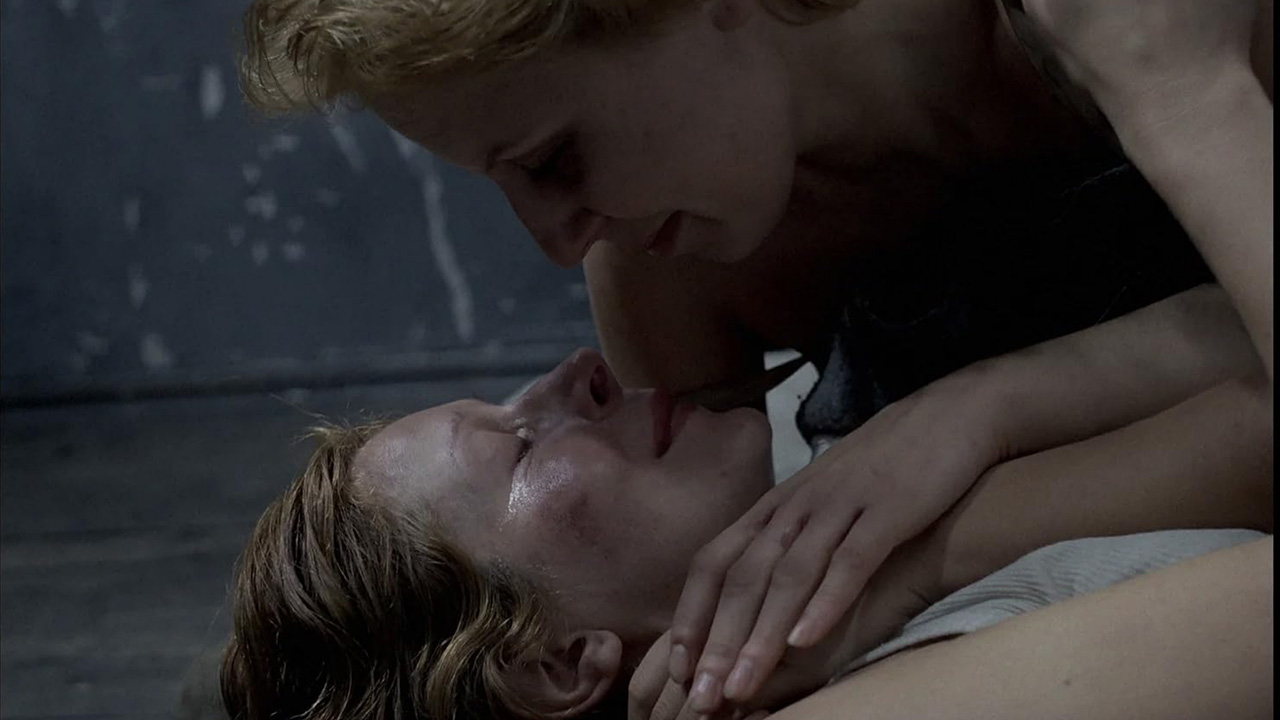
Unlike most entries on this list, Interrogation is not exploitation cinema but a politically charged psychological drama. Directed by Ryszard Bugajski and banned in Poland for nearly a decade, the film offers a harrowing portrayal of life under Stalinist rule. Set in a women’s political prison, it focuses on power, control, and human dignity rather than genre tropes. It’s considered one of the most important Polish films of the 20th century, and a landmark in political filmmaking under censorship.
- Director: Ryszard Bugajski
- Runtime: 118 minutes
- Country: Poland
- Language: Polish
- Genre: Historical Drama / Political Prison Film
- Starring: Krystyna Janda, Adam Ferency, Janusz Gajos
- Tone: Stark, realistic, emotionally intense
Synopsis:
Tonia, a cabaret singer in early 1950s Poland, is arrested without explanation and held in a political prison. Interrogated for years, she faces psychological abuse, betrayal, and institutional cruelty. She forms brief bonds with fellow inmates and even one of her interrogators, but these connections are manipulated as tools of control. After giving birth in prison and being forced to give up her child, she emerges years later into a world that no longer recognizes her.
Content Warnings & Viewer Guidance
- Content Warnings: Psychological torture, suicide attempt, emotional manipulation, forced separation from child
- Tags: Political imprisonment • Psychological abuse • Stalinist repression • Institutional trauma
- Viewer Note: This is a serious historical film, not a genre entry. It’s emotionally challenging, grounded in real events, and best suited for viewers interested in political cinema, history, or performance-driven storytelling.
Historical & Thematic Context
Interrogation was completed in 1982 but suppressed by the Polish government for its open critique of Stalinist brutality and political imprisonment. It wasn’t released until 1989, as the Soviet Bloc began to collapse. Krystyna Janda delivers a searing performance as Tonia, a woman caught in a system designed to destroy identity.
The film’s stripped-down style, long prison scenes, and intense emotional realism contrast sharply with the tropes of exploitation. It’s often studied in the context of Eastern European resistance cinema and stands as one of the boldest anti-authoritarian statements in Polish film history.
4. 99 Women (1969)
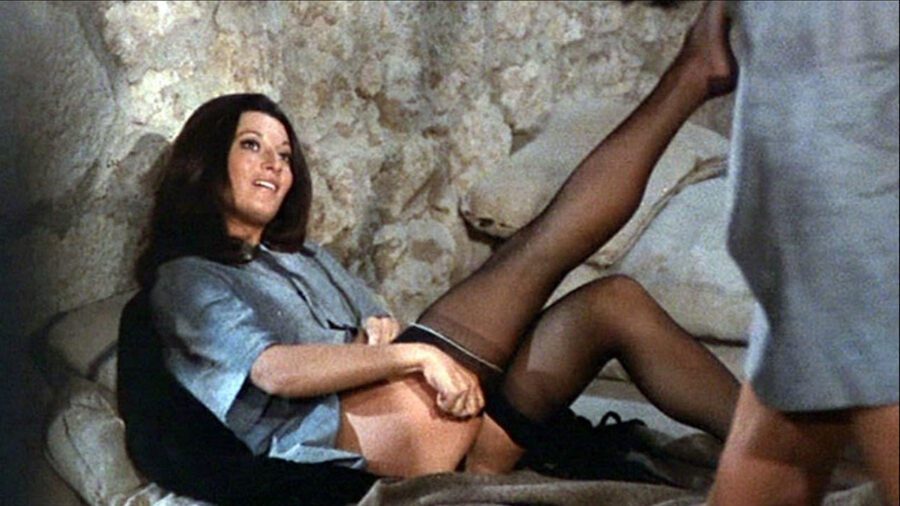
Directed by Jesús Franco, 99 Women helped solidify the women-in-prison genre by mixing European eroticism with institutional cruelty. It’s often cited as one of the earliest WiP films to gain international attention, thanks to its mix of high-profile actors, softcore appeal, and a script that flirts with reform while leaning into taboo. The film is a key example of late-60s Eurocult cinema balancing censorship, spectacle, and social commentary.
- Director: Jesús Franco
- Runtime: 90 minutes
- Country: West Germany / UK / Liechtenstein
- Language: English, German
- Genre: Women-in-Prison / Eurocult / Sexploitation
- Starring: Maria Schell, Mercedes McCambridge, Maria Rohm, Rosalba Neri
- Tone: Lurid, melodramatic, politically ambiguous
Synopsis:
On a remote penal colony, 99 female prisoners endure brutal conditions under the rule of Thelma Diaz (Mercedes McCambridge), a sadistic warden who punishes rebellion with solitary confinement and whippings. When a reform-minded administrator named Leonie (Maria Schell) takes over, tensions rise. Her relationship with inmate Marie (Maria Rohm) sparks rumors, and when a failed escape attempt leads to more violence, a full-scale riot erupts. Leonie is dismissed, but looming political reform may finally break the cycle of abuse.
Content Warnings & Viewer Guidance
- Content Warnings: Flogging, sexual assault, lesbian stereotyping, institutional violence
- Tags: Female solidarity • Power abuse • Sexual coercion • Escape attempts • Riot narrative
- Viewer Note: This is one of Jesús Franco’s more accessible WiP films. While still exploitative, it features stronger production values and a larger cast than many later entries. Its blend of softcore scenes and reformist gestures makes it a useful case study in genre contradiction.
Historical & Thematic Context
99 Women marked Franco’s international breakthrough and launched a wave of similar films throughout Europe and Asia. Released at the edge of the censorship collapse in the late 1960s, it walks a tightrope between commercial sleaze and institutional critique.
Mercedes McCambridge, an Oscar winner, lends unexpected gravitas to the genre, while Maria Schell’s reformist subplot introduces a rare thread of idealism. The film set the template for decades of WiP tropes: predatory guards, implied lesbianism, escape attempts, and prison riots as both climax and commentary.
25. Star Slammer (aka Prison Ship) (1986)

Also known as Prison Ship and The Adventures of Taura, Star Slammer takes the classic women-in-prison setup and launches it into space. Directed by Fred Olen Ray, the film fuses 1950s-style pulp with 1980s exploitation, offering a campy mix of cleavage, ray guns, and rebel politics. It’s part of the short-lived but memorable wave of sci-fi WiP hybrids, where prison tropes were reimagined with control panels, leather collars, and glowing torture devices.
- Director: Fred Olen Ray
- Runtime: 86 minutes
- Country: United States
- Language: English
- Genre: Sci-Fi / Women-in-Prison / Exploitation
- Starring: Sandy Brooke, Ross Hagen, Suzy Stokey, Marya Gant, Aldo Ray
- Tone: Campy, pulpy, low-budget
Synopsis:
On the planet Arous, rebel miner Taura (Sandy Brooke) is arrested after defending herself from the corrupt Captain Bantor (Ross Hagen), who loses a hand in the scuffle. As punishment, she’s sent to the intergalactic prison ship Vehemence, a floating hell where sadistic guards, brainwashing machines, and interstellar politics collide. As Bantor plots to turn prisoners into mindless slaves, Taura bonds with her fellow inmates and stages a daring escape through laser-filled corridors and cardboard sets.
Content Warnings & Viewer Guidance
- Content Warnings: Torture, sexualized costuming, mind control
- Tags: Sci-fi prison • Female rebellion • Body politics • Camp aesthetics • Retro-futurism
- Viewer Note: Expect everything to look and feel like a drive-in B-movie. The story hits familiar beats from WiP films but adds space opera tropes. Great for studying how genre formulas adapt when transplanted to new settings.
Historical & Thematic Context
Star Slammer is part of a brief movement in the 1980s where genre mashups (like Spacehunter or Galaxina) tried to inject sci-fi into low-budget exploitation.
Fred Olen Ray, a prolific B-movie director, plays fast and loose with plot logic but delivers on the aesthetic: revealing outfits, improvised sets, and synth soundtracks. It mirrors how women-in-prison movies adapted during the VHS boom, by becoming more outrageous, self-aware, and geared toward niche fandom.
The film plays with rebellion and captivity, but mostly offers a satirical, sleazy spectacle that reflects genre fatigue and innovation at once. Star Slammer isn’t one of the best sci-movies ever made. Heck, it isn’t even the best W.I.P. movie, but as a huge sci-fi fan, I felt this list wouldn’t be complete without at least one sci-fi W.I.P. movie.
Summing Up
Women-in-Prison films blend exploitation and drama, focusing on stories of female inmates trapped in brutal, often sexualized environments. Most follow a formula: an innocent woman is imprisoned, abused by sadistic guards, and eventually leads a revolt with fellow inmates.
Core themes include violence, sexual abuse, lesbianism, humiliation, and rebellion, often paired with nudity and campy aesthetics, especially in sexploitation versions.
Originally rooted in low-budget pulp cinema, WiP films were popular in American, Italian, and Asian exploitation markets, offering exaggerated depictions of prison life. Many early films lacked ethical boundaries, with improvised sex scenes and little concern for realism.
Despite their exploitative roots, WiP stories laid the groundwork for more serious modern depictions of women in prison, such as Orange Is the New Black or The L Word. These later works still draw from the same themes (oppression, survival, and female solidarity) but treat them with more nuance and empathy.
At their core, WiP films reflect power struggles, showing women either crushed by or rising against abusive authority. Some directors highlight female empowerment through rebellion and resilience, while others focus on suffering and exploitation. Either way, the genre remains a lens into how cinema explores control, identity, and resistance.
Read Next: Curious how visual styles define film genres?
Explore our breakdown of Genre & Visual Style to see how movements like naturalism, noir, and surrealism shape what we watch.
Looking for the big picture? Visit our Film History, Theory & Genre page to connect techniques with the eras and ideas that shaped them.
