

Published: October 3, 2025 | Last Updated: January 14, 2026

What is Empathy? Definition & Meaning
Empathy is the ability to understand and share the feelings of another person by imagining their experience and emotions as if they were your own.
In film, empathy helps you connect with characters, care about their choices, and feel their emotions. It’s not the same as sympathy, which I’ll get back to in a minute.
Screenwriters, directors, and actors rely on empathy to make characters feel real. Without it, scenes lose meaning and emotional weight.
Empathy in Psychology (Brief Overview)
In psychology, empathy is typically described as the ability to understand another person’s internal emotional state and, in some cases, emotionally resonate with it. While everyday usage often treats empathy as a single trait, researchers commonly distinguish between different psychological components that work together.
- Cognitive empathy – the ability to intellectually understand what another person is feeling and why.
- Affective empathy – the capacity to emotionally respond to another person’s feelings, often by feeling a version of that emotion yourself.
- Compassionate empathy – the motivation to act or respond once another person’s emotional state is understood.
In storytelling and film, these components rarely appear in isolation. Strong emotional scenes often combine cognitive understanding (we know why a character feels a certain way) with affective response (we feel it with them), which is what makes cinematic empathy so powerful.
Types of Empathy
Empathy comes in three main forms. All of them shape how you experience film:
- Cognitive empathy means you understand what someone is thinking or why they behave a certain way.
- Emotional empathy means you feel a version of their emotion (like fear, grief, or hope) without needing to live through the same experience.
- Compassionate empathy (also called empathic concern) means you not only feel with someone, but also feel moved to help or support them.
How Filmmakers Create Empathy

Empathy in film is rarely created by a single element. It emerges through a combination of visual, auditory, and narrative choices that guide the audience’s emotional alignment with a character.
- Writing: Characters face moral dilemmas, personal losses, or internal conflict. You begin to understand their thoughts and values.
- Restricted perspective: When the audience only knows what a character knows, we experience uncertainty, fear, or hope alongside them. See also point-of-view in film.
- Acting: A strong performance shows what a character feels without needing words. A silent expression or tense posture can say more than dialogue.
- Cinematography: Close-ups let you see emotions clearly. Internal framing and character-focused angles reduce the distance between you and them.
- Editing: Slow pacing or long takes give you time to process what the character is going through.
- Sound and music: Empathetic sound, for example, extra-diegetic or diegetic music that reflects a character’s mood, helps you feel what they feel.
These techniques don’t tell the audience what to feel. Instead, they create the conditions where empathy can naturally emerge through shared attention and emotional presence.
For example, in Moonlight (2016, A24), Chiron says very little. But close shots, silence, and careful pacing let you feel his isolation and confusion. The empathy comes from stillness, not explanation.
Empathy vs. Sympathy in Film
Although empathy and sympathy are often used interchangeably, they create very different viewing experiences—especially in film.
Sympathy places the audience outside a character’s emotional experience. We observe their suffering and feel concern or pity for them. Empathy, on the other hand, pulls the audience inside the character’s emotional state. Instead of watching someone feel fear, grief, or joy, we are encouraged to experience a version of those emotions ourselves.
In practical filmmaking terms, this difference often shows up as:
- Sympathy: wider shots, emotional distance, explanatory dialogue
- Empathy: close-ups, subjective sound, restrained dialogue, and time spent inside a character’s reactions
Empathy tends to create stronger emotional engagement because it relies less on explanation and more on shared experience. Rather than telling the audience how to feel, empathetic storytelling allows viewers to arrive at the emotion on their own.
Film Examples
Grave of the Fireflies (1988, Studio Ghibli) follows two siblings after their city is bombed in World War II. The story is quiet and personal. You see hunger, fear, and love in small moments. Their suffering feels real. That’s empathy built through direction, realism, and restraint.
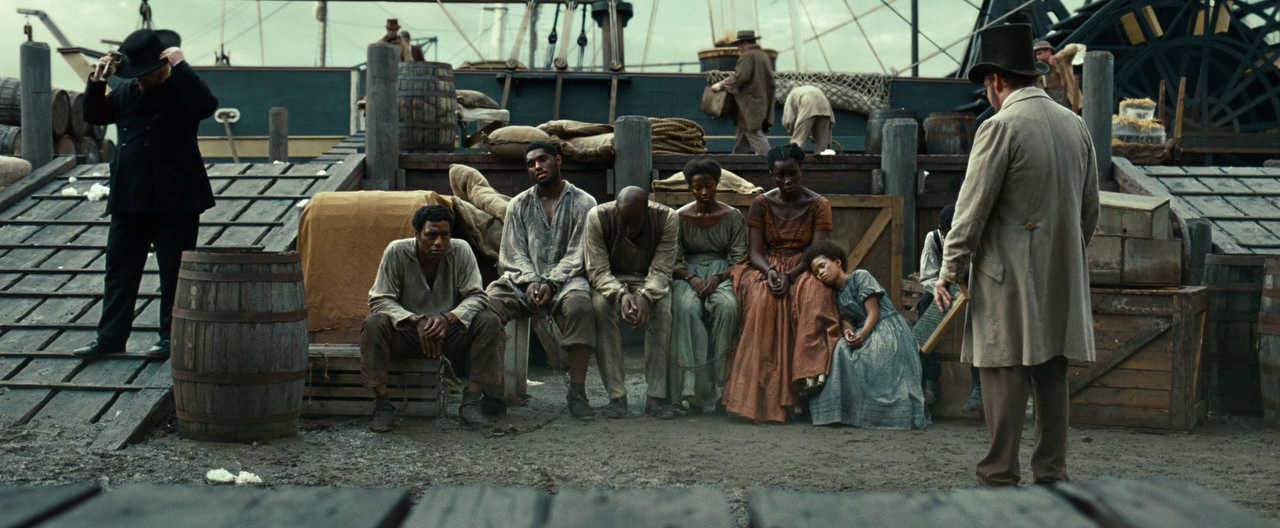
12 Years a Slave (2013, Regency Enterprises) shows the true story of Solomon Northup, a free Black man forced into slavery. The film doesn’t rush through pain. It lingers in hard moments. You’re watching the cruelty and feeling what Solomon feels as his freedom is taken.
Limits of Empathy
Empathy has limits. Sometimes, a film doesn’t give you enough context or time to connect with the characters. That’s called an empathy gap. It can happen when emotional scenes feel forced, or when the pacing doesn’t leave room to feel anything.
Personal experience also shapes empathy. What moves one person may not affect another. That’s why good screenwriting and direction leave emotional space open. They invite you in without pushing too hard.
When Films Intentionally Block Empathy
Not all films aim to create empathy. In some cases, filmmakers deliberately prevent emotional identification to provoke reflection rather than emotional immersion.
This can be achieved by keeping emotional distance from characters, using detached camera work, withholding psychological context, or emphasizing structure over emotional flow. Rather than inviting the audience to feel with the characters, these films encourage viewers to analyze behavior, themes, or moral questions from the outside.
By limiting empathy, filmmakers can challenge audiences to confront uncomfortable ideas, question their own judgments, or remain critically aware of the story’s construction. In this way, the absence of empathy can be just as intentional (and meaningful) as its presence.
Summing Up
Empathy is your ability to feel what someone else feels by imagining their point of view. In film, it turns characters into people you understand, care about, and remember. Writers, directors, actors, and editors all use empathy to make characters feel personal and real. When empathy works, a film doesn’t just tell you what happened, it makes you feel like you’re inside it.
Read Next: Curious how film theory shapes the way we watch movies?
Start with the Film Theory section to break down realism, formalism, structuralism, and more — with examples from iconic films.
If you want studying film theory I recommend starting with The FilmDaft overview of film theory discourses to break down realism, formalism, structuralism, and more — with examples from iconic films.
Then explore the full Film History, Theory & Genre collection to see how movements, styles, and storytelling traditions have evolved.
Whether you’re into Soviet montage or 2000s genre mashups, there’s something here to sharpen your understanding.
