

Published: October 3, 2025

What is Plato’s Allegory of the Cave? Definition & Meaning
Plato’s Allegory of the Cave is a thought experiment intended to show how people can confuse illusions for reality until they gain real knowledge. It appears in Book VII of The Republic (written around 375 BCE), where Plato presents a conversation between Socrates and Glaucon. In that dialogue, Socrates tells a story: prisoners are chained inside a cave and can only see shadows cast on a wall. They believe those shadows are real. One prisoner escapes, sees the true world, and returns to warn the others, who reject him.
The Three Stages of the Allegory

Plato’s allegory unfolds in three parts: a life of illusion inside the cave, the painful journey toward truth, and the difficult return to help others.
The three stages are described by Socrates in his conversation with Glaucon as a way to explain how knowledge, ignorance, and belief affect how we live and think.
Here’s each stage broken down in more detail:
Living in Illusion Inside the Cave
Plato asks you to imagine a group of people trapped in a cave from childhood. Their necks and legs are chained so they cannot turn their heads. All they can see is the wall in front of them. Behind them, a fire burns. Between the fire and the prisoners, people walk along a raised path holding objects. The fire casts shadows of those objects onto the cave wall. The prisoners see only these shadows and assume the shadows are reality.
The prisoners also hear echoes from the walkway, but because they can’t see where the sounds come from, they think the shadows are making the noise. They accept this illusion as the full truth because it’s all they’ve ever known.
The Escape from the Cave

One day, a prisoner is freed. At first, he’s in pain. The fire hurts his eyes. He’s confused and angry. But he’s forced to turn and see the objects behind him. He begins to understand that the shadows were only copies.
Eventually, he is dragged out of the cave. The sunlight blinds him, but slowly, his eyes adjust. First, he sees reflections, then real objects, and finally, the sun itself, the source of all light and truth. Now that he knows the real world, he feels pity for those still in the cave.
The Return to the Cave
He returns to share what he has seen. But in the darkness, his eyes struggle to adjust. The others think his journey has made him weaker. They mock him. Some would rather kill anyone who threatens their idea of reality than accept they’ve been wrong.
What Does “Allegory” Mean?
An allegory is a story in which characters, settings, and events symbolize abstract ideas or larger truths. Instead of being read only on the surface, an allegory is meant to be interpreted for its deeper meaning. Plato’s Allegory of the Cave is one of the earliest and most famous uses of allegory.
Philosophy Behind the Cave
The allegory is part of Plato’s larger theory of knowledge and reality. It connects to three key ideas from The Republic:
- The Theory of Forms: Plato believed that the physical world is a shadow of a higher reality made of perfect, unchanging forms. The objects in the cave represent the lowest level, copies of copies.
- The Divided Line: Just before the cave allegory, Plato explains the four levels of knowledge: imagination, belief, reason, and pure understanding. The cave’s shadows represent imagination. Escaping the cave means climbing toward understanding through logic and philosophy.
- The Form of the Good: Outside the cave, the sun represents the highest form, the Form of the Good. It makes all truth possible. For Plato, knowing the Good is the goal of all real education.
Film Examples of the Allegory
Many films follow the same structure as Plato’s cave. A character starts in a false world, slowly learns the truth, and must choose whether to return or break free completely.
In The Matrix (1999, Warner Bros.), Neo learns his reality is a computer simulation. His awakening mirrors the freed prisoner.
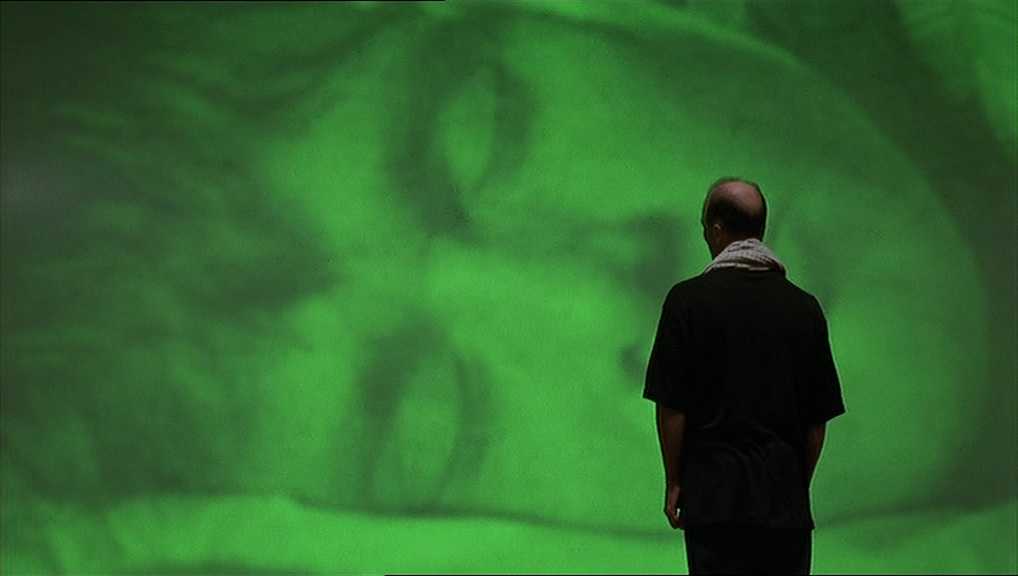
In The Truman Show (1998, Paramount), Truman’s entire life is a staged illusion. When he finds the truth, he walks through the set’s wall, like stepping out of the cave. In WALL·E (2008, Pixar), the humans on the spaceship live disconnected from real life, staring at screens. They only recover the truth when they return to Earth.
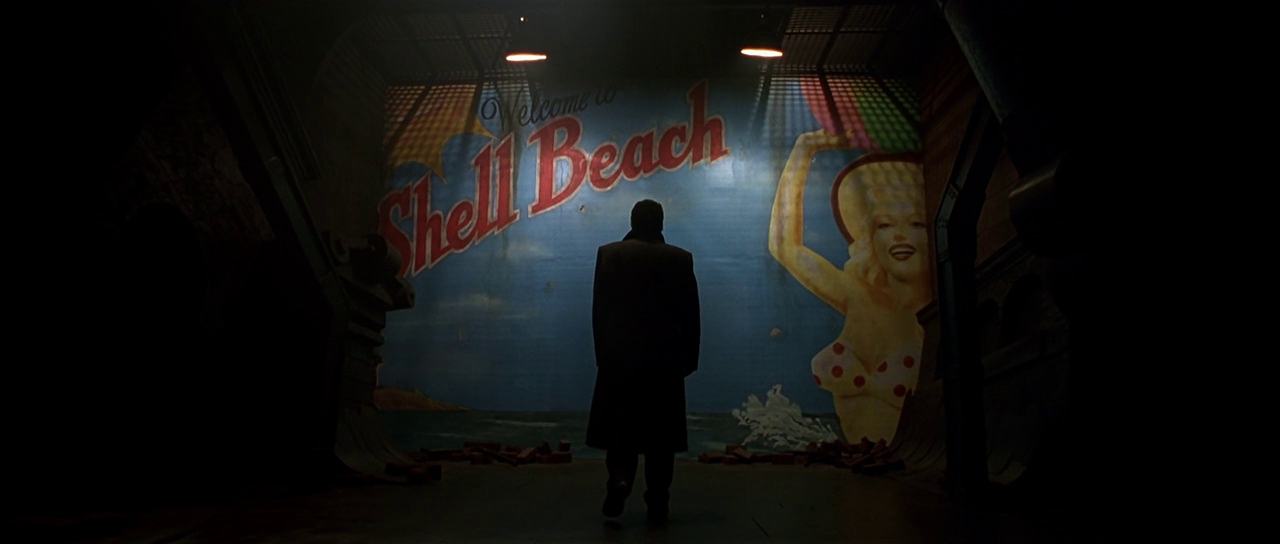
In Dark City (1998), people are trapped in a shifting city controlled by alien beings. They live in false memories and darkness. Cube (1997) traps characters in a giant maze with no clear exit or explanation, forcing them to question the system itself.
The Island (2005) and World on a Wire (1973) also use artificial environments and sudden revelations of truth, following the same core structure.
Each of these films asks the same question Plato did: What happens when someone discovers that everything they believed was a lie? And what do they do with that knowledge?
Modern Meaning and Critiques
The allegory isn’t just about the past. It applies directly to your world. Plato’s cave is a way to understand how misinformation, surface-level media, and social bubbles can shape what people accept as truth. When you live in a constant stream of images, posts, and distractions, it becomes harder to see what’s real.
Some scholars also criticize the allegory. They argue that it assumes a single, universal truth and that the “escaped” person has all the answers. Others point out that forcing someone out of ignorance, as in the story, ignores their consent. And some say the line between illusion and reality isn’t as clear as Plato believed.
Summing Up
Plato’s Allegory of the Cave challenges you to question what you’re shown. Don’t settle for shadows. Think for yourself. Look for the source of the light. And when you do see the truth, be prepared: not everyone will want to hear it.
If you create or study films, you can use this structure. Stories that reveal illusions (and show the cost of breaking free) connect deeply with how
Read Next: Curious how film theory shapes the way we watch movies?
Start with the Film Theory section to break down realism, formalism, structuralism, and more — with examples from iconic films.
If you want studying film theory I recommend starting with The FilmDaft overview of film theory discourses to break down realism, formalism, structuralism, and more — with examples from iconic films.
Then explore the full Film History, Theory & Genre collection to see how movements, styles, and storytelling traditions have evolved.
Whether you’re into Soviet montage or 2000s genre mashups, there’s something here to sharpen your understanding.
