

Published: June 13, 2019 | Last Updated: March 3, 2026

What is Postmodernism? Definition & Meaning
Postmodernism is a cultural and intellectual movement that began in the mid-20th century. It rejects grand narratives and fixed truths, favoring irony, remix, and self-reference across art, architecture, and film.
Postmodernism is both a way of making art and a way of reading it. A postmodern film can still be emotional and character-driven, but it often shows you the “movie-ness” of what you are watching.
Postmodern as a label vs. postmodern as a concept
People use “postmodern” in two common ways, and mixing them up creates confusion.
- As a vibe: A film feels self-aware, reference-heavy, or ironic.
- As a concept: A film treats meaning as unstable and shows how culture is built from copies, images, and repeated patterns. See also postmodern theory in film.
- As a toolkit: A film uses specific methods like pastiche, parody, intertextuality, and nonlinear structure.
Where postmodernism shows up
Postmodern ideas appear across art forms, which is why film examples often connect to architecture, fine art, and pop culture.
- Film and TV: genre remix, meta jokes, self-aware characters, fractured timelines
- Writing: unreliable frames, direct address, layered references (see intertextuality and allusion)
- Visual art: appropriation, repetition, and “copies of copies” (see visual art timelines)
- Architecture and design: playful mixes of styles and symbols in one building
Common mix-ups to avoid
Postmodernism overlaps with other ideas, but it is not the same thing. These quick checks keep your definitions honest.
- Postmodernism vs. “weird”: A confusing film can be confusing without making a point about media, art, or meaning.
- Postmodernism vs. parody: Parody copies a style for comedic or critical effect. Postmodern work can include parody, but it can also stay serious.
- Postmodernism vs. irony: Irony is one tool. Postmodernism is a broader approach that often uses irony plus references, remix, and self-awareness.
- Postmodernism vs. genre: Genre rules matter because postmodern films often comment on them (see genre in film and this movie genres overview).
Where Postmodernism Comes From
Postmodernism grew out of a long argument about what art is “supposed” to do. Film picks up that argument because cinema sits between art, technology, and mass entertainment.
Modernism as the background
Modernism is a broad movement that pushed new forms, new rules, and new ways to represent reality. Postmodernism reacts to the cultural world that modernism helped create.
- Modernism often values formal invention, seriousness, and clean “art-first” ideas (see modern art).
- Postmodernism often treats “high art” and pop culture as material you can mix in the same work (see contemporary art and fine art).
Postmodernism in architecture is a clear example
Architecture shows the shift in a visible way. Postmodern buildings can quote older styles, then combine them with modern materials and bold signage.

Key ideas that matter for film
Postmodern theory is large, but a few points show up again and again in film analysis and screenwriting choices.
- Jean-François Lyotard (a French philosopher) is often linked to the idea that modern “grand narratives” lose authority. In film terms, that can mean fewer moral certainties and more competing frames.
- Jean Baudrillard (a French social theorist) is linked to ideas about simulation and images replacing reality. Films about constructed worlds often echo this, even when they do it indirectly.
- Fredric Jameson (an American literary critic) is linked to discussions of pastiche and culture made from recycled styles.
If you want a FilmDaft anchor for related theory terms, start with the Film Theory section and move outward from there.
Key Traits of Postmodern Film
Postmodern films do not all look the same. The traits below work like a checklist, and most films use a few of them rather than all of them.
Pastiche, homage, and remix
Pastiche is a work built from borrowed styles. In film, that often means you can feel another genre, era, or director “inside” the scene.
- How it shows up: costume and production design that quote an older era, a score that mirrors a genre tradition, or camera grammar that imitates a known style.
- How you plan it: build a reference list early, then decide what each reference does for the scene (tone, theme, or genre commentary). FilmDaft’s overview of homage and artistic interpretation helps you separate tribute from imitation.
- What can go wrong: references stack up without a clear reason, and the scene becomes a collage without a point.
Intertextuality and visible references
Intertextuality is meaning created through connections to other works. In postmodern film, references are often part of the film’s surface, not hidden “Easter eggs.”
- How it shows up: characters name rules from earlier films, shots mirror iconic frames, or dialogue relies on shared cultural memory.
- How you keep it readable: make sure the scene still works if someone misses the reference. The reference should add meaning, not replace the scene’s purpose.
- Useful related terms: intertextuality, allusion, and connotation.
Irony, satire, and self-awareness
Postmodern films often let you feel the distance between what a scene is and what it comments on. Irony can be comedic, but it can also be tense or bitter.
- How it shows up: a character knows genre rules, a film winks at its own tropes, or a scene stages a “classic” moment with a twist in tone.
- How you control it: decide whether the irony lives in the writing, the performance, the edit, or all three. Mixing levels without a plan can confuse the tone.
- Related tools: dramatic irony and situational irony.
Breaking the fourth wall and direct address
Direct address makes the viewer feel “noticed,” and that changes the relationship between the film and its world. Postmodern films sometimes use this to remind you that you are watching a constructed piece of media.
- How it shows up: a character speaks to camera, a narrator comments on the scene, or the film highlights its own devices.
- How you keep the rules consistent: decide when direct address is allowed and what it means. That rule should hold across the film.
- Useful related terms: breaking the fourth wall, diegesis, and diegetic vs. non-diegetic sound.
Genre mixing and rule-bending
Postmodern films often treat genre as something you can quote, bend, and comment on. Genre knowledge becomes part of the film’s language.
- How it shows up: a scene starts like a horror sequence, then shifts into comedy, or an action beat plays like a musical number without becoming one.
- How you keep control: set a dominant tone for each sequence, then pick the moments where you switch. Random switches are hard to cut and harder to score.
- Useful references: style in film, grindhouse, and genre definitions above.
Fragmentation and nonlinear structure
Fragmented structure breaks a “straight line” timeline. The point is usually perspective, theme, or tension, not confusion for its own sake.
- How it shows up: shuffled chapters, repeated events from different viewpoints, or scenes that reframe earlier scenes.
- How you protect clarity: build a master timeline, then decide where you cut it up. Track character knowledge scene by scene.
- Useful related terms: narrative in film and the three-act structure as a baseline you can bend.
Hyperreality and constructed worlds
Some postmodern films focus on worlds made of images, brands, screens, and simulations. The film can treat “reality” as something built by media and systems.
- How it shows up: characters discover their world is staged, a film shows a reality filtered through screens, or a character identity becomes a product.
- How you keep it grounded: tie the idea to a character need. Without that anchor, the concept stays abstract.
- Useful related terms: diegesis and film theory basics.
High art and pop culture in the same frame
Postmodern culture often collapses the distance between museum art and mass media. Film reflects that with characters, props, and design that treat “high” and “low” as a single pool of references.


Film Examples: How Postmodernism Plays on Screen
Examples matter because postmodernism is easiest to understand as choices you can point to. These breakdowns stay at the scene and character level so you can copy the process, not the surface style.
Example: Kill Bill: Vol. 1 (2003, Miramax) uses a style shift to reframe backstory
Quentin Tarantino (an American writer-director known for genre remix and pop-culture reference) drops into anime during O-Ren Ishii’s origin. The shift is not only decoration. The anime form supports a heightened, myth-like backstory with extreme violence and graphic symbolism.
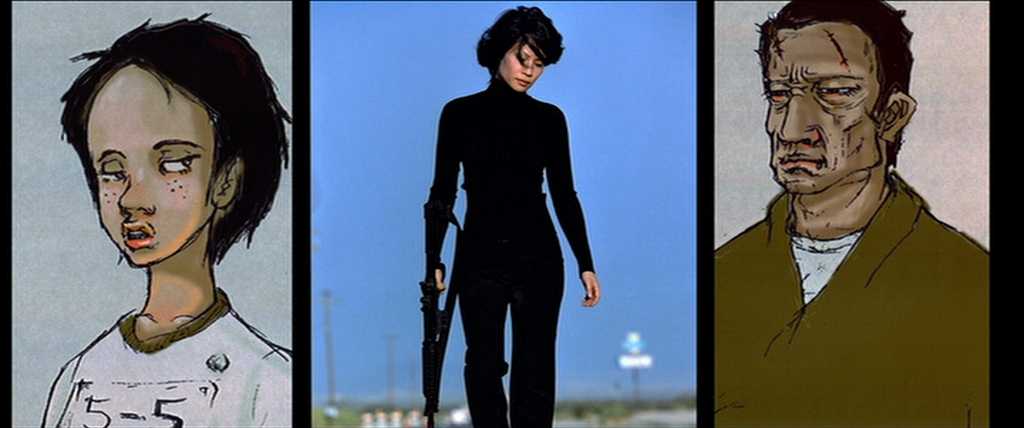
- Postmodern trait: pastiche through a sudden medium shift.
- How it works: the film uses animation grammar to compress time and heighten violence without switching into a separate “realistic” register.
- Practical lesson: style shifts need a narrative reason you can state in one sentence, or the cut feels like a gimmick.
- Related reading: Tarantino’s use of genre borrowing connects to anime types and grindhouse traditions.
Example: Scream (1996, Dimension Films) turns genre rules into character logic
Wes Craven (an American director known for horror) builds tension by letting characters talk about horror rules inside a horror plot. Randy’s “rules” are funny, but they also raise the stakes because the film shows that knowing rules does not guarantee safety.
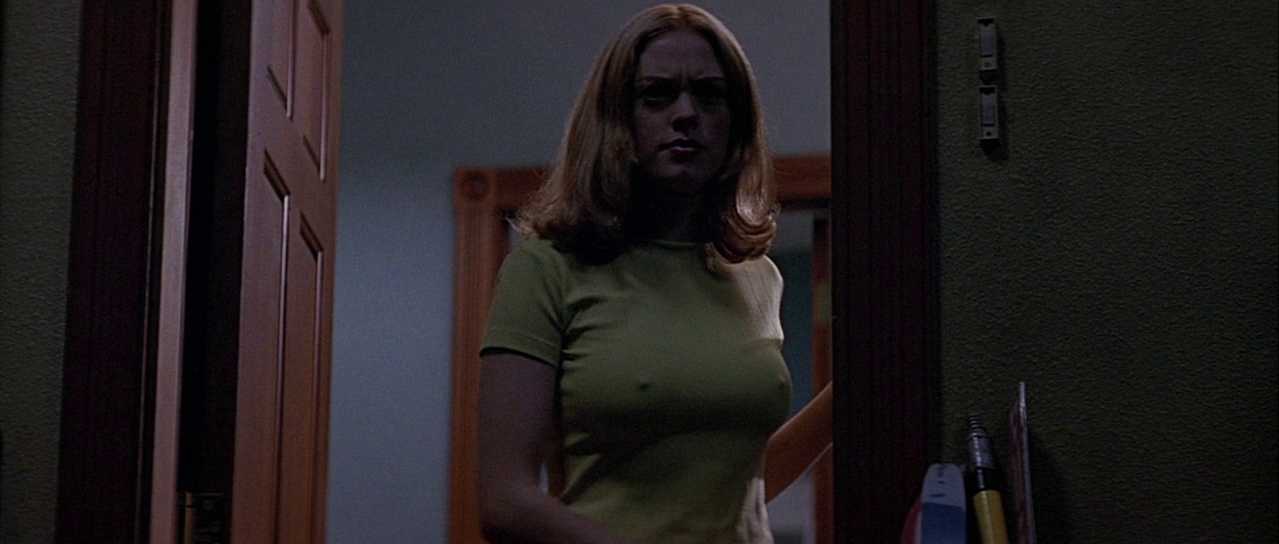
- Postmodern trait: self-awareness plus intertextuality.
- Scene-level mechanics: the opening attack plays like a “classic” horror setup, and the film leans on your memory of other horror openings. The phone call also turns horror fandom into part of the threat.
- Character-level mechanics: Randy’s rule speech makes genre knowledge part of identity. That turns the “viewer perspective” into a character trait inside the scene.
- Practical lesson: meta dialogue needs stakes in the scene. A rule speech works because the film keeps killing characters who should “know better.”
- Related reading: horror tropes, clichés, and intertextuality.
Example: Pulp Fiction (1994, Miramax) uses a shuffled timeline to change meaning
Tarantino structures the film in chapters that are not presented in chronological order. The result is that cause and effect stay intact in the full timeline, but your emotional reading shifts because you meet characters in one “state,” then later see an earlier event that reframes them.

- Postmodern trait: fragmented structure with clear internal logic.
- Scene-level mechanics: Vincent’s bathroom habit becomes a repeating pattern. The repetition turns a simple action into a structural cue that links scenes across the film’s out-of-order layout.
- Character-level mechanics: you experience Vincent as “alive” in one chapter even when another chapter has already shown his death. That changes suspense and changes how you read later scenes.
- Practical lesson: nonlinear structure needs a master timeline and strong signposts, or the edit becomes guesswork. FilmDaft’s narrative guide is a good baseline reference.
Example: The Matrix (1999, Warner Bros.) ties simulation ideas to physical training scenes
Lana and Lilly Wachowski (American filmmakers known for stylized action and genre blending) build a world where “reality” is an interface. The film keeps the concept readable by attaching it to a character arc: Neo must learn what rules are real, which rules are code, and which rules can be broken.

- Postmodern trait: simulation and hyperreality.
- How it works on screen: the film repeats “rule lessons” through fights, jumps, and failures. Each lesson has a visible test, which keeps the concept from staying abstract.
- Practical lesson: big ideas land better when the film gives you a repeatable visual rule, then shows the rule breaking at the right moment.
- Related reading: diegesis and broader film theory terms.
Example: The Truman Show (1998, Paramount) uses media framing as the plot engine
Peter Weir (an Australian director known for character-focused dramas) builds a world where an entire life is staged for television. The film keeps the concept readable by showing you multiple layers of framing: Truman’s lived reality, the show’s camera system, and the control room choices that shape what the show becomes.

- Postmodern trait: a constructed world that comments on media systems.
- How it works: the monitor view makes the production apparatus visible, which turns “how the show is made” into part of the narrative tension.
- Practical lesson: if your film contains media inside the film, track what each camera angle means and who controls it. That keeps the idea consistent in the edit.
How to Use Postmodern Techniques on Purpose
Postmodern tools work best when they serve a clear goal. That goal can be emotional, thematic, or genre-based, but it should be stated in your plan before you shoot.
Pick what you are commenting on
A postmodern film usually points at something outside itself, even if the film stays inside the narrative world most of the time.
- Genre rules: you can comment on clichés and tropes (see clichés and horror tropes).
- Media culture: you can comment on brands, celebrity, and “image as identity.”
- Art and originality: you can comment on copying, remix, and authorship (see homage and plagiarism boundaries).
Write a simple rule set for the film
Rules keep self-aware ideas from turning into random choices. A rule set also helps other departments work in the same direction.
- Reference rules: what kinds of references are allowed (direct quotes, visual echoes, genre grammar).
- Tone rules: when comedy is allowed, when tension takes over, and how far irony can go.
- World rules: whether the film can acknowledge the camera or only acknowledge genre.
- Structure rules: whether the timeline is shuffled and how the film signals the order.
Protect clarity with visible signposts
Postmodern structure can still be clean and readable. Clarity often comes from repeating simple cues.
- On-screen text: time and place cards, chapter titles, or graphic labels (a tool related to the idea behind a chyron).
- Sound cues: repeating motifs and audio transitions (see diegetic vs. non-diegetic sound).
- Editing patterns: repeated cut styles or repeated scene openings (see Film Editing overviews).
Responsibilities by Production Phase
Postmodern choices touch every department because they change how the film communicates. Breaking the work into phases helps you turn ideas into concrete deliverables.
Development and screenwriting
Development is where postmodern intent becomes readable on the page. You set the rules early, then keep the draft consistent with those rules.
- Deliverable: reference inventory with the source, the reason it matters, and where it appears.
- Deliverable: master timeline that lists events in order, plus the order you show them.
- Deliverable: tone map that marks where irony, tension, and sincerity are allowed.
- Workflow artifact: scene-state notes for character knowledge (what the character knows in each scene).
- Related support: baseline structure helps even when you bend it (see three-act structure and narrative frameworks at this narrative structures guide).
Pre-production
Pre-production turns the plan into shot decisions, design choices, and a schedule that protects the film’s logic.
- Deliverable: look book with frames that define what “quote” and “original” look like in your film.
- Deliverable: clearance list for references that might require rights, logos, or music permissions.
- Deliverable: coverage plan that protects edit flexibility when tone shifts (see coverage in film).
- Deliverable: storyboard or animatic for sequences with layered references or complex structure (see storyboards).
- Workflow artifact: continuity packet that lists costume, props, hair, makeup, and set dressing states per scene.
Production
Production is where postmodern choices become physical. Small continuity errors can break a scene’s logic, especially when the film jumps in time or repeats events from new angles.
- Deliverable: shot log with intent so editorial knows what each shot is “doing” (reference, irony, genre cue, or structure cue).
- Workflow artifact: continuity photo sets taken at the same moments each setup (start position, key prop position, and end position).
- Workflow artifact: reset checklist so each take starts from a known baseline.
- Coordination focus: keep hair, makeup, wardrobe, and props locked to the correct scene state (see continuity in film and on-set workflow).
- Blocking and staging: repeated scenes need matching movement and eyelines if you want the edit to line up (see blocking).
Post-production
Post-production is where postmodern structure either becomes clean or becomes messy. Editorial, sound, and color need a shared plan for what the film is signaling.
- Deliverable: edit map that tracks timeline order, chapter order, and repeated events.
- Deliverable: reference checklist so you keep what matters and cut what distracts.
- Workflow artifact: version notes that track changes to structure and meaning across cuts.
- Related craft: postmodern films often mix “invisible” continuity with visible disruptions (see continuity editing and jump cuts).
Continuity Mechanics for Postmodern Structures
Postmodern films often repeat moments, jump in time, or shift point of view. That creates continuity pressure because the same scene can appear in multiple “versions,” even when you shoot it once.
Continuity photos and reset logic
Continuity photos only help if they match the way you shoot and reset. The goal is repeatability across takes and across shoot days.
- Photo set 1: wide reference of the whole set, plus actor marks and key props.
- Photo set 2: medium reference for hands, faces, and costume details that shift easily.
- Photo set 3: close reference of “story-critical” props, such as a phone screen, a weapon, a drink level, or a torn sleeve.
- Reset note: write the “start state” and “end state” for each take, then reset to the same start state every time.
Multiples, states, and repeated scenes
Repeated scenes are common in postmodern structure. A scene can return later with new context, which means continuity includes meaning, not only visuals.
- State labels: label each version of the scene by what the character knows and feels, even if the blocking stays similar.
- Prop logic: track “prop history,” such as when a character first sees an object and when they understand what it is.
- Performance anchors: write one sentence for the performance goal in each version so the actor can repeat the beat with a controlled difference.
Coordination with hair, makeup, wardrobe, props, and script supervision
Postmodern structure multiplies coordination needs because small details become clues. A strong continuity workflow keeps those clues consistent.
- Hair and makeup: track sweat level, blood level, and damage states with photos and written notes.
- Wardrobe: track wrinkles, stains, and how items are worn, plus which pockets hold which props.
- Props and set dressing: lock positions that matter for repeated cuts, then mark them physically on set when possible.
- Script supervision: keep a running log of line changes, ad-libs, and any reference wording that must match later scenes (see the script supervisor focus inside continuity in film).
Summing Up
Postmodernism in film is easiest to trust when you treat it as a set of choices with clear goals. The core pattern is simple: the film uses remix, references, self-awareness, and structure play to comment on art, media, genre, or reality. The craft challenge is also simple: you must protect clarity with rule sets, continuity discipline, and strong editorial signposts.
Read Next: Curious how art movements shaped film?
Explore our full Visual Art Timeline to see how styles like Surrealism, Cubism, and Suprematism influenced cinema’s most experimental moments.
Or keep browsing our Film Movements & World Cinema section for more on the histories that shaped screen culture around the globe.