Published: October 8, 2025 | Last Updated: January 16, 2026

What is Figurative language? Definition & Meaning
Figurative language is any use of words that goes beyond their literal meaning to create a more vivid, emotional, or layered effect. It’s how you say something without saying it directly. You compare, exaggerate, or give extra meaning to words so your writing feels sharper or more expressive.
In film terms: figurative language isn’t just “pretty writing.” It’s a tool for character voice, theme, and visual storytelling—because movies can “speak” figuratively with images, sound, and editing too. (If you want the film-specific version of this idea, see visual metaphor and symbolism in film.)
Literal vs. Figurative Language
Literal language says exactly what it means:
- “I’m tired.”
- “It’s raining.”
Figurative language creates meaning through imagery or implication:
- “I’m running on fumes.”
- “The sky opened up.”
Why this matters in scripts: literal dialogue easily becomes on-the-nose (“I’m sad because…”). Figurative language helps characters reveal feelings without confessing them. For more on writing what characters mean instead of what they say, read how to create subtext in film and FilmDaft’s Dialogue: Make Every Line Count.
How Figurative Language Shows Up in Film
Figurative language lives in:
- Dialogue (subtext, jokes, comparisons)
- Voice-over (poetic framing, theme statements)
- Screenplay description (tone, rhythm, vivid action lines)
- Visuals (symbols, motifs, framing, color, repetition)
If you want a broader toolkit for “style that serves the story,” visit FilmDaft’s Writing Techniques hub. It’s the most natural home for devices like metaphor, irony, and motif.
Rule of thumb: if you can show the meaning, do it. If you need to say it, say it as the character would. (Related: connotation in film—how images and sounds communicate “extra meaning.”)
Film Mini Case Studies (How Figurative Language Works On Screen)
Figurative language in film can be a repeated visual pattern, a sound cue, or an editing choice that creates meaning beneath the surface. Here are a few well-known examples and what they do for theme, character, and audience effect.
1) Dramatic Irony (tension through audience knowledge)
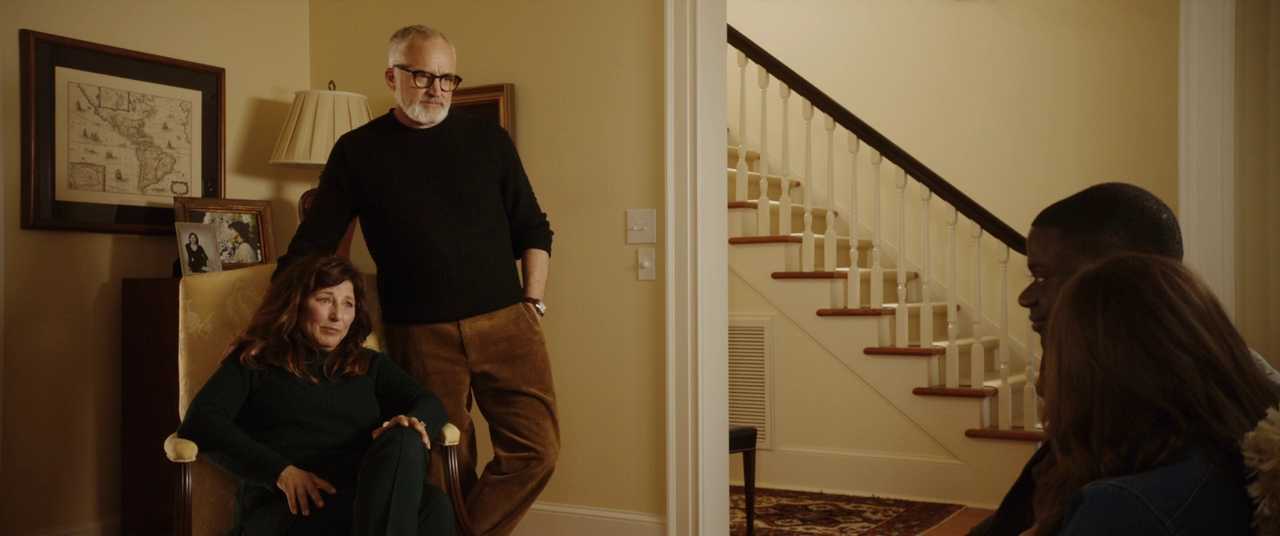
Example: Get Out (2017) – Early scenes play “normal” on the surface, but the audience gradually realizes something is deeply wrong before the protagonist fully does. That gap between what we know and what the character believes turns polite conversation into suspense.
What it does: Builds dread without changing the dialogue. A friendly line can land as a warning. Dramatic irony also makes viewers hyper-alert to micro-details (glances, pauses, framing) that carry subtext.
2) Symbolism (theme through a concrete object)

Example: The Godfather (1972) – Oranges appear around moments of violence or looming danger. You can’t always “prove” symbolism in a single instance, but repetition invites the audience to connect the pattern and feel the omen.
What it does: Adds a layer of meaning without exposition. Symbols reward attentive viewers and can unify a film’s tone. (Related: Symbolism in Film.)
3) Extended Metaphor / Motif (meaning built through repetition)
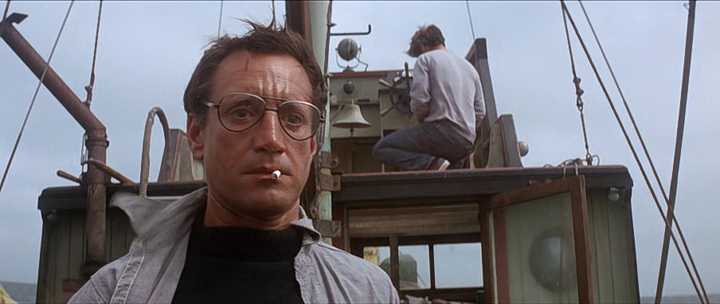
Example: Jaws (1975) – The shark is not only a literal threat; it becomes a recurring idea of fear and the unknown. The theme is reinforced through repeated “signals” (music, absence/presence, reactions) that escalate meaning over time.
What it does: Turns a story element into a thematic engine. Repetition creates expectation, and then you can subvert it for surprise. (Related: What Is a Motif in Film? and Leitmotif in Film.)
4) Visual Metaphor (show the idea instead of saying it)
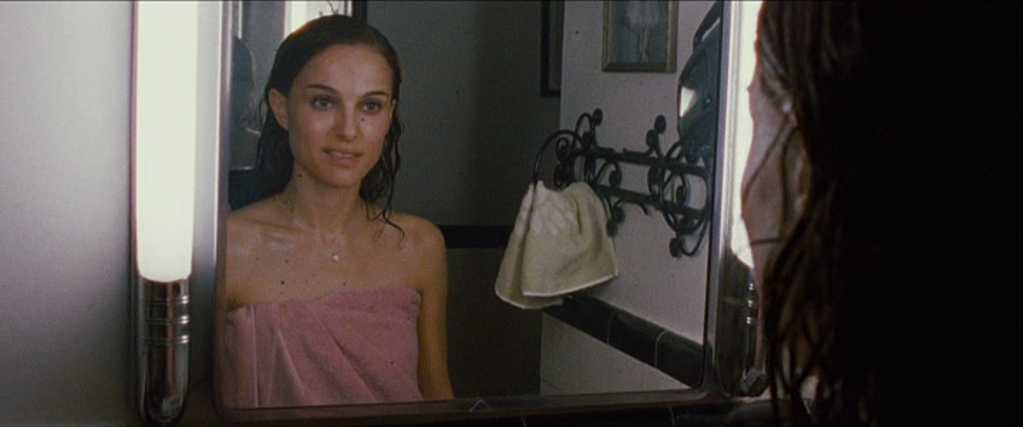
Example: Black Swan (2010) – Mirrors, doubles, and distorted reflections repeatedly externalize identity fracture and self-conflict. The film “speaks” in images, so the audience experiences instability rather than being told about it.
What it does: Converts an internal emotion into something visible, making subtext immediate and visceral. (Related: What Is a Visual Metaphor? and Connotation in Film.)
5) Understatement (tone + character through what’s not said)

Example: No Country for Old Men (2007) – Characters often react with restraint, letting silence and minimal dialogue carry weight. The emotional truth sits in what they refuse to articulate.
What it does: Reveals character psychology (stoic, numb, guarded) and creates subtext. Understatement can feel more real than big speeches—and can hit harder because the audience fills in the missing emotion.
If you want to write these effects deliberately, start with subtext: Subtext in Film and How to Create Subtext in Film.
How to Think About Figurative Language (A Practical Map)
Figurative language isn’t a random collection of tricks. Each device does a specific kind of work in a scene. A useful way to learn it (especially for screenwriting) is to group devices by what they actually do for meaning.
Most figurative language falls into four functional clusters:
- Comparison devices – create meaning by showing similarity or contrast
- Substitution devices – replace direct meaning with association or implication
- Sound & wordplay devices – create rhythm, emphasis, or tonal texture
- Emphasis devices – heighten or soften meaning through exaggeration or restraint
Below, each device is grouped under one of these clusters, with notes on when it works best—and when it can work against you in a script.
Types of Figurative Language (with Film-Friendly Examples)
In scripts, figurative language works best when it supports character voice and visual storytelling, not when it draws attention to itself. A helpful way to think about it is in clusters—what the device is doing for the scene.
Cluster 1: Comparison devices (meaning through similarity)
- Simile (“like/as”) and metaphor (“is”)
- Extended metaphor (a metaphor carried across moments, often becoming a motif)
- Personification (human traits applied to non-human things)
When to use: When a character avoids direct emotion, when you want a memorable line, or when you’re building a repeating thematic pattern.
When to avoid: In fast, high-stakes scenes where clarity is king. Also, avoid comparisons that don’t fit the character’s world (it will sound “written”).
Cluster 2: Substitution devices (meaning through association)
- Symbolism (object/image stands for an idea)
- Metonymy (associated term stands for a thing: “the suits”)
- Synecdoche (part/whole swap: “all hands”)
- Euphemism (softens harsh truth)
- Allusion (reference to a known story/person/event)
When to use: When you want subtext, world-building shorthand, or a visual layer that can be repeated as a motif.
When to avoid: When the audience won’t understand the reference (allusion), or when symbolism is too “explained” in dialogue. In film, symbols work best when shown, repeated, and slightly varied over time.
Cluster 3: Sound and wordplay devices (meaning through rhythm)
- Alliteration (repeated starting sounds)
- Onomatopoeia (words that imitate sounds)
- Puns (double meanings/wordplay)
When to use: In comedy, stylized dialogue, speeches, chants, slogans, or a character with a performative voice.
When to avoid: In naturalistic drama, too much wordplay can break realism or pull focus from the scene’s emotional stakes.
Cluster 4: Contrast + intensity devices (meaning through opposites and emphasis)
- Irony (verbal, situational, dramatic)
- Hyperbole (overstatement) and understatement
- Oxymoron and paradox
When to use: To create humor, tension, or character texture; to sharpen theme through contradiction; to make subtext land without exposition.
When to avoid: Hyperbole in serious scenes (it can tip into melodrama). Irony that confuses the audience about what’s “true” in the scene (keep intent readable).
For more craft context around devices beyond single lines—motifs, repetition, and pattern—see What Are Stylistic Devices? and Writing Techniques: Style That Serves the Story.
1) Simile
A comparison using like or as.
- “He’s shaking like a leaf.”
- “Her grin was as sharp as a knife.”
Mini scene examples
- Interrogation room: A suspect tries to act cool. “I’m fine. Cool as ice.” (But his knee is bouncing.)
- Rom-com meet-cute: “I swear, my brain just blue-screened. Like… fully crashed.”
- Sports drama: “He fights like he’s got nothing to lose.” (Sets tone for a comeback.)
2) Metaphor
A comparison that says one thing is another.
- “Time is a thief.”
- “This place is a zoo.”
Mini scene examples
- Breakup scene: “We’re a house with termites. Looks fine… until you lean on it.”
- Mentor speech: “Confidence is a muscle. You build it by using it.”
- Crime thriller: “This city is a mouth. It swallows people whole.”
Screenwriting tip: the metaphor should match the character’s world. If you’re building a whole visual pattern around it, you’re drifting into visual metaphor and possibly motif territory.
3) Extended Metaphor
A metaphor that continues across multiple lines, scenes, or recurring moments (often becoming a motif).
Mini scene examples
- Political drama: A candidate calls the campaign “a chess match,” then later says, “They’re sacrificing pawns,” and near the end: “Checkmate.”
- Family drama: A parent uses “storm” language throughout: “clouds,” “thunder,” “calm,” until the climax: “I can’t outrun this weather anymore.”
- Heist film: The crew talks about the job like a “surgery” (incision, bleeding, stitching it up). When it goes wrong: “We lost the patient.”
If you want to develop recurring patterns like this, read FilmDaft’s deep dive on motifs in film.
4) Personification
Giving human traits to non-human things.
- “The wind whispered.”
- “The city never sleeps.”
Mini scene examples
- Horror: “This house watches you.” (Cue slow push-in on a dark window.)
- Romance: “The ocean’s calling your name.” (Sound design sells it.)
- Noir: “The streets chew up good people.” (Sets tone and worldview.)
5) Hyperbole
Exaggeration for effect.
- “I’ve told you a million times.”
- “I could sleep for a year.”
Mini scene examples
- Comedy argument: “If I hear that ringtone again, I will evaporate.”
- Teen drama: “This is the worst day in human history.”
- Buddy cop: “I’ve seen cleaner crime scenes in a toddler’s lunchbox.”
Warning: in serious scenes, hyperbole can turn into melodrama. If you’re trying to avoid melodrama via implication, pair this with subtext in film.
6) Understatement
Downplaying something for effect (often funny, sometimes devastating).
- After chaos: “Well… that was messy.”
Mini scene examples
- Action aftermath: A car flips. Smoke. Silence. Character: “We’re gonna be late.”
- Tragedy: At the hospital, a character says, “Not great,” and you feel the weight of what they can’t say.
- Deadpan comedy: Kitchen fire. “I may have overcooked it.”
7) Irony
When the meaning or outcome contrasts with expectations.
- Verbal irony: “Fantastic.” (When it’s clearly not.)
- Situational irony: The “safety expert” causes the accident.
- Dramatic irony: The audience knows the truth; the character doesn’t.
Mini scene examples
- Dramatic irony (thriller): The audience knows the friendly neighbor is the killer. Neighbor: “Call me anytime.” (Terrifying.)
- Situational irony (drama): A character lies to protect someone… and the lie is what destroys them.
- Verbal irony (comedy): Power goes out mid-date. “Wow. Five-star ambience.”
8) Symbolism
When an object, image, or repeated detail stands for a bigger idea.
- A cracked mirror = fractured identity
- A wilting plant = a relationship dying
Mini scene examples
- Identity story: A character avoids mirrors. In the final act, they face one—then the camera holds as they finally meet their own eyes.
- Power/control theme: A character obsessively winds a watch. As their life unravels, the watch stops—and they stop pretending they’re “fine.”
- Guilt motif: A stain on a shirt that never quite comes out. Each attempt to clean it makes it worse.
Film craft tip: symbolism works best when it’s shown, repeated, and slightly varied. For more, read Symbolism in Film and the related guide on repetition in film (including symbolic repetition).
9) Allusion
A reference to a well-known story, person, place, or event.
- “Don’t open that box. Pandora’s situation.”
Mini scene examples
- Nerd character: “This is a classic Icarus move.” (Ambition + risk in one line.)
- Rom-com: “We’re doing the enemies-to-lovers thing, aren’t we?” (Meta allusion to tropes.)
- Drama: “I’m not Job. I’m done being tested.”
Note: allusions can miss if the audience doesn’t share the reference. If your story is built on references and echoes between texts, FilmDaft’s intertextuality article is a helpful next step.
10) Euphemism
A softer way of saying something harsh.
- “Passed away” instead of “died”
- “Let go” instead of “fired”
Mini scene examples
- Corporate scene: “We’re restructuring.” (Translation: people are losing jobs.)
- Family scene: “Grandpa is resting now.” (Avoidance signals grief.)
- Crime scene: “We handled it.” (Sinister vagueness.)
11) Metonymy
Replacing something with a closely related term.
- “The crown” = the monarchy
- “Hollywood” = the film industry
Mini scene examples
- Studio notes scene: “The suits want it happier.” (Not literally suits—executives.)
- Newsroom: “Wall Street is nervous today.” (Markets/finance sector.)
- Political drama: “The White House is pushing back.” (Administration.)
12) Synecdoche
Using a part to represent the whole (or the whole to represent a part).
- “All hands on deck” (“hands” = people)
- “New wheels” (“wheels” = car)
Mini scene examples
- War film: “We need boots on the ground.” (People reduced to function.)
- Sports: “We need fresh legs.” (Players framed as body parts—pressure/urgency.)
- Heist planning: “We need more eyes in the hallway.” (Surveillance/coverage.)
13) Alliteration
Repeating the same beginning sound in nearby words.
- “Cold concrete corridors.”
Mini scene examples
- Villain speech: “Power, pressure, and perfection.” (Memorable rhythm.)
- Coach: “Discipline. Drive. Details.”
- Comedy: A character overdoes it and gets called out: “Okay, Shakespeare.”
14) Onomatopoeia
Words that imitate sounds.
- “Buzz,” “click,” “bang,” “thud,” “crash.”
Mini scene examples
- Heist tension: “If you hear a click, we’re done.”
- Comedy: A character narrates their own disaster: “And then—thud.”
- Stylized action: Screenplay lines lean into sound for pace: “BANG. Glass. CRASH. Footsteps.”
15) Oxymoron & Paradox
Oxymoron pairs opposites (“deafening silence”). Paradox seems contradictory but reveals truth (“the more I know, the less I’m sure”).
Mini scene examples
- Romance: “This is a beautiful mess.”
- Drama: “To move on, I have to stay here a little longer.”
- Noir: “The truth is the best lie you can tell.” (Character worldview, morally gray.)
Common Confusions (Quick Fixes)
Metaphor vs. Symbolism
- Metaphor is usually a line of language: “Grief is a room I can’t leave.”
- Symbolism is often an object/image pattern: a locked room that keeps appearing when a character feels trapped.
If you’re working visually, pair this section with visual metaphor and symbolism in film.
Metonymy vs. Synecdoche
- Metonymy: a related label replaces the thing (“the crown,” “the suits”).
- Synecdoche: part/whole replacement (“hands,” “boots,” “heads”).
Irony vs. Sarcasm
- Sarcasm is usually verbal irony with bite (tone-driven).
- Irony is broader (situational, dramatic, verbal).
How to Use Figurative Language Well (Especially in Scripts)
- Make it character-specific: metaphors should come from the speaker’s life.
- Use it for subtext: when characters can’t say the thing directly (start here: Subtext in Film).
- Don’t stack metaphors: one strong image beats three competing ones.
- Let visuals carry meaning: repeat props, framing, locations, or color to “echo” the idea (see motif and repetition).
- Clarity beats clever: if the audience can’t get it in context, it’s just noise.
Fast writer’s checklist
- Does it sound like this character (not “a writer”)?
- Does it add meaning the literal version wouldn’t?
- Is it clear in context?
- Can the film support it visually?
- Is it the only big figurative beat in the moment?
If your goal is to make scenes read cleaner and communicate more with fewer lines, you’ll also like FilmDaft’s take on exposition in film (and how subtext helps avoid info-dumps).
Summary
Figurative language is meaning beyond the literal. It adds emotion, imagery, and subtext, and in film it can be spoken or shown through symbols, motifs, and visual patterns. Use it to sharpen character voice, build theme, and make moments stick.
In other words, if your goal is screenwriting, don’t treat figurative language as decoration. Use it to generate subtext and visual patterns that support character and theme—then let the camera do the rest.
Read Next: Want to dig deeper into screenwriting?
Start with the Screenwriter’s Toolkit on literary devices vs. elements – a deep resource covering every major literary device and element used in writing.
Then explore our collection of practical writing techniques covering dialogue, structure, and pacing.
Or jump into the free screenwriting course to start your first draft today.
You can also head back to the Screenwriting section for more tools, theory, and breakdowns.