

Published: February 9, 2024 | Last Updated: July 1, 2026

Overview
Definition: A euphemism is a milder or indirect word or phrase you use to replace a harsher, more direct one.
What you’ve seen before: You have heard characters dodge blunt facts with softer language when a scene is tense, political, or socially awkward.
Example: In a screenplay, a manager says the company is “letting people go” instead of “we’re firing you.” In a hospital scene, a doctor tells the family they “lost him” instead of saying “he died,” so the news lands softer.
Why it matters: Euphemisms change how information lands, and they can shift where the blame feels like it sits. “Letting people go” sounds like a process, so the speaker feels less responsible. In a scene, that kind of wording can signal status, fear, shame, denial, or calculated spin. Euphemisms also help you control tone and rating while dialogue still fits the world and job culture on screen.
- Key takeaway 1: Use a euphemism when a character has a clear reason to soften the truth in that moment.
- Key takeaway 2: Make the hidden meaning readable from context, so the line plays as subtext, not confusion.
- Key takeaway 3: Match the euphemism to character voice and status, since different people soften language in different ways.
The rest of this guide breaks down the main types of euphemism and shows how to write them so the meaning stays obvious on screen.
What is a euphemism in film? Definition & Meaning
On screen, a euphemism is a word swap that keeps the same fact, but changes the emotional and social “temperature” of the line.
- What gets hidden: the blunt word (“fired,” “died,” “torture”).
- What gets offered instead: a softer label (“let go,” “lost him,” “enhanced interrogation”).
- What you learn about the speaker: their fear, shame, status, job culture, or PR motive.
Quick test: If you can replace the euphemism with the blunt phrase and the plot fact stays the same, you are looking at a euphemism.
Euphemisms show up in everyday language when you want to make a hard message easier to hear, create emotional distance, or sound more polite. They are also common in movie dialogue. You can use them to reveal character, protect tone, or avoid taboo language. Some euphemisms also stick around because the phrase has become a movie cliché.
Here are ten examples of common euphemisms:
- “Passed away” instead of “died”
- “Let go” instead of “fired”
- “Gentlemen’s club” instead of “strip club”
- “Senior citizen” instead of “old person”
- “Correctional facility” instead of “prison”
- “Pre-owned” instead of “used”
- “Downsizing” instead of “mass layoffs”
- “Under the weather” instead of “sick”
- “Enhanced interrogation” instead of “torture”
- “Collateral damage” instead of “civilian deaths”
Euphemisms in film and TV
Film and TV use euphemisms for the same reasons we do in real life. A line can keep a scene funny, keep dialogue rating-friendly, or show a character dodging the truth. Euphemisms also help you read what a character will not say directly, as long as the scene gives you enough context.
Sometimes a euphemism even shows up in a title. Friends with Benefits (2011) uses a softer label for a casual sexual relationship. The title hints at sex without spelling it out.
Gilmore Girls (S02E08): “Eventually we’re all going to take the same long vacation.”
Lorelai and Sookie worry that Mia might sell the Independence Inn. They want to talk to Fran Westin about buying the Dragonfly, and they also need to face what happens when Fran dies. They avoid the word “death” with phrases like “long vacation.”
The humor comes from the avoidance. You still understand the meaning because the scene keeps circling the same idea without naming it.
South Park (S01E01): “You’re not fat, you’re big-boned.”
In the first episode of South Park, Cartman gets called fat at school. His mom tries to comfort him with the euphemism “big-boned.”
The line relabels the insult as something neutral. It also signals denial, since she uses a nicer label to avoid the blunt word.
Grease (1978): “Hey, Rizzo’s got a bun in the oven.”
Rizzo tells Marty she might be pregnant because she missed her period. Marty promises to keep it quiet, then blurts it out to Sonny almost immediately. Sonny turns it into a rumor with “Rizzo’s got a bun in the oven.”
“Bun in the oven” is a classic pregnancy euphemism. It keeps the topic jokey and gossipy, which matches the scene’s tone.
The Godfather (1972): “I’m gonna make him an offer he can’t refuse.”
Vito Corleone’s line is a euphemism for a threat. The “offer” sounds businesslike, and the real meaning is violence. The phrase lets him stay calm in public while he makes the stakes clear.
That indirect wording fits his character. He rarely says the ugly part out loud.
Shaun of the Dead (2004): “You’ve got red on you.”
“You’ve got red on you” is a euphemism for “you’re covered in blood.” The line lands because the characters treat a horror situation like a small social embarrassment. That mismatch keeps the comedy alive while the violence stays visible.
More quick movie and TV quotes that function as euphemisms
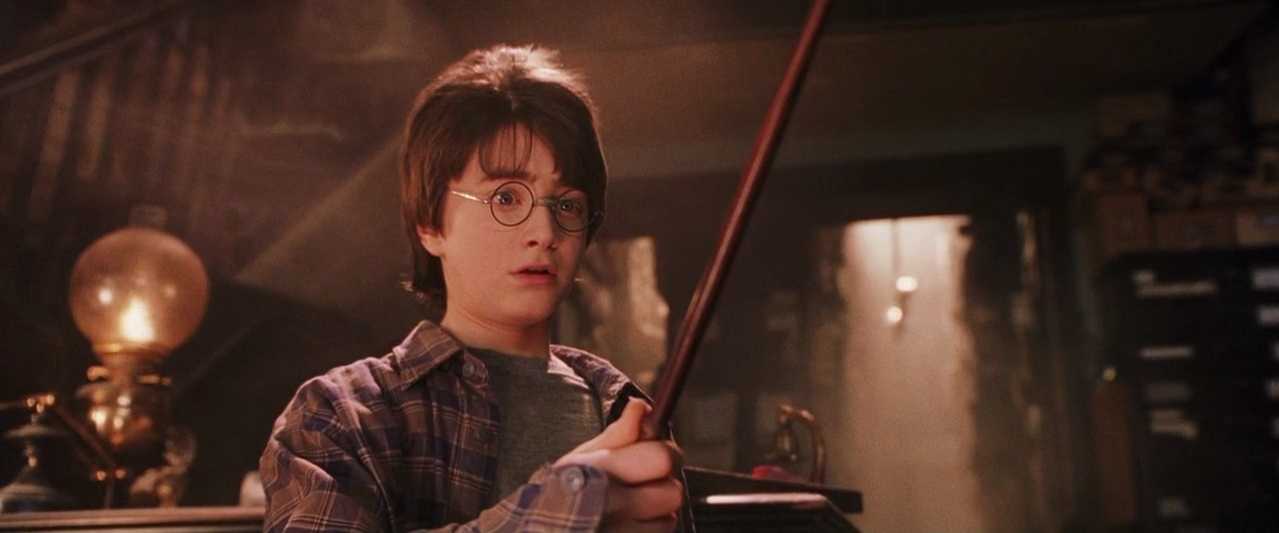
Some euphemisms stay smooth on the surface while the meaning underneath stays obvious. You can quote them, and the implication still comes along.
- “It’s a Sicilian message. It means Luca Brasi sleeps with the fishes.” (The Godfather)
- “He-Who-Must-Not-Be-Named” (Harry Potter films). One direct example is Mr. Ollivander’s line: “After all, He-Who-Must-Not-Be-Named did great things. Terrible, yes, but great.” (Harry Potter and the Sorcerer’s Stone (2001))
Quotes can vary slightly between subtitles, TV edits, and regional releases. If your clip matches the wording on the page, the quote choice makes sense for readers.
How euphemism works on screen
In film craft, euphemism is a choice in screenwriting and direction. The line points at something the scene avoids naming directly. Ratings, censorship rules, social norms, and character psychology can all push a scene toward indirect language.
Euphemism often connects to subtext. You figure out the real meaning from what surrounds the line. Performance, blocking, editing, music, and reaction shots can all steer you toward the truth.
Many euphemisms rely on inference. The meaning sits under the words, and the scene gives you enough evidence to reach it.
A practical framework: types, uses, and pitfalls
Euphemisms can look similar on the page, and they can exist for different reasons. When you name the type, it becomes easier to write the line on purpose instead of grabbing a default phrase.
Common types of euphemism in film and TV
These buckets help you spot what a euphemism is doing. Many lines fit more than one bucket, and that is normal.
1) Politeness euphemisms
These help a speaker sound respectful or gentle.
Example patterns: “passed away,” “senior citizen,” “between jobs.”
2) Emotional-distance euphemisms
These help a character avoid fear, grief, shame, or guilt.
Example patterns: “we lost him,” “it’s not looking good,” “he’s gone.”
3) Institution and PR euphemisms
These make harsh actions sound neutral, technical, or clean.
Example patterns: “collateral damage,” “enhanced interrogation,” “incident,” “neutralize.”
4) Character-voice euphemisms
These reveal class, job culture, upbringing, or personality.
Example patterns: a politician’s spin, a doctor’s bedside wording, a gangster’s coded threat.
5) Comic euphemisms
These create laughs through awkwardness, denial, or absurd phrasing.
Example patterns: overly formal wording for something obvious, or invented code words that keep escalating.
6) Minced oaths (rating-friendly profanity)
These soften swearing so it fits a platform rule or a rating. The emotion still reads because the sound pattern feels familiar.
Example patterns: “frick,” “shoot,” “dang,” “gosh,” “jeez,” “fork,” “shirt,” “motherforker.”
Minced oaths mini-guide (clean swearing that still lands)
A minced oath is a euphemism that swaps a swear for a safer sound, and you still feel the same beat in the line. It works because the rhythm and the mouth-feel stay close to the original word.
Recognizable examples (and what they are standing in for):
- “shoot” → “shit”
- “dang / darn” → “damn”
- “frick / frig” → “fuck”
- “gosh / jeez” → softened religious swearing
- Invented near-swears used as a running gag (for example, The Good Place style substitutions)
Why you use them
- Tone control: You can keep a family-friendly vibe without losing the character’s frustration.
- Rating and platform compliance: Broadcast and kid-focused shows often need the emotional beat without the language.
- Character voice: A buttoned-up character’s “darn it” signals restraint. A character who reaches for sharper near-swears reads edgier.
- Comedy: You still “hear” the real swear underneath, and that can be funnier than saying it.
- Worldbuilding: In stylized settings, fake swears can become part of the show’s identity.
Quick writing tip: Choose minced oaths that fit the character’s age, era, region, and social class. A modern teen saying “gee whiz” will read like a joke unless that mismatch is the point.
Why you use euphemisms (besides politeness)
When a euphemism has a clear goal, it stops feeling like filler. The line starts doing real work in the scene.
- To stay in character: People dodge direct language when they feel scared, embarrassed, or defensive.
- To control tone: Indirect wording can keep a moment light, or make a threat feel colder.
- To fit a rating or a platform: Broadcast TV and family films often rely on substitution language.
- To build subtext: The avoided word becomes the pressure point of the scene.
- To sharpen conflict: One character hedges while another forces the blunt truth.
Pitfalls (and how to avoid them)
Euphemisms can backfire when the meaning gets fuzzy, or when the line feels like a stock phrase from other movies. The fix usually comes from stronger context or a more personal choice of wording.
- Clarity problems: If you cannot figure out the meaning, the scene turns muddy.
Fix: Add evidence through a reaction shot, a visual cue, a follow-up line, or a clear stake.
- Movie cliché overload: Some euphemisms are so common that they stop feeling specific.
Fix: Tailor the phrase to the speaker’s worldview, job culture, and personal metaphors.
- Tone mismatch: A cute euphemism can undercut a tragic beat.
Fix: Match the euphemism’s style to the scene’s emotional temperature.
- Ethical fog: Euphemisms can hide responsibility, especially in official language.
Fix: If manipulation is the point, show the real cost somewhere else in the film.
Euphemism vs. innuendo vs. double entendre (in film dialogue)
These tools sit close together, and they do different jobs. When you separate them, it gets easier to write the kind of indirect line you actually want.
- Euphemism is a softer substitute for something harsh or taboo (example: “passed away”).
- Innuendo is an indirect suggestion, often flirtatious or accusatory (example line: “So… you two were together last night?”).
- Double entendre is a line with two meanings, often one innocent and one suggestive (example line: “That’s not what I meant… unless you want it to be.”).
A simple way to choose is to focus on your goal in the scene.
- Want soft framing? Use euphemism.
- Want implication? Use innuendo.
- Want a joke that lands twice? Use double entendre.
Censorship and euphemism in classic Hollywood
Older films did not avoid taboo topics because writers lacked nerve. Many films had to communicate around rules, and euphemism became a main way to keep meaning on screen without getting cut.
How the Hays Code pushed indirect language
The Motion Picture Production Code, often called the Hays Code, shaped what Hollywood could show and say for decades. Its strict enforcement era is usually dated from 1934 to 1968. When a film could not show sex or say something explicit, implication had to carry the meaning.
A simple way to remember the logic is to focus on what the scene can still communicate.
- If you cannot show it, you imply it.
- If you cannot say it, you code it.
- If you cannot be explicit, you rely on subtext.
Sexual euphemisms and innuendo in classic movies
Classic Hollywood leaned on suggestion because it kept romance and comedy alive while staying inside censorship rules. The scene gives you the context, so the line can stay clean while the meaning stays clear.
- Metaphor: phrases like “a nightcap,” “keep warm,” or “I’ll walk you home,” when the scene makes the meaning obvious
- Ellipsis: lines that stop right before the explicit point (example: “I was wondering if you’d like to…”)
- Polite phrasing: “we’re expecting,” “in the family way,” “a blessed event”
Sexual euphemisms in classic film noir (coded desire, coded danger)
Much of Film noir dialogue leans on suggestion. A flirt can also feel like a power contest, and euphemisms help the meaning stay slippery on purpose.
- Competitive metaphors (sports, gambling, racing) when the scene is really about desire or dominance
- Threat and flirt hybrids where attraction and danger share the same line
- Double meanings that keep the dialogue clean on paper while the subtext stays charged
Noir lesson: the character who controls the meaning often controls the scene.
TV Standards & Practices and broadcast indecency (why euphemisms shaped TV dialogue)
Film has the Hays Code. Television developed a different set of guardrails, and they pushed scripts toward euphemism for decades.
Network Standards & Practices (S&P) worked like internal gatekeepers. Their job was to reduce legal risk, protect advertiser-friendly brand safety, and keep content within what the network considered acceptable for its audience and affiliates. That meant scripts and cuts often got notes like “imply this, don’t say it,” or “change the wording,” especially around sex, bodily functions, profanity, and sensitive topics.
On U.S. broadcast TV, euphemism also connects to indecency rules and scheduling. Broadcast standards historically encouraged cleaner language in daytime and prime time, with more leeway late at night. Even when a scene’s meaning stayed the same, you learned to express it indirectly so it could air at the intended hour and keep sponsors happy.
That’s why older (and still many broadcast) shows often rely on:
- Pregnancy workarounds: “expecting,” “a blessed event,” “in the family way,” or foreign-language phrasing
- Sex as implication: “together,” “seeing someone,” “staying over,” “spending the night”
- Bathroom euphemisms: “powder room,” “freshen up,” “wash up”
- Profanity substitutions: minced oaths (“shoot,” “dang,” “frick”) or strategic cutaways and bleeps
As TV expanded from strict broadcast norms to cable and then streaming, you got more freedom. Euphemisms did not disappear. They became a style tool you can still use for comedy timing, character voice, and subtext.
Writer takeaway: TV euphemisms do more than sound polite. They are a craft response to platform rules, scheduling, sponsor pressure, and tone. When you know which pressure is active in your scene, you can choose a euphemism that feels specific to the character and the setting.
TV Tropes euphemism examples map (crowdsourced, use as an idea generator)
If you want a quick way to spot patterns and find lots of examples, TV Tropes can help. It is crowdsourced, so treat it as inspiration, not an academic source.
Helpful trope pages to browse when you write or analyze euphemistic dialogue:
- Euphemism Buster: one character uses a soft phrase, another says the blunt meaning out loud.
- Technical Euphemism: institutional or clinical language that hides harsh reality (“incident,” “procedure,” “collateral damage”).
- Gosh Dang It to Heck!: deliberate replacement swearing (minced oaths) for tone or ratings.
- No Longer with Us: recurring death workarounds (“passed on,” “gone,” “lost him”).
- Hurricane of Euphemisms: rapid-fire strings of substitutes (“You know… that… the thing… the situation…”).
Use these labels as prompts: Am I aiming for politeness, denial, institutional spin, comedy, menace, or emotional distance?
Visual euphemisms in cinema: showing without saying
A visual euphemism replaces an explicit action or taboo idea with an image that implies it. Editing, framing, sound, and off-screen space can carry meaning without a blunt shot or a blunt line.
Cinematic techniques for visual euphemism
These techniques work because the film gives you the setup, then lets you connect the dots. The cut becomes the implication.
- Cutaway plus implication: cut to a meaningful detail right before the explicit moment
- Elliptical editing: skip the action, then show the before and after
- Off-screen space: sound and reactions carry meaning while the action stays off camera
- Lighting and shadows: silhouettes suggest what cannot be shown directly
- Match cuts and visual puns: a cut links two images, and the link carries a suggestive meaning
Visual euphemism examples (classic-friendly)
Classic Hollywood used these tricks constantly. You get the implication, and the film stays inside the rules of the time.
- It Happened One Night (1934): the “Walls of Jericho” blanket barrier implies sexual tension while the scene stays proper on the surface.
- North by Northwest (1959): the final train-and-tunnel punchline implies sex through a symbolic cut.
The Lubitsch Touch (visual euphemism as a craft)
Director Ernst Lubitsch (1892–1947) became famous for implying romance, deception, or desire through small visual choices. A closed door, a pause, a prop, or a look can carry the idea that a blunt line would normally spell out.
Lubitsch-style euphemism trusts you to connect the dots.
Euphemisms for death in film and television (common patterns)
Death euphemisms show up constantly because they let characters manage fear, grief, or decorum without saying the blunt word. Many of them use the same families of images, so you start noticing the pattern fast.
Common families of death euphemisms:
- Travel: “long vacation,” “gone,” “left us”
- Rest or sleep: “resting,” “went to sleep,” “at peace”
- Loss: “we lost him,” “she’s no longer with us”
- Passing: “passed,” “passed away”
- Spiritual framing: “in a better place,” “with the angels”
Writing tip: choose the euphemism based on who is speaking. A hardened detective, a child, a priest, and a mob boss do not reach for the same language.
Frequently Asked Questions
What is a euphemism in simple terms?
A euphemism is a mild or indirect word or phrase used in place of one that is harsh, blunt, or uncomfortable, such as saying “passed away” instead of “died.”
What is an example of a euphemism?
“Passed away” for died, “let go” or “between jobs” for fired, “powder room” for toilet, and “collateral damage” for civilian casualties.
Why do people use euphemisms?
To soften bad news, stay polite about taboo topics, and avoid giving offense, or, less kindly, to disguise or play down something unpleasant.
What is the difference between a euphemism and an innuendo?
A euphemism softens or replaces a blunt term. An innuendo hints at something, often rude, indirectly, leaving the listener to infer the real meaning.
What is a euphemism for death?
Common euphemisms for death include “passed away,” “no longer with us,” “resting in peace,” and “gone to a better place.”
Summing Up
Euphemisms are a flexible tool in film and TV writing. You can use them to soften pain, dodge taboo topics, sharpen character voice, and build subtext.
If you want euphemisms to work on screen, aim for three things.
- Pick a euphemism that fits the speaker’s personality and situation.
- Make the meaning obvious through context, reactions, and stakes.
- Avoid default clichés unless the cliché reveals something specific about the speaker.
Euphemism can also be visual. Editing, symbols, off-screen space, and reaction shots can carry meaning without direct dialogue.
Read Next: Want to dig deeper into screenwriting?
Start with the Screenwriter’s Toolkit on literary devices vs. elements – a deep resource covering every major literary device and element used in writing.
Then explore our collection of practical writing techniques covering dialogue, structure, and pacing.
Or jump into the free screenwriting course to start your first draft today.
You can also head back to the Screenwriting section for more tools, theory, and breakdowns.
Further Reading and Resources
- FCC (Obscene, Indecent and Profane Broadcasts): https://www.fcc.gov/consumers/guides/obscene-indecent-and-profane-broadcasts
- FCC (Broadcast Obscenity, Indecency, Profanity enforcement overview): https://www.fcc.gov/enforcement/areas/broadcast-obscenity-indecency-profanity
- Museum of Broadcast Communications (Standards and Practices): https://www.museum.tv/tv-encyclopedia-16/standards-and-practices
- TV Tropes (Euphemism Buster): https://tvtropes.org/pmwiki/pmwiki.php/Main/EuphemismBuster
- TV Tropes (Technical Euphemism): https://tvtropes.org/pmwiki/pmwiki.php/Main/TechnicalEuphemism
- TV Tropes (Gosh Dang It to Heck!): https://tvtropes.org/pmwiki/pmwiki.php/Main/GoshDangItToHeck
- TV Tropes (No Longer with Us): https://tvtropes.org/pmwiki/pmwiki.php/Main/NoLongerWithUs
- TV Tropes (Hurricane of Euphemisms): https://tvtropes.org/pmwiki/pmwiki.php/Main/HurricaneOfEuphemisms
