

Published: February 12, 2024 | Last Updated: July 1, 2026

Overview
Definition: A metaphor says one thing is another so the second thing lends its traits to the first. The comparison stays implied, so the image does the explaining.
What you’ve seen before: You’ve heard a character drop a short, vivid line that frames a feeling as a physical thing, so you can picture it instantly.
Example: In The Dark Knight (2008, Warner Bros.), the Joker calls Harvey Dent Gotham’s “white knight.” The phrase frames Dent as a spotless hero, so his fall reads like Gotham losing its symbol of hope.
Why it matters: A clean metaphor gives the scene one shared picture. Dialogue, performance, blocking, and design can all push the same meaning. A mixed metaphor gives you competing pictures, so the scene feels fuzzy.
- Key takeaway 1: Make the metaphor concrete enough that you can visualize it as one image.
- Key takeaway 2: Keep the metaphor consistent inside the scene, so the meaning stays readable.
- Key takeaway 3: Test the metaphor by asking what it changes in the character’s goal, attitude, or choices.
Next, let’s define metaphor in a broader way and show how it plays out on screen.
What is a metaphor in film? Definition & broader Meaning
A metaphor is a figure of speech that says one thing is another to highlight a shared feature. In film, a metaphor often works through a repeated image, object, action, sound, or place that returns at key moments, so an abstract idea becomes something you can see. A cracked mirror can point to a damaged self-image. A storm can track rising conflict. The film does not need to say the idea out loud. The on-screen pattern carries it.
A quick example is: “Time is a thief.” The line treats time as a thief to stress loss. You can expand it into an analogy when you explain the shared feature, such as how time “takes” moments the way a thief takes valuables.
Metaphors often connect to subtext in film and literature because they can express what a character will not say directly. A repeated image can carry meaning under the dialogue, so you still get the point when the words stay simple.
Everyday metaphor examples
You hear metaphors in everyday talk. Each one turns an abstract idea into a quick image you can picture.
- “Her ideas were fireworks.” (bright, surprising, attention-grabbing)
- “He has a heart of stone.” (emotionally closed off)
- “That meeting was a marathon.” (long, draining, required endurance)
- “The city is a jungle.” (chaotic, competitive, survival-focused)
In film, metaphors often show up through images. A recurring object, color, location, action, or sound can suggest something abstract, such as grief, freedom, corruption, or identity, without direct explanation.
Metaphor vs. Simile: What’s the difference?
Metaphor and simile both compare two things. The difference is the wording. The wording changes how the line lands when you hear it.
- A metaphor states an identity: one thing is another.
- A simile compares with like or as.
Quick examples
These two sentences share the same core idea. The metaphor feels more direct because it states the idea as fact.
- Metaphor: “Fear is a cage.”
- Simile: “Fear is like a cage.”
Why writers and directors choose one over the other
The choice between metaphor and simile often comes down to tone and character voice. You also choose based on how blunt you want the comparison to feel in the moment.
- Metaphors feel more absolute. They fit intense moments, or a character who speaks in hard statements.
- Similes feel more careful because they admit the comparison. They fit casual dialogue, comedy, or narration that needs to sound conversational.
Film tip: You can create a simile-like effect through juxtaposition. Put two images side by side and the cut suggests “this is like that.” A visual metaphor often builds through repetition, framing, and context across multiple scenes.
Metaphor vs. Symbol vs. Motif (a quick film-friendly framework)
In movies, these terms get mixed up because they can overlap in the same moment. A simple framework helps you name what you are seeing.
The shortest definitions
- Motif = a repeat. It is a pattern (image, object, sound, color, action) that keeps returning.
- Symbol = a stand-in. One thing points beyond itself to a broader idea (a flag → a nation, a crown → authority).
- Metaphor = a meaning link. The film connects two ideas so one thing behaves like another through context.
A practical test you can use while watching
This test helps you decide what job the element is doing in the scene.
- Does it repeat in a noticeable way?
If yes, you are probably looking at a motif. - Does it point to a broad concept even with little context?
If yes, it leans symbol. It can still work when you only see it once. - Does the film build an “A = B” relationship through staging, framing, or editing?
If yes, it is functioning as metaphor. The meaning comes from the connection the film constructs.
Why overlap happens (and why it’s fine)
Overlap happens when the film repeats an element and also loads it with meaning. The label depends on what you are pointing at.
- A motif can become symbolic because repetition teaches you what it stands for.
- A symbol can work metaphorically when the film pushes a specific comparison through context.
Quick examples with no heavy spoilers
- A repeated ticking sound across stressful scenes is a motif. The pattern can also support a metaphor about pressure and time.
- A wedding ring shown once can still read as a symbol of commitment.
- A character framed behind glass across key beats can become a metaphor for separation. The meaning comes from the way the film trains you to read the pattern.
How metaphors appear in film (with examples)
Metaphors are common in film because you can repeat an image and let it gain meaning through context. A prop can return in different scenes. A location can shift mood over time. A line of dialogue can echo a character’s real belief.
These are common ways metaphors show up on screen, with examples that explain what the film is doing.
Visual metaphor through a recurring image
The green light in The Great Gatsby (2013, Warner Bros. Pictures) often reads as Gatsby’s hope and obsession. The film places the light across the bay on Daisy’s dock. Gatsby can see it, and he cannot reach it. The distance turns desire into a visible gap.

If you want a related concept, read more about symbols in movies, with examples. A symbol points beyond itself. A metaphor links two ideas, and the meaning comes from the connection the film builds.
Metaphor through character action
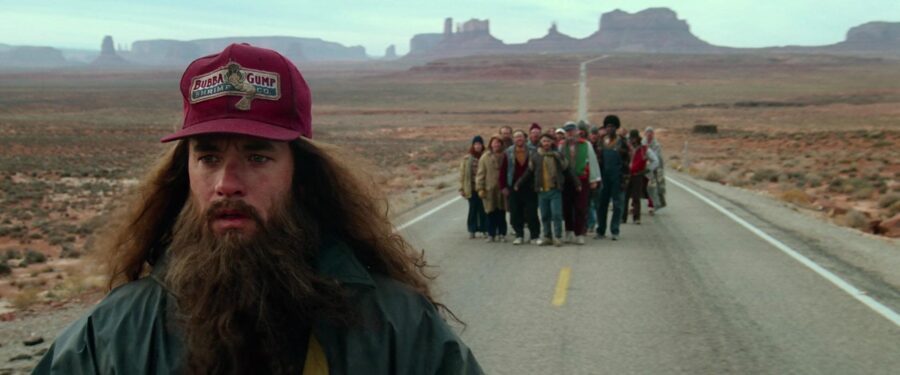
In Forrest Gump (1994, Paramount Pictures), Forrest’s long run can read as a metaphor for life without a clear plan. He starts running after a personal break, and he does not set a destination. The film then shows him moving through new places and meeting new people, so the run becomes a visible pattern of change, chance, and persistence.
Metaphor through a clear choice in dialogue
In The Matrix (1999, Warner Bros. Pictures), the red and blue pills work as a metaphor for truth versus comfort. The red pill means Neo learns the real situation. The blue pill means he stays inside a safer lie. The metaphor stays readable because the choice changes what Neo can do next.
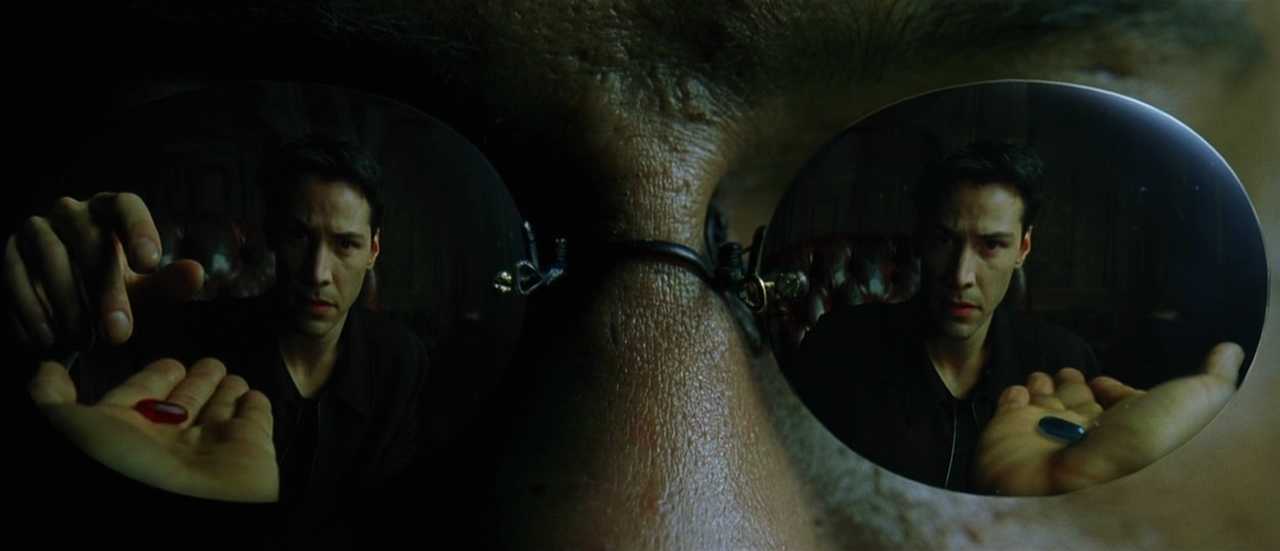
The metaphor also stays practical. Once Neo accepts the truth, he stops coasting and starts making real decisions inside the system.
Metaphor built into the premise
In WALL·E (2008, Pixar), a lonely robot cleaning a trash-covered Earth can read as a metaphor for what happens when consumption runs unchecked. The planet looks empty and clogged with waste, so the setting turns an environmental problem into a daily routine you can watch.
The film then adds one concrete shift. A living plant becomes proof that recovery is possible, so the cleanup routine turns into a mission with a clear goal.
Metaphor through setting and design
In The Truman Show (1998, Paramount Pictures), the town of Seahaven can read as a metaphor for a controlled media world. The streets look perfect and the people act like they rehearsed their lines. Truman lives inside a set, and he does not know it.

The town’s bright surfaces also support the film’s critique of media control. Even the nonstop product placement supports the point because it turns daily life into a sales pitch.
Scene breakdowns: how a visual metaphor gets built (3 short examples)
A fast way to spot a film metaphor is to watch how the movie teaches you the meaning through repetition, framing, contrast, and payoff. These breakdowns stay spoiler-light.
1) Get Out (2017, Universal Pictures): The “Sunken Place” as a metaphor for lost agency

What you see (the craft): The scene uses a small repeated action plus a distinct sound cue, so you learn that the trigger leads somewhere. The film also shifts perspective, so the character becomes a watcher of his own life. The framing sells distance and separation.
What it means (the metaphor): The film turns an abstract experience into an image. Being controlled becomes a space you fall into. You do not need a speech about powerlessness because you watch it.
Why it fits the story: The image matches the film’s power dynamic, so it supports the plot instead of sitting on top of it as decoration.
2) Parasite (2019, Barunson E&A): Stairs and vertical space as a metaphor for class
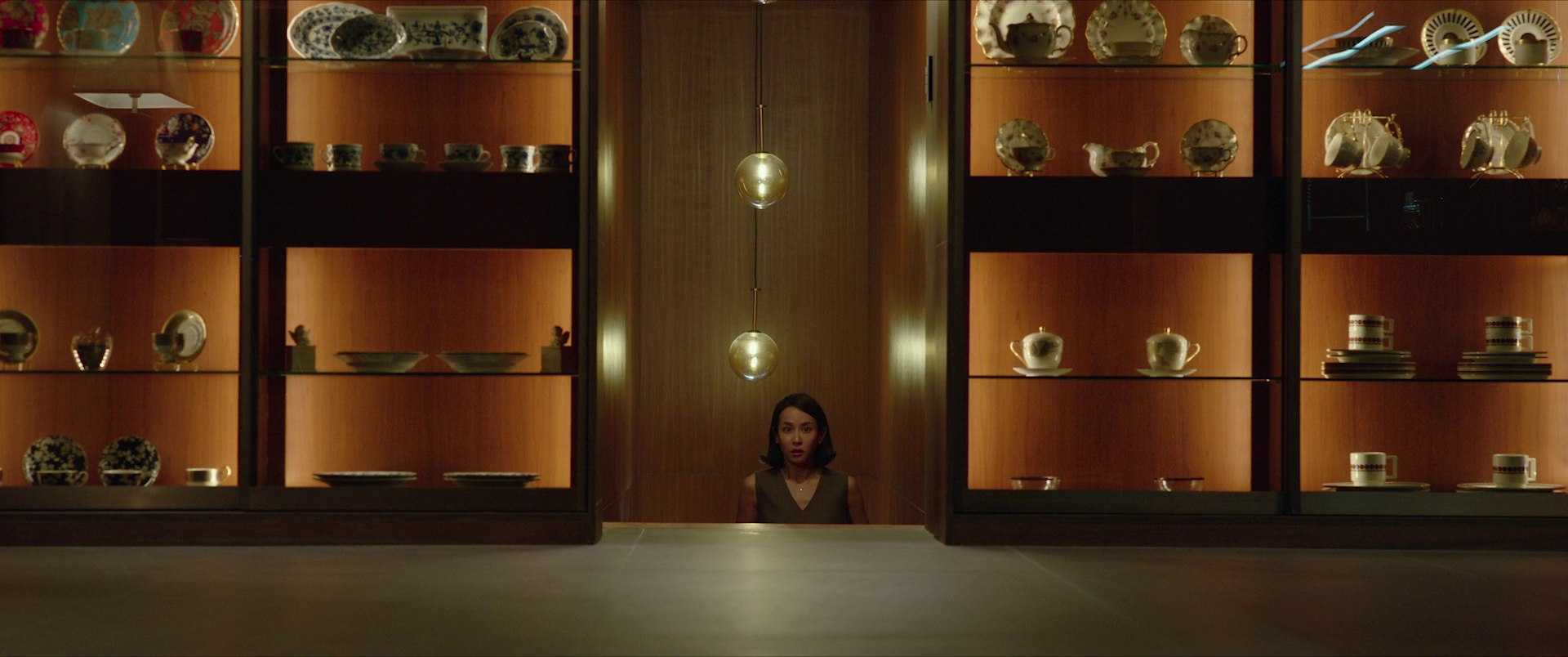
What you see (the craft): The film keeps staging power on levels. One character stands higher in frame and another sits lower. The movie returns to stairs and elevation at turning points, so direction starts to feel meaningful.
What it means (the metaphor): Class becomes something you can navigate with your body. Social hierarchy becomes physical elevation. The pattern lands because it repeats in enough scenes that you learn the “rule.”
Why it becomes metaphor: Lots of films have stairs. This becomes metaphor when the film repeatedly uses vertical movement to explain power and access.
3) Black Swan (2010, Fox Searchlight Pictures): Mirrors and doubles as a metaphor for a split identity
What you see (the craft): The film returns to reflections at moments of pressure. Framing often makes the mirror compete with the real body, so you keep checking which version feels “true.”
What it means (the metaphor): The repeated doubling links identity to a visible split. The mirror stops being background. It becomes a way to track a changing self-image.
Why it stays readable: The mirror moments sit inside the character’s stress and choices. The image keeps showing up when the same internal problem spikes.
A mini-checklist you can use on any movie
This checklist helps you decide if you are looking at a visual metaphor instead of a normal prop or background detail.
- Does the element show up at key emotional or structural beats?
- Does framing or editing give it extra emphasis compared to normal props and background?
- Does it shift meaning across scenes because the context changes?
- Does it translate an abstract idea into something physical you can track?
Examples of visual metaphors in film
Visual metaphors are comparisons built from images. They turn an abstract idea into something you can literally see, such as an object, a space, a repeated pattern, or a transformation.
- 2001: A Space Odyssey (1968, Metro-Goldwyn-Mayer): The monolith
The film gives the monolith ritual framing and slow attention. That choice pushes you to read it as a trigger for change and an encounter with the unknown. - Pan’s Labyrinth (2006, Warner Bros. Pictures): Tasks as moral pressure
The film turns inner conflict into physical trials. Each task forces a choice, so the fantasy action carries the emotional truth of fear, courage, and resistance. - The Shining (1980, Warner Bros. Pictures): The hedge maze
The maze traps bodies in space at peak tension. The dead ends can mirror mental dead ends, so the setting carries meaning through the situation. - Children of Men (2006, Universal Pictures): A baby as fragile hope
The baby changes how every character behaves in the moment. The film builds silence and focus around that presence, so hope becomes a living stakes marker. - The Great Gatsby (2013, Warner Bros. Pictures): The green light
The light stays visible and distant across key beats, so desire becomes a visible gap you keep seeing.
A visual metaphor does not always have one single answer. A strong image can stay clear in the scene, and your reading can deepen as you notice the pattern across the film.
How directors use metaphors in movies
Most film metaphors work best when they support what the plot and characters already explore. When an image matches the core conflict, the metaphor feels earned.
1) They pick a concrete carrier for an abstract idea
A theme like isolation or greed is abstract. A carrier is the thing you can see or hear that carries the meaning, such as a locked door, a shrinking room, a repeated color, or a sound cue that returns.
2) They repeat it with variation, so meaning grows
Repetition teaches you what to watch for. Variation keeps the repeated element from fading into decoration.
- The same object returns in different emotional moments.
- The same framing returns and the character’s situation has changed.
- The same location returns and it feels colder, smaller, emptier, or more threatening.
3) They build it with on-screen craft
Film has tools that can carry metaphor without explanation. Meaning builds when the tool repeats with a consistent job.
- Motifs: repeated objects or images that gain meaning over time. Motif is the delivery pattern. Metaphor is the meaning link the film builds through that pattern.
- Color planning: controlled color choices across scenes that support theme and character state.
- Production design: spaces and props that communicate order, chaos, warmth, or cold.
- Costume design: identity and change shown through wardrobe choices.
- Framing and composition: who is centered, boxed in, dwarfed, or separated.
- Blocking: where actors stand and move to show relationships and power.
- Lighting: shadow and clarity used to support moral tension, fear, or safety.
- Editing and match cuts: cuts between similar shapes or movements that connect ideas.
- Sound motifs: repeated sound cues that signal a feeling or idea.
4) They keep the scene readable
A metaphor can stay subtle and still work. The image should make sense inside the scene, even when nobody labels it as a metaphor.
Types of metaphors in literature (and how they translate to film)
Metaphors appear in both writing and film, and the delivery changes. In literature, metaphor often sits in language. In film, metaphor often sits in images, space, and timing.
These categories help you name what you are seeing. They also help you explain why a metaphor feels simple, layered, or long-running.
Extended metaphor
An extended metaphor continues across multiple lines, scenes, or an entire work.
In film: an extended metaphor often becomes a recurring motif or a cluster of related visuals that develops with the character arc.
Implied metaphor
An implied metaphor suggests the comparison without stating it directly.
In film: the meaning often comes from context, such as a repeated object that returns at turning points without dialogue calling attention to it.
Mixed metaphor (usually accidental)
A mixed metaphor combines incompatible images. The result feels confusing because you cannot hold one clear picture in your head.
In film: mixed metaphor can show up when dialogue points toward one image and the visuals push a different meaning in the same moment.
Dead metaphor
A dead metaphor is so common that it stops feeling like a metaphor, such as “time is running out.”
In film: familiar imagery can feel empty unless the movie uses it with clear intent, such as irony, character voice, or a strong payoff.
Visual metaphor
A visual metaphor expresses meaning through imagery more than language.
In film: camera choices, staging, and design carry the meaning through emphasis and repetition.
Allegory (metaphor at the story level)
An allegory uses the overall story as a second layer of meaning.
In film: the plot can reflect a broader political, moral, or philosophical idea across the full runtime.
If you’re unsure whether you’re seeing a metaphor, symbol, or motif, use the quick framework above. A symbol points beyond itself. A metaphor links two ideas, and the meaning comes from the connection the film builds through context and repetition.
Famous metaphors in literature (and what they mean)
These examples show how metaphor works outside film. They also show why metaphor stays useful across centuries and genres.
- “All the world’s a stage,” (William Shakespeare)
The line frames life as performance, with roles, masks, and social scripts. - “Hope” is the thing with feathers – (Emily Dickinson)
Hope becomes a small living creature. The image suggests fragility and persistence in the same breath. - “I wandered lonely as a cloud” (William Wordsworth)
Loneliness becomes drifting. The metaphor turns an inner feeling into atmosphere and motion. - “Two roads diverged in a yellow wood,” (Robert Frost)
Choice becomes a path. The image helps you think about direction, consequence, and regret. - Animal Farm (1945, Secker & Warburg): political allegory
The characters and events stand in for real political dynamics.
These examples matter for film because each metaphor starts with a concrete image, such as a stage, a bird, a cloud, or a road. Film can show the concrete image directly, and meaning can follow from context.
Role of metaphor in creative writing
Metaphor helps you express an emotional idea through a short image you can picture fast. It also helps you control voice, tone, and theme without long explanation.
- Make the abstract concrete: anxiety becomes a storm; grief becomes weight.
- Reveal character: metaphors show how someone thinks, such as a person who describes love as war.
- Control tone: metaphors can make language feel playful, harsh, romantic, or clinical.
- Create unity across a work: a repeated metaphor can connect scenes and keep the theme consistent.
- Reduce exposition: you show the trap on the page, and you do not need a long speech about feeling trapped.
A good metaphor makes an idea easier to picture. That helps the image stick.
How to write effective metaphors
If you want metaphors that feel fresh, start with the exact idea you mean. Then pick a concrete image that behaves in a similar way.
1) Name the real thing you want to express
The real thing is the emotion or idea, such as jealousy, freedom, burnout, first love, or shame.
2) Pick one feature you want to highlight
Jealousy can feel sour. It can feel sharp. It can feel consuming. It can trigger paranoia.
3) Choose an image that naturally has that feature
Choose an image you can picture instantly. The image should match the behavior you want, such as spreading, clinging, stinging, weighing you down, or following you.
- consuming: fire
- itchy: a rash
- paranoid: a shadow that follows
- sour: spoiled fruit
4) Write the metaphor, then keep it consistent
Write a first version, then check if it sounds like a common phrase. Specific images often feel fresher than general ones.
- Weak (common): “Jealousy is a monster.”
- Stronger (specific): “Jealousy is smoke. It gets into everything. You cannot get it out of your lungs.”
5) Test it for clarity and tone
A good metaphor fits the character, the genre, and the moment. Say it out loud and check how it sounds as real dialogue.
- Does it fit the character’s worldview?
- Does it match the genre and tone?
- Does it create the reaction you want without confusion?
Sensory metaphors often land well because they use sound, texture, temperature, weight, or taste. Those details are easy to imagine.
Avoiding mixed metaphors (common pitfalls)
Mixed metaphors happen when you combine images that do not belong together. The result is a picture you cannot hold in your head.
Mixed metaphor example:
“Let’s hit the ground running and steer this ship across the finish line.”
This line mixes running, ships, and races. A cleaner line stays inside one image.
Fix it by choosing one metaphor framework
Pick one image and keep the language consistent. The rewrite becomes simpler once you decide what picture you want the reader to imagine.
- Running metaphor: “Let’s hit the ground running and keep our pace to the finish.”
- Ship metaphor: “Let’s set a clear course and stay steady through rough water.”
Easy rule: keep the metaphor consistent. Only describe actions that make sense inside the image you chose.
Frequently Asked Questions
What is a metaphor in simple terms?
A metaphor is a figure of speech that describes one thing as if it were another, without “like” or “as,” to create meaning or a vivid image, as in “time is a thief.”
What is an example of a metaphor?
“Time is a thief,” “the world is a stage,” and “she has a heart of stone.” In film, a caged bird can be a visual metaphor for a trapped character.
What is the difference between a metaphor and a simile?
A simile compares using “like” or “as” (“brave as a lion”); a metaphor states the comparison directly (“he is a lion”).
What are the types of metaphor?
Common types include the standard metaphor, the extended metaphor (sustained over a passage), the implied metaphor, and the dead metaphor (so common it is no longer felt).
What is a visual metaphor in film?
A visual metaphor is an image that stands in for an idea, such as a storm for inner turmoil or a wilting flower for lost innocence.
What is a mixed metaphor?
A mixed metaphor clumsily combines two metaphors that do not fit together, such as “we will burn that bridge when we come to it.”
Summing Up
Metaphors explain abstract ideas through concrete images. A metaphor links two things, and the shared feature creates meaning. In film, metaphor often works through repetition, framing, and context, so an object, place, sound, or action can carry an idea without extra explanation.
Read Next: Curious how film theory shapes the way we watch movies?
Start with the Film Theory section to break down realism, formalism, structuralism, and more — with examples from iconic films.
If you want studying film theory I recommend starting with The FilmDaft overview of film theory discourses to break down realism, formalism, structuralism, and more — with examples from iconic films.
Then explore the full Film History, Theory & Genre collection to see how movements, styles, and storytelling traditions have evolved.
Whether you’re into Soviet montage or 2000s genre mashups, there’s something here to sharpen your understanding.
