

Published: October 8, 2025 | Last Updated: October 26, 2025

What is The Scorpion and the Frog story? Definition & Meaning
The Scorpion and the Frog is a short allegorical tale that shows how some beings act according to their true nature, even when it leads to their own destruction.
The basic story goes like this:
A scorpion asks a frog to carry him across a river. The frog hesitates, fearing the scorpion will sting him. The scorpion promises not to, pointing out that if he stung the frog, both would drown. The frog accepts.
But halfway across, the scorpion stings the frog anyway. As they both begin to drown, the frog asks, “Why?” The scorpion replies, “It’s in my nature.”
Origins and Variants
The story is modern, but feels ancient. It does not appear in classical Aesop’s fables. It is, however, a modern fable.
Its earliest confirmed version comes from a 1954 English novel written by a Russian author, Boris Bazhanov, living in exile after fleeing his home country.
There are several variations. In one version, the scorpion rides a tortoise instead of a frog. Because the tortoise has a hard shell, it survives. That version appears in some Persian and Middle Eastern sources. Other tellings swap the scorpion for a snake or viper, which shifts the tone but keeps the same message.
What the Fable Means (and How It’s Used in Film)
The fable’s core message is that some people act against their own interests because of unchangeable traits. Even when logic says “don’t sting,” the scorpion does it anyway. His nature wins out over reason. The phrase “It’s in my nature” has become shorthand for destructive behavior that feels inevitable, no matter the cost.
A good early example of this we see in Orson Welles’ film Mr. Arkadin (1955), when Jakob Zouk, a sick, terrified man in hiding, is approached by an American investigating the mysterious Gregory Arkadin. Zouk is one of the last people who knows about Arkadin’s criminal past, and he’s in hiding because others with similar knowledge have already turned up dead.
When asked for help, Zouk tells the story of the scorpion and the frog to explain his fear. He sees Arkadin as the scorpion—someone who will always destroy others, simply because it’s in his nature.
From the frog’s point of view, the story is a warning: don’t trust people who have already shown you what they are.
From the scorpion’s side, it’s a tragedy. It suggests that some drives are so deep, they override survival or promises. The story taps into fear, not just of betrayal, but of being trapped in your own instincts.
Modern uses in film
Writers use the story to shape characters, foreshadow betrayal, or build tension around trust.
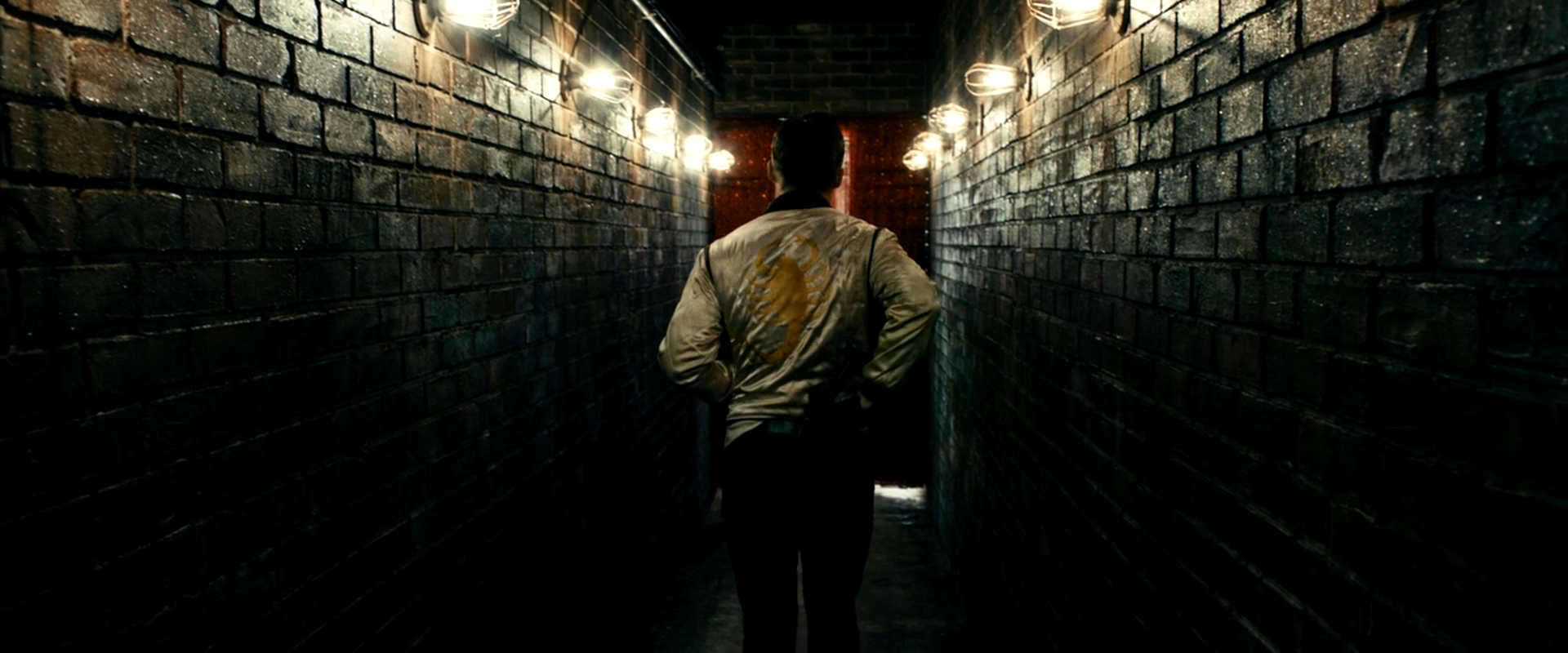
In Drive (2011), the main character wears a jacket with a golden scorpion. That’s a visual metaphor that connects him to the fable. He wants to do good, but violent instincts take over.
In The Crying Game (1992), the fable is told directly by a character to explain how some people betray even when they don’t want to.
Some writers even flip the story, creating arcs where characters fight their nature, offering a more hopeful view of human behavior.
Critiques and Limitations
The story sends a dark message: people can’t change. That view is easy to remember, but it doesn’t match how people actually grow.
Critics argue the fable is too rigid. Human behavior is shaped by more than nature; it includes choice, environment, and experience.
There’s also a logic problem. A real scorpion probably wouldn’t sting in a situation where it would drown. But the fable is symbolic. It’s about what we fear in others, and in ourselves.
Summing Up
The Scorpion and the Frog is a modern fable about destructive nature and broken trust. It warns you to think carefully about who you trust, and reminds you that some people may act against their own interests because they cannot change who they are. In film and literature, this fable often surfaces when characters face betrayal, compulsion, or the danger of trusting the wrong person. Use the lesson, but question its limits.
Read Next: Struggling to shape your story?
Head to our Plot & Structure section for clear, no-fluff breakdowns of story arcs, turning points, and screenplay structure—from three-act to alternative models.
Want more tools to write with confidence? Explore the Screenwriting archive for guides on dialogue, formatting, concept development, and building a writing routine.
