Published: September 24, 2025 | Last Updated: July 4, 2026

What is A visual metaphor? Definition & Meaning
A visual metaphor is a film technique where an image, object, or action represents something deeper than its literal meaning. Instead of saying something outright, the image stands in for an idea or emotion, creating subtext. This lets you show what a character is feeling or what the story is about without using words.
How Visual Metaphors Work
A visual metaphor connects two things: the source (what you see on screen) and the target (the idea it represents). The viewer understands the connection by how the image is presented — through motion, contrast, repetition, or context.
For example, if a bird flaps in a cage while a character stares out a window, the cage might represent how trapped that character feels. Nothing needs to be said. The metaphor builds through the shot itself.
Visual metaphors often use light, color, shape, space, or movement to deliver their message. If the image is placed carefully in the story, it sticks in your mind long after the scene ends.
Types of Visual Metaphors
Below is an overview of common visual metaphors and their typical uses in film:
- Juxtaposition: Two images placed back-to-back to show a connection. A baby bird falling from a nest, followed by a crying child, might suggest fear or helplessness.
- Replacement: One image replaces another entirely. Instead of showing a breakup, you might show a dying plant — standing in for the failed relationship.
- Fusion: Two things merge into one. A face reflected in broken glass could represent a shattered sense of self.
- Spatial Metaphor: Size, distance, or emptiness suggest meaning. A small figure walking alone in a wide open field might show isolation or vulnerability.
- Stylistic Metaphor: Color, texture, or lens effects reflect emotion. Harsh red lighting might represent danger or inner chaos.
Examples of Visual Metaphors in Film
Now, let’s examine some cool examples of visual metaphors in film.
Apocalypse Now (1979)
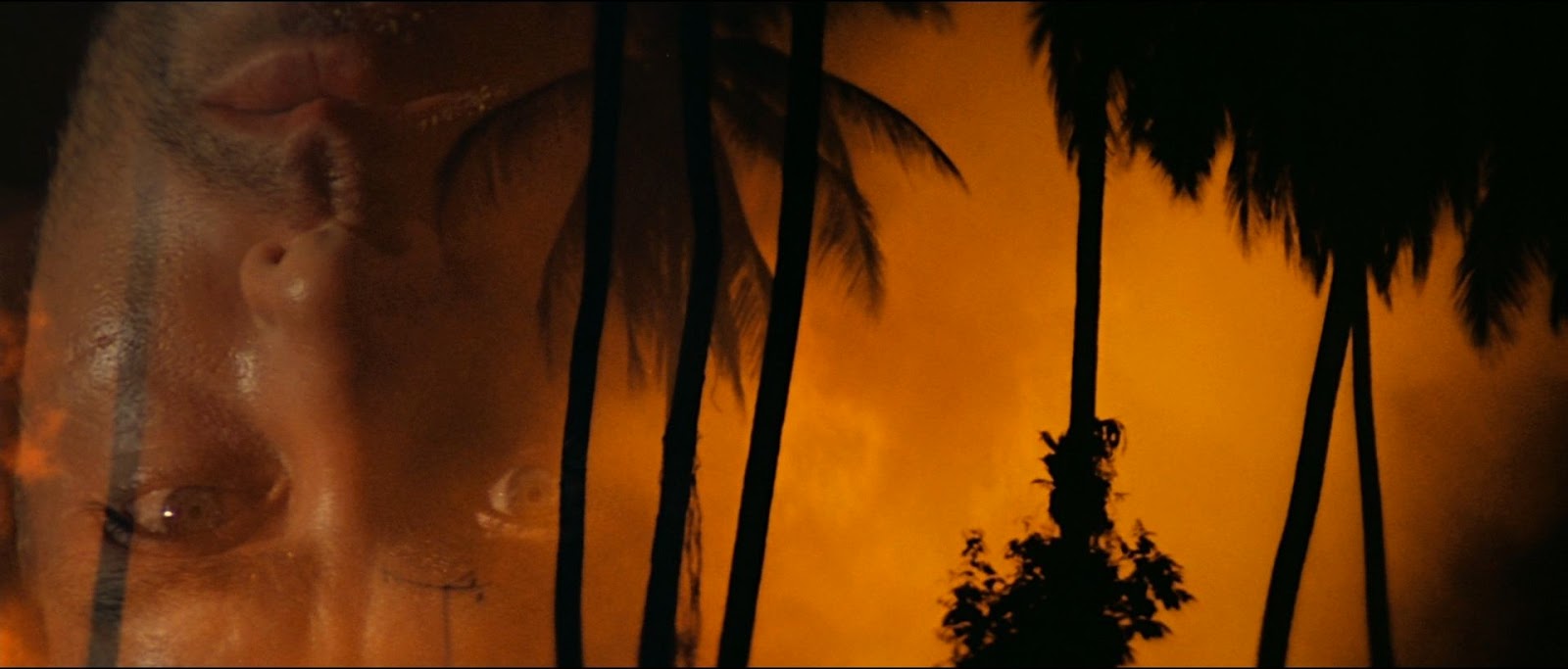
Captain Willard’s face is superimposed over images of war. This suggests that his mind has become fused with the violence. It shows his psychological breakdown without dialogue.
The Godfather (1972)

Oranges appear in scenes that lead up to betrayal or death. Over time, the fruit becomes a visual warning and a motif. Its metaphorical meaning builds through repetition across the film.
Inception (2010)

Cobb’s spinning top is a metaphor for uncertainty. If it falls, he’s awake. If it spins, he’s still dreaming. That top stands in for his obsession and the blurred line between reality and illusion.
Rocky (1976)
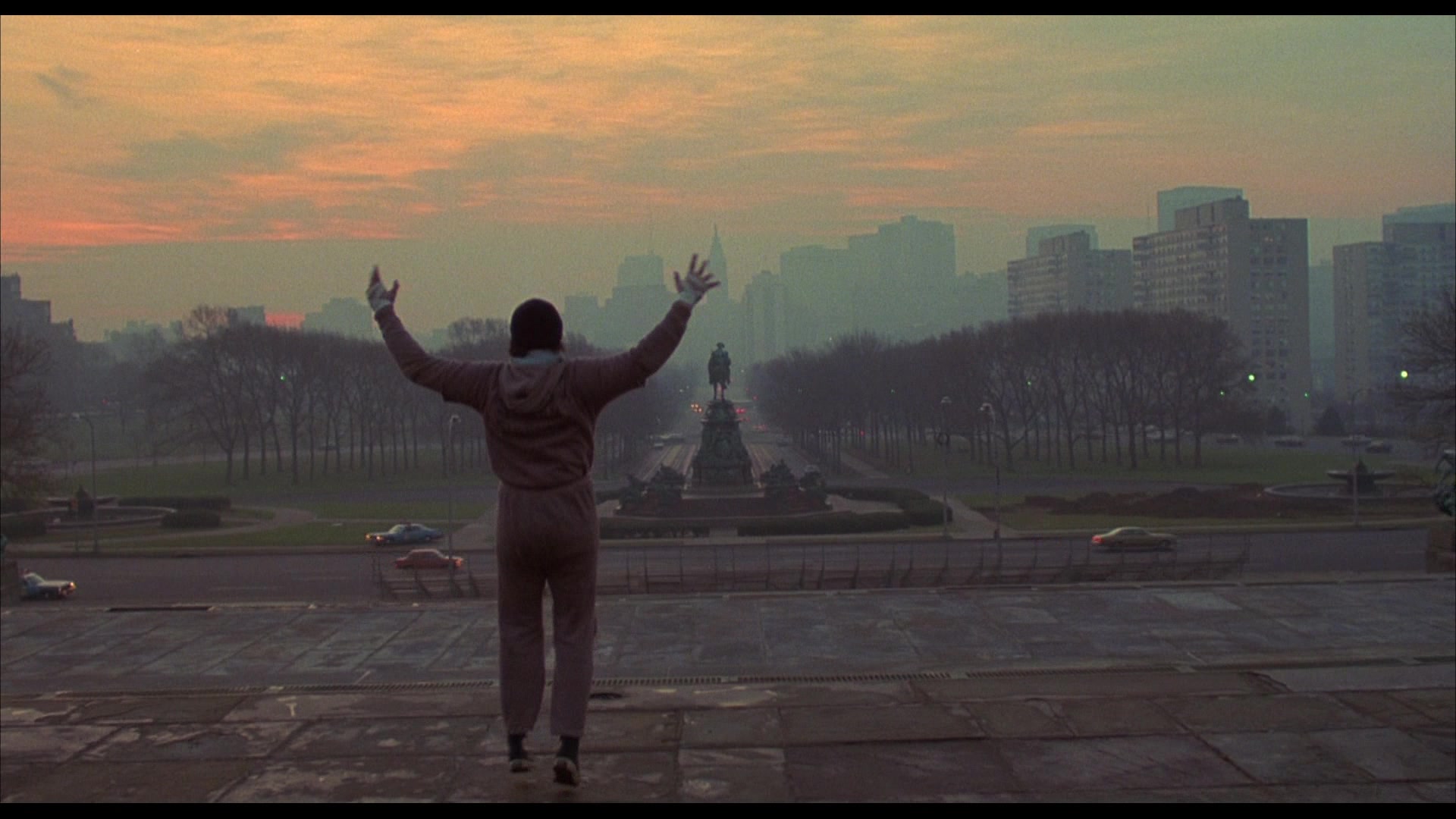
The training montage ends with Rocky reaching the top of the Philadelphia Museum steps. His run becomes a metaphor for personal growth, strength, and belief in himself. Climbing the stairs shows that he’s ready to fight — not just physically, but mentally.
Common Visual Metaphors (Beyond Film)
Visual metaphors aren’t just used in movies. You’ll find them in photography, advertising, album covers, and fine art. These images often stand in for universal ideas — like freedom, fear, or transformation. They don’t need dialogue. They work because we recognize what they mean without being told.
| Visual | What It Represents |
|---|---|
| A caged bird | Lack of freedom, oppression, emotional confinement |
| An open road | Freedom, opportunity, unknown future |
| A wilted or dead flower | Lost love, death, sadness, time passing |
| A mirror | Identity, self-reflection, truth vs illusion |
| A locked door | Repression, hidden secrets, emotional barriers |
| A stairway or ladder | Progress, growth, ambition, spiritual ascent |
| A storm | Inner turmoil, emotional chaos, danger |
| A shadow | Fear, hidden self, guilt, the unknown |
| A tree with deep roots | Family, tradition, stability, history |
| A melting clock | Distorted time, memory, instability |
| A butterfly emerging | Transformation, rebirth, personal growth |
| A hand reaching out | Connection, longing, isolation |
| A broken mirror | Fractured identity, mental breakdown, disillusionment |
| A setting sun | Endings, loss, reflection, finality |
| A child’s toy left behind | Innocence lost, nostalgia, abandonment |
| A tightrope walker | Risk, balance, vulnerability |
How to Spot Visual Metaphors
- Watch for repetition. If an object or image shows up more than once, it may carry hidden meaning.
- Notice emotional timing. If a shot appears during a big moment, it likely reflects what the character is going through.
- Look for contrast or isolation. A single object shown alone or in contrast to the rest of the frame often carries metaphorical weight.
- Think about what’s missing. Sometimes the absence of a person, sound, or item can create a visual metaphor for loss, silence, or emptiness.
- Pay attention to changes. If an object changes shape, color, or condition, the transformation might reflect a shift in the story or character.
Visual Metaphor vs Symbolism
Symbolism and visual metaphor are closely related. A symbol stands for something — like how a rose might stand for love. A visual metaphor makes a stronger connection between two ideas, often through timing or context.
For example:
- A red rose sitting on a table is a symbol of love.
- A wilting rose shown right after a couple breaks up is a visual metaphor for lost love.
Symbols are passive. Metaphors are more active — they do the work of showing what’s going on inside the story.
Why Visual Metaphors Matter
Visual metaphors let you express complex feelings or themes without dialogue. They use the power of the image to tell the story.
When used well, they create emotional weight, strengthen your theme, and give the story layers. A single image can represent a character’s growth, a moral idea, or a cultural conflict — all without saying a word.
They also reward attention. A viewer who picks up on the metaphor feels more connected to the story. The image becomes more than just part of the background — it becomes part of the meaning.
Summing Up
Visual metaphors create subtext by showing meaning through images instead of words. They give your story depth, emotion, and a way to express what words can’t. Whether it’s a spinning top, a tiny plant, or a long run up a flight of stairs, the right image can carry the weight of an entire theme.
Visual Metaphor FAQ
What is a visual metaphor?
An image, object, or action in a film that represents an abstract idea or emotion beyond its literal meaning, creating subtext.
What are examples of visual metaphors in film?
A caged bird for confinement, a crumbling building for decay, or the spinning top in Inception standing for the uncertainty of reality.
What is the difference between a visual metaphor and symbolism?
A visual metaphor draws a direct comparison between two things; symbolism uses an object to stand for a broader idea. They overlap, and a symbol can act as a visual metaphor.
How do filmmakers create visual metaphors?
Through mise-en-scène — composition, colour, lighting, props, and staging — that links an image to an idea.
Why use visual metaphors?
They convey emotion and theme without dialogue, letting the audience feel meaning rather than being told it.
Read Next: Want to dig deeper into screenwriting?
Start with the Screenwriter’s Toolkit on literary devices vs. elements – a deep resource covering every major literary device and element used in writing.
Then explore our collection of practical writing techniques covering dialogue, structure, and pacing.
Or jump into the free screenwriting course to start your first draft today.
You can also head back to the Screenwriting section for more tools, theory, and breakdowns.