

Published: October 3, 2025 | Last Updated: October 26, 2025

What is A fable? Definition & Meaning
A fable is a short fictional story that teaches a moral lesson, often using animals, objects, or natural forces with human traits. It shows a simple conflict and draws a lesson you can apply to life. Many fables state the moral explicitly at the end.
Fables are one of the oldest narrative forms. They survive today because they speak to basic human behavior in a form that is easy to remember and retell.
So What Makes a Fable a Fable?
Fables follow a few consistent rules that make them easy to recognize. These rules also set them apart from other kinds of short fiction.
- Short and focused: A fable is brief and limited to just a few characters and one key conflict. This makes the lesson more direct.
- Nonhuman characters: Animals, plants, objects, or natural forces act like people. This device (called anthropomorphism) helps deliver the moral without pointing fingers at real people.
- Clear moral lesson: The ending always contains a message, like “Don’t lie” or “Pride leads to failure.” The moral may be stated outright or implied through the outcome. Think, for example, of the famous Scorpion and Frog fable.
- Symbolism: Characters often represent human traits. For example, a fox may stand for cleverness, a lion for power, or a crow for pride.
Fables versus similar genres
Fables also differ from other types of stories.
Fairy tales use magic, fantasy, and longer plots, while fables stay grounded in behavior and morality.
Allegories stretch across longer works with layered meaning. A fable stays compact and delivers one clear message.
Where Fables Come From
Fables appear across cultures and time periods. In ancient Greece, Aesop’s stories, like The Tortoise and the Hare, warned against pride and rushed decisions.
In India, the Panchatantra used animals to teach political and social lessons through clever storytelling. In 17th-century France, Jean de La Fontaine reshaped earlier fables into poetic tales that critiqued power and class.
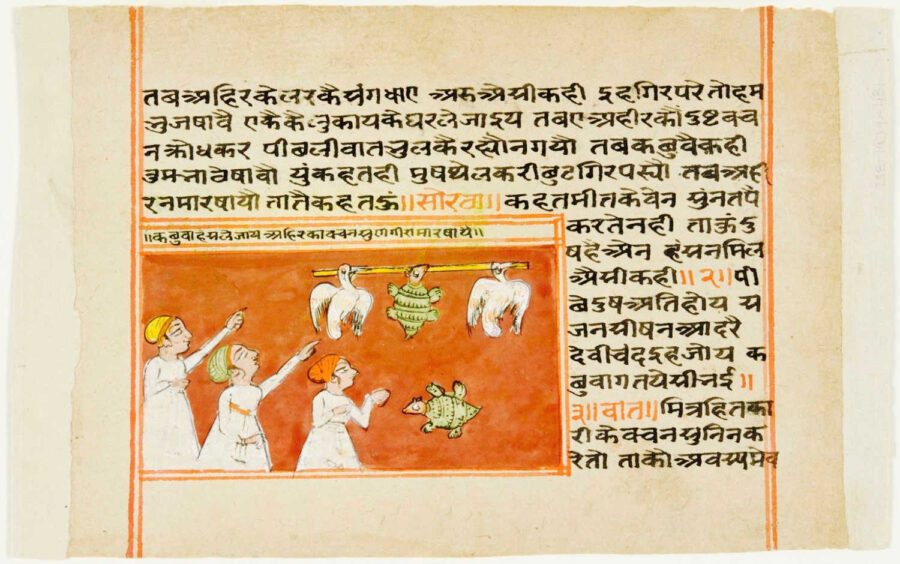
Each culture shaped fables to reflect its values, but the format stayed consistent: animal actions, clear consequences, and a moral at the end.

Recommended Fables I Think You’ll Like
If you’re looking for great fables beyond the usual Aesop ones, I always come back to Rudyard Kipling (he’s the guy who wrote The Jungle Book (1984)). His Just So Stories (1902) are strange, funny, and still kind of brilliant. My favorite is the one where the elephant gets his trunk after a crocodile grabs his nose; it’s called The Elephant’s Child.
Another favorite of mine is Rikki-Tikki-Tavi. It’s about a brave little mongoose who protects his human family from two cobras. It reads like a fable even though it has more action. The lesson still lands: courage means standing your ground, even when you’re small. It was originally published as part of The Jungle Book, but it is often reprinted as a standalone story.
If you like stories where animals act like people but the message stays sharp, Kipling’s work is worth checking out.
Fables in Modern Film
Many modern animated films use fable-like structures to tell clear moral stories. The characters may act like people, but they’re animals or symbolic figures with deeper meaning.

Zootopia (2016): A rabbit police officer teams up with a fox to solve a crime. The film deals with bias and prejudice. Each animal represents a social type, and the message is about fairness and equality.

Kung Fu Panda (2008): Po the panda wants to be a kung fu master, but no one believes in him. The story teaches that self-belief and hard work can overcome doubt.

Animal Farm (1954, 1999): Based on George Orwell’s novel, this film works as a political fable. It shows how good intentions can be corrupted by power.
How to Use Fables in Story Design
If you’re designing a story and want to follow a fable structure, use this step-by-step format:
- Start with symbolic characters (animal, object, or natural force).
- Give them a simple problem or conflict based on their traits.
- Show how their choices lead to a clear result—positive or negative.
- End with a message that connects to behavior, ethics, or values.
This structure works well in short films, animation, and allegorical writing. You can use it to make a point quickly and memorably.
Summing Up
A fable is a short, fictional story that teaches a moral by using anthropomorphized characters like animals, plants, or objects. Key traits include brevity, symbolism, conflict and resolution, and a clear lesson. Fables are one of the oldest ways to explore human behavior, and they still shape modern storytelling today.
Read Next: Want to dig deeper into screenwriting?
Start with the Screenwriter’s Toolkit on literary devices vs. elements – a deep resource covering every major literary device and element used in writing.
Then explore our collection of practical writing techniques covering dialogue, structure, and pacing.
Or jump into the free screenwriting course to start your first draft today.
You can also head back to the Screenwriting section for more tools, theory, and breakdowns.