

Published: January 19, 2026 | Last Updated: July 3, 2026

Overview
What is an adventure movie? Definition & Meaning
An adventure movie is a goal-driven journey where the main character keeps moving into new places that create new obstacles and force new decisions.
What you’ve seen before: You feel the adventure genre when the story keeps changing location, and each major sequence ends with a cost or a forced move that changes the route.
Example: In Raiders of the Lost Ark (1981, Paramount), Indiana Jones enters a temple with hidden rules. Each discovery triggers a new hazard, and the sequence ends with a dangerous escape that forces the next move.
Why it matters: The adventure label helps you design the right kind of scene. You plan a route made of encounters, so your film keeps moving instead of circling the same situation.
Key takeaways: Adventure runs on a goal, a route, and repeating encounter sequences. Each big sequence should end with a cost or a route change.
Why “adventure” matters as a genre label
A genre label is a planning tool. You use it to set expectations, build the right sequences, and avoid writing scenes that stall the movie. When you choose adventure, you choose a structure that keeps moving through space, risk, and change.
- Screenwriting: You can test your outline by checking whether each major sequence creates a new problem that forces the next move.
- Visual planning: You can plan reveals, transitions, and landmark sequences where the environment changes what is possible.
- Production: You can predict travel, locations, stunts, weather exposure, and continuity load early.
- Editing: You can protect momentum by trimming scenes that do not change the route, the plan, or the cost of failure.
If you want FilmDaft’s baseline definitions for how genre language works, start with What Is Genre? Definition and Examples from Film.
Adventure as a genre engine
Adventure is a genre engine built on movement. In practical terms, the engine is the film’s repeated sequence type: the character enters a new place, learns the rules through action, faces the obstacle system of that place, pays a cost, and moves on with fewer safe options.
In a larger genre framework, adventure often works as a “structure label.” It tells you how the film delivers entertainment across the runtime: through a chain of locations, each with its own problems, instead of one stable situation that keeps recycling the same kind of scene.
Adventure films as hybrids and subgenres
Adventure also explains why many films feel like hybrids. The world and tone can come from another genre, while the moment-to-moment sequence rhythm stays adventurous. A fantasy adventure gets its rules from fantasy, yet it still runs on route encounters. An adventure thriller adds pursuit and time pressure, yet it still ends many sequences with a forced move or a narrowed path.
A fast way to position your project is to name the main engine first, then add a second label that describes the dominant “extra pressure.” If the repeated scenes are route encounters, the engine is an adventure. If the repeated scenes are clue turns or threat-position shifts, another engine may fit better.
What “adventure” is on the page and on the screen
Adventure is easiest to understand as a repeatable scene pattern. The character moves toward a goal, enters a new situation, faces a new obstacle system, pays a cost, and pushes forward with less time, fewer resources, or fewer safe options.
Obstacle system: The rules, hazards, opponents, and limits in a place that respond when the character makes a move.
The adventure engine: goal, route, obstacle system, stakes
The adventure engine stays easy to track when you follow four things through the film’s spine. In most major sequences, you should be able to name the goal, describe the route, identify the obstacle system, and state what gets worse if the character fails.
A practical writing move is to keep the goal visible and playable. “Get the idol,” “reach the island,” “rescue the person,” and “escape the zone” give you actions you can stage and shoot.
What a “set piece” means in adventure
A set piece is a designed sequence with a clear objective, a turning point, and a payoff. In adventure, set pieces often come from the space itself. The place creates the problem, and the character has to solve it under pressure.
Common adventure set piece shapes include a trap space, a crossing, a chase route, a rescue attempt, and a survival passage. Each one should end with a cost that changes the plan, the route, or the remaining resources.
How discovery stays on screen
Discovery is a visible change in what the character knows, what the place allows, or what the character can safely do. You show discovery with reveals that affect decisions, such as a new rule, a hidden hazard, a new rival, or a tool that stops working.
Discovery should change what the character does next. If a reveal does not change the plan, the route, or the risk, it plays like decoration instead of story movement.
A simple draft check is to underline each discovery beat and write the next decision it causes. If you cannot name a decision, the discovery is not earning its screen time yet.
How escalation works in adventure
Escalation is a step-by-step increase in difficulty that comes from space, time, and cost. A later sequence should be harder to cross, harder to hide in, harder to negotiate through, or harder to survive.
You can raise escalation by shrinking time, removing tools, splitting allies, increasing exposure, or forcing the character into narrower paths with fewer exits.
Genre conventions you can test in your draft
Adventure has genre conventions, which are repeatable scene patterns viewers expect from the label. For FilmDaft’s baseline definition of conventions across all genres, see What are Genre Conventions?.
You can test these patterns in your outline or rough cut to see whether the label fits the experience you created.
- Route progression: Locations or zones change what the character can do, and the story keeps moving into new zones.
- Encounter structure: Major sequences force a decision under pressure, and that decision creates the next situation.
- Landmark rhythm: Big sequences arrive like milestones, each with an objective, a reversal, and a cost.
- Resource pressure: Time, safety, trust, tools, or health gets tighter as the journey continues.
- Clear objective language: You can state what the character is trying to do right now in one sentence.
Many “adventure” films also repeat a second kind of sequence, and that second pattern often deserves its own label. For example, an adventure thriller repeats pursuit and time pressure, while an adventure mystery repeats clue turns that change the route.
If you are adding a second label, FilmDaft’s guide to subgenres explains how to combine tags without designing scenes that fight each other.
Adventure vs nearby genres
Adventure overlaps with many genres, so labels can get confusing fast. A practical separator is to ask what kind of sequence the film repeats most often, because that repeated sequence is the promise you are making to the viewer.
Adventure vs action
Action films center on physical jeopardy through fights, chases, and stunts. Adventure can include those elements. Adventure still leans on the journey, and many of its biggest moments come from entering a new place with new rules and surviving what that place demands.
Draft test: If many major sequences end because the character “wins the fight,” action may be your main engine. If many sequences end because the character must move, detour, or sacrifice resources, adventure may be the main engine.
Adventure vs fantasy
Fantasy centers on impossible rules, beings, or worlds. Adventure centers on the route of encounters. Many films combine both. A fantasy adventure stays easy to follow when the goal, the route, and the cost of failure stay concrete inside the magical world.
Draft test: If the film’s main pleasure comes from learning how a world works, fantasy is doing major work. If the film’s main pleasure comes from moving through that world via encounter sequences, adventure is doing major work.
Adventure vs thriller
Thrillers often center on sustained tension, pursuit, and immediate danger across a tighter time window. Adventure tends to widen into varied locations and varied encounter types.
Draft test: Thriller sequences often end with a new threat position or a new piece of information. Adventure sequences often end with a forced move, a new route, or a resource loss.
If you want a FilmDaft comparison example that focuses on genre boundaries, horror vs thriller uses the same “what does the scene deliver” logic.
Scene-anchored examples you can study
Examples help most when they point to moments you can rewatch and break down. In each example below, track the goal, the route, the obstacle system, and the cost that forces the next move.
Raiders of the Lost Ark (1981, Paramount)
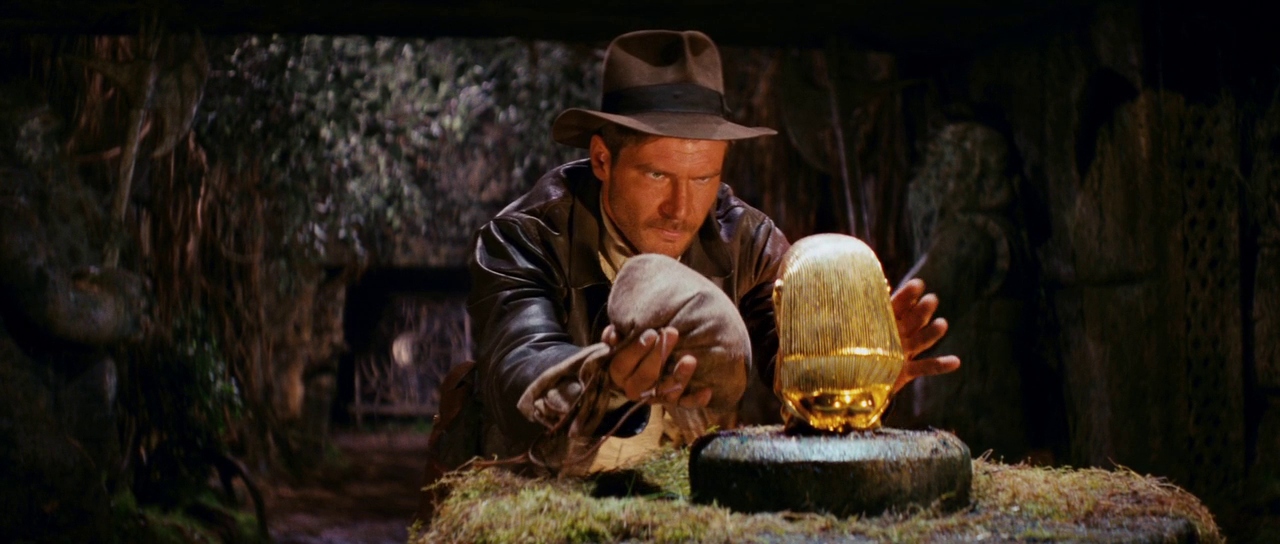
The opening temple sequence plays like a compressed adventure loop. Indiana Jones enters a place with rules he cannot fully predict. Each step reveals a new hazard that changes what he can do next. The idol swap triggers the trap system, and the sequence ends with a forced escape route and a moving deadline.
The Ark also functions as a chase object that organizes pursuits and reversals across the film. If you want FilmDaft’s terminology for that kind of driver, see MacGuffin and the broader definition of a plot device.
Jurassic Park (1993, Universal)
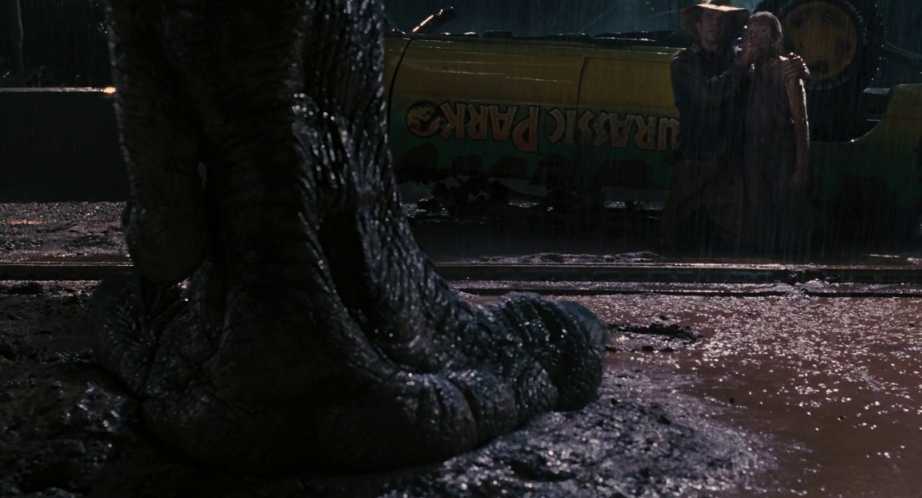
The T. rex breakout turns the park into an obstacle system. Containment fails, the route breaks, and the characters have to solve immediate problems with limited options. The sequence keeps changing the plan through stalled vehicles, shifting safe zones, and the drop that turns escape into a new survival passage.
Discovery stays physical and consequential. New information arrives through what the space allows, what it blocks, and what it destroys.
The Lord of the Rings: The Fellowship of the Ring (2001, New Line)
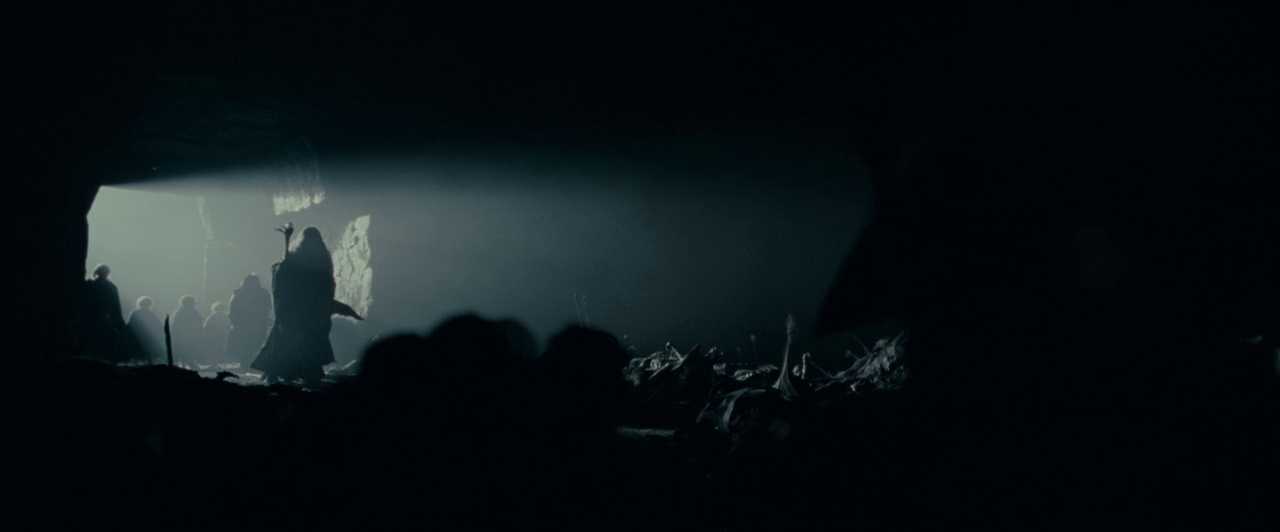
The journey structure stays explicit, and each location acts like a new test. In the Mines of Moria, darkness limits information, noise gives away position, and narrow paths remove escape options. The bridge sequence turns the route into a single-file passage, which forces sacrifice and a new plan for the group.
If you are building an adventure outline, you will often see similar journey language in story structure models. FilmDaft covers that pattern in What Is the Hero’s Journey? and the deeper breakdown in Campbell’s Monomyth.
How to use “adventure” in real development work
If you label a project as adventure, that choice should change your outline and your sequence design. You are planning a route of encounters, so you need movement, costs, and milestones that reduce options over time.
A step-by-step adventure test for your outline
This test works on a beat sheet or a scene list. The goal is to confirm that your film behaves like adventure from start to finish.
- Name the goal in one sentence. Make it something you can stage, shoot, and measure.
- Map the route as zones or phases. A single city can count when zones have different rules, access, and safety.
- List the encounters for each zone. Each encounter should force a decision under pressure.
- Track the cost at the end of each major sequence, such as lost time, lost gear, injury, exposure, or a forced detour.
- Check escalation by confirming that later zones reduce options and increase risk.
If you want FilmDaft structure references that fit this kind of planning, see three-act structure, the Plot & Structure hub, and how to use story beats.
What you check in scene design
Adventure scenes fall flat when they do not change anything that matters. You can keep scenes connected by writing the objective, defining the obstacle system, and forcing an end-state change.
An end-state change can be a cost paid, a new route forced, a plan revised, a key resource lost, or a new constraint revealed. FilmDaft’s definition of narrative can help you describe those cause-and-effect turns.
What you check in production planning
Adventure pushes specific production needs because space changes are part of the genre promise. You can protect your shoot by deciding early which milestones deserve full resources, and which moves can be compressed through transitions and smart coverage.
- Location count: Combine zones when they do the same job in the route.
- Milestone priority: Pick a few landmark sequences to stage fully, then simplify the connective tissue.
- Continuity pressure: Track damage, weather, props, and travel time across the route.
- Safety planning: Treat crossings, heights, water, vehicles, and stunts as early schedule decisions, not late surprises.
If you use AI tools during planning, use them for drafts and options, then verify against the script, the schedule, permits, and safety constraints. FilmDaft’s AI overview at Artificial Intelligence in Filmmaking, the hub at AI Filmmaking, and the current landscape map AI Tools for Filmmaking support that workflow mindset.
Common misuses of the “adventure” label
Adventure is a widely used tag, so it often gets applied to films that run on different engines. Mislabeling matters because it can push you toward the wrong kind of sequences, and the finished film can feel inconsistent with its promise.
Using “adventure” as shorthand for scale
A large-scale film can still be a drama, thriller, or war film. When most of the runtime stays inside one main situation, the engine comes from that situation. In that case, the adventure label can push you toward route beats your story does not need.
Using “adventure” when the film runs on investigation
Investigation structures run on questions, clues, and interpretation. If your major sequences mainly end with new information, your film may be closer to mystery or thriller than adventure.
Using “adventure” when travel is only a backdrop
Some films include travel, yet travel does not change the problem. If most scenes are conversations and relationship shifts, and locations do not create new obstacle systems, adventure may not be the best primary label.
Limits, hybrids, and editorial judgment
Adventure blends easily with other genres, so your job is to choose the main engine and protect it. That means you decide what kind of sequence the film repeats, then you keep the cut focused on that repeated promise.
When the adventure label adds value
Adventure adds value when your film is built around movement through a story world, and your best sequences are encounters that change the route, the plan, or the remaining resources.
When the label adds noise
Adventure adds noise when your primary engine is something else, such as sustained tension, romance progression, or psychological pressure. In that case, a more accurate label helps you design the right scenes and sell the right promise.
A practical decision rule you can apply
Look at your biggest sequences. If your biggest sequences exist because the character enters new places, and those places generate the main problems, the adventure label likely fits. If your biggest sequences are confrontations inside a stable situation, you may be in action, thriller, drama, or horror instead.
If you want a FilmDaft reference for describing how genre and look connect, style in film can help you name the craft choices that support your genre promise.
Summing Up
Adventure movies are defined by a goal-driven journey that keeps moving through new locations, new rules, and escalating obstacle systems, with major sequences that end in a cost or a route change. You can test the label by checking route progression, encounter structure, landmark rhythm, and resource pressure. The label helps when it guides sequence design and production planning, and it causes problems when it gets used as a catch-all tag for “big” or “exciting.”
Adventure Movie FAQ
What is an adventure movie?
A genre built around an exciting journey or quest, usually to an exotic or dangerous place, driven by a brave, resourceful hero seeking a goal — treasure, a person, a discovery, or a way home.
What are the main subgenres of adventure film?
Quest, fantasy adventure (The Lord of the Rings), swashbuckler and pirate films, survival and disaster adventure, historical adventure, and action-adventure (Indiana Jones, James Bond).
What is the difference between action and adventure?
An action film centres on continuous physical conflict and set-pieces, while adventure centres on a journey and the discovery along the way. Many films, like Indiana Jones, blend both as “action-adventure.”
What are examples of adventure movies?
Indiana Jones, The Lord of the Rings, Pirates of the Caribbean, Jurassic Park, and The Goonies are classic examples across the genre’s subgenres.
What makes a good adventure movie?
A clear goal that pulls the hero into the unknown, rising obstacles and exotic locations, high stakes, and a genuine sense of wonder or discovery along the way.
Read Next: Curious how visual styles define film genres?
Explore our breakdown of Genre & Visual Style to see how movements like naturalism, noir, and surrealism shape what we watch.
Looking for the big picture? Visit our Film History, Theory & Genre page to connect techniques with the eras and ideas that shaped them.
