

Published: October 9, 2025 | Last Updated: January 19, 2026

What is Freytag’s Pyramid? Definition & Meaning
Freytag’s Pyramid is a five‑part narrative structure that divides a story into exposition, rising action, climax, falling action, and resolution. It helps you understand how tension builds and releases across a story, especially in classical drama. Even today, it’s still useful when shaping film, novels, or screenplays.
The Five Stages of Freytag’s Pyramid

Each stage moves the story forward in a different way. Tension increases, peaks, and then resolves. Here’s how it works in order:
1. Exposition (Setup)
The exposition introduces the world, characters, and basic situation. It gives the audience the context they need to follow the story. It often ends with the inciting incident, a key event that starts the central conflict.

Example: In The Fellowship of the Ring (2001), the exposition shows Frodo’s peaceful life in the Shire and reveals the threat of the One Ring. The inciting event is when Frodo learns he must leave the Shire to protect it.
2. Rising Action (Tension Builds)
Rising action (Freytag originally called this ‘rising movement’) is the bulk of the story. It adds complications, raises the stakes, and puts pressure on the characters. Each event forces a decision or creates a new problem. Freytag called this the “rising movement.”

Example: Across all three Lord of the Rings films, tension builds as Frodo gets closer to Mordor. The Fellowship breaks. The Ring corrupts. Saruman attacks Rohan. Gollum returns. Every step brings more danger. Each new choice pushes the story toward collapse.
3. Climax (Turning Point)
The climax is the peak of the pyramid. It’s the most intense moment, the point where the conflict can’t escalate any further. The protagonist takes decisive action, often changing the course of the story. Freytag saw this as the moment where the “play” becomes “counterplay.” Everything after this is fallout.

Example: In The Return of the King (2003), Frodo reaches Mount Doom but can’t let go of the Ring. Gollum attacks, and in the struggle, the Ring falls into the fire. This is the turning point. Sauron’s power ends. The war is over. The main question of the story is finally answered.
4. Falling Action (Aftermath)
The falling action (Freytag originally called this ‘falling movement’) shows what happens after the climax. The central conflict is over, but the story isn’t finished. Subplots close, tension fades, and the world begins to react. Freytag also described a moment of “final suspense” near the end, one last beat of danger or doubt before things truly settle.

Example: After the Ring is destroyed, Mount Doom erupts and Barad-dûr collapses. Frodo and Sam are left stranded on the rocks, unsure if they’ll survive. Then the eagles arrive and carry them to safety. The war ends, and the enemy is gone. These moments shift the story away from danger and toward peace.
5. Resolution (Ending)
The resolution shows the new normal. It brings emotional and narrative closure. In tragedies, this might be a downfall. In epics, it can be a return or farewell. The story ends, but the characters carry its weight.
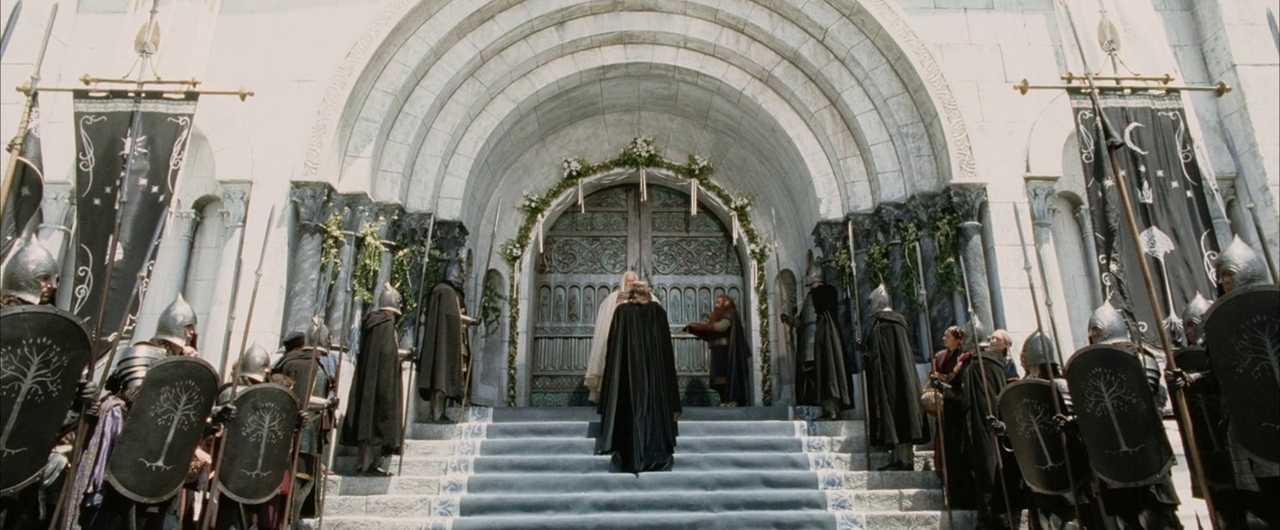
Example: Aragorn is crowned king. The hobbits return to the Shire, but it no longer feels the same. Frodo chooses to leave Middle-earth with Gandalf and the Elves. Sam stays, starts a family, and carries the memory forward. The resolution reflects on everything that was gained and lost.
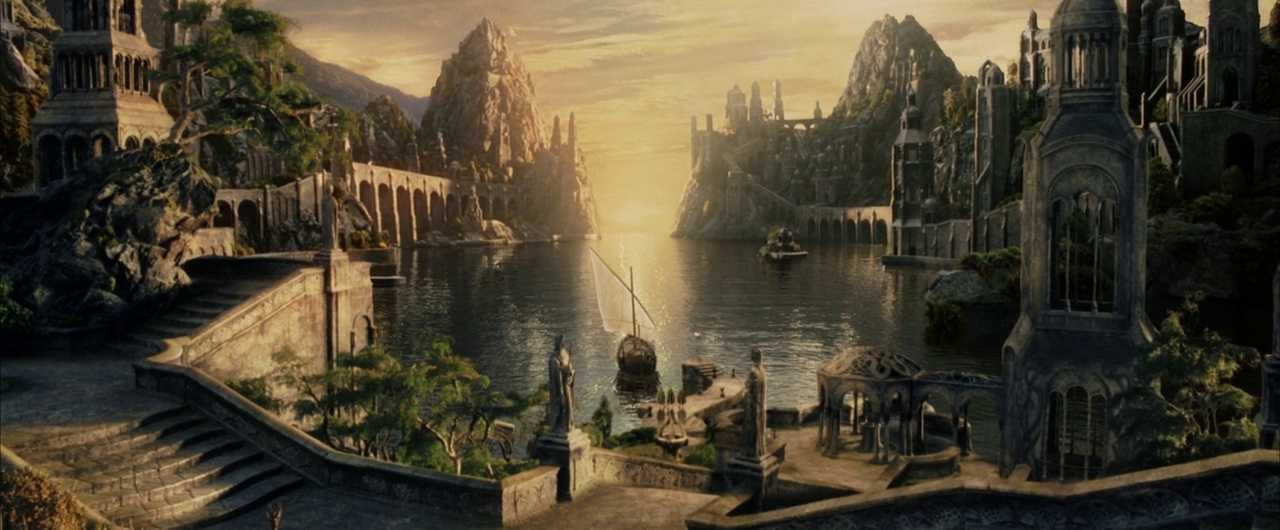
But The Return of the King continues beyond this point. Frodo’s departure at the Grey Havens and Sam’s quiet life after the journey are part of the denouement, i.e., the emotional release after resolution. Freytag’s Pyramid doesn’t separate the two, but many modern stories do. The denouement lets you reflect on what was gained, what was lost, and what still lingers.
How to Use Freytag’s Pyramid When You Write
This structure can help you plan or revise a screenplay. You don’t need to follow it perfectly, but the shape of the pyramid helps you pace your tension and clarify your major beats.
- Start with exposition. Set up your world and your main character’s situation.
- Introduce an inciting incident that forces the character to act.
- Build rising action through scenes that complicate the situation and raise the stakes.
- Choose a climax that changes everything and can’t be reversed.
- Let falling action show the results. Then use the resolution to give closure or a new normal.
Examples from Film
Freytag’s Pyramid can be seen in many films. Here are a few examples that follow its shape clearly:
- Jaws (1975): Calm beach town → shark attacks escalate → final boat showdown → aftermath → town returns to peace
- Rear Window (1954): Observation setup → suspicious behavior escalates → climax when killer enters → rescue → quiet reflection
- The Godfather (1972): Family loyalty setup → rising crime tension → Michael kills Sollozzo → family war → Michael becomes Don
Modern Adaptations and How They Compare to Other Structures
Freytag’s Pyramid was built around five-act tragedies, so it doesn’t match every kind of story. Many modern films follow a three-act structure that focuses on setup, conflict, and resolution.
Other stories use flashbacks, nonlinear timelines, start in medias res, or remove falling action entirely. Some films end right after the climax. That’s especially common in thrillers and action movies.
Still, Freytag’s model remains useful. It helps you track how tension rises and falls across a story. That makes it easier to shape your pacing, emotional rhythm, and character arcs, even if your plot doesn’t follow the exact same order.
Freytag Compared to 3-Act Structure

The three-act structure is common in screenwriting. It breaks the story into three large parts: Act I (Setup), Act II (Conflict), and Act III (Resolution). Freytag’s Pyramid breaks that structure down further. It gives more detail about how tension builds and what happens after the climax.
Freytag’s Pyramid: Exposition → Rising Action → Climax → Falling Action → Resolution
3-Act Structure: Setup → Conflict → Resolution
In the three-act model, the climax usually happens near the end. In Freytag’s model, the climax often comes in the middle, followed by a longer section of falling action and resolution.
Freytag Compared to 5-Act Structure

Freytag’s Pyramid was originally based on five-act plays, especially in Greek and Shakespearean drama. Each act had a clear function, and the structure was symmetrical. Tension climbed in the first half, peaked at the center, and then declined. Today, five-act stories often use turning points or emotional shifts instead. The acts may focus more on change than symmetry.
Freytag Compared to the Story Mountain

Freytag’s Pyramid and the Story Mountain look almost identical. Both use a rising and falling shape with a climax at the peak. Both have five basic stages. That’s why some people use the names interchangeably. But there is an important difference.
The Story Mountain is a simplified version of Freytag’s model. It focuses on what happens in each part of the story. Freytag’s Pyramid focuses on how tension rises, peaks, and falls. It also includes extra details like final suspense or dramatic reversal. Those ideas are not usually part of the Story Mountain.
Here’s a quick comparison:
| Story Mountain | Freytag’s Pyramid |
|---|---|
| Beginning | Exposition |
| Build-up | Rising Action |
| Climax | Climax (Turning Point) |
| Resolution | Falling Action |
| Ending | Resolution (Denouement) |
In short, the Story Mountain helps you outline basic plot events. Freytag’s Pyramid helps you shape dramatic tension. You can use the Story Mountain to plan, and then use Freytag’s model to fine-tune the structure.
You can use all of these models together. The three-act structure gives pacing. The Story Mountain helps with planning. Freytag’s Pyramid gives shape to emotional tension. Each tool helps you see your story from a different angle.
Where Freytag’s Pyramid Comes From
Gustav Freytag was a German novelist and critic who studied how classical plays worked. In 1863, he published Die Technik des Dramas, which broke most plays into five distinct phases. He called them the rising movement (action), climax, falling movement (action), and so on. He used a pyramid shape to show how tension climbs, peaks, and falls.
Freytag focused on Greek and Shakespearean tragedies. But, as we’ve seen, the structure can be found in many modern genres, especially dramas and character-driven films.
Summing Up
Freytag’s Pyramid gives you a clear way to shape tension over five stages: setup, escalation, climax, fallout, and resolution. Even if your story doesn’t follow it exactly, it helps you understand what each section needs to do and why it matters.
Read Next: Want to dig deeper into screenwriting?
Start with the Screenwriter’s Toolkit on literary devices vs. elements – a deep resource covering every major literary device and element used in writing.
Then explore our collection of practical writing techniques covering dialogue, structure, and pacing.
Or jump into the free screenwriting course to start your first draft today.
You can also head back to the Screenwriting section for more tools, theory, and breakdowns.
