

Published: May 15, 2024 | Last Updated: January 16, 2026

What is a Character arc? Definition & Meaning
A character arc is a character’s transformation or inner journey throughout a story. It often involves significant changes in the character’s beliefs, personality, or behavior, reflecting their growth, maturation, or decline. However, some character arcs are flat, meaning the character is constant, and the environment and surrounding characters change. Character arcs add emotional depth to characters and help drive conflict. They work best when they reflect real human experiences so that we can mirror ourselves with the characters on screen.
The 5 core stages of a character arc (a practical, cross-framework model)
Different screenwriting theories use different terminology, but most satisfying character arcs follow the same underlying progression. Below is a practical five-stage model that aligns with common approaches used in film schools and screenwriting books, while remaining flexible enough to apply across genres.
- Initial state – The character’s starting belief, flaw, or emotional coping strategy.
- Inciting disruption – An event or relationship challenges that belief and destabilizes the character’s normal life.
- Progressive complications – Pressure escalates as the character tries (and fails) to solve problems using their old mindset.
- Crisis choice – A decisive moment forces the character to either change their belief or double down on it.
- New equilibrium – The story proves who the character has become through action and consequence.
You’ll see versions of this structure described in different terms (such as “setup, confrontation, and resolution” or “weakness, pressure, decision, and transformation”), but the dramatic function remains the same.
How the stages appear in well-known films
Let’s see how the core character arc stages apply to a few selected movies:
The Lion King (1994)
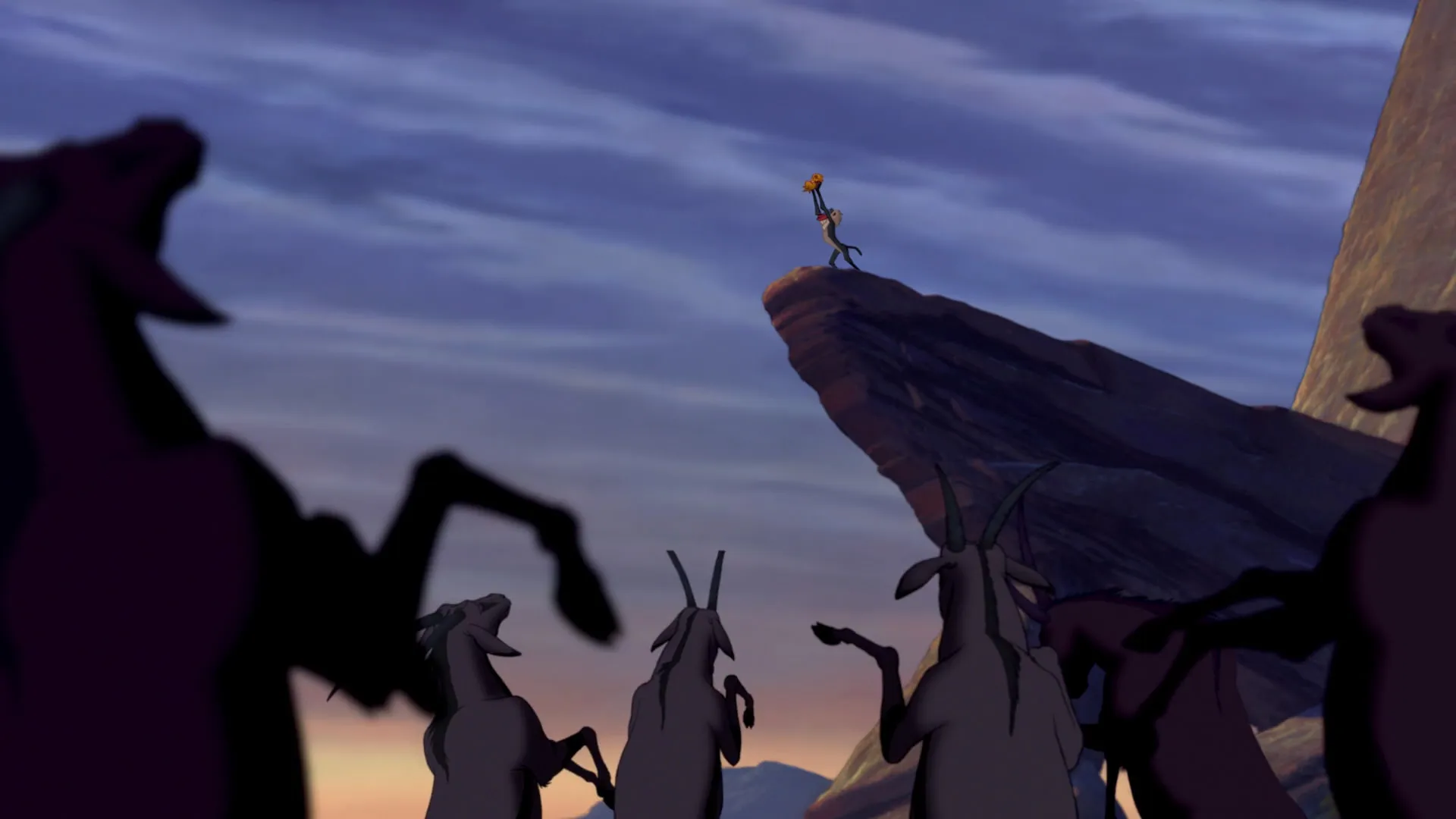
Initial state: Simba believes responsibility leads to loss and pain.
Inciting disruption: Mufasa’s death and Simba’s exile.
Progressive complications: Avoidance provides comfort but leaves the kingdom in ruin.
Crisis choice: Simba accepts his past and returns to face Scar.
New equilibrium: He rules as a mature king who embraces responsibility.
The Godfather (1972)
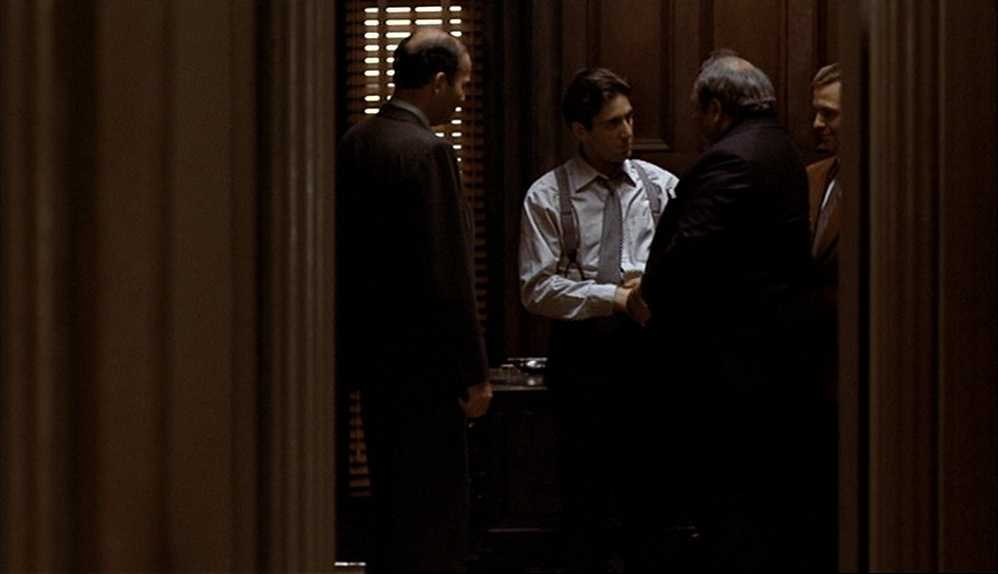
Initial state: Michael believes he can stay separate from the family business.
Inciting disruption: Violence threatens the Corleone family.
Progressive complications: Each protective choice pulls Michael deeper into power logic.
Crisis choice: He commits murder to secure control.
New equilibrium: Michael becomes the ruthless leader he once rejected.
Character arc types at a glance
There are three primary character arcs: positive, negative, and flat. They cover every character in any story ever written. Besides these, there are secondary arcs you use when you want to become more specific. I’ll get back to these.
| Arc type | Character outcome | Best used when… |
|---|---|---|
| Positive | The character grows or heals | You want hope, inspiration, or emotional catharsis |
| Negative | The character deteriorates or is corrupted | You want tragedy, warning, or moral consequence |
| Flat | The character remains the same | You want to test values or change the world around them |
Character arcs are useful when analyzing movies and writing screenplays. Let’s break them down in more detail below:
Positive Character Arc

A Positive Change Arc involves a character starting with flaws or limitations and growing to overcome them by the end of the story. They often gain new strengths or insights that help them achieve their goals.
Examples of positive character arcs from movies

Below are a few examples of movies where the protagonist goes through a positive change.
- Rocky (1976) – Rocky Balboa evolves from a small-time boxer to a self-confident athlete who proves his worth.
- The Lion King (1994) – Simba overcomes his past and accepts his destiny as king, bringing peace to the Pride Lands.
- A Beautiful Mind (2001) – John Nash battles schizophrenia and eventually triumphs, making significant contributions to mathematics.
- The Pursuit of Happyness (2006) – Chris Gardner rises from homelessness to achieve success and provide a better life for his son.
- Silver Linings Playbook (2012) – Pat Solitano works through his mental health struggles and finds love and stability with Tiffany Maxwell, who has lost her husband. A double positive character arc.
Positive arc example: Rocky (1976)

Let’s examine Rocky within the framework of the 5 core stages of character arcs:
Limiting belief: Rocky believes he is a loser destined to stay small.
Pressure: A once-in-a-lifetime title shot forces him to take himself seriously.
Choice: He commits fully to training, not to win, but to prove his worth.
Transformation: Rocky gains self-respect and identity.
Cost: Physical punishment, emotional exposure, and the risk of public failure.
Negative Character Arc

In a Negative Change Arc, a character begins with potential or positive traits but deteriorates throughout the story, often due to poor decisions or external pressures.
Examples of negative character arcs from movies

Below are a few examples of movies where the protagonist goes through a negative change.
- Scarface (1983) – Tony Montana starts with ambitions of power and wealth but spirals into violence and paranoia, leading to his downfall.
- Taxi Driver (1976) – Travis Bickle becomes increasingly unstable and violent, culminating in a tragic end.
- The Godfather (1972) – Michael Corleone transforms from a reluctant family outsider to a ruthless mafia boss, losing his soul in the process.
- Black Swan (2010) – Nina Sayers’ obsessive pursuit of perfection in ballet leads her into paranoia and self-destruction. It’s a great example of how inner conflict can lead to downfall.
- Nightcrawler (2014) – Lou Bloom becomes a successful yet morally corrupt videographer, showing the dark side of ambition and ethics in journalism.
Negative arc example: Black Swan (2010)
Let’s look at Black Swan in more detail:
Limiting belief: Nina believes perfection equals love and safety.
Pressure: The role demands emotional freedom she can’t control.
Choice: She chooses obsession over balance.
Transformation: Her identity fractures as perfection consumes her.
Cost: Mental health, relationships, and ultimately her life.
Flat Character Arc
A Flat Arc features a character who remains largely unchanged throughout the story, but their steadfastness influences the world and other characters around them.
Examples of flat character arcs from movies

Below are a few examples of movies where the protagonist doesn’t change from beginning to end.
- Forrest Gump (1994) – Forrest’s consistent innocence and integrity impact those around him, even though he remains the same.
- Dr. No (1962) – James Bond remains confident and unyielding in his mission.
- Raiders of the Lost Ark (1981) – Indiana Jones stays courageous and determined.
- Mad Max: Fury Road (2015) – Max Rockatansky maintains his survivalist mentality.
- The Terminator (1984) – The Terminator stays relentless and focused on its mission.
- Wonder Woman (2017) – Diana Prince remains steadfast in her beliefs and commitment.
- John Wick (2014) – John Wick consistently seeks vengeance without changing his core values.
Flat arc example: Forrest Gump (1994)

Let’s take Forrest Gump and break it down further:
Core belief: Forrest believes in kindness, honesty, and loyalty.
Pressure: A chaotic world constantly tests those values.
Choice: Forrest repeatedly chooses decency without changing who he is.
Transformation: Other characters grow and heal around him.
Cost: Forrest remains emotionally vulnerable and often misunderstood.
Secondary Character Arcs
Of course, you can become more specific when describing a character’s arc in a story. Secondary arcs include…
- transformational (fx Seth Brundle in The Fly. Also, superhero origin stories)
- corruption (fx Michael Corleone in Godfather)
- coming-of-age (fx William Miller in Almost Famous)
- redemption (fx Derek Vinyard in American History X)
- disillusionment (fx Charles Foster Kane in Citizen Kane)
…to name but a few. As you can see, these all fit within the three primary categories. Fx, a redemption arc is positive, a corruption arc is negative, and a coming-of-age arc can be both (while Almost Famous ends on a positive beat, Stephen King’s Carrie is a negative arc).
How different character arcs can drive conflict
Most good stories blend different character arcs and archetypes, making the plot more interesting.
In the simplest form, the protagonist might follow a positive arch, the antagonist a negative arch, and the supporting characters a flat arch, creating conflict. However, to make the narrative more interesting and create subplots, supporting characters often follow positive and negative arcs or arcs that follow both positive and negative trajectories.
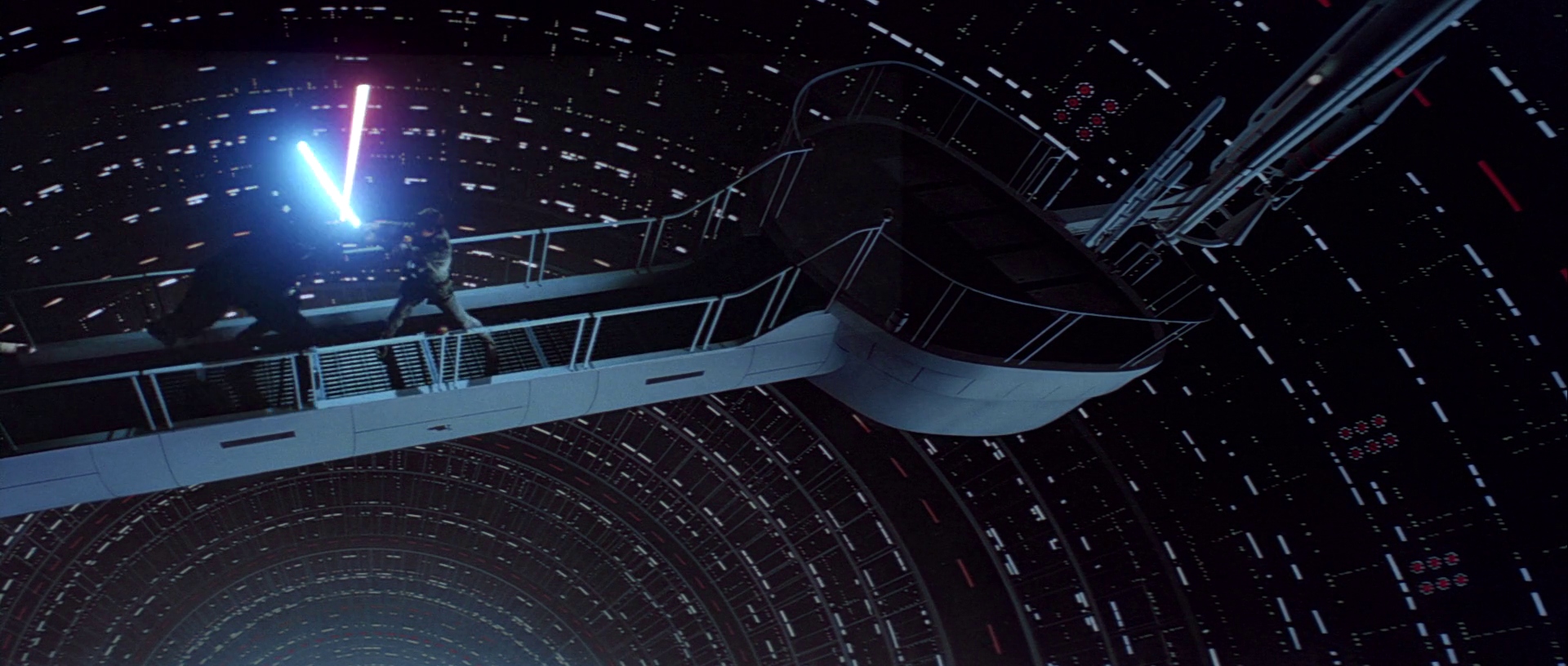
Take Star Wars as an example. Luke Skywalker (the Hero archetype) follows the traditional positive arc from farm boy to Jedi Knight and savior.
Luke must battle Darth Vader, who follows a negative character arc as the dark side corrupts the young, innocent boy Anakin Skywalker. Anakin redeems himself at the end, creating a positive twist to his arc. This drives the main conflict, theme of good vs. evil, and plot in the series.
On a deeper level is the conflict between good and evil embodied by Yoda and Darth Sidious, two constants with flat arcs. Palpatine’s arc only follows a negative one on the surface as he goes from coveted senator to emperor. But underneath, he has been pure evil, Darth Sidious all the time.
Character arcs: common terminology vs FilmDaft’s framework
The concept of the character arc is widely taught across screenwriting theory, though terminology varies between sources. FilmDaft’s categorization of positive, negative, and flat arcs reflects patterns that appear consistently across established storytelling frameworks.
- Robert McKee — Story (1997): emphasizes internal change driven by choice under pressure.
- Christopher Vogler — The Writer’s Journey (1992): frames character change through mythic stages and tests.
- John Truby — The Anatomy of Story (2007): focuses on moral weakness, desire, and self-revelation.
In other words, the names differ, but the dramatic engine is consistent: the plot applies pressure, the character makes choices, and those choices reveal growth, decline, or steadfastness.
FilmDaft’s approach simplifies that into a practical lens: Does the character grow, decline, or remain steadfast—and what does that choice cost them?
Summing Up
A character arc is a character’s transformation or inner journey throughout a story. This progression often involves growth, change, or self-discovery and is driven by the plot’s events and challenges. Character arcs also help drive the plot and narrative forward, creating a symbiotic relationship.
Character arcs help create depth to characters, let us see ourselves in the characters on screen, and help drive conflict in the narrative.
Read Next: Want to write characters that feel real on the page?
Start with our Free Screenwriting Course — a complete foundation in structure, dialogue, and building compelling characters.
Then browse all character development articles — from internal conflict and arcs to ensemble design and protagonist logic.
Or return to the Screenwriting section for formatting, story structure, and writing tools.
