

Published: February 16, 2024 | Last Updated: February 5, 2026

Overview
Definition: A red herring is a deliberately misleading clue, suspect, or lead that pulls you away from the real answer.
What you’ve seen before: You have watched a mystery push you toward the “obvious” culprit, then later reveal that thread was a dead end.
Example: In Knives Out (2019, Lionsgate), the investigation keeps shifting because each family member comes with a fresh timeline problem, a suspicious detail, or a claim that clashes with someone else’s story. The film gives those details enough weight that you treat them as the solve for a while, then later shows why they do not actually close the case.
Why it matters: A red herring lets you steer what you track, so the real clue can sit in plain sight without feeling obvious. It also controls pacing, because every false lead needs time to get tested, challenged, and ruled out. If a false lead never gets ruled out, the ending can feel unfair because the story asked you to care about evidence that never meant anything.
- Key takeaway 1: Make the false lead plausible by tying it to believable motive, opportunity, or behavior.
- Key takeaway 2: Give the red herring a definite “collapse” moment where new information rules it out.
- Key takeaway 3: Track clues scene by scene so misdirection stays consistent and does not turn into a plot hole.
Next, we’ll define red herrings inside a bigger film framework, then break down how they work on-screen.
What is a Red Herring in film? Definition & broader Meaning
In film, a red herring is a misdirection move inside the story’s clue system. It is evidence that supports a plausible wrong answer to the story’s main question, and it stays “alive” long enough that you spend screen time testing it. A red herring earns its place when it changes decisions, raises risk, or reveals character, and the film later shows why that path fails as the main explanation.
Where the term red herring comes from
The phrase “red herring” is often linked to smoked (cured) herrings and older anecdotes about using strong smells to distract attention. Many references trace the figurative sense to English journalist William Cobbett in 1807, where he used “red herring” as a political metaphor for a distraction that pulls focus away from the real issue.
Some popular versions of the story describe “distracting hounds” during hunts. The historical details of that practice are disputed, so it is safer to treat the hounds story as a widely repeated explanation rather than a verified origin.
Definition and scope of red herrings in scriptwriting
Red herrings sit under the larger umbrella of misdirection. The label only helps you if it has boundaries, because many story moves can “mislead” without being a red herring.
In script terms, a red herring is a deliberate plot device that encourages a plausible but incorrect conclusion about a key story question, and the script later rules that conclusion out.
A red herring shows up often in mysteries, thrillers, and stories built on suspense. It also fits film noir and giallo films, where suspicion is part of the fun. In dramas and comedies, a smaller red herring can push you toward the wrong assumption for a few scenes, then snap back.
What it can be: A suspect, an object, a rumor, a timeline detail, a staged action, a pattern, or a line of dialogue.
What it does: It boosts confidence in a wrong explanation for a while, then the story later reframes that evidence.
What it is not: A random detail that never matters, or a secret the story hides without giving you a trail to follow.
How a red herring works in practice
A red herring works because you want closure. Once a story gives you a question, you start testing answers against what you know about people, genre conventions, and cause and effect. A red herring fits that logic for a while.
The red herring pattern uses question, answer, correction
The red herring pattern usually moves through three steps. The story raises a question, offers a strong answer, then later corrects that answer with missing context or new facts.
- Question: A problem appears. The question often starts with an inciting incident or a catalyst. Who did it, what is the danger, what is the real motive, what is the truth about a character.
- Plausible answer: The story puts weight on a clue or suspect that seems to explain the problem.
- Correction: Later scenes show why the clue pointed the wrong way, or why it mattered for a different reason.
The red herring stays believable when the story supports your reasoning
A red herring holds when it matches how people reason. You see motive signals, opportunity signals, and patterns that fit the genre. You also see characters behave as if the false lead deserves attention.
- Motive looks believable: A character seems to gain something from the crime or conflict.
- Opportunity looks clean: Timing and access appear to line up.
- Visual emphasis guides you: Close-ups, reaction shots, and repeated inserts can signal “this matters,” even when it later turns out to matter in a different way. This connects to pacing and continuity editing.
- Social proof inside the story: The detective, the family, or the media within the story pushes the same suspicion you are forming.
Red herring vs related story tools
Several story tools can look similar, yet they make different promises. If you separate the terms, revision gets easier because you can name what is actually broken.
Red herring vs foreshadowing
The red herring vs foreshadowing difference is the destination. Foreshadowing points toward a later truth, even if it stays subtle. A red herring points toward a later correction.
- Foreshadowing: Early hints that support what later becomes true. See Foreshadowing in Film.
- Red herring: Early hints that support a plausible conclusion that later gets downgraded or disproved.
- Practical test: After the reveal, foreshadowing feels like confirmation. After the reveal, a red herring feels like a reasonable path that failed as the main answer.
Red herring vs Chekhov’s gun
The red herring vs Chekhov’s gun difference is about payoff type. Chekhov’s gun is about economy and payoff. A red herring can still “pay off,” because it can affect choices, tension, and the route to the real answer.
- Chekhov’s gun: A focused detail should pay off later. See Chekhov’s Gun.
- How they fit: A red herring can pay off by changing decisions, risk, or relationships.
- Revision tip: If your red herring never changes anything, it starts to feel like noise.
Red herring vs MacGuffin
The red herring vs MacGuffin difference is what changes in your head. A MacGuffin is a goal object or objective that motivates action. A red herring pushes a mistaken conclusion.
- MacGuffin: A driver of pursuit. See MacGuffin examples.
- Red herring: A driver of wrong interpretation.
- Overlap: One object can do both if it motivates the chase and also supports a wrong explanation.
Red herring vs plot twist
The red herring vs plot twist difference is scale. A plot twist is the moment the story reframes meaning in a big way. A red herring often supports a twist because it helps you settle on a wrong explanation first.
- Plot twist: A reveal that reframes meaning. See Plot Twist: Definition and Examples.
- Red herring: A false path that increases surprise once the reveal lands.
Red herring vs unreliable narrator
The red herring vs unreliable narrator difference is trust type. An unreliable narrator changes what you can trust about the telling itself. A red herring changes what you think the evidence means.
- Unreliable narrator: The storyteller’s account has gaps, bias, or distortion. See Unreliable Narrator in Film.
- Red herring: The evidence points you toward a wrong conclusion, even when the narration stays stable.
Film examples with scene-level breakdowns
Examples matter because red herrings are about execution. The same false lead can feel fair in one film and cheap in another.
Spoiler note: Major plot points are discussed below.
Psycho (1960, Paramount)

The red herring in Psycho works early because the film plays like a crime story. The camera and the scene choices train you to treat the money as the center of the plot.
- What the film pushes you to focus on: Marion steals a large sum, hides it, and drives away. The trip carries stress, stops, and a sense of pursuit.
- How the misdirection gets reinforced: The money gets repeated attention through framing and inserts. You see it wrapped, placed, and protected.
- Where the red herring flips: Marion gets killed, and the main tension shifts away from her escape plan. The center moves to the motel and to Norman Bates. This also fits the false protagonist idea.
- How the film resolves the false lead: The money ends up discarded with the car, and it loses its plot importance. The detail still matters because it got Marion to the motel and set your expectations.
- Takeaway you can reuse: A red herring can be a whole storyline if it drives choices and consequences. It can also work as a smaller subplot.
The Sixth Sense (1999, Buena Vista)
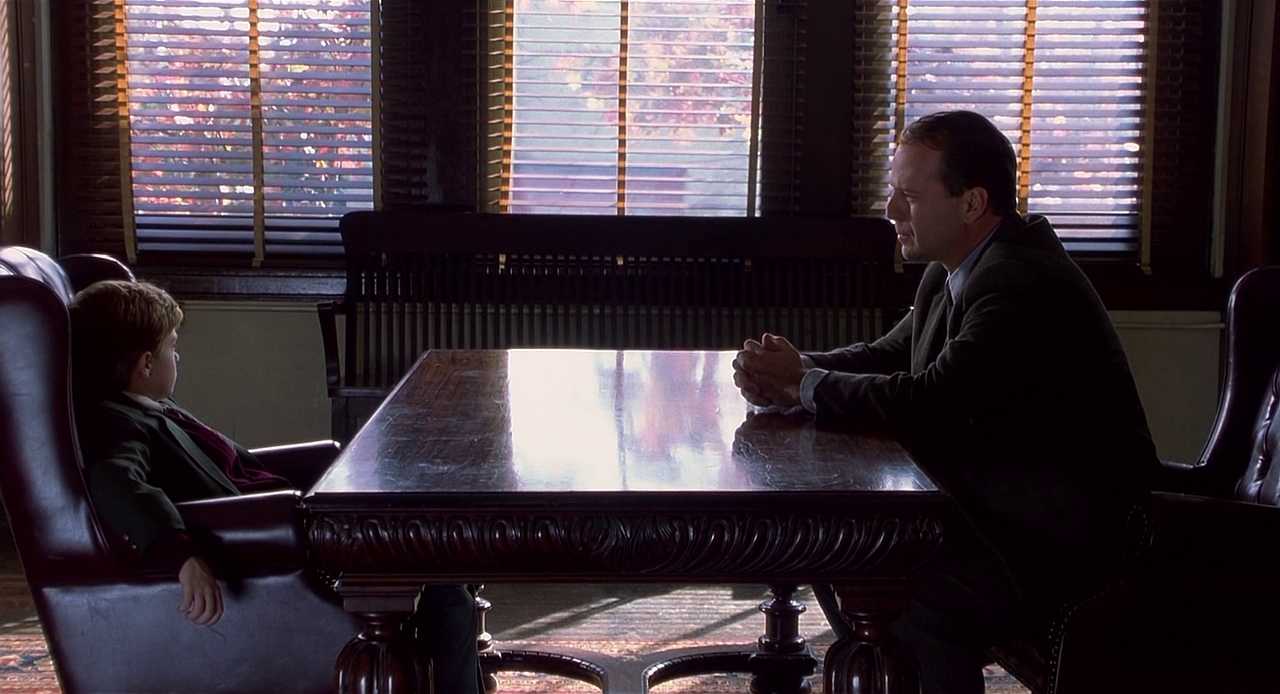
The red herring in The Sixth Sense is a wrong assumption about a character’s status. The film supports that assumption through ordinary scene construction and familiar character framing.
- What you are led to assume: Dr. Malcolm Crowe is alive, and he works with Cole as a therapist with unfinished work.
- How the scenes support the assumption: Crowe moves with purpose, and the editing treats his scenes as normal present-time action. You also see tension with his wife, and that fits a familiar relationship pattern.
- Why this counts as a red herring: The film gives you everyday signals that confirm your assumption, while key interactions stay limited in a way you do not question yet.
- How it links to twist structure: The reveal reframes earlier scenes. Moments play differently once you understand why certain conversations and physical interactions happen the way they do. For a broader map of endings, see Resolution in Film and Denouement in Film.
- Takeaway you can reuse: A red herring can live inside a “normal” character setup if the reveal reinterprets details you already saw on-screen.
Gone Girl (2014, 20th Century Fox)
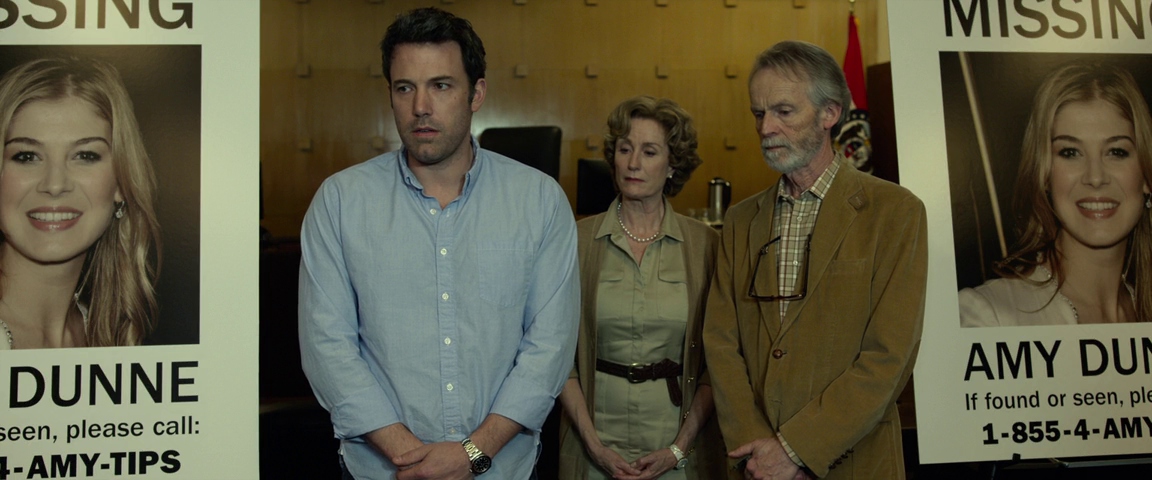
The red herring in Gone Girl shows how suspicion can come from systems, not only from villains. You watch evidence get interpreted, and you watch public pressure change what those facts seem to mean.
- What you are led to suspect: Nick looks like a likely culprit in his wife’s disappearance, and the suspicion grows because he reads badly in public.
- How the misdirection gets built: The film uses media framing, police interpretation, and selective facts to build a tight guilt narrative. Each new detail seems to support the same conclusion.
- How it stays plausible: The case has motive signals, marriage strain, and public missteps, and those pieces often correlate with guilt in true-crime logic.
- How the red herring pays off: The false conclusion raises stakes and changes how other characters treat Nick. The damage becomes part of the plot even after the truth shifts.
- Takeaway you can reuse: Police procedure, gossip, and news coverage can all function as red herring engines because they push a story toward a simple explanation.
Examples from literature that films often adapt
Many film red herrings come from the same toolbox as detective fiction. If your investigation relies on step-by-step logic, FilmDaft’s guide to deductive reasoning can help you plan the reasoning on-screen.
- The Hound of the Baskervilles by Arthur Conan Doyle: The supernatural hound legend pushes attention toward a “monster” explanation. The story later reveals a human plan behind the fear, and the false trail becomes part of the cover.
- The Girl with the Dragon Tattoo by Stieg Larsson: The investigation produces multiple plausible suspects and motives, and the false trails reflect how messy real information can feel.
- The Da Vinci Code by Dan Brown: The puzzle chain can push you toward answers that feel solved, then later reveal that some steps were incomplete or misread.
How to write fair red herrings in your script
A red herring works best when it grows out of story logic. Planning helps because you can build a false lead that feels natural, while the real answer still has enough support on-screen.
Starting with the truth keeps your red herring stable
Starting with the truth helps because you can design false paths that do not break the real chain of cause and effect.
- Write the true explanation in one sentence: Keep it specific and testable.
- List the required clues: Include what must appear on-screen for the truth to hold later.
- Decide what your characters know: Separate facts from assumptions.
- Choose one false explanation that fits the same evidence: Strong red herrings share evidence with the truth, then fail on one missing piece.
Tracking suspicion helps you control the viewer’s guesses
Red herrings often break during revision because the script leans too hard on one suspect for too long, or because the false clue never changes a decision. A simple tracking method keeps balance.
- Create a clue ledger: Use three columns: clue, what it suggests now, and what it truly means later.
- Score suspicion per scene: Note who looks most guilty right now, and why.
- Check turning points: Link suspicion shifts to your beats. See story beats and the three-act structure.
Resolving the red herring protects trust
A red herring needs closure, even when that closure is quiet. Closure often lands in the resolution or the denouement.
- Show why it looked true: A short explanation can protect trust.
- Show why it was incomplete: One missing fact can be enough.
- Make the dead end matter: It should cost time, raise risk, or reveal character.
Common problems and fixes
Red herrings get criticized when they feel unfair. Most failures show up fast in revision, and the fixes are usually structural.
- Problem: The red herring depends on withheld basic information.
Fix: Let you have the key facts, then misdirect what those facts seem to mean. If you struggle with what to reveal, see exposition and context. - Problem: The false lead has no consequence once it fails.
Fix: Tie it to a decision that changes the situation, even when the suspect turns out innocent. - Problem: The story points too loudly at the decoy.
Fix: Reduce repeated emphasis. Use fewer announcement moments and more ordinary support. - Problem: The real answer has weak support.
Fix: Strengthen the true clue chain first, then rebalance your red herrings.
Related articles that can help you go deeper
Red herrings connect to repeat craft problems: expectation control, reveal timing, and endings that feel earned. These guides can help during outlining and revision.
Structure and endings
Red herrings are easier to manage when you know where your turning points and wrap-up beats sit.
- Three-act structure (Hollywood Story Arc)
- Climax in film
- Resolution in film
- Denouement in film
- Freytag’s Pyramid
Clues, misdirection, and fairness
These pages help when a red herring starts to feel too loud, too thin, or too confusing.
- Plot device definition
- Genre conventions
- Pacing in film
- Plot holes
- Subplot roles in film
- Protagonist vs main character (and false protagonists)
- Screenwriter’s Toolkit: literary devices vs. elements
- Writing techniques collection
Summing Up
Red herring is a craft tool that sends you down a believable wrong path on purpose. It works when the false answer fits the evidence for a while, then collapses because one missing fact changes what the evidence really meant.
If you want your red herring to feel earned, check three things: the false lead changes decisions or risk, the script rules it out on-screen, and the real answer has a solid clue chain that was present the whole time.
Read Next: Want to dig deeper into screenwriting?
Start with the Screenwriter’s Toolkit on literary devices vs. elements – a deep resource covering every major literary device and element used in writing.
Then explore our collection of practical writing techniques covering dialogue, structure, and pacing.
Or jump into the free screenwriting course to start your first draft today.
You can also head back to the Screenwriting section for more tools, theory, and breakdowns.
