
Published: February 5, 2024 | Last Updated: February 20, 2026

Overview
Definition: A theme is the single main idea a story keeps testing through a character’s choices and the consequences that follow.
What you’ve seen before: You have felt this when very different scenes still feel connected, because they keep pushing the same value question under new pressure.

Example: In Finding Nemo (2003, Pixar Animation Studios), the story keeps testing what “protection” looks like when fear takes over. Marlin’s choices keep creating new problems, until he finally has to risk loss and trust his son.
Why it matters: A theme gives you a clear filter while you write or analyze. You can test every scene by asking what value problem it pressures, what choice it forces, and what cost it creates. That keeps your film from feeling scattered, because the cause-and-effect stays tied to one main idea.
- Key takeaway 1: Write your theme as one simple idea, then test it by forcing hard choices.
- Key takeaway 2: Track theme through decisions and consequences, so the meaning comes from proof on screen.
- Key takeaway 3: If a scene does not test the theme in a new way, that scene is a cut or rewrite candidate.
Now let’s place theme inside the bigger story system, so you can spot it fast and prove it with scenes.
What is a theme within broader storytelling? Definition & Meaning
Theme is the meaning layer that sits on top of the story events. You read it by tracking cause-and-effect, the lead’s character arc, and the film’s overall system of setup and payoff across the whole runtime. Theme becomes clearer when you connect story pressure to film form and the repeating craft patterns that support meaning, like motifs, repetition with variation, and connotation in images, sound, and dialogue.
Theme, topic, and the job a theme does
Theme helps you stay focused, because it gives you a yes-or-no question for every scene. You can ask what idea the scene pressures, and you can prove the answer by pointing to the choice and the cost.
A topic is a category like “family,” “war,” or “ambition.” A theme is a clear claim about that topic that plays out through story pressure. “Family” is a topic. “Family loyalty can trap you inside a violent system” is a theme, because scenes can test it through decisions and consequences.
Theme also helps you explain why a scene belongs. A fun scene can still be a problem if it does not pressure the same value conflict as the rest of the film.
Theme vs motif, plot, premise, conflict, and moral
Theme gets mixed up with nearby story terms because they work together. The fastest way to stay clear is to keep each term tied to its job.
Theme vs motif
A motif is a repeating element you can point to on the surface, like an image, a sound, an object, a phrase, or a repeated action. Theme is the idea that repetition supports across the film.
In Jaws (1975, Universal Pictures), the two-note cue and the repeated attention on empty water keep turning “nothing” into threat. Those repeating signals can support theme claims about fear, responsibility, and public denial, because the film keeps placing those patterns beside high-pressure choices. Within music this is called a leitmotif.
Theme vs plot
Plot is what happens and in what order. Theme is the value problem those events keep testing.
In The Godfather (1972, Paramount Pictures), the plot tracks Michael Corleone’s rise inside the family business. A theme claim needs scene proof, like what the story shows about loyalty, corruption, and what “protection” costs the people who accept it.
Theme vs conflict
Conflict is the struggle that drives the story forward. Theme is the meaning tied to that struggle, based on what choices cost the characters over time.
In The Revenant (2015, 20th Century Fox), the conflict includes survival against nature and revenge against another man. A theme claim has to go past labels and point to what the film tests through consequences, like what endurance costs, or what revenge does to identity and purpose.
Theme vs premise and logline
A premise is the setup plus the central problem. A logline is the short pitch of that problem and the main drive. Theme is what the film ends up arguing about, once you have seen how the premise plays out.
“A police chief must stop a shark” is premise-level information. A theme-level claim points to choices and costs, like what the story shows about denial, courage, and public pressure when the threat is real.
Theme vs moral lesson
A moral is advice you can state as a lesson, and fables aim straight for that result. Many films aim for a tougher question, where two values clash, and the ending leaves tension.
When you analyze theme, your goal is supportable meaning from the film’s evidence. You can point to what the film rewards, what it punishes, and what it treats as tempting, costly, or necessary.
Literary theme and cinematic theme
Theme works in books and films, but the evidence looks different. A novel can explain thoughts with language. A film has to show meaning through action, images, sound, and editing.
What is a literary theme?
A literary theme is the main idea a book develops through plot turns, character decisions, and the way the narrator frames events. A reader builds it from patterns that repeat across the whole work.
In 1984 (1949, Secker & Warburg), the story keeps testing how language and surveillance can crush personal truth. In To Kill a Mockingbird (1960, J. B. Lippincott & Co.), the story tests how prejudice can distort what a community calls “justice.”
What is a cinematic theme?
A cinematic theme is the main idea a film tests through what you can see and hear. You track it through choices under pressure, repeating patterns, and the way scenes are arranged for meaning.
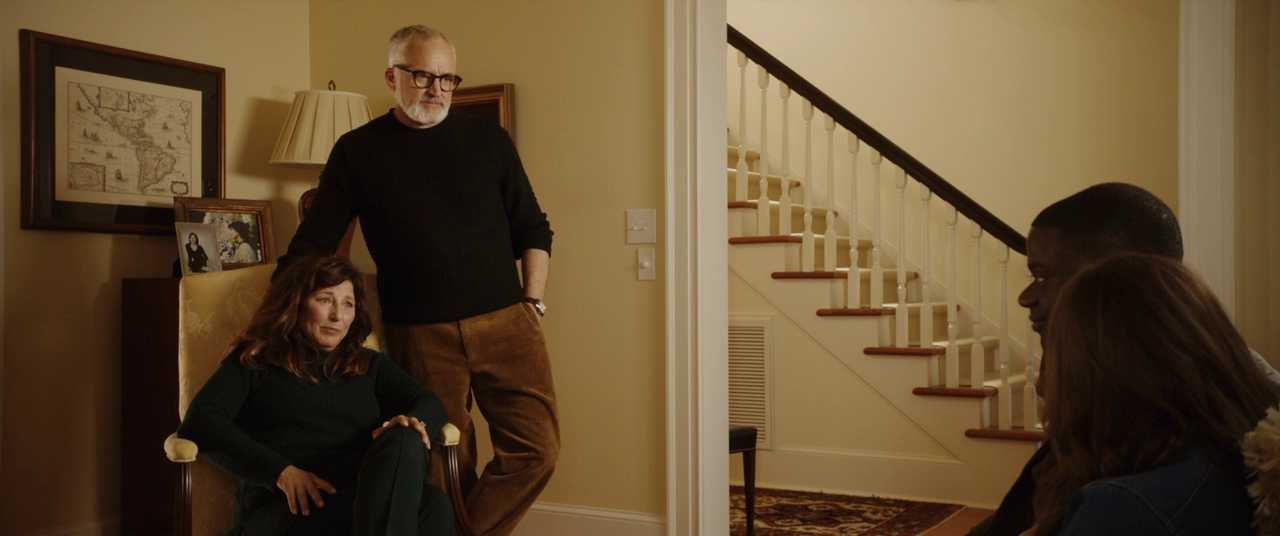
In Get Out (2017, Universal Pictures), a theme about exploitation and control shows up through social behavior, staged politeness, and scenes that turn social threat into physical danger.
And, as I mentioned in the overview, Finding Nemo (2003, Pixar Animation Studios), explores a theme about letting go that shows up through Marlin’s fear-based decisions, the mess those choices create, and the final choice to trust Nemo.
How to identify a theme and prove it with scenes
Theme gets easier when you treat it like evidence work. You collect patterns, you write a claim, and you test that claim against major story moments.
- List the repeating pressures. Write down what keeps forcing decisions, like security versus freedom or loyalty versus self-respect.
- Track the lead’s biggest choices. Focus on moments where the character could act in two clear ways, then chooses one.
- Track consequences across time. Look at what gets worse, what gets easier, and what the character loses or protects.
- Mark repeating patterns. Track motifs, symbols, and repeating scene situations that return at key beats.
- Write a one-sentence theme claim. Make it specific enough to test with scenes. Test it against at least three turning points.
A theme claim that only fits one scene is usually a detail. A theme claim that fits every film without proof is usually too vague.
How films convey theme on screen
Films turn ideas into trackable choices and patterns. Theme becomes easier to explain when you can point to what the camera, the cut, the sound, and the performance keep doing at key moments.
Character pressure and choice
Character pressure and choice is the clearest theme evidence, because theme lives in what a character does when two values collide.
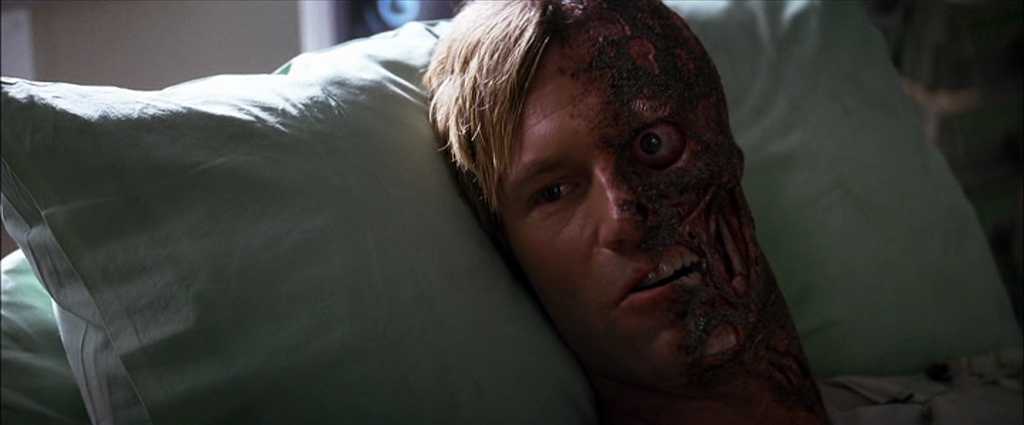
In The Dark Knight (2008, Warner Bros. Pictures), the film keeps putting characters in choice traps where every option has a cost. Harvey Dent’s fall matters because the story shows what he stands for early, then shows the kind of pressure that breaks his line.
Visual patterns that return at key beats
Visual patterns that return at key beats help theme stay visible, because repetition trains you to notice meaning in framing, space, and objects.
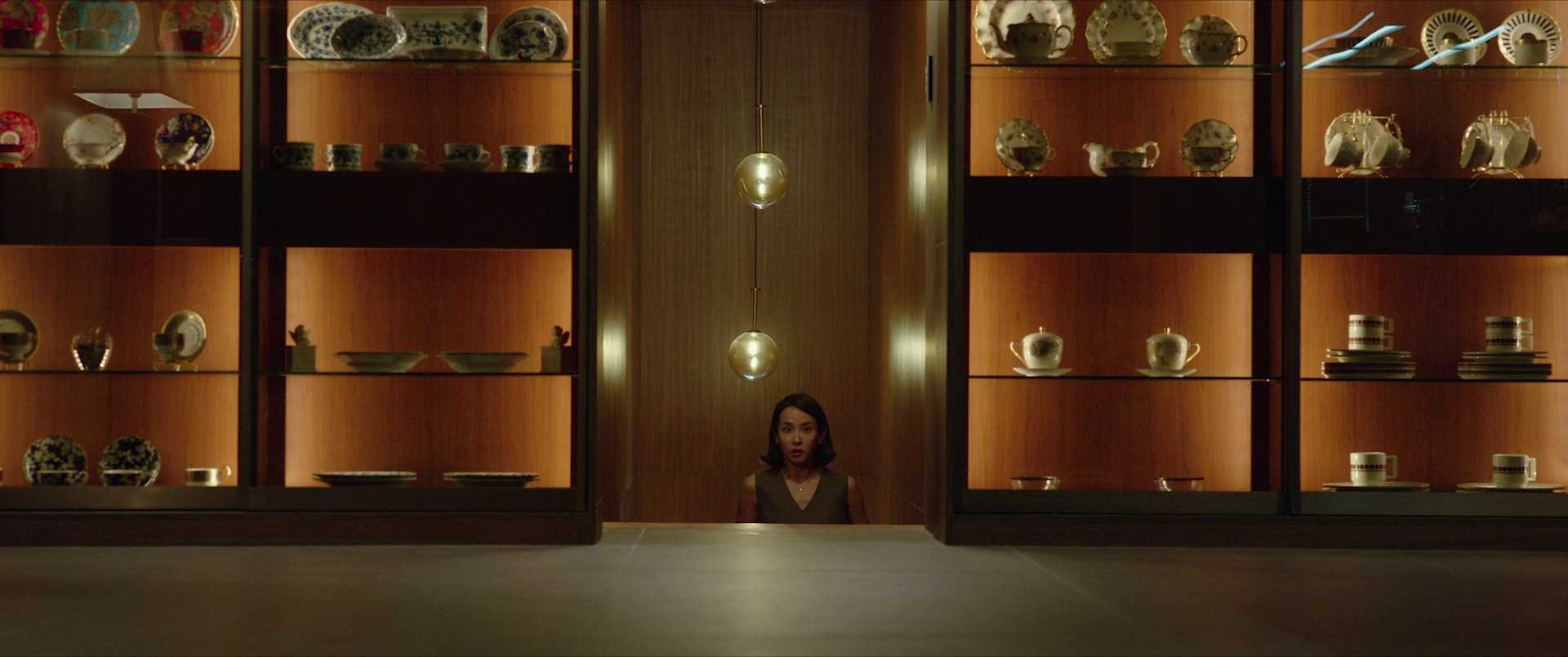
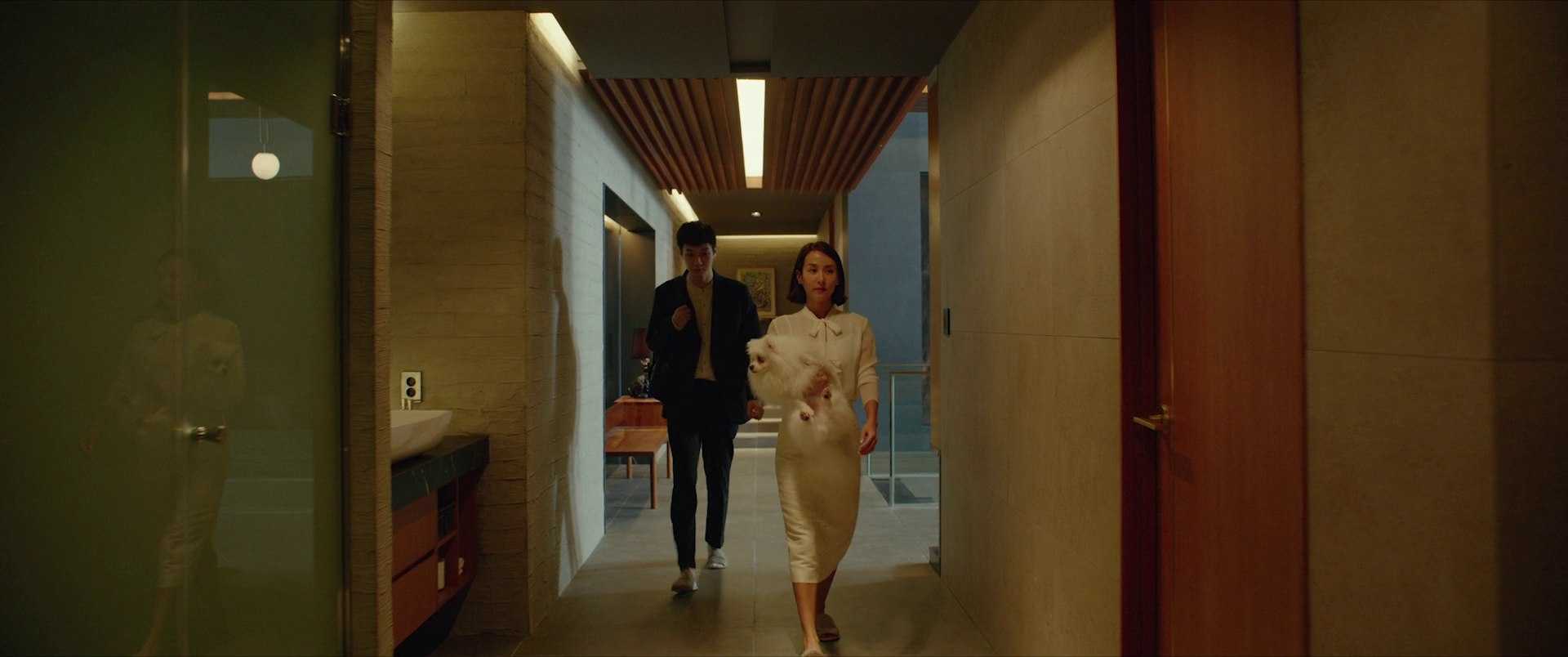
In Parasite (2019, CJ Entertainment), vertical space keeps returning. Stairs, slopes, and below-ground rooms keep placing characters on levels, which supports theme claims about class, access, and instability.
If you want to get more specific, use visual composition terms to describe what the frame keeps doing across those repeats.
Dialogue that reveals values and cover stories
Dialogue that reveals values and cover stories can carry theme, because characters tell you what they believe, what they fear, and what they justify.
Theme shows up strongest when dialogue stays on the surface while the real conflict sits underneath. That is subtext, and you can often prove it by showing how a character’s words clash with their actions and later consequences.
If you want a cleaner vocabulary for this, use dialogue in film terms like “cover story,” “objective,” and “avoidance.”
Structure and payoff as final proof
Structure and payoff can lock theme in, because the ending is the last big test of the film’s value problem.
Compare the first major choice to the last major choice. Ask what changed, what stayed firm, and what the film treats as the final cost.
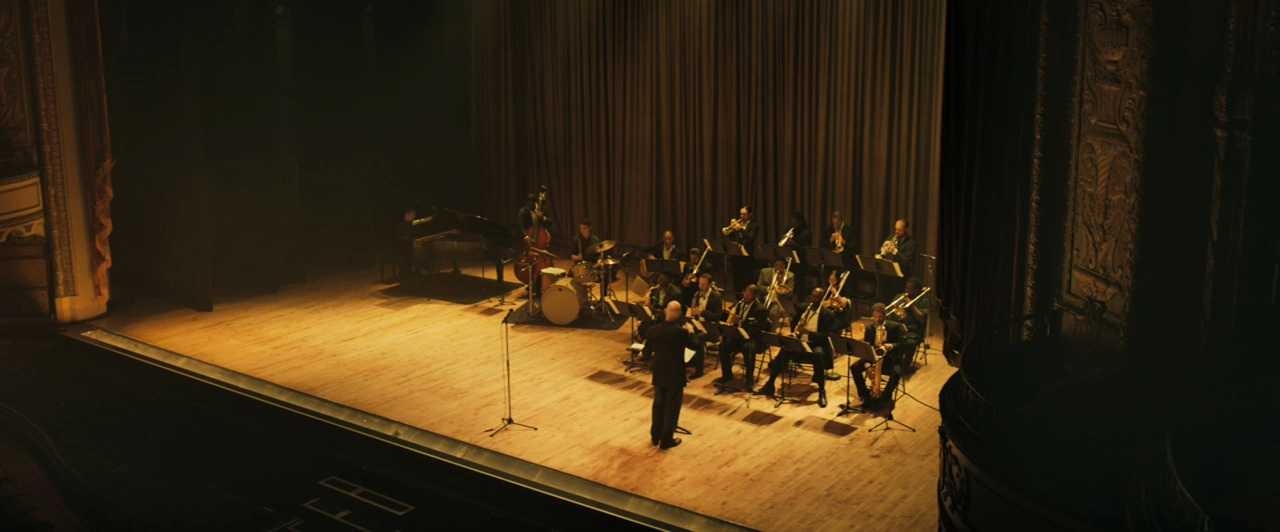
In Whiplash (2014, Bold Films), the final performance forces you to judge ambition, approval, and cost in one concentrated sequence. The meaning comes from setup and payoff across the whole film.
Sound and music as meaning signals
Sound and music can support theme through repetition and timing, because the audio track can push dread, safety, romance, or control beside a choice.
When you analyze theme through sound, point to exact moments. Name the scene, then describe what changes in the audio and what decision or consequence lands beside that change. If you need the basic terms, start with diegesis and diegetic vs non-diegetic sound.
Developing a central theme while writing a screenplay
Theme gets easier to write when you treat it like a value conflict that has to play out as decisions. You do not need a slogan. You need scenes that keep forcing the same kind of choice at a higher cost.
Start with a theme question that can be argued from both sides, like “What does loyalty cost?” or “When does protection turn into control?” A question gives you room for characters who disagree in believable ways.
Then connect that question to your protagonist. Put the protagonist under pressure, force a choice, and let the consequences carry forward. Theme becomes clearer when those consequences keep circling the same value problem.
- Build two honest positions. Give different characters believable reasons to choose different values under the same pressure.
- Design turning points as value tests. At each major beat, force a decision where every option costs something real.
- Use a repeatable pattern. Bring back an object, image, or situation, then let the context change so the meaning shifts.
- Make consequences visible. Show the cost of a choice in later scenes, so the theme grows through cause and effect.
- Use the ending as proof. Make the last major decision answer your theme question through action.
Theme and character arc
Theme and character arc often move together, because both deal with values under pressure.
If your theme is about trust, you need scenes where trust is risky and where the cost lands later. If your theme is about identity, you need scenes where identity has a price. The learning has to show up in the consequences.
Theme and foils
Theme and foils work well together, because a foil character can show two value answers side by side.
Give two characters the same kind of pressure, then let them choose different tactics. The contrast makes the theme question easier to see because the film shows two answers in action.
Dialogue tips that keep theme inside the story
Theme-relevant dialogue works best when it stays tied to conflict, because characters fight over tactics and values, not theme statements.
If you place a theme line, put it in a scene where the character has something to lose. Then make later scenes prove or challenge that belief through action and consequence.
Common theme topics and how to turn them into theme statements
Many lists label themes as one-word topics. That is a fine starting point. A usable theme is a clear claim you can test with scenes.
Love and romance
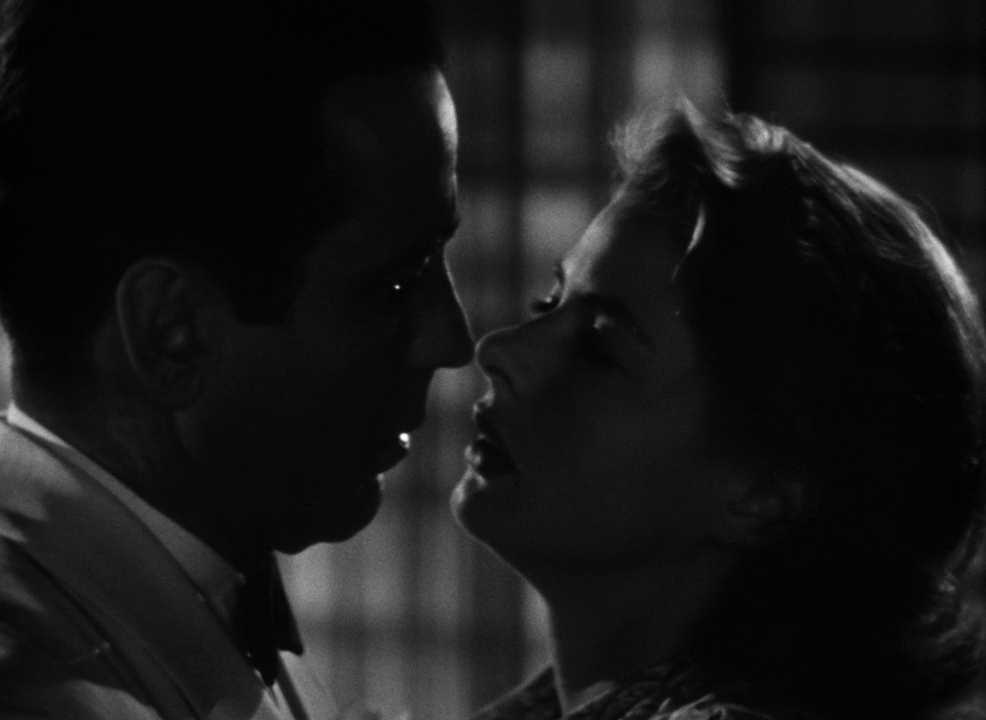
Topic: love, romance, commitment.
Theme claim example: Love can demand sacrifice when duty has real stakes.
- Casablanca (1942, Warner Bros. Pictures)
- Titanic (1997, Paramount Pictures)
- Eternal Sunshine of the Spotless Mind (2004, Focus Features)
- La La Land (2016, Lionsgate)
Coming of age

Topic: growing up, identity, maturity.
Theme claim example: Growing up is learning what you will carry and what you will leave behind.
- Boyhood (2014, IFC Films)
- Dead Poets Society (1989, Buena Vista Pictures Distribution)
- The Perks of Being a Wallflower (2012, Summit Entertainment)
- Lady Bird (2017, A24)
Transformation and duty

Topic: transformation, responsibility, sacrifice.
Theme claim example: Real duty demands loss, even when the goal is “good.”
- Star Wars: A New Hope (1977, Lucasfilm)
- The Matrix (1999, Warner Bros. Pictures)
- The Lion King (1994, Walt Disney Pictures)
- The Lord of the Rings: The Fellowship of the Ring (2001, New Line Cinema)
Campbell’s Monomyth: a guide to the hero’s journey
Social issues
Topic: inequality, injustice, discrimination, systems.
Theme claim example: A system can feel “normal” until pressure reveals who it protects.
- Erin Brockovich (2000, Universal Pictures)
- Parasite (2019, CJ Entertainment)
- 12 Years a Slave (2013, Fox Searchlight Pictures)
- Sorry to Bother You (2018, Annapurna Pictures)
Redemption
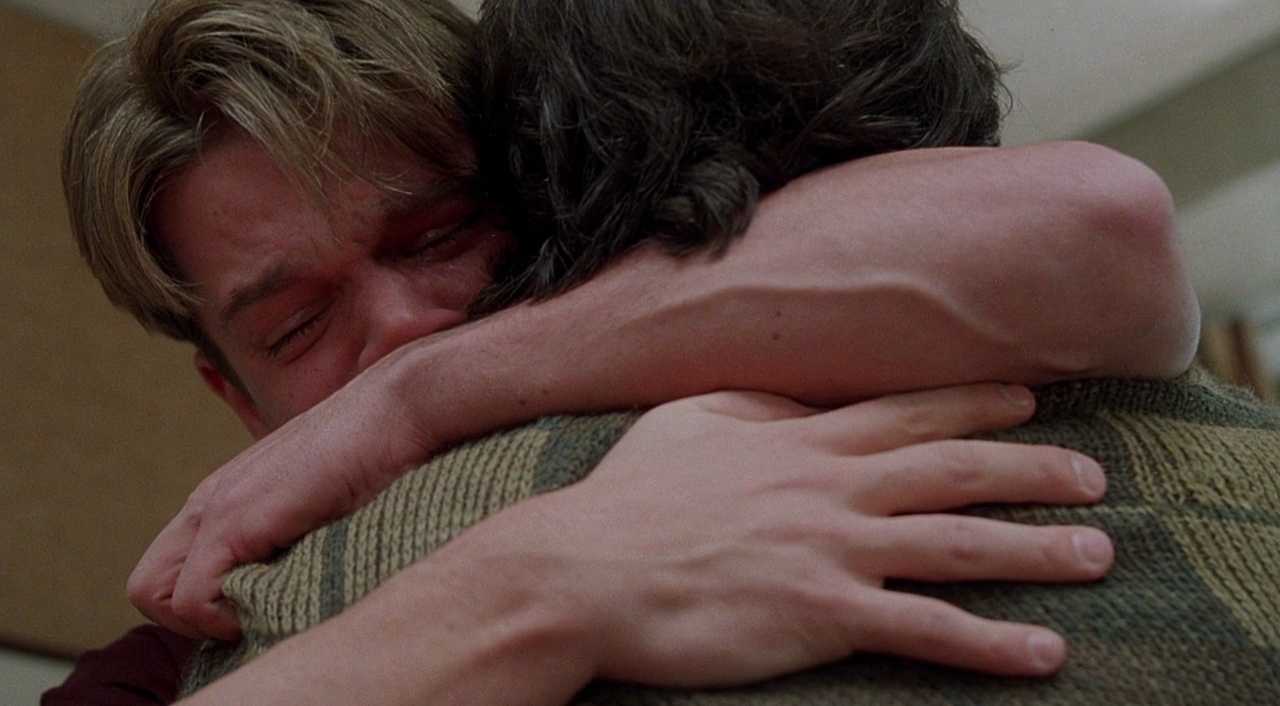
Topic: forgiveness, change, repair.
Theme claim example: Redemption starts when a character stops protecting the story they tell about themselves.
- Good Will Hunting (1997, Miramax)
- Gran Torino (2008, Warner Bros. Pictures)
- Unforgiven (1992, Warner Bros. Pictures)
- The Shawshank Redemption (1994, Columbia Pictures)
Identity and self-discovery
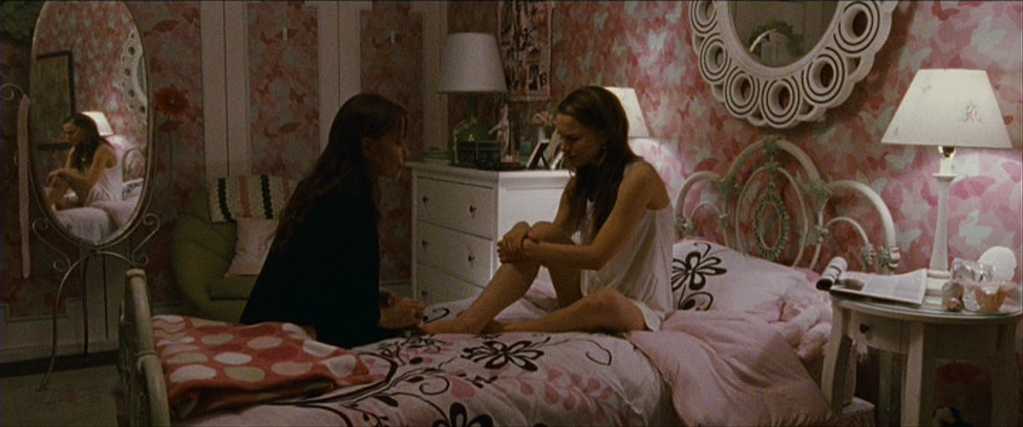
Topic: identity, masks, self-image, control.
Theme claim example: Chasing a perfect self can destroy the real self.
- Fight Club (1999, 20th Century Fox)
- Black Swan (2010, Fox Searchlight Pictures)
- Her (2013, Warner Bros. Pictures)
- The Truman Show (1998, Paramount Pictures)
Survival

Topic: survival, resilience, endurance.
Theme claim example: Survival can cost your humanity when pain becomes your only compass.
- Cast Away (2000, 20th Century Fox)
- The Revenant (2015, 20th Century Fox)
- The Road (2009, Dimension Films)
- Gravity (2013, Warner Bros. Pictures)
Betrayal

Topic: trust, deception, loyalty.
Theme claim example: Betrayal becomes “reasonable” when fear is the main currency.
- Gone Girl (2014, 20th Century Fox)
- The Godfather Part II (1974, Paramount Pictures)
- The Prestige (2006, Warner Bros. Pictures)
- Judas and the Black Messiah (2021, Warner Bros. Pictures)
War and conflict

Topic: war, violence, moral damage.
Theme claim example: War strips away the rules people use to feel “good,” then exposes what is left.
- Apocalypse Now (1979, United Artists)
- Platoon (1986, Orion Pictures)
- Saving Private Ryan (1998, DreamWorks Pictures)
- 1917 (2019, Universal Pictures)
Fantasy and imagination

Topic: imagination, wonder, escape, belief.
Theme claim example: Fantasy worlds test real values, because magic removes excuses and raises stakes.
- Pan’s Labyrinth (2006, Warner Bros. Pictures)
- Harry Potter and the Sorcerer’s Stone (2001, Warner Bros. Pictures)
- Alice in Wonderland (1951, Walt Disney Productions)
- The NeverEnding Story (1984, Warner Bros.)
Analyzing theme in film with theory and evidence
Theme analysis works best when you treat theme as an argument you prove with scenes. Theory can help you ask sharper questions, but the proof still has to stay tied to what happens on screen.
How to write a film analysis essay about theme
A theme analysis essay works when it stays focused, because you can only prove so much at once.
Write one theme claim as your thesis. Pick three to five scenes that support it. Describe what happens in each scene, then explain how craft supports meaning. Use details you can verify, like framing, blocking, editing, performance, and sound. End by showing how the ending reinforces or complicates your claim.
Revision helps when you separate summary from analysis. Summary tells what happened. Analysis explains how the film creates meaning through choices and consequences you can point to.
Major film theory lenses and what each helps you see
Film theory lenses help you notice different kinds of evidence. Pick the lens that fits your theme claim, then translate it into plain language before you write.
- Formalist film theory: looks at how patterns in editing, framing, and structure create meaning.
- Realist film theory: looks at how performance, space, and time create a sense of reality.
- Auteur theory: looks for repeating themes and choices across a director’s work.
- Feminist film theory: looks at gender, desire, power, and whose viewpoint controls the image.
- Psychoanalytic film theory: looks at desire, fear, identity, and repression through recurring images and behavior.
- Marxist film theory: looks at class, labor, ownership, and how systems push character choices.
- Genre theory: looks at how genre expectations carry shared meaning and shared themes.
- Reception theory: looks at how audiences and culture change interpretation, which matters when theme depends on history.
A useful habit is to name your lens, then return to scenes. Theory supports analysis when it sharpens what you can already prove with evidence.
Adapting themes from literature to the screen
Adaptation can change how theme is expressed, because film and prose have different strengths. A novel can live inside thoughts. A film has to find external actions and images that carry the same meaning.
Start by naming the theme question you want to keep. Then find the book scenes that carry the strongest theme tests. You may need to merge characters, compress events, or shift order to keep the theme readable in film time.
In The Lord of the Rings: The Fellowship of the Ring (2001, New Line Cinema), themes about power, temptation, and duty show up through visible choices and costs. The Ring works as a concrete object that changes behavior in scenes, which lets film carry inner struggle through action and staging.
If a book’s theme depends on narration, you have options. You can use voice-over with care. You can also build a visual system that repeats and shifts meaning across the film, like a recurring object that changes role, or a framing pattern that tightens with pressure.
The limits of theme and common mistakes
Theme can guide writing and analysis, but it can also turn into a shortcut. Theme stays strong when it stays specific and evidence-based.
One common mistake is stopping at a one-word topic. “Love” and “betrayal” are categories. A usable theme needs a claim you can test in scenes. Another common mistake is forcing characters to speak the idea straight out. Dialogue often flattens when it carries theme as a speech instead of conflict.
Theme also weakens when scenes repeat the same test with no new cost. Pressure has to rise, and choices have to get harder, or the film starts to feel stuck.
In analysis, a common mistake is treating theme as intent without proof. You can suggest what a film may be doing, but you still need to show how the film supports your claim through trackable evidence.
Summing Up
Theme is the single main idea a story keeps testing through choices, consequences, and repeating patterns that return at key beats. Theme becomes clearer when you can point to proof in scenes, not just a label.
You can spot theme by tracking pressure, decisions, consequences, and repeat patterns like motifs and symbols. You can write theme by building a value conflict, designing turning points as tests, and letting the ending act as the final proof. You can analyze theme by making one claim and supporting it with scenes and craft evidence.
Read Next: Curious how film theory shapes the way we watch movies?
Start with the Film Theory section to break down realism, formalism, structuralism, and more — with examples from iconic films.
If you want studying film theory I recommend starting with The FilmDaft overview of film theory discourses to break down realism, formalism, structuralism, and more — with examples from iconic films.
Then explore the full Film History, Theory & Genre collection to see how movements, styles, and storytelling traditions have evolved.
Whether you’re into Soviet montage or 2000s genre mashups, there’s something here to sharpen your understanding.
Sources and further reading
- Aristotle (c. 335 BCE). Poetics.
- Bordwell, D., & Thompson, K. (2023). Film Art: An Introduction (13th ed.). McGraw Hill.
- Chatman, S. (1978). Story and Discourse: Narrative Structure in Fiction and Film. Cornell University Press.
- Mulvey, L. (1975). Visual pleasure and narrative cinema. Screen, 16(3), 6–18.
- Field, S. (2005). Screenplay: The Foundations of Screenwriting (Rev. ed.). Delta.

Thank you for making that so simple. Most appreciated
You’re welcome. I’m glad you found it useful 🙂