
Published: April 18, 2024 | Last Updated: July 4, 2026

What is Auteur Theory? Definition & Meaning
Auteur theory is the idea that a film’s director is like its main author (or “auteur”). This means the director’s personal style and vision shape the film more than anyone else involved. The idea began as la politique des auteurs, coined by François Truffaut in the journal Cahiers du cinéma, and was renamed “auteur theory” by American critic Andrew Sarris in 1962. The theory suggests that the director’s influence is strong enough to stand out clearly, even though filmmaking is usually a team effort.
Origins of Auteur Theory
Auteur theory began in French film criticism in the late 1940s, especially among writers for the magazine Cahiers du Cinéma. It was first introduced by critics like François Truffaut and Jean-Luc Godard, who later became key filmmakers in the French New Wave movement.

Jean-Luc Godard (at Berkeley, 1968) was one of the founders of Auteur Theory and later became a central filmmaker within French New Wave cinema.
Gary Stevens, CC BY 2.0 https://creativecommons.org/licenses/by/2.0, via Wikimedia Commons
Critics like François Truffaut believed directors could use filmmaking tools (like cameras, editing, and sound) to express their ideas, just like writers use a pen.
Truffaut crystallized these ideas in his 1954 essay A Certain Tendency of the French Cinema. In it, he criticized films of his time for focusing too much on adapting existing stories instead of showing the director’s unique vision.
Later, American critic Andrew Sarris brought auteur theory to the United States. He introduced and expanded these ideas in his 1962 essay, Notes on the Auteur Theory, and in his book, The American Cinema: Directors and Directions 1929–1968 (1968). In his work, Sarris ranked directors and films based on how clearly the director’s personal style stood out.
Core Concepts
At the heart of auteur theory is the “politique des auteurs,” which posits that the director should imprint his vision on the movie despite the collaborative nature of film production.

François Roland Truffaut and actress Claude Jade at the première of Love on the Run in Luxembourg, April 1979.
Carlo Hansen, CC BY-SA 4.0 https://creativecommons.org/licenses/by-sa/4.0, via Wikimedia Commons
The idea of the auteur was groundbreaking because movies were traditionally seen as the result of teamwork, not just one person’s vision. French cinema at the time valued polished scripts, strong acting, and skilled craft more than creativity and personal style. Auteur theory challenged this, rebelling against what was known as the “tradition of quality.”
An auteur’s personal vision, sometimes called their “signature,” shows up through repeated themes (aka motifs), visual styles, and common ideas across their movies.
Examples of Auteur Directors
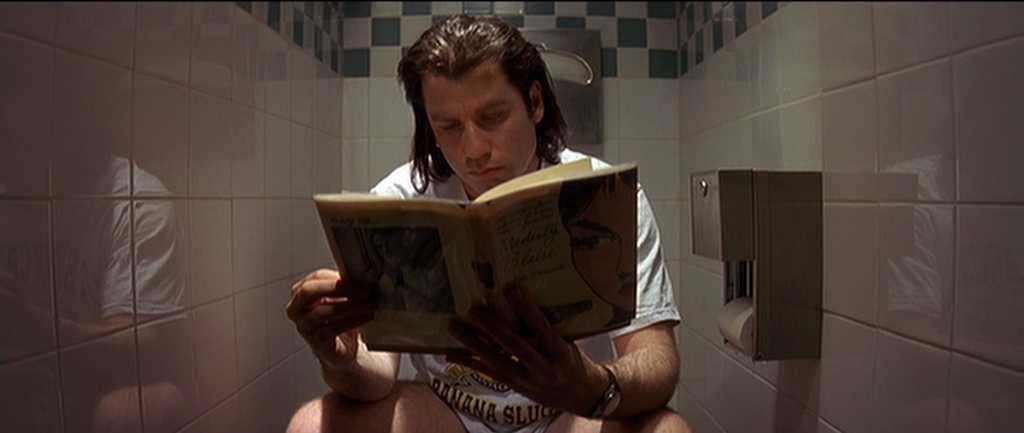
The influence of auteur theory can be seen in the recognition of directors like Quentin Tarantino, whose films Pulp Fiction (1994) and Kill Bill (2003) feature his unmistakable dialogue and non-linear storytelling.
Another example is Martin Scorsese, famous for exploring complicated characters who deal with guilt and redemption, like in Goodfellas (1990) and Taxi Driver (1976). These directors clearly show how having a strong personal style makes someone an auteur.
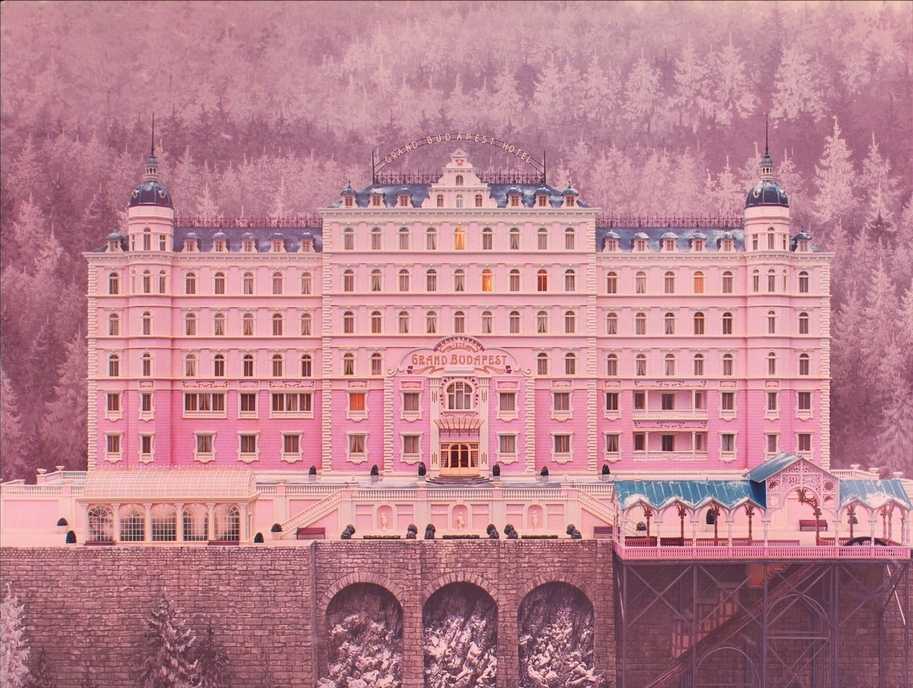
Other directors known for their distinct styles include Alfred Hitchcock, whose films like Psycho (1960) and Rear Window (1954) often feature themes of suspense and spying on others, and Wes Anderson, who creates films with a unique visual style and symmetrical shots, like The Grand Budapest Hotel (2014).
| Movie (Year) and Director | Explanation |
|---|---|
| Citizen Kane (1941) – Orson Welles | Orson Welles’ debut feature is often cited as the quintessential example of auteur theory due to his innovative narrative techniques and visual style. Welles’ control over cinematography, lighting, and structure indicates his influence over the project. |
| Vertigo (1958) – Alfred Hitchcock | Alfred Hitchcock’s meticulous control over camera movement and framing and thematic focus on psychological obsession make Vertigo a prime example of auteur theory. Hitchcock’s recurring motifs are evident throughout his career, marking his films distinctly. |
| 8½ (1963) – Federico Fellini | Fellini’s 8½ explores complex themes of creativity and psychological turmoil, reflective of Fellini’s own experiences. The film’s surreal narrative structure and visual style are distinctly Felliniesque, showing a personal touch that aligns with auteur theory. |
| Annie Hall (1977) – Woody Allen | Annie Hall reflects Woody Allen’s personal and neurotic narrative style and urban intellectual milieu. His films often blend humor with personal philosophical dilemmas, reflecting his unique directorial voice. |
| Blue Velvet (1986) – David Lynch | David Lynch’s Blue Velvet combines the grotesque with the mundane, exemplifying Lynch’s unique narrative and aesthetic style. His approach to surreal storytelling and visual design is highly personal and recognizable. |
| Pulp Fiction (1994) – Quentin Tarantino | Quentin Tarantino’s eclectic dialogue, non-linear storytelling, and homage to multiple genres are hallmarks of his style, clearly visible in Pulp Fiction. This film embodies the essence of Tarantino’s directorial identity, making it a strong example of auteur theory. |
| The Grand Budapest Hotel (2014) – Wes Anderson | Wes Anderson is known for his distinctive visual and narrative style characterized by symmetrical compositions, pastel color palettes, and intricate detail. The Grand Budapest Hotel shows his unique stylistic traits, aligning with auteur theory. |
| Moonlight (2016) – Barry Jenkins | Barry Jenkins’ Moonlight portrays rich, emotional depth and a strong personal vision regarding identity and human connection. The film’s intimate character portrayal and innovative narrative structure reflect Jenkins’ distinctive directorial voice. |
| The Lighthouse (2019) – Robert Eggers | Robert Eggers’ The Lighthouse exemplifies his commitment to atmospheric and historical authenticity and a unique horror aesthetic. His meticulous attention to period detail and psychological depth reflects his auteur signature. |
| Parasite (2019) – Bong Joon-ho | Bong Joon-ho’s Parasite mixes elements of dark comedy, drama, and social commentary, which are recurrent themes in his work. His ability to craft intricate narratives with deep socio-economic insights shows his auteur characteristics. |
Auteur Theory’s Relation to French New Wave Cinema
The French New Wave (Nouvelle Vague) and Auteur Theory are important ideas in film studies. They are connected but focus on different things.
People often talk about them together because they appeared around the same time, and many French New Wave directors supported Auteur Theory. But they aren’t the same. The French New Wave was a film movement that introduced new styles, storytelling methods, and cultural ideas into movies. Auteur Theory is about recognizing the director as the main “author” of a film, focusing on their personal vision and style.
Differences Between Auteur Theory and French New Wave Cinema
Below, I have created a table that compares and shows the relationship and differences between Auteur Theory and French New Wave Cinema.
| Auteur Theory | French New Wave |
|---|---|
| A specific approach to analyzing films, focusing on the director’s role as the primary creative force. | A broader film movement encompassing various stylistic and narrative innovations. |
| A critical framework that can be applied to film analysis globally and historically, transcending the specific context of the French New Wave. | Describes a historical and cultural movement in French cinema, including changes in how films were made and perceived. |
| Primarily influenced film criticism and theoretical discussions about the role of the director in cinema. | Influenced actual filmmaking techniques (e.g., using lighter cameras and shooting on location). |
Limitations and Criticisms
Auteur theory is influential, but it also has some problems. The main criticism is that it overlooks how movies are made by teams, not just one person. Filmmaking involves writers, actors, editors, and many others working together, and auteur theory’s focus on the director can simplify this reality too much.
Another issue is that auteur theory can give too much credit to directors, making other important team members seem less valuable. This can limit recognition for the contributions of everyone else involved in the creative process.
Influence on the New Hollywood Movement
When auteur theory became popular, attention in cinema began shifting from movie stars to the overall creative vision behind a film.
In the 1960s and 1970s, a new wave of directors such as Martin Scorsese, Francis Ford Coppola, George Lucas, and Steven Spielberg brought fresh energy to filmmaking. This period, known as the New Hollywood era, gave directors more control and freedom to take risks. As a result, studios supported bolder and more diverse films, leading to some of the most innovative movies of the time.
However, in the 1980s, following high-profile failures such as the epic Western movie Heaven’s Gate (1980), studios reasserted control, leading to a diminished influence of auteur theory.
Modern Relevance: Streaming Auteurs
In today’s digital age, when almost anyone with a smartphone can try making a film, auteur theory still matters, even if some younger audiences see it as outdated.
It still helps people appreciate the director’s role as more than just calling “action” and “cut.” With streaming services like Netflix and Amazon creating more original content, many projects are still shaped by a director’s personal style. These auteur-driven films and shows give platforms unique, recognizable content that stands out in a crowded market.
Summing Up
Auteur theory has grown from a debated idea into a widely used tool for looking at and discussing films, especially within film theory. It highlights how a director’s vision can shape a movie, much like a painter with a brush or a writer with a pen. Still, it is important to remember that filmmaking is mostly a team effort, where everyone, from the production assistant to the lead actor, plays a part in completing the final picture.
Auteur Theory FAQ
What is auteur theory?
The idea that a film’s director is its true “author,” whose personal vision and style shape the film more than anyone else. It treats directors like Hitchcock or Kubrick as artists with a signature.
Who came up with auteur theory?
It began as la politique des auteurs, coined by François Truffaut in Cahiers du cinéma in the 1950s, and was renamed “auteur theory” by American critic Andrew Sarris in 1962.
What are Sarris’s three criteria for an auteur?
Technical competence, a distinguishable personality (a recognisable style), and interior meaning — the tension between a director’s personality and their material.
What are examples of auteur directors?
Alfred Hitchcock, Stanley Kubrick, Wes Anderson, Quentin Tarantino, and Akira Kurosawa are often cited for their instantly recognisable styles.
What is the main criticism of auteur theory?
That filmmaking is highly collaborative, so crediting the director alone overlooks the writers, cinematographers, editors, and actors who also shape a film.
Read Next: Curious how film movements shape cinema?
Read our full guide to What Is a Film Movement? for clear definitions and iconic examples, or explore more in our Film Movements & World Cinema section.
Want broader context? Visit our Film History, Theory & Genre archive for deeper dives into the evolution of cinematic style.
