

Published: July 17, 2024 | Last Updated: July 2, 2026

Overview
Definition: Tone is the film’s overall emotional attitude in a scene, created by how the film frames, lights, paces, and scores what you are watching.
What you’ve seen before: You have felt this when the same basic action, like someone walking down a hallway, plays as funny in one film and scary in another because every detail pushes your mood in one direction.
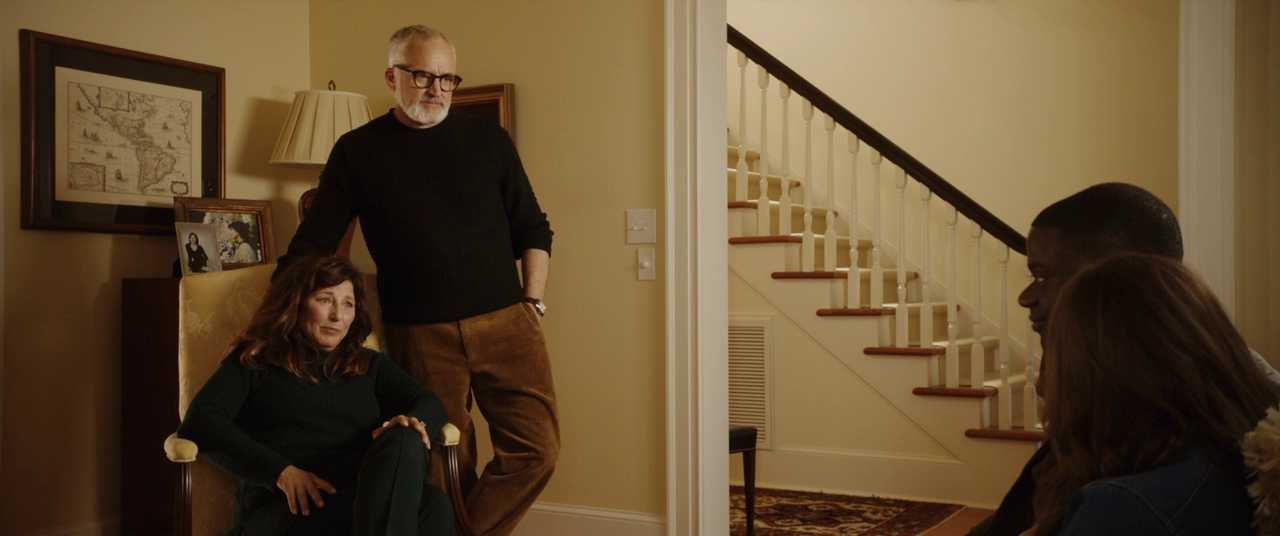
Example: In Get Out (2017, Universal Pictures), early scenes at the Armitage house keep everyday behavior slightly “off” through calm pacing, polite smiles that linger, and music that stays uneasy, so normal talk starts to feel like a trap.
Why it matters: Tone decides what you expect next, so it guides where you put your attention. When the tone stays consistent, you read small moments as clues, not random noise. When the tone turns muddy, a scare can land flat, a joke can feel cruel, and your scene goals get harder to play.
- Key takeaway 1: Pick the emotion you want first, then choose lighting, framing, and pace that all support it.
- Key takeaway 2: Check tone at the scene level, because one wrong music cue or edit rhythm can flip the feeling.
- Key takeaway 3: Keep tone steady across cuts, so performance, camera, and sound do not fight each other.
Now, let’s zoom out and define tone in film inside the bigger craft system, so you can control it on purpose.
What “tone” means in the full film framework
Tone is the story’s attitude toward what happens, carried through the whole film or a long stretch of it. It sits between story and style. The story decides what happens and what it costs. The style decides how you experience those events, shot by shot and beat by beat.
You can test tone with three simple checks:
Sound check: Do music and sound push comfort, dread, irony, or tenderness? If you need vocabulary, see sound design in film and diegetic and non-diegetic sound.
Consequence check: When a character makes a mistake, does the film treat it as tragic, awkward, cruel, or forgiving?
Distance check: Does the camera feel close like a partner, far like a witness, or watchful like surveillance? If you want more tools here, see point of view in film.
If you want to separate “tone talk” from broader craft talk, see style in film and film form vs film style.
How tone works in a film
Tone stops feeling vague when you treat it as a pattern you can prove. You do not notice tone once. You keep noticing it because the film repeats the same kind of pressure, the same kind of humor, and the same moral “angle” on characters.
Tone guides how you read what happens
Tone tells you what kind of meaning the film wants you to make from events. A breakup can play as tragic, awkward, bitter, or relieved. The plot beats can stay similar. The tone changes how you read each pause, each reaction, and each choice.
Tone comes from repeatable choices you can point to
You can defend a tone label when you can point to evidence across scenes. That evidence usually shows up as repeat patterns in story consequence and craft choices.
- Story pressure: what problems scenes keep testing, plus how harsh the consequences feel
- Character framing: whether the film treats mistakes with sympathy, ridicule, dread, or cold distance
- Dialogue behavior: how people talk under stress, what they dodge, and when jokes cut tension (see dialogue in film)
- Camera choices: shot size, angle, movement, and how close you get (see camera shots, angles, and moves)
- Lighting and color: contrast, shadow weight, and palette consistency (see low-key lighting, high-key lighting, and color palette)
- Sound choices: silence, room tone, music style, and how loud the world feels (see diegesis)
- Editing rhythm: hold time on faces, cut frequency, and where reactions land (see pacing in film and film cut)
- Design and texture: sets, props, costumes, and how “clean” or “worn” the world looks (see production design in film and setting in film)
Use tone labels that point to craft
A useful tone label hints at choices you can track. “Dark” can mean many things. “Dry,” “clinical,” “anxious,” “tender,” “mean-spirited,” or “satirical” usually points you toward specific patterns in performance timing, framing distance, music behavior, and consequence harshness.
Tone, mood, genre, and style
These terms overlap in real films, so they get mixed up fast. You can keep them straight by asking one question: “Does this describe a short stretch, or does it describe the full attitude across the story?”
Tone and mood sit at different scales
Mood is the local feeling in a moment or a stretch of scenes. A film can move through dread, relief, warmth, and shock. Tone is the throughline attitude that keeps showing you how the film treats events as it moves between moods. If you want a clean breakdown with examples, see mood in film and atmosphere in film.
Genre sets expectations, then tone makes the promise specific
Genre helps you predict the kind of story moves you might see. A heist suggests planning and execution. Horror suggests threat and survival. Tone tells you whether that horror plays as grim, playful, tragic, or satirical, which changes how you stage scenes and how you pace reveals. For genre tools, see genre in film and subgenre.
Style is the toolbox that carries tone
Style is the set of techniques you keep using, across cinematography, editing, sound, and design. Style can support tone, or it can fight it if departments pull in different directions. If you want the big picture, see style in film.
How to establish tone in a screenplay
When you write tone well, you give everyone the same target before the camera shows up. You do not need to micromanage shots on the page. You do need to control what the reader feels, scene by scene, so the film can stay consistent later.
The screenwriter sets tone through consequence and attention
You set the default attitude through what you choose to show, what you skip, and what consequences you attach to choices. You also decide how often relief arrives, how often danger escalates, and how characters talk under stress. Tone often starts as a writing problem before it becomes a camera problem.
Tone on the page comes from detail control
Readers feel tone through verbs, specificity, and the order you reveal information. You can keep descriptions lean and still control tone by choosing the right details. Sentence length also matters. Short lines speed up danger. Longer lines slow a moment and add weight.
Sample action line (neutral tone): He opens the fridge. It is empty.
Sample action line (bleak tone): He opens the fridge. The light flickers over one bottle of ketchup and a plate with dried crust.
Tone in dialogue comes from intent and risk
Dialogue tone is not only word choice. It comes from what the character wants, what they fear, and what they are willing to risk in the moment. A joke can land as cruel if it targets a weakness. A simple line can land as scary if it arrives with calm certainty during danger.
Sample dialogue (comic deflection): “We are fine. The smoke alarm is just… dramatic.”
Sample dialogue (threat under politeness): “You can leave whenever you want. I only need you to sign first.”
Screenwriting techniques that support tone
Mood does short-range work, then tone does long-range work. Pick mood tools that match your tone target, so the script does not feel like it switches values by accident.
- Anchor details: repeat a few objects, textures, or behaviors that match the attitude of the story (see repetition in film)
- Cause-first scene design: let actions trigger consequences on the page, so tension feels earned
- Controlled humor: decide where jokes release pressure, plus where jokes sharpen cruelty
- Behavior over labels: describe what you can see someone do, then let the reader judge it
- Context clues: plant meaning through props, reactions, and focus (see context in film)
How to spot tone drift in a draft
Read three scenes that sit far apart in the story. If they feel like they belong in different movies, you have tone drift. Mark what causes it. Look for changes in consequence harshness, joke frequency, description density, and how often the script asks you to empathize or judge.
Tone shifts
Tone shifts work when the story earns the change. A shift needs a pivot, which often comes from a new fact, a new threat, or a new moral cost that changes how you read everything. Parasite (2019, CJ Entertainment) is a common example because it can move from social comedy into sharper suspense once the hidden space and violence enter the story. The shift holds because the film has already built a base of class pressure and deception.
How on-screen craft creates tone
Once you move from page to screen, tone becomes a set of choices you can test and adjust. The same scene can feel gentle or harsh based on lens distance, light quality, sound density, and how long you hold a reaction.
Cinematography choices that steer tone
Camera choices steer tone through distance, movement, and what the frame refuses to show. A close lens near a face can feel intimate. The same choice can feel invasive if the character wants space. A locked wide frame can feel calm. The same choice can feel cold if the scene needs warmth. If you want practical options, see camera shots, angles, and moves, and visual composition.
Lighting and color decisions that carry attitude
Lighting changes tone through contrast, shadow shape, and softness. Hard light with deep shadows can make a room feel dangerous or morally sharp. Soft light with gentle falloff can make a room feel safe, nostalgic, or romantic. If you need building blocks, see low-key lighting, high-key lighting, color psychology in cinematography, and color grading.
Production design decisions that make tone visible
Production design carries tone through the rules of the world you can see. A clean, symmetric space can suggest control. A crowded, worn space can suggest struggle. The key is consistency. If your world looks “fancy” in one scene and “cheap” in the next, the tone can wobble unless the story explains the change. For deeper tools, see production design in film and setting in film.
Sound choices that lock tone to meaning
Sound choices change tone through what you hear, what you barely hear, and what you expect to hear next. Dense ambience can make a world feel alive. The same density can feel oppressive in a tight room. Silence can feel peaceful. Silence can also feel like a warning. If you want a solid overview, see sound design in film and diegesis.
Performance and editing are tone multipliers
Actors set tone through timing, restraint, and stress behavior. Editing sets tone through rhythm and emphasis. A long hold on a face can build empathy or discomfort. A quick cut away can turn pain into a joke, or turn a joke into threat. If you want technical tools, see film cut, scene transitions, and coverage in film.
Film theory and analysis of tone
When you analyze tone, you move from personal reaction to defendable evidence. You make a claim, then you support it with patterns the film repeats. That approach keeps you honest, because you can test your idea against scenes that do not fit your first impression.
A practical method for a tone analysis
A tone analysis works best when you treat tone as a system. Prove the system with evidence from at least two scenes. Keep your writing simple. Explain cause and effect.
- Name the tone with a precise label: pick a word that implies craft, then define what you mean by it
- Prove it across departments: connect performance, camera, sound, and consequence design
- Explain what it changes: show how the attitude changes what you judge, fear, forgive, or laugh at
Auteur theory and tone
Auteur theory is tied to director identity in film criticism. The idea became influential through French critic and director François Truffaut in 1954 and American critic Andrew Sarris in 1962. Tone becomes an easy pattern to track across a director’s films because framing distance, pace, moral attitude, and humor often repeat. If you want a related angle, see authenticity in film and film theory.
Representation, power, and tone
Tone matters when a film shows bodies, desire, danger, and power. Film theorist Laura Mulvey wrote a major 1975 essay on visual pleasure and the gaze. Cultural critic bell hooks expanded that conversation in the early 1990s. A careful tone analysis asks a simple question: what does the film push you to feel about what you see? Then you check whether the craft pushes empathy, control, or detachment. If you want related context, see mood in film and atmosphere in film.
How tone connects to theme and point of view
Tone often supports theme, because both deal with values and judgment. Tone also connects to point of view, because camera access and sound access decide whose reality gets priority. If you want supporting guides, see theme in film and point of view in film.
Case studies: tone in film noir and comedy
Case studies help because tone is easier to learn when you can point to a repeatable playbook. Film noir and comedy both rely on precision. Noir relies on moral tension and trap-like spaces. Comedy relies on timing and expectation.
Film noir tone
Film noir is often linked to moral tension, crime pressure, and high-contrast lighting. French critics Raymond Borde and Étienne Chaumeton wrote an early book on noir in 1955. Film scholar James Naremore later wrote a major history and analysis in 1998. Double Indemnity (1944, Paramount Pictures) sets a noir tone early through confession framing, fatal consequences, and the sense that every “smart” move has a price. If you want a dedicated guide, see film noir.
Comedy tone
Comedy tone depends on what the script treats as normal, plus what it treats as absurd. Airplane! (1980, Paramount Pictures) commits to deadpan delivery, so ridiculous events get treated with straight-faced certainty. That choice carries across acting, cut rhythm, and line design. Comedy can also run dry and uneasy. Fargo (1996, Gramercy Pictures) pairs polite small talk with violence, so the tone stays tense and awkward across scenes.
Common misunderstandings, limits, and misuses
Tone becomes messy when it turns into a shortcut note that nobody can execute. “Make it darker” does not tell you what to change. “Make it funnier” does not tell you where tension should release. Useful tone notes name a lever and a result.
When “tone” becomes a vague note
If you get a tone note, ask for a craft translation. What should change in consequence design, joke placement, camera distance, light contrast, or sound density? What scene should feel different, and what should stay consistent?
When a tone problem is really a story problem
Sometimes tone breaks because story logic breaks. If a character acts out of character, the scene can turn unintentionally comic or unintentionally cruel. Fixing tone can mean fixing motivation, stakes clarity, and cause and effect.
When you do not need to name tone
Some projects stay simple and direct. In those cases, you may get more value from scene clarity, honest performance, and clean coverage. Tone talk helps most when a project blends genres, plays with irony, or risks mixed signals.
Frequently Asked Questions
What is tone in simple terms?
Tone is the attitude a writer or filmmaker takes toward the subject and audience, such as serious, playful, or ironic.
What is the difference between tone and mood?
Tone is the creator’s attitude, while mood is the feeling the audience experiences.
What is an example of tone?
The dark, ironic tone of a film noir, or the warm, gentle tone of a family comedy.
How is tone created in film?
Through word choice, music, lighting, color, pacing, performance, and camera work.
What are some words to describe tone?
Common tone words include serious, humorous, sarcastic, nostalgic, ominous, formal, and playful.
Summing Up
Tone is the consistent attitude a film expresses toward events, carried through story pressure and craft choices. You can set tone in a screenplay through consequence design, detail control, and dialogue behavior. You can then build and adjust it through camera choices, lighting and color, production design, sound, performance, and editing rhythm. Tone analysis stays trustworthy when you prove your claim with repeat patterns across scenes, and when you explain what those patterns do to meaning and judgment.
Read Next: Curious how film theory shapes the way we watch movies?
Start with the Film Theory section to break down realism, formalism, structuralism, and more — with examples from iconic films.
If you want studying film theory I recommend starting with The FilmDaft overview of film theory discourses to break down realism, formalism, structuralism, and more — with examples from iconic films.
Then explore the full Film History, Theory & Genre collection to see how movements, styles, and storytelling traditions have evolved.
Whether you’re into Soviet montage or 2000s genre mashups, there’s something here to sharpen your understanding.
Sources and further reading
- McKee, Robert. Story: Substance, Structure, Style, and the Principles of Screenwriting. ReganBooks, 1997.
- Truby, John. The Anatomy of Story. Farrar, Straus and Giroux, 2007.
- Seger, Linda. Making a Good Script Great. Samuel French, 1987.
- Field, Syd. Screenplay: The Foundations of Screenwriting. Delacorte Press, 1979.
- Sarris, Andrew. “Notes on the Auteur Theory in 1962.” Film Culture, 1962.
- Truffaut, François. “Une certaine tendance du cinéma français.” Cahiers du cinéma, 1954.
- Mulvey, Laura. “Visual Pleasure and Narrative Cinema.” Screen, 16(3), 1975.
- hooks, bell. “The Oppositional Gaze: Black Female Spectators.” In Black Looks: Race and Representation. South End Press, 1992.
- Borde, Raymond, and Chaumeton, Étienne. Panorama du film noir américain. Éditions de Minuit, 1955.
- Naremore, James. More Than Night: Film Noir in Its Contexts. University of California Press, 1998.
