

Published: May 17, 2024 | Last Updated: December 4, 2024

Authenticity Definition & Meaning
Authenticity is a multifaceted concept explored in philosophy, sociology, and cultural studies. It generally refers to being genuine to one’s character, spirit, or identity. In the context of objects, authenticity means being original or not a copy.
In this article, I’ll examine authenticity in film, especially based on the perspective of German cultural critic and media theorist Walter Benjamin.
Authenticity in Walter Benjamin’s Thought
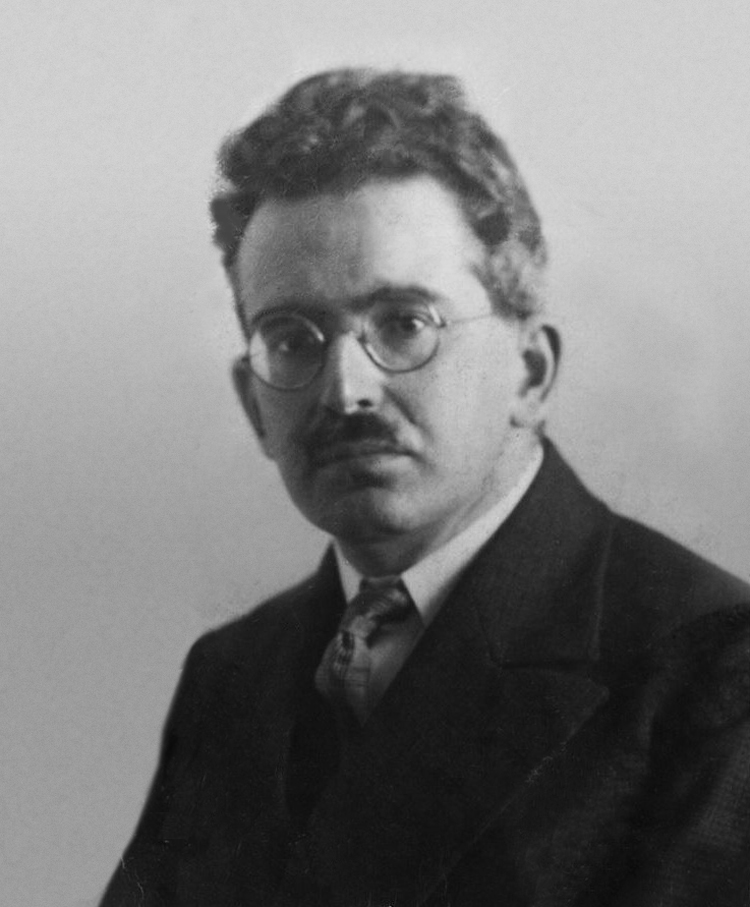
Walter Benjamin’s essay, The Work of Art in the Age of Mechanical Reproduction (1935), discusses authenticity and its transformation due to mechanical reproduction technologies.
Benjamin asserts that a work of art’s aura—its unique presence in time and space—diminishes when reproduced (fx when you take a photo of a painting). This aura encompasses the work’s history, physical location, and unique existence as an irreplicable object (think fx of the Mona Lisa painting). Copying an artwork strips it of its authenticity and aura.
Authenticity and Film
Film, as a medium, addresses Benjamin’s concerns about authenticity. Unlike a painting or a sculpture, a film lacks a single, original copy that signifies the ‘authentic’ work.
Of course, this isn’t technically true because there’s usually a master from which the rest of the copies are made. But the point is that movies cater to mass consumption, with each screening acting as a reproduction. This attribute makes films inherently less ‘authentic’ in Benjamin’s view.
On the other hand, this aspect also democratizes art, making it accessible to a broader audience. Mainstream blockbusters are produced to be shown in multiple theaters globally and later distributed through various digital and physical formats. The film’s impact isn’t connected to a unique screening but to its widespread accessibility.
Film Movements and Authenticity
Different film movements have approached authenticity in varied ways. The Italian Neorealism movement, for instance, captured the reality of post-World War II Italy. Films like Bicycle Thieves (1948) by Vittorio De Sica presented authentic scenes of everyday life, often using non-professional actors and real locations. Here, the authenticity lies in the truthful representation of life.
The French New Wave also tackled ideas of authenticity. Directors like Jean-Luc Godard and François Truffaut experimented with narrative forms and shot on location, breaking away from the artificiality of studio sets. Their films, such as Breathless (1960), captured a different kind of authenticity—one found in the innovative and personal approach to filmmaking.
See also verisimilitude, which is a related concept but is different.
Auteur Theory and Authenticity
The auteur theory claims that a film reflects the director’s creative vision, making the director the ‘author’ of the film. This idea connects to authenticity by suggesting that a film’s true essence comes from its director’s unique vision.
Directors like Alfred Hitchcock or Stanley Kubrick are prime examples of auteurs because their films, such as Psycho (1960) or 2001: A Space Odyssey (1968), exhibit a distinctive, personal style that makes them stand out.
In the context of Benjamin’s argument, even a film by an auteur lacks the traditional sense of authenticity since it remains a product intended for mass reproduction.
Yet, the auteur theory proposes a different kind of authenticity based on the filmmaker’s personal imprint rather than the film’s unique existence as a physical object.
Conclusion
Walter Benjamin’s discussion of authenticity offers a valuable perspective for examining cinema. Mechanical reproduction may reduce a work of art’s aura, yet it also makes art more accessible and democratizes its consumption.
As a reproducible medium, the film challenges traditional notions of authenticity and provides new ways to perceive and understand art. Whether through mainstream blockbusters, film movements, or auteur theory, the evolving concept of authenticity shapes how people engage with cinema.
Read Next: From Homage to Plagiarism: Artistic Interpretations in Film
