

Published: September 25, 2025 | Last Updated: July 4, 2026

What is Lyric poetry? Definition & Meaning
Lyric poetry is poetry that centers on a speaker’s inner life (thoughts, feelings, perception) during a focused moment, using sound, rhythm, and image to make that moment feel immediate.
The term “lyric” comes from ancient Greece, where poets performed their work accompanied by a lyre, a stringed instrument. These poems were often short and musical. Today, lyric poetry still carries that sense of personal voice and emotional depth.
Lyric poetry usually feels close to a human voice. The speaker can be the writer, a character, or a persona the writer invents. The key point is focus: lyric poems tend to stay near a single emotional or reflective center, even when they describe actions or events.
Lyric poetry matters in film because you already use its tools when you write a personal voice-over, build a memory montage, or craft dialogue that sounds like someone speaking from the inside. A lyric poem does not need a plot twist to hit hard. It needs a point of view, a moment, and language that stays close to what the speaker notices and feels.
Definition and scope
Lyric poetry is a big category, so it helps to know what belongs inside it and what does not. You will see lyric poems across centuries and cultures, from short songs to modern free verse. In film terms, “lyric” is about proximity to a character’s mind and the way language and rhythm hold attention.
Lyric poetry began as performed poetry in ancient Greece, often sung with a lyre. That history explains why sound still matters, even in poems that do not rhyme.
- Focus: A lyric poem stays close to one speaker’s feelings or reflections during a specific moment.
- Time scale: Many lyric poems take place in a “now,” even when the speaker remembers the past.
- Language: Lyric poems lean on imagery, sound patterns, and line breaks to control pace and emphasis.
- Plot: Events can appear, but the poem’s main job is to express inner experience.
Narrowing it down further: How Lyric Poetry Differs from Other Types of Poetry
Below, you can see how lyric poetry differs from narrative and dramatic poetry:
| Poetry mode | What it mainly does | What you usually track | Example |
|---|---|---|---|
| Lyric | Holds on a feeling, thought, or perception | speaker, tone, sound, images, turns | Emily Dickinson’s “’Hope’ is the thing with feathers” |
| Narrative | Presents events in sequence | what happens next, cause and effect, time order | Samuel Taylor Coleridge’s “The Rime of the Ancient Mariner” |
| Dramatic | Presents a voice in a situation | who is speaking, who is being addressed, pressure in the scene | Robert Browning’s “My Last Duchess” |
How lyric poems work on the page
Lyric poetry can look simple, but its effects are built from small, repeatable choices. When you know what those choices are, you can read lyric poems with more precision and borrow the same tools for scenes, narration, and tone.
The speaker and the persona
The speaker is the voice that talks in the poem. The speaker can match the poet, but the speaker can also be a crafted persona (a role, a mask, a point of view invented for the poem).
Lyric poems often use “I,” but the first-person is not required. Some lyric poems speak in third person, address a “you,” or describe an idea as if it were a living thing. What makes it lyric is the closeness to a mind in a moment.
Imagery as an emotional engine
Imagery is concrete detail that you can picture, hear, or feel. Lyric poems use imagery to carry emotion without long explanation.
When a poem describes a field of daffodils, a cold room, a feather, or a cup of coffee, that object does work. It can anchor memory, signal mood, or show what the speaker cannot say directly. If you want a quick refresher on how images work in writing and film, see imagery in film.
Sound, rhythm, and the line
Sound is one of the fastest ways to control tone. Lyric poems can use rhyme, meter, or looser patterns that still feel musical when read aloud.
Sound tools include alliteration, assonance, and consonance. Rhyme is optional, but it can be useful when you want a sense of closure or a repeated punch. For a deeper breakdown, see rhyme.
Line breaks are also part of rhythm. A line break can slow the reader down, isolate a word, or create a small pause that changes meaning. In film terms, a line break can work like a cut. It controls timing and emphasis.
The turn (volta)
A turn (also called a volta) is a shift in thought, feeling, or focus inside a poem. Many lyric poems build toward a turn, then land on a new angle.
The turn can be subtle. A speaker might move from observation to confession, from certainty to doubt, or from calm to fear. If you write a scene where the character changes how they see something, you are already writing a turn.
Common lyric forms
Lyric poetry shows up in many forms. Form does not guarantee quality, but form does give you a set of expectations. If you know the expectations, you can see when a poem follows them and when it breaks them on purpose.
The sonnet
A sonnet is a 14-line poem with a patterned structure. Sonnets often build an idea, then use a turn to complicate it or sharpen it.
In practice, a sonnet is a compressed argument or confession. It is a good form to study when you want to understand how constraints can tighten the meaning.
The ode
An ode is a poem that addresses or praises something, such as a person, object, place, or idea. The subject can be grand or ordinary.
Odes often move through observation and interpretation. That motion is useful when you want to write a scene where the character studies a small object and reveals themselves through what they notice.
The elegy
An elegy is a poem of grief, remembrance, or mourning. Elegies often balance loss with reflection.
Elegy is a useful form for film because it matches how characters process grief in fragments. A character remembers a detail, then the detail triggers a thought, then the thought triggers another image.
Free verse and modern lyric
Free verse is poetry without a fixed meter or rhyme scheme. Free verse still has rhythm, but the rhythm comes from phrasing, repetition, and line breaks.
Modern lyric poems often feel conversational on the surface, but the craft sits in the timing. When you read free verse out loud, you can hear where the poem wants you to pause.
Literature examples you can recognize
Examples help because lyric poetry is a feeling as much as a form. When you look at real poems, you can point to the exact lines where the speaker’s inner experience takes the lead.
William Wordsworth and a memory that returns
William Wordsworth (1770–1850) was an English Romantic poet who wrote about nature, memory, and everyday perception. In “I Wandered Lonely as a Cloud,” the speaker describes seeing daffodils, then later remembers that image when alone.
I wandered lonely as a cloud
That floats on high o’er vales and hills,
When all at once I saw a crowd,
A host, of golden daffodils;
That second step is important. The poem shows how a simple image becomes emotional fuel. The “event” is small, but the inner effect lasts. That is lyric logic: the world triggers the mind, then the mind keeps working after the moment ends.
This poem’s use of vivid imagery and personal reflection fits lyric poetry perfectly.
Emily Dickinson and a speaker that defines an idea
Emily Dickinson (1830–1886) was an American poet known for short, concentrated lyric poems. In “’Hope’ is the thing with feathers,” Dickinson uses metaphor and first-person voice to explore the feeling of hope. The poem is brief, emotional, and musical:
“Hope” is the thing with feathers —
That perches in the soul —
And sings the tune without the words —
And never stops — at all —
The poem stays focused on one concept, then tests it against hardship. The voice feels personal because it shows a private way of thinking, even though it does not depend on “I” in every line.
William Shakespeare and the sonnet voice
William Shakespeare (1564–1616) was an English playwright and poet who also wrote sonnets. Many of Shakespeare’s sonnets speak directly to a “you,” which creates intimacy even when the poem sounds formal.
Shall I compare thee to a summer’s day?
Thou art more lovely and more temperate:
Rough winds do shake the darling buds of May,
And summer’s lease hath all too short a date;
That direct address matters for screenwriting. A lyric voice can feel close because it talks to someone specific. In film, that same closeness can show up in a letter read aloud, a confession, or a private soliloquy.
Lyric poetry in film
Film cannot use line breaks the same way the page can, but film has its own equivalents. You can create lyric effects through voice, editing, sound, and repeated visual detail.
Voice-over as a lyric speaker
Voice-over can act like a lyric poem when it stays close to thought and feeling instead of explaining plot. The key is selection.
A lyric voice-over chooses the details that match the character’s state of mind. It does not try to cover everything. It picks a few images or lines and lets them carry weight.
Montage as lyric structure
Montage can feel lyric when the editing follows association instead of cause and effect. One image suggests the next, the way a thought chain works.
When audio carries across cuts, that can also create a lyric flow. A sound bridge can hold a feeling steady while the image changes.
Dialogue that works like a poem
Film dialogue can lean toward lyric when it compresses meaning into a few lines, then relies on subtext and timing. Sound devices can help, but the goal is still point of view.
If a character repeats a phrase, that repetition can act like a refrain. For a writing-focused breakdown of the technique, see repetition.
Symbols and repeated images
Lyric poems often return to the same image, then change its meaning through context. Film can do the same with a prop, a location, or a recurring sound.
This overlaps with symbolism, but lyric use is usually more immediate. The image feels tied to a mind in a moment, even when it also points to a larger idea.
Film examples explained at the scene level
Film examples are useful because you can see lyric technique at work with camera, sound, and performance. The point is not to label a film “a poem.” The point is to notice when a film uses poetic tools to stay close to inner experience.
Paterson (2016, Amazon Studios)
In Paterson (2016, Amazon Studios), the main character, Paterson, writes poems during his daily bus-driver routine. The film often shows the poem’s lines on screen while you hear Paterson’s voice reading them.
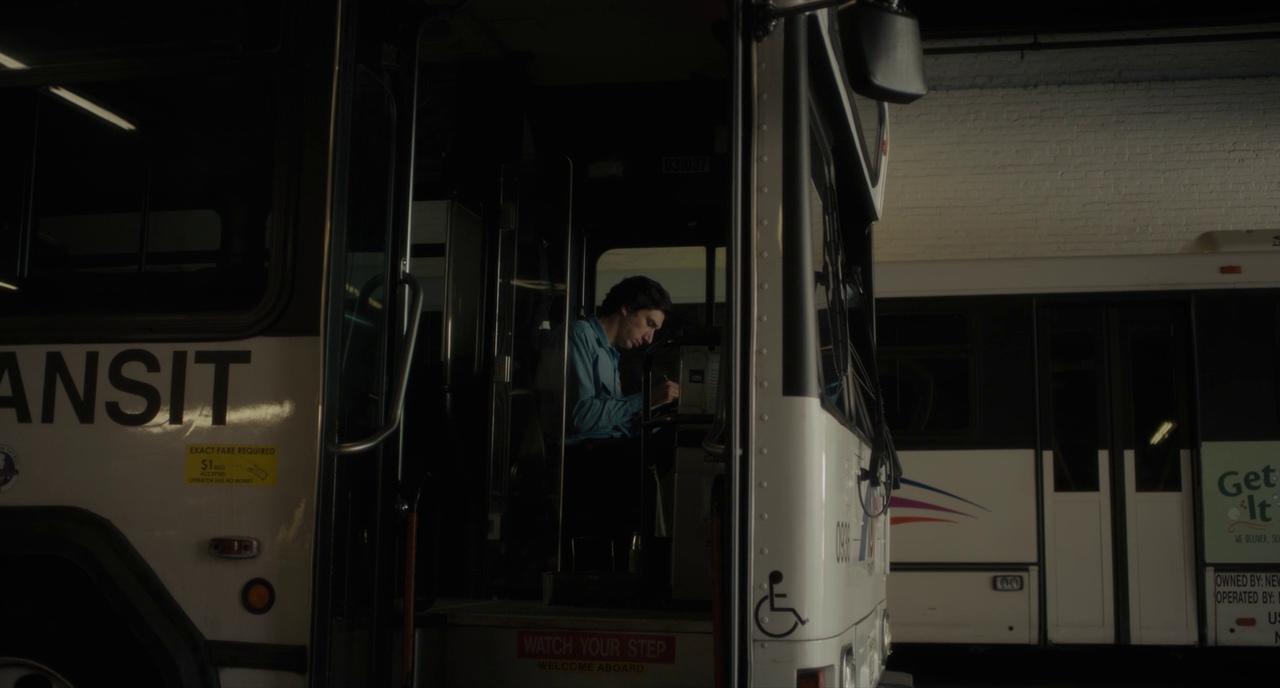
That choice creates a lyric effect in three steps. First, the film anchors the speaker. You know who thinks the lines, and you see the life around him. Second, the film builds poems from ordinary images, such as a matchbox, a bus route, or a quiet conversation. Third, the editing and on-screen text control pace the way line breaks do on the page. A short line lands like a cut. A pause lands like white space.
Dead Poets Society (1989, Touchstone Pictures)
In Dead Poets Society (1989, Touchstone Pictures), English teacher John Keating treats poems as lived speech, not museum objects. Several scenes stage poetry as a direct line into a teenager’s private wants and fears.
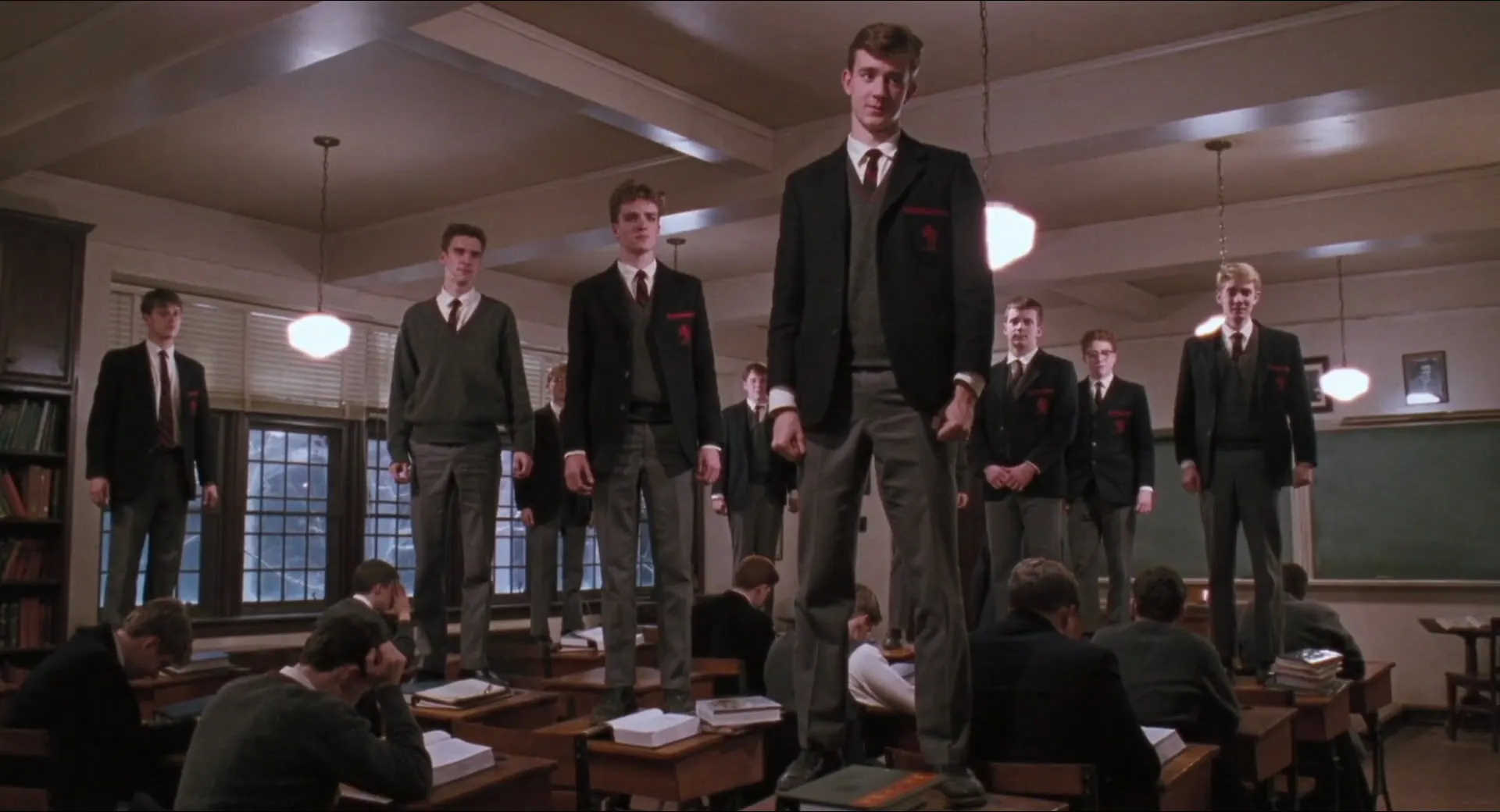
The ending is a strong example. The students stand on their desks and say “O Captain! My Captain!” as a personal farewell to Keating. The line comes from Walt Whitman’s elegy for Abraham Lincoln, but the scene turns it into a present-tense address. It works like lyric because it is not about moving the plot forward. It is about what the students feel in that moment and how they choose to express it.
Bright Star (2009, Pathé)
In Bright Star (2009, Pathé), poet John Keats and Fanny Brawne connect through writing, reading, and letters. The film treats Keats’s language as part of the characters’ emotional life.
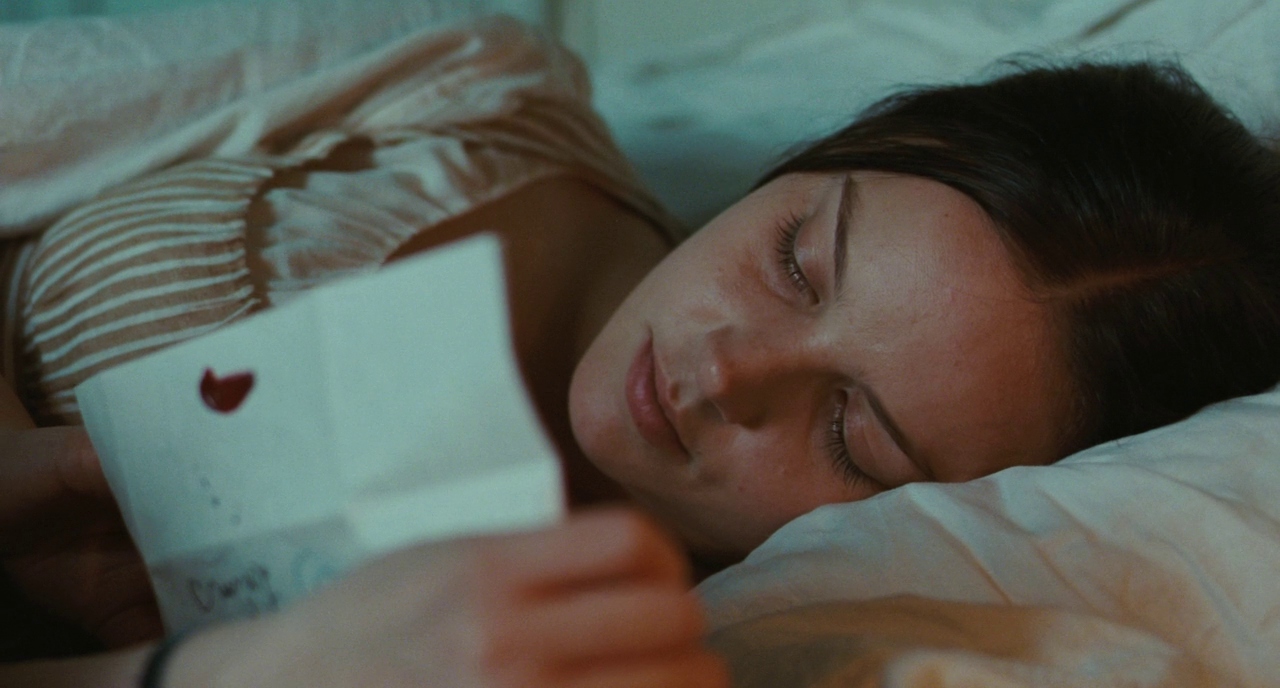
Later in the film, Fanny recites Keats’s words as she moves through the world after loss. The poem functions like a voice-over grief. The lines hold a single emotional state, and the images around her support that state through weather, distance, and silence. That is lyric use in film form: a mind stays in focus, and the world becomes a frame for feeling.
A practical workflow you can use
If you want to write lyric poems or write lyric passages for film, you need a process that you can repeat. The main goal is control. You control the point of view, you control what detail appears, and you control timing.
- Pick the speaker. Decide who talks, what they want to say, and what they avoid saying.
- Lock the moment. Choose a narrow “now,” such as a walk home, a sleepless night, or a few seconds before a phone call.
- Collect concrete images. Write down 10 to 20 details the speaker would notice. Choose details that match the mood.
- Choose a sound strategy. Decide if you want loose conversational rhythm, heavy repetition, or a tighter pattern with rhyme.
- Draft with line breaks on purpose. Break lines where you want a pause, a surprise, or emphasis on a single word.
- Read it out loud. If the rhythm feels off, change the phrasing. If a line explains too much, replace it with an image.
- Test it in film terms. Imagine the words as voice-over over a montage. Cut any line that fights the images.
How to identify lyric poetry
Lyric poetry can hide in plain sight, especially when it looks simple. A short checklist helps you decide what kind of reading you should do and what kind of tools the writer uses.
- Is there a speaker? You can point to a voice, even if the poem does not say “I.”
- Is the focus internal? The lines stay close to thought, feeling, perception, or reflection.
- Do images carry meaning? Concrete details do more work than summary explanation.
- Do sound and timing matter? Rhythm, repetition, or line breaks control how the poem lands.
- Is there a shift? The poem turns or reframes its idea, even in a small way.
Related FilmDaft resources
Lyric poetry connects to a larger toolkit of writing terms. If you want to expand your range fast, start with the basics, then move into specific devices you can apply in scenes and dialogue.
If you want a broader context, begin with what is poetry and what is a poem. If you want the device framework, use the Screenwriter’s Toolkit on literary devices vs. elements. For practical craft options across genres, see the collection of writing techniques. If you want a structured start, the free screenwriting course is a good next step.
Summing Up
Lyric poetry centers on inner experience during a focused moment, and it uses imagery, sound, and timing to make that moment feel present. The speaker matters, the details matter, and the rhythm matters.
Once you can spot lyric technique on the page, you can also spot it in film. You will see it in voice-over, montage flow, and dialogue that stays close to a character’s mind. If you build your own lyric passages with a repeatable process, you get a reliable way to write intimacy without long explanation.
Lyric Poetry FAQ
What is lyric poetry?
Short, musical poetry that expresses the personal feelings and thoughts of a single speaker, rather than telling a story.
What is the difference between lyric and narrative poetry?
Lyric poetry voices emotion and reflection in the moment; narrative poetry tells a story with characters and a plot.
What are types of lyric poetry?
The ode, elegy, sonnet, and hymn are classic lyric forms.
Where does the term “lyric” come from?
From the ancient Greek lyre, the instrument that accompanied these poems when they were sung.
What are examples of lyric poetry?
Shakespeare’s sonnets, the odes of John Keats, and much of Emily Dickinson’s work.
Read Next: Want to dig deeper into screenwriting?
Start with the Screenwriter’s Toolkit on literary devices vs. elements – a deep resource covering every major literary device and element used in writing.
Then explore our collection of practical writing techniques covering dialogue, structure, and pacing.
Or jump into the free screenwriting course to start your first draft today.
You can also head back to the Screenwriting section for more tools, theory, and breakdowns.
