

Published: March 5, 2026 | Last Updated: July 3, 2026

Overview
When you sit down to watch a film, something interesting happens. You forget you are sitting in a seat. You start caring about characters who do not exist. You feel tension, sadness, or excitement on their behalf. Spectatorship theory is the branch of film studies that asks why this happens and what it means. It took shape in the 1960s and 1970s through theorists such as Jean-Louis Baudry, Christian Metz, and Laura Mulvey, and later widened through cultural critics like Stuart Hall and bell hooks.
The theory investigates the relationship between films and the people who watch them. It asks who is assumed to be watching, what position the film invites you into, and whether that position reflects or reinforces particular ideas about gender, race, and power. It also asks how much of your response is learned versus instinctive, and whether different viewers can resist the positions a film offers them.
You will encounter spectatorship theory in film studies courses because it connects formal analysis (how a film is made) to questions about ideology (the hidden assumptions about power and society that films can carry). Understanding it gives you a framework for moving beyond plot summary into questions about how films work on their audiences.
What Is Spectatorship Theory? Definition and Meaning
Spectatorship theory is a body of film theory that examines how films construct a viewing position and how real viewers engage with, accept, or resist that position. It sits at the crossroads of psychoanalytic film theory, cognitive psychology, and cultural studies. It draws tools from each to explain the act of watching.
The key distinction is between the implied spectator and the actual audience. The implied spectator is the ideal viewer the film seems to be made for, the person whose tastes, identity, and assumptions the camera, editing, and narrative seem to address. The actual audience is the diverse set of real people who watch the film, each bringing their own history and identity to the experience. Most early spectatorship theory focused on the implied spectator. Later work expanded to include how actual viewers negotiate the positions a film offers them.
Evidence for spectatorship analysis includes camera placement, editing patterns, point-of-view shots, framing, and narrative structure. These formal elements work together to guide your attention and position you in relation to the story.
Historical Background
Spectatorship theory emerged in the 1970s from two converging intellectual movements: French psychoanalysis and the British academic approach to cinema known as Screen Theory. Scholars at the British journal Screen were drawing on the ideas of Sigmund Freud, the Austrian neurologist who founded psychoanalysis, and Jacques Lacan, a French psychoanalyst who reread Freud through the lens of language and identity. They applied these frameworks to explain cinema’s hold over viewers.
Psychoanalytic Foundations and Laura Mulvey
Laura Mulvey, a British film theorist and filmmaker, wrote the foundational essay “Visual Pleasure and Narrative Cinema” in Screen in 1975. She argued that classical Hollywood cinema was structured around a male gaze in film: the camera adopted a male point of view and presented women as objects to be looked at rather than as subjects who act. The film positioned you as a male viewer by default, regardless of your actual gender.
Around the same time, the French film theorist Christian Metz published The Imaginary Signifier (1977). Metz drew on Lacan’s theory of the mirror stage to explain why cinema felt so absorbing. The mirror stage, in Lacan’s account, is the moment a child first sees a coherent self in a reflection. Metz argued that watching a film activated a similar dynamic: you projected yourself into the screen and adopted the position the film constructed for you. This felt seamless because suture, the editing technique that stitches together shots into a smooth point of view, hid the constructedness of what you were seeing (Metz 1977).
Screen Theory and the Universal Spectator
The Screen Theory tradition, which you can explore further in our guide to Screen Theory in the 1970s, imagined a relatively uniform spectator whose experience was determined mainly by how the film was structured. Camera work, editing, and narrative all worked together to produce a particular psychological state. Critics later challenged this model for treating the viewer as a blank slate and for ignoring how real viewers differ based on gender, race, and class.
The Screen Theory approach was also deeply connected to semiotics in film, the study of how images and sounds function as signs that carry meaning. Understanding how signs address a viewer was central to the Screen Theory account of how cinema positioned its audience.
Cognitive and Cultural Turns
By the 1980s and 1990s, two major new directions emerged. David Bordwell, an American film scholar and one of the founders of cognitive film theory, argued that spectatorship was better explained by how the mind actively processes information than by psychoanalytic mechanisms. For Bordwell, watching a film involved continuous mental activity: forming hypotheses, making inferences, and building a mental model of the story world (Bordwell 1985).
Separately, scholars rooted in cultural studies began asking whose experience the psychoanalytic model had overlooked. Stuart Hall, a British-Jamaican cultural theorist, argued in his influential 1980 essay “Encoding/Decoding” that viewers do not all receive messages in the same way. Some accept the dominant meaning a text offers. Others used their own social position to resist or reinterpret what the film presents. Hall called these latter responses negotiated or oppositional readings. Applied to film, this opened up the question of how viewers from marginalized groups experienced films made for an assumed mainstream audience (Hall 1980).
Core Mechanism: How the Theory Works
Spectatorship theory is not one unified model. It is a set of overlapping frameworks, each emphasizing different aspects of the viewer’s experience. Understanding how each one operates helps you decide which tools are most useful for analyzing a given film.
Psychoanalytic Spectatorship: Identification and the Gaze
Psychoanalytic approaches focus on identification, the process by which you emotionally and imaginatively align yourself with a character or a camera position. Mulvey argued that classical Hollywood films structured identification in gendered ways. The camera framed women as erotic spectacles. Male characters were the agents who drove the story forward. This meant the film positioned you to look with active male protagonists and to look at passive female characters (Mulvey 1975).
The mechanism worked through point-of-view editing. When a male character looks at a woman, the film typically shows you what he sees. You see through his eyes. This alignment between your looking and the character’s looking is what Mulvey called the male gaze. Metz added a deeper layer: suture describes how editing stitches together shots so that the gaps between them become invisible. You lose awareness that each shot was chosen and placed deliberately. The result is that the film’s construction of your viewpoint disappears from view (Metz 1977).
Cognitive Spectatorship: Active Mental Processing
Cognitive film theory offers a different account. Rather than asking what unconscious processes a film triggers, it asks what mental work you do while watching. You are an active interpreter who draws on knowledge of how stories work and how the world operates to make sense of what you see on screen.
For Bordwell, comprehension drives viewing. Your brain predicts what will happen next, fills in gaps, and revises its model of the story as new information arrives. Formal techniques like editing, framing, and music give your mind the cues it needs to build that model. This approach is closer in spirit to formalist film theory, which focuses on how a film’s structure creates meaning independently of its content (Bordwell 1985).
This framework is more optimistic about your agency as a viewer. But critics point out that it tends to bracket questions of power and focus on cognition while leaving gender, race, and class to one side.
Cultural and Sociological Spectatorship: Real Viewers
Cultural approaches bring the actual, diverse viewer back into the picture. bell hooks, the American cultural critic and author, extended Hall’s idea of oppositional reading in her 1992 essay “The Oppositional Gaze.” She argued that Black female spectators had historically been excluded from mainstream cinema’s intended audience. Their experience of watching involved both the pleasure of cinema and the pain of seeing their own absence or misrepresentation on screen. This produced a distinctive mode of watching: critical, alert to exclusion, and resistant to the positions on offer (hooks 1992).
Hooks’s work, developed in dialogue with feminist film theory, shows that spectatorship depends on both how a film is structured and the social position of the person watching. Your history, identity, and prior experiences affect how you engage with any given film. What feels like comfortable identification to one viewer may feel like alienation to another.
What to Look For: A Checklist for Spectatorship Analysis
Spectatorship analysis requires you to track both the formal features of a film and the subject positions that those features construct. Here are the key elements to examine in any scene or sequence:
- Point-of-view shots: When the camera adopts a character’s viewpoint, whose perspective is being offered? How often is this gendered or racially coded? Read more about the point of view in film.
- Identification cues: Which character has the most screen time, narration, or emotional interiority? Which characters are presented primarily as objects of the camera’s attention?
- Editing patterns: Does shot-reverse-shot editing align you with one character’s gaze more than another’s?
- Sound and music: Does the film’s score orient you emotionally toward one character’s situation over another’s?
- Narrative structure: Whose goals drive the plot? Whose desires are treated as legitimate and sympathetic?
- Framing of the body: Are any characters consistently framed in ways that emphasize appearance over agency, through close-ups of body parts or slow camera movements across the figure?
- Gaps and absences: Which groups of people are missing, marginalized, or present only in stereotyped roles?
Once you have noted these elements in a scene, ask what subject position they add up to. Is there a consistent pattern across the film? Does the camera repeatedly align your vision with one character’s gaze? Does that alignment map onto social categories like gender or race? Your observational notes become analysis when you connect formal choices to the viewing position they construct.
Micro-Analysis: Vertigo (1958)
Alfred Hitchcock, the British-American director, put the mechanics of the male gaze on screen with unusual directness in Vertigo (1958). The film has become one of the most analyzed works in spectatorship theory. It is a useful case for seeing how the theory works in practice because its structure so closely mirrors the theoretical model.
The Structure of Surveillance
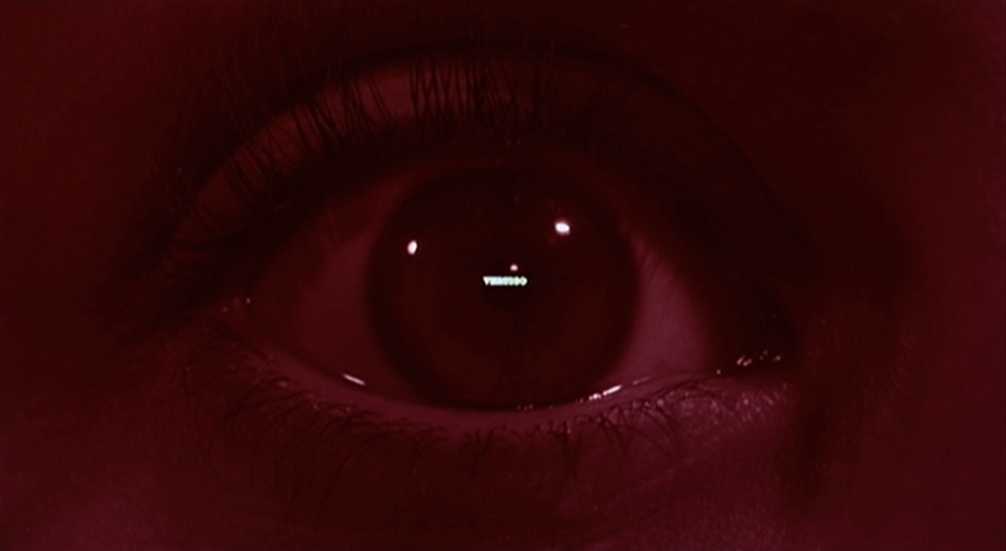
The film follows Scottie Ferguson (James Stewart), a retired detective who becomes obsessed with a woman named Madeleine (Kim Novak). A former colleague hires Scottie to follow Madeleine, and the film spends a significant portion of its first half showing him watching her from a distance. The camera follows Scottie following Madeleine. You see her through his eyes, framed as an object of surveillance. She does not know she is being watched. You are placed in the position of a second-order voyeur: watching someone watch.
Desire, Control, and Transformation

The film makes this structure explicit in its second half. Scottie encounters a woman named Judy who resembles Madeleine, and he sets about transforming her. He changes her hair, clothing, and manner to match his memory. The camera’s approach to Judy mirrors Scottie’s controlling attention: she is presented in fragments (hair, dress, posture) before being assembled into the image he desires.
Critical Readings
Mulvey’s framework maps directly onto this structure. The film grants Scottie an active role: he moves through the story, pursues goals, and acts on his desires. Madeleine and Judy are presented primarily as objects of his looking. The camera’s gaze merges with Scottie’s gaze, and by extension with the viewer’s. Mulvey reads this as the psychological structure of mainstream cinema made visible (Mulvey 1975).
The film also complicates what it stages. Madeleine turns out to be a performance put on by Judy, who has her own history of being manipulated. In the final act, the camera briefly grants Judy direct address. This breaks the voyeuristic frame. Some scholars read this as the film critiquing the very structure it has enacted. Others argue the critique arrives too late to undo the patterns the film has spent most of its running time establishing. This disagreement is itself central to how spectatorship analysis works: you are expected to weigh the formal evidence and argue your position.
Additional Film Examples
The range of spectatorship theory becomes clearer when you apply it to films that operate very differently from classical Hollywood.
Oppositional Viewing: Get Out (2017)

Jordan Peele, the American writer-director, offers a clear case for hooks’s oppositional gaze framework with Get Out (2017). The film’s protagonist, Chris (Daniel Kaluuya), is a Black man visiting his white girlfriend’s family. The film codes white characters as threatening in ways that a Black viewer is likely to register earlier than a white viewer, because the cues draw on shared knowledge of racial microaggressions in everyday life. Peele has said the film was designed for a Black audience whose lived experience would make the horror feel grounded rather than abstract. White viewers experience the film as genre entertainment; Black viewers may experience it as something more personal and urgent. The same formal text produces different spectatorial engagements depending on who is watching.
Durational Viewing: Jeanne Dielman (1975)
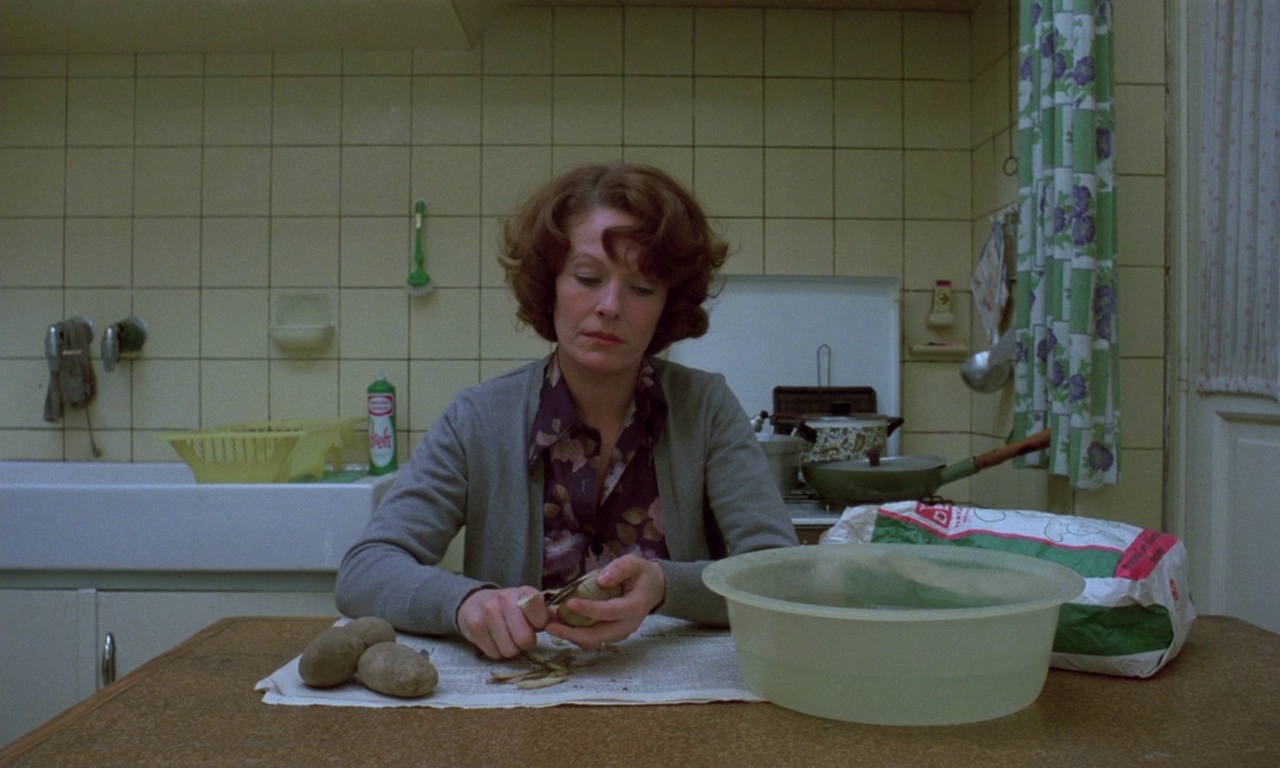
Chantal Akerman, a Belgian filmmaker known for experimental and feminist cinema, follows a widowed housewife through three days of routine domestic tasks in Jeanne Dielman, 23 quai du Commerce, 1080 Bruxelles (1975). The film refuses most of the identification cues that psychoanalytic spectatorship theory relies on. There is almost no shot-reverse-shot editing. There are no point-of-view shots that align your gaze with a male character’s desire. The camera holds on cooking, washing dishes, and making beds in real time, with no musical score to guide your emotional response. This formal strategy puts you in an unfamiliar position. You are denied the usual cues for engagement, which forces you to confront what you expect from cinema and why.
Cognitive Engagement: Rashomon (1950)
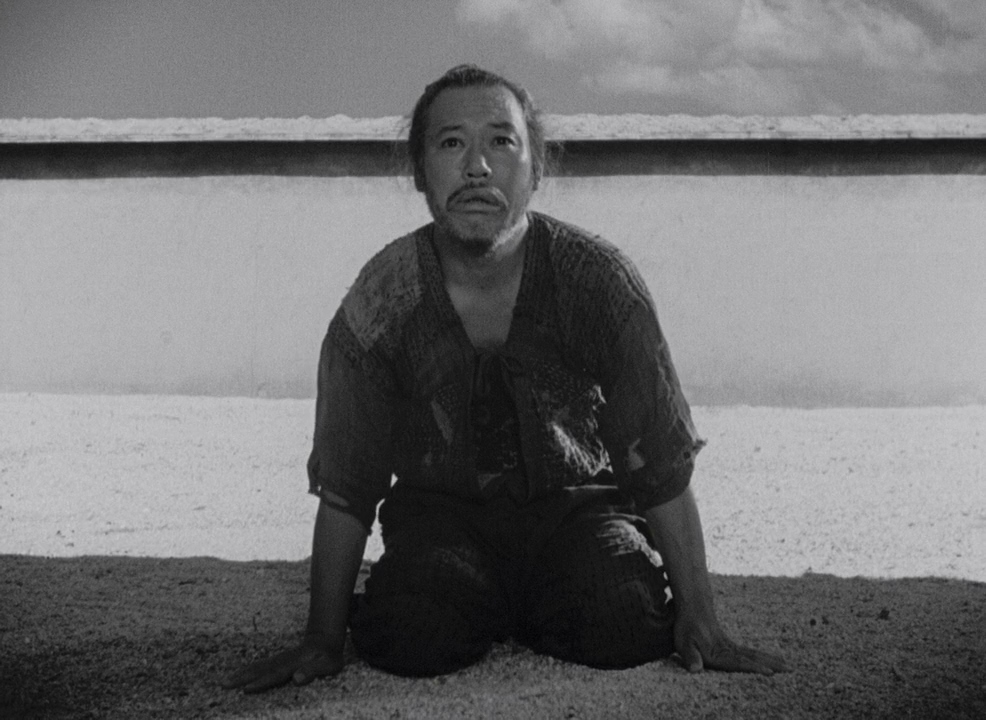
Akira Kurosawa, the Japanese filmmaker, presents the same violent event from four contradictory perspectives in Rashomon (1950). Each narrator’s account is shown as a flashback, and each account differs significantly from the others. The cognitive spectatorship framework is especially useful here. The film does not ask you to simply receive a story; it asks you to hold competing versions simultaneously and evaluate their reliability. You constantly form and revise hypotheses about what actually happened, which makes your own process of meaning-making visible as an activity (Bordwell 1985).
Common Misconceptions
Spectatorship theory is often misread in predictable ways. Clarifying these helps you use the frameworks more precisely.
The Implied Spectator and the Actual Audience
One common mistake is to confuse the implied spectator with the actual audience. When Mulvey describes the male gaze, she is describing the position the film constructs through its formal choices. She is not claiming that all viewers simply accept that position. Real women watching classical Hollywood films did not necessarily identify with male protagonists or experience female characters as objects. Actual spectatorship is messier and more varied than any theoretical model can capture on its own.
Film Structure and Social Attitudes
A second misconception is that psychoanalytic spectatorship theory claims films directly cause sexist or racist attitudes in their viewers. The argument is more subtle. Films can normalize certain ways of seeing and make them feel like common sense rather than constructed choices. The argument focuses on cumulative effects: repeated structural patterns across many films affect what feels ordinary in visual culture. The concern is with widespread patterns, not individual films.
Combining Frameworks
Third, cognitive spectatorship and psychoanalytic spectatorship are sometimes treated as completely opposed frameworks that cannot be used together. In practice, they address different questions. Psychoanalytic theory focuses on unconscious, ideologically charged aspects of film engagement. Cognitive theory focuses on conscious, problem-solving aspects of viewing. Both are useful for film analysis, and the most complete accounts of spectatorship tend to draw on both.
Key Debates and Scholarly Criticism
Spectatorship theory has been contested from several directions, and these debates have pushed the field in productive new directions.
The Female Spectator
Mulvey’s 1975 account left an obvious question unanswered: if Hollywood cinema was structured for a male viewer, what happened to women in the audience? Mary Ann Doane, an American film scholar, addressed this in her widely cited 1982 essay “Film and the Masquerade.” She argued that female spectators faced a structural difficulty. They could either over-identify with the female figure on screen or adopt a masculine identification position. Neither option felt comfortable. Doane introduced the concept of masquerade (performing femininity as a conscious costume rather than inhabiting it as a given identity) as a way female viewers might create critical distance from the images they were watching (Doane 1982).
Mulvey later revisited her own argument in “Afterthoughts on Visual Pleasure and Narrative Cinema” (1981) and acknowledged that female viewers often identified with male protagonists in action-driven narratives. Critics found this explanation incomplete, but the exchange produced a more nuanced understanding of how identification works across gender lines.
Race, the Gaze, and Exclusion
Hooks’s 1992 essay directly challenged the assumption that Mulvey’s model, built around a simple male/female opposition, covered all the relevant positions. Mainstream cinema did not simply position Black women as passive objects. It frequently made them invisible, pushed to the margins, or present only in stereotyped roles that made genuine identification impossible. The relevant choice for Black female viewers was between erasure and stereotype. This critique shifted the framework from gender alone to an intersectional model (one that accounts for how gender, race, class, and other factors interact to define the viewing experience) (hooks 1992).
This intersectional approach connects spectatorship theory to broader questions in postcolonial film theory, which examines how colonialism and its legacies influence the representation of non-Western peoples and the conditions under which global audiences watch films made predominantly in the West.
Post-Theory Challenges
In the 1990s, David Bordwell and the American critic Noël Carroll, a philosopher of art and film, led a challenge to psychoanalytic spectatorship theory from an empirical direction. Their approach, often called Post-Theory, argued that grand theoretical frameworks drawn from Lacan and Louis Althusser (a French Marxist philosopher whose concept of ideological state apparatuses had influenced Screen Theory) were too abstract to generate testable claims about actual films. They called for “middle-level research”: focused studies of specific cognitive and formal mechanisms that could be examined through evidence from real films and real viewers (Bordwell 1985).
This debate connects to broader divisions within post-structuralist film theory, which had itself offered a critique of unified, stable meanings. Defenders of psychoanalytic approaches responded that empirical methods were not equipped to address unconscious or ideologically structured aspects of film viewing. Most contemporary scholars take a pragmatic position and use whatever framework best illuminates the specific question at hand.
Quick Contrast: Spectatorship Theory and Reception Studies
Spectatorship theory and reception and audience studies are often used interchangeably, but they address different questions with different methods.
Different Questions, Different Methods
Spectatorship theory, especially in its psychoanalytic form, works through textual analysis. It asks what position a film constructs through its formal choices. The viewer it describes is theoretical, derived from the structure of the text rather than from observation of real audiences. The realism versus anti-realism debate in film is partly a debate about how different formal strategies address and position the viewer.
Reception studies, by contrast, uses historical research, ethnography, and audience surveys to document how actual audiences at specific moments in history responded to films. It is an empirical discipline focused on documented responses rather than theoretical models. Where spectatorship theory asks what position a film constructs, reception studies asks how documented audiences in a given time and place actually engaged with it.
How the Approaches Complement Each Other
The two approaches work well in combination. Spectatorship theory tells you what a film invites; reception studies tells you whether audiences accepted that invitation, resisted it, or did something else entirely.
Why It Still Matters
Spectatorship theory was developed primarily through analysis of mid-twentieth-century cinema. Some of its specific claims belong to that historical context. But its core questions remain urgent for contemporary film and media.
Representation and Power
The question of who is assumed to be watching is still central to debates about representation in Hollywood. Arguments about whose stories get told as universal, and whose are marked as specific or niche, draw directly on the conceptual vocabulary spectatorship theory developed. Understanding that vocabulary helps you engage more precisely with those debates.
Digital Spectatorship
In digital media contexts, the framework needs adaptation. Streaming platforms, social media feeds, and interactive games create viewing conditions that differ significantly from the cinema Mulvey was analyzing. The relationship between viewer and image is less one-directional: you can pause, rewind, comment, and participate in communities that collectively influence interpretation. Scholars have extended spectatorship theory to address attention, distraction, and surveillance in digital culture. These updates adapt the tools for a changed media landscape.
Active Research Directions
The cognitive tradition continues to produce research on how viewers track narrative information, how genre conventions direct expectations, and how formal techniques guide emotional response. This work remains directly useful for film analysis at a practical level.
The cultural and intersectional approaches pioneered by hooks and others are now among the most active areas of contemporary film scholarship. Questions of racial and gendered representation, and the viewing experiences of audiences historically excluded from mainstream cinema’s assumed address, drive significant current research and criticism.
Summing Up
Spectatorship theory is a broad and contested field, but its central question is clear: what does it mean to watch a film, and who is assumed to be doing the watching? The psychoanalytic tradition, developed by Mulvey and Metz, focused on how classical cinema constructed a gendered viewing position through camera placement, editing, and narrative structure. The cognitive tradition, led by Bordwell, described spectatorship as active mental processing rather than passive ideological absorption. The cultural tradition, extended by bell hooks and Stuart Hall, brought real, diverse viewers into the picture and showed how race, gender, and social position affect the act of watching.
No single framework captures everything. The most useful approach to spectatorship analysis is to be clear about which question you are asking. If you are asking what position a film’s formal structure constructs, the psychoanalytic framework is your starting point. If you are asking how your mind processes narrative information, the cognitive framework applies. If you are asking how your social identity influences what you bring to a film and take from it, the cultural framework is most relevant. A complete analysis often draws on all three.
Read Next: Curious how film theory shapes the way we watch movies?
Start with the Film Theory section to break down realism, formalism, structuralism, and more — with examples from iconic films.
If you want studying film theory I recommend starting with The FilmDaft overview of film theory discourses to break down realism, formalism, structuralism, and more — with examples from iconic films.
Then explore the full Film History, Theory & Genre collection to see how movements, styles, and storytelling traditions have evolved.
Whether you’re into Soviet montage or 2000s genre mashups, there’s something here to sharpen your understanding.
Spectatorship Theory FAQ
What is spectatorship theory?
Spectatorship theory is the branch of film studies that examines the relationship between films and their viewers — who a film assumes is watching, what position it invites, and how meaning and pleasure are produced in the act of viewing.
What is apparatus theory?
Associated with Jean-Louis Baudry and Christian Metz, apparatus theory argues that the cinema “apparatus” — the darkened room, the projected image, the camera’s viewpoint — positions the spectator ideologically, encouraging identification with the film’s way of seeing rather than only with its characters.
What is the “male gaze”?
A concept from Laura Mulvey’s 1975 essay “Visual Pleasure and Narrative Cinema”, describing how classical Hollywood constructs a masculine viewing position that turns women into objects to be looked at.
What is the difference between the gaze and identification?
The gaze concerns the power relations in looking — who looks and who is looked at — while identification concerns how a viewer psychologically aligns with the camera, the characters, or the film’s perspective. Both are central to spectatorship theory.
What is the “oppositional gaze”?
bell hooks’s idea that marginalized viewers — she wrote about Black female spectators — can watch critically and resist the position a film assigns them, rather than passively accepting it.
References
- Bordwell, David. 1985. Narration in the Fiction Film. Madison: University of Wisconsin Press.
- Doane, Mary Ann. 1982. “Film and the Masquerade: Theorising the Female Spectator.” Screen 23 (3–4): 74–87.
- Elsaesser, Thomas, and Malte Hagener. 2010. Film Theory: An Introduction through the Senses. New York: Routledge.
- Hall, Stuart. 1980. “Encoding/Decoding.” In Culture, Media, Language, edited by Stuart Hall, Dorothy Hobson, Andrew Lowe, and Paul Willis, 128–38. London: Hutchinson.
- hooks, bell. 1992. “The Oppositional Gaze: Black Female Spectators.” In Black Looks: Race and Representation, 115–31. Boston: South End Press.
- Mayne, Judith. 1993. Cinema and Spectatorship. London: Routledge.
- Metz, Christian. 1977. The Imaginary Signifier: Psychoanalysis and the Cinema. Translated by Celia Britton, Annwyl Williams, Ben Brewster, and Alfred Guzzetti. Bloomington: Indiana University Press.
- Mulvey, Laura. 1975. “Visual Pleasure and Narrative Cinema.” Screen 16 (3): 6–18.
