Published: May 1, 2024 | Last Updated: November 28, 2025

This article explores various iconic film noir films considered canon, examining how their innovative use of narrative, style, and characterization helped lay down the foundational elements of film noir and continually influence its evolution.
Each of these films contributed uniquely to the film noir genre and pushed the boundaries of what cinema was capable of at the time, making them invaluable studies for understanding the evolution of film as an art form.
The Maltese Falcon (1941)
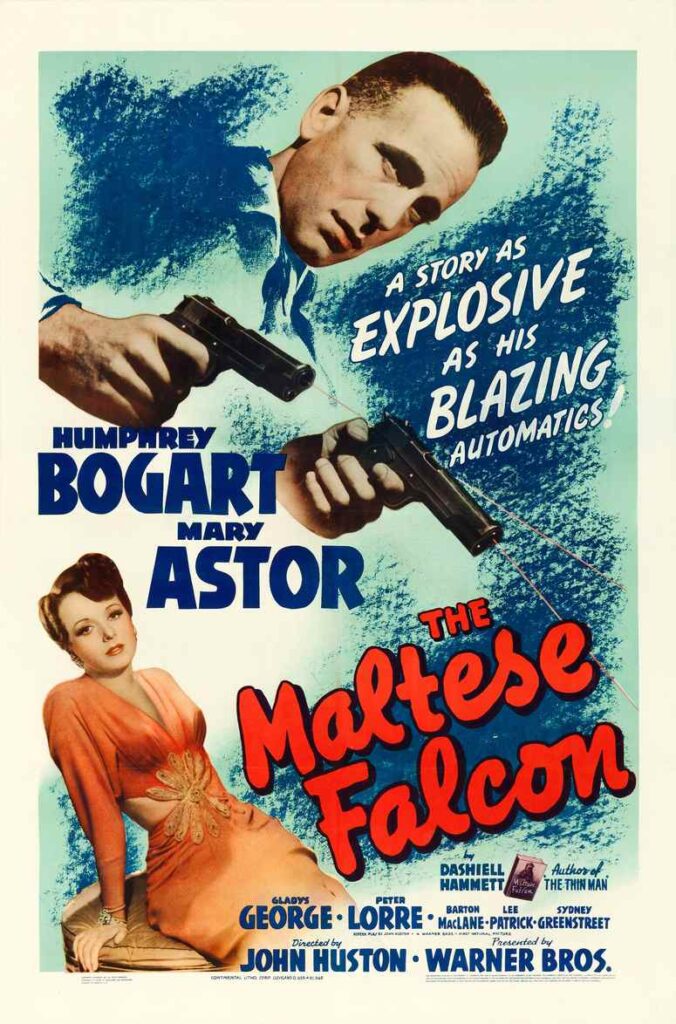
The Maltese Falcon (1941) Movie Poster
Vitagraph Inc., a subsidiary of Warner Bros. at the time of publication. Public domain, via Wikimedia Commons
John Huston’s The Maltese Falcon is essential for establishing the film noir detective archetype, embodied by Humphrey Bogart’s portrayal of Sam Spade. It is also an essential study for its introduction and establishment of the powerful and cunning femme fatale (in this case, Brigid O’Shaughnessy, played by Mary Astor) within the genre.
This film lays the groundwork for character complexity in noir, showcasing a protagonist who is both morally ambiguous and cunningly sharp. With its multiple betrayals and shifting allegiances, the narrative provides a blueprint for the genre’s thematic preoccupations with greed and deception.
It’s a great movie for analyzing how character development within noir can drive intricate plots and maintain suspense.
Double Indemnity (1944)
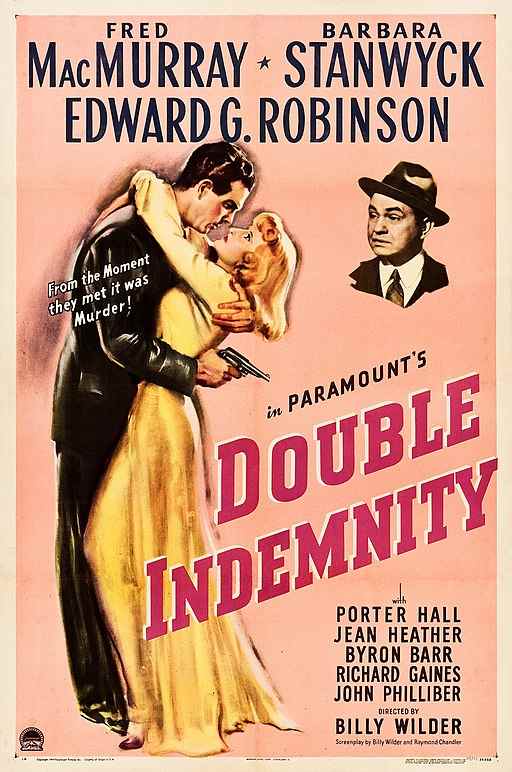
Double Indemnity (1944) Movie Poster
Copyright 1944 Paramount Pictures Inc., Public domain, via Wikimedia Commons
Double Indemnity is a seminal work in the film noir genre. It was directed by Billy Wilder and adapted from a novella by James M. Cain. Its importance is defined by innovation in narrative structure and visual style.
Wilder introduced a complex, flashback-driven plot that keeps us guessing, a technique many later noirs emulated. The film’s exploration of themes like betrayal and moral ambiguity and its low-key lighting and shadow use helped establish the noir aesthetic.
Study Double Indemnity to understand how to use narrative structures to drive the plot and the visual style to enhance a story’s psychological depth.
Read more on subplots.
Laura (1944)

Laura (1944) Movie Poster
Copyright 1944 by Twentieth Century–Fox Film Corp., Public domain, via Wikimedia Commons
Directed by Otto Preminger, Laura is a good example when analyzing narrative devices like the unreliable narrator and plot twists.
For more on plot twists in film see this article on anagnorisis.
The film’s plot revolves around a detective who becomes obsessed with the apparent murder victim whose case he is investigating. Laura’s unexpected twists and complex character interactions exemplify the genre’s ability to subvert audience expectations.
This film is a masterclass on weaving complexity into a film narrative.
Out of the Past (1947)
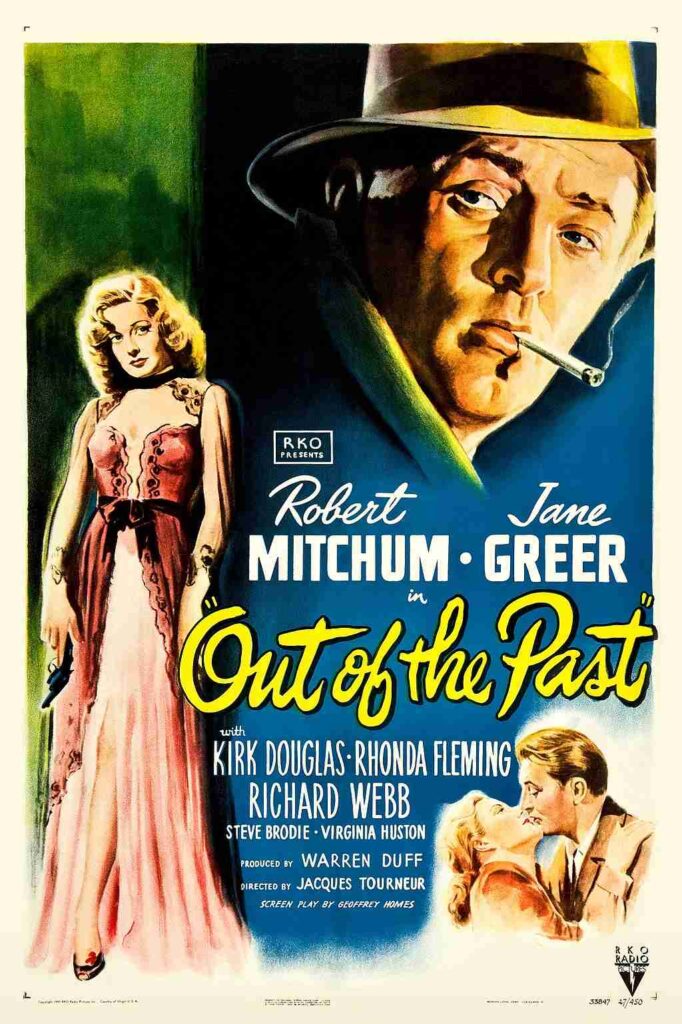
Out of the Past (1947) Movie Poster
William Rose, Public domain, via Wikimedia Commons
Out of the Past, directed by Jacques Tourneur, is pivotal for its atmospheric use of settings and character study.
This film added to the genre through its sophisticated narrative structure and richly layered characters, particularly the conflicted protagonist played by Robert Mitchum, whose past catches up with him in dramatic fashion. The use of real locations and moody, shadow-laden scenes contribute to a feeling of fatalism and inevitability that defines noir.
It’s a great movie for studying the effect of atmosphere and setting in storytelling and how these elements can reflect characters’ inner turmoil.
Touch of Evil (1958)
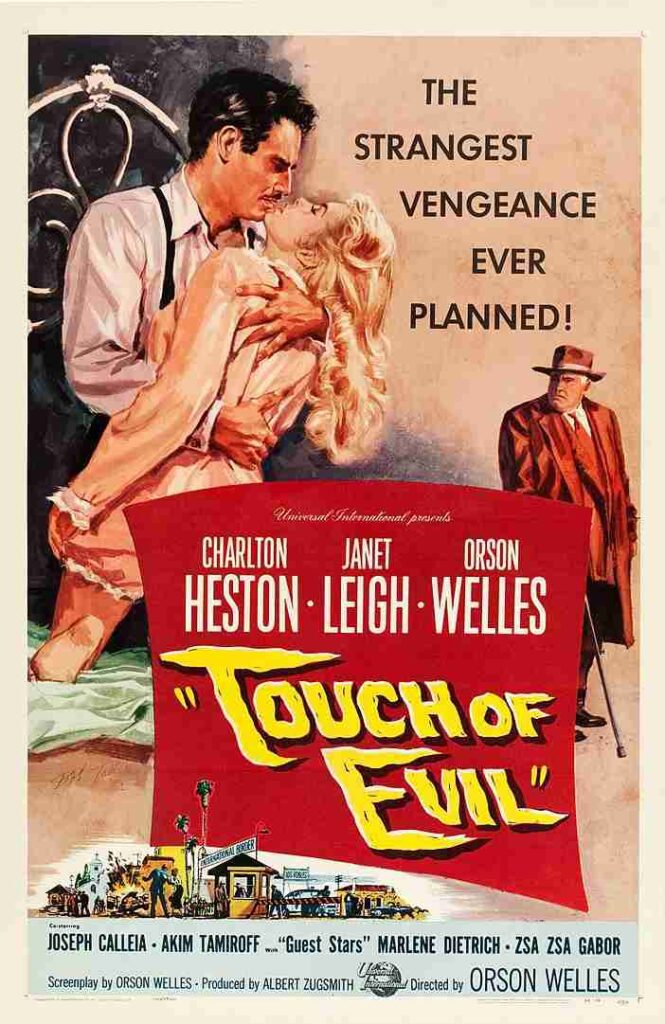
Touch of Evil (1958) Movie Poster
Copyright 1958 Universal Pictures Co., Inc., Public domain, via Wikimedia Commons
Orson Welles’ Touch of Evil redefines the boundaries of film noir with its technical skill and innovative cinematography.
Known for its long, uncut opening shot, the film is a good example of how mise-en-scéne, camera movements, blocking, and choreography can be used to tell a great story. The dark themes of corruption and racism are explored through a gritty narrative that blends personal downfall with broader social commentary.
Analyze how it works as a type of social critique and also how the technical aspects (fx the camera as an active moving observer) help guide the audience through a scene.
Summing Up
The enduring appeal of film noir lies in its ability to adapt and resonate with each new generation while retaining its core themes and aesthetic qualities. The canonical works within film noir provided a blueprint that has been adhered to and subverted over the decades.
Films such as The Maltese Falcon and Double Indemnity have established the essential elements of film noir and ensured the genre’s place in cinematic history.
By analyzing these canonical films, we gain a deeper appreciation of film noir’s past contributions and insights into how the genre’s complex narrative structures and visual aesthetics have helped shape future genres such as neo-noir and tech-noir.
Read Next: Essential Neo-noir Movies Every Film Student Must Watch!