Published: January 8, 2021 | Last Updated: November 28, 2025

What is Blocking? Definition & Meaning
Blocking is the placement and movement of actors in relation to the camera, i.e., the scene’s choreography. The movie’s director maps out, a.k.a. “block,” the character’s actions in a scene before shooting. You also block the camera and lights. Blocking tells the story by staging the characters’ actions to mirror the subtext of what’s happening on screen and can be used for dramatic effect.
Think of blocking as your scene’s choreography. You decide where people stand, when they move, and how the camera follows. You also plan how the light hits them through each beat. Good blocking shows power, tension, and relationship shifts without extra dialogue.
What blocking covers: actors, camera, and lighting
Blocking guides three things at once. You stage the actors, you plan the camera setup and movement, and you set the lighting so every move reads on screen. Each choice should match the subtext you want the scene to carry. If a character withdraws, you can pull them back into the frame. If a character takes control, you can move them closer to the lens.
Shot choice is part of camera blocking. Use medium long shots to read posture and gesture. Use long shots to create distance. Use wide shots for scale, or a close-up for a small shift in the eyes. You can dig deeper into shots, moves, and angles here.
Blocking the lights as characters move
Light placement ties to blocking. Place units so cues land as actors cross marks. Adjust levels and directions to match the motivated source you establish.
Blocking tells the gaffer and team where light must live and where it must never spill. It also tells the art team where the practicals should sit. Share simple diagrams with your crew to lock the plan.
Why blocking matters: continuity and clear edits
Clean blocking protects continuity. The script supervisor tracks hands, eyelines, props, and paths. If a hand lands on the chair in one take and hangs in the air in the next, the cut will jump. Consistent marks help the editor build smooth scene geography.
Use blocking for dramatic effect
Movement can raise pressure or release it. Push in to tighten focus on a key choice. Whip pan to reveal a new threat. Tilt to shift power. Track from above with a crane or drone to place characters inside a larger plan.
How to block a scene
Work in a clear order. Secure the space. Walk the beats. Mark the moves. Rehearse the camera. Light it. Then shoot.
Step 1: Run a blocking rehearsal
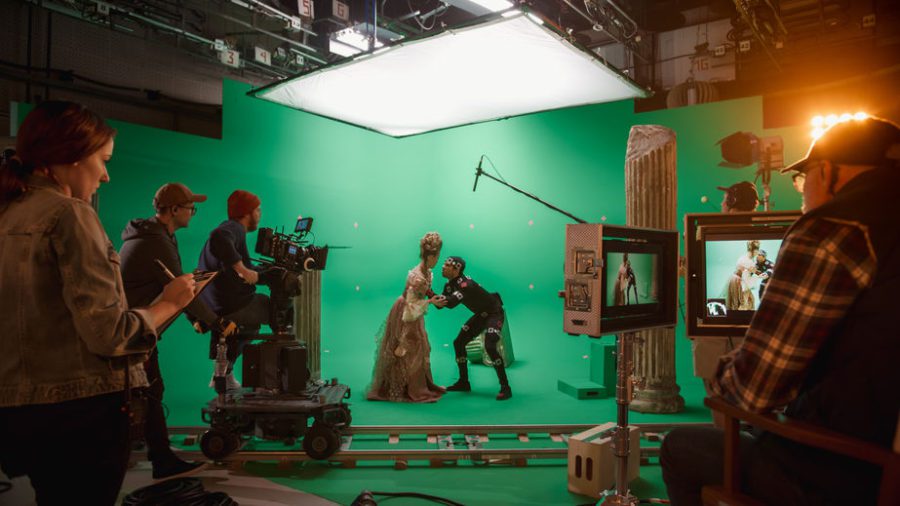
Walk through the dialogue and the actions on the actual set. Let actors move naturally first. Then shape paths to match story beats. Adjust the scene to the location’s limits.
Step 2: Mark the spots
Lock placements with marks once a path works. Use tape for exact returns. If you work with name talent, you can rehearse with stand-ins, then bring talent to set for a short polish.
Step 3: Add background and rhythm
Place background action with your second AD after the camera and key lights sit. Keep paths clean so the boom stays out of frame, and sightlines make sense.
Step 4: Rehearse the camera moves
Walk the shot with the operator. Practice any pan, tracking move, or dolly. Plan for repetition. Frame choices must work across all takes, so keep the 180-degree rule and composition in mind.
Step 5: Light after you set blocking
Work with the DP to place key, fill, and backlight for the path you set. If shadows or gear cross the frame, revise the move or shift a unit. Do a short camera rehearsal again to confirm the fix.
Step 6: Use a shot list and stay flexible
Arrive with a shot list. Be ready to change it. New ideas will appear once you see actors and space together. Time limits may force a tighter plan. Keep the master shot in mind as a safety.
The director’s role in blocking
Blocking is one of your clearest tools as a director. You set where the eye goes and why. Actors need a playable action, not a vague feeling. Give a verb that fits the beat. “Escape to the window” gives purpose. The move now carries meaning.
Writers can include blocking, but you own it on set. Shape it so the camera, the actors, and the cut all drive the same point. You can read more tips on directing here.
Scene examples: how blocking carries the story
Study these scenes. Each one uses distance, eyeline, and path to show shifts in power and emotion.
The Godfather
Director Francis Ford Coppola builds a final beat on stillness, distance, and a door.
Michael sits, then paces under pressure. After he lies to Kay, he returns to a strong, centered pose on the desk. Allies close in. Kay watches from far down the hall. The door closes. The block locks his new power and her exclusion.
If you like crime stories, see why gangster films connect.
Citizen Kane
Orson Welles uses space and deep focus so you track two worlds at once.
Young Kane plays in the snow outside while adults trade power inside. Their moves reset the frame’s center again and again. The final close-up anchors the choice that shapes his life.
Inglourious Basterds
Quentin Tarantino turns a room-and-table scene into a pressure cooker with reveals and pose shifts.
See how the threat enters in this shot. Feet land first. Bodies loom over the table. Our heroes sit lower, boxed by stone walls.
Notice who moves and who freezes when control changes. A hidden player enters the frame later. The blocking turns a talk scene into a standoff.
National Lampoon’s Christmas Vacation
Director Jeremiah S. Chechik stages a flood of relatives like a siege. The edit jumps between tight faces while the frame crowds.
The doorbell primes dread. The path from the entryway to the living room traps the family. The timing of each entrance sets the comic beat and the stress level.
For more laughs, check out these comedy classics.
Quick blocking checklist
Blocking works best when it’s intentional and repeatable. Whether you’re staging a simple dialogue scene or a complex long take, use this checklist to stay efficient, consistent, and camera-ready.
- Define the beat for each move. Tie every path to a clear intention.
- Set marks for returns. Protect continuity across takes.
- Rehearse the camera path before you light.
- Place lights for the whole movie, not a single pose.
- Keep composition rules in mind. Hold the 180 and your eyelines.
- Save time with a master shot if the day slips.
Summing Up
Blocking gives shape to the story. You place actors, you guide the camera, and you set the light so every beat lands. Start with a clean rehearsal, mark the moves, rehearse the shot, and light the path. Use distance, eyeline, and rhythm to show power and emotion.
Read Next: Want to sharpen your directing skills?
Head to our Directing section for guides on visual storytelling, working with actors, blocking scenes, and making creative decisions that shape your film.
Whether you’re directing your first short or prepping a feature, you’ll find breakdowns on everything from shot lists to tone, style, and leadership on set.