

Published: June 12, 2019 | Last Updated: July 25, 2025

What is Naturalism in art? Definition & Meaning
Naturalism in art is a style that aims to represent the world exactly as it appears, without idealization or distortion. Artists working in this mode try to capture subjects with close attention to detail, guided by direct observation of the natural world. Human anatomy, light, texture, and environment are all depicted as faithfully as possible.
Origins of Naturalism

Naturalism emerged in France in the 1870s and 1880s as a development of Realism. It gained traction through artists like Jules Bastien‑Lepage, who combined plein air technique with a scientific approach to observation.
The movement reflected the growing influence of evolutionary theory, empirical research, and photographic accuracy. Painters shifted their focus to working-class subjects, agricultural labor, and rural landscapes, rendered without myth or idealization.
Earlier figures, such as Gustave Courbet and Jean-François Millet, laid the groundwork in the 1840s and 1850s by rejecting academic subjects in favor of depicting peasant life.
But it was Bastien‑Lepage who solidified the movement’s identity in the late 19th century, bringing precision, light study, and atmospheric realism to the forefront of French painting.
Defining Characteristics
Naturalist painters shared a methodical approach to representation. They studied light, weather, anatomy, and physical setting. They avoided theatrical poses or symbolic meaning.
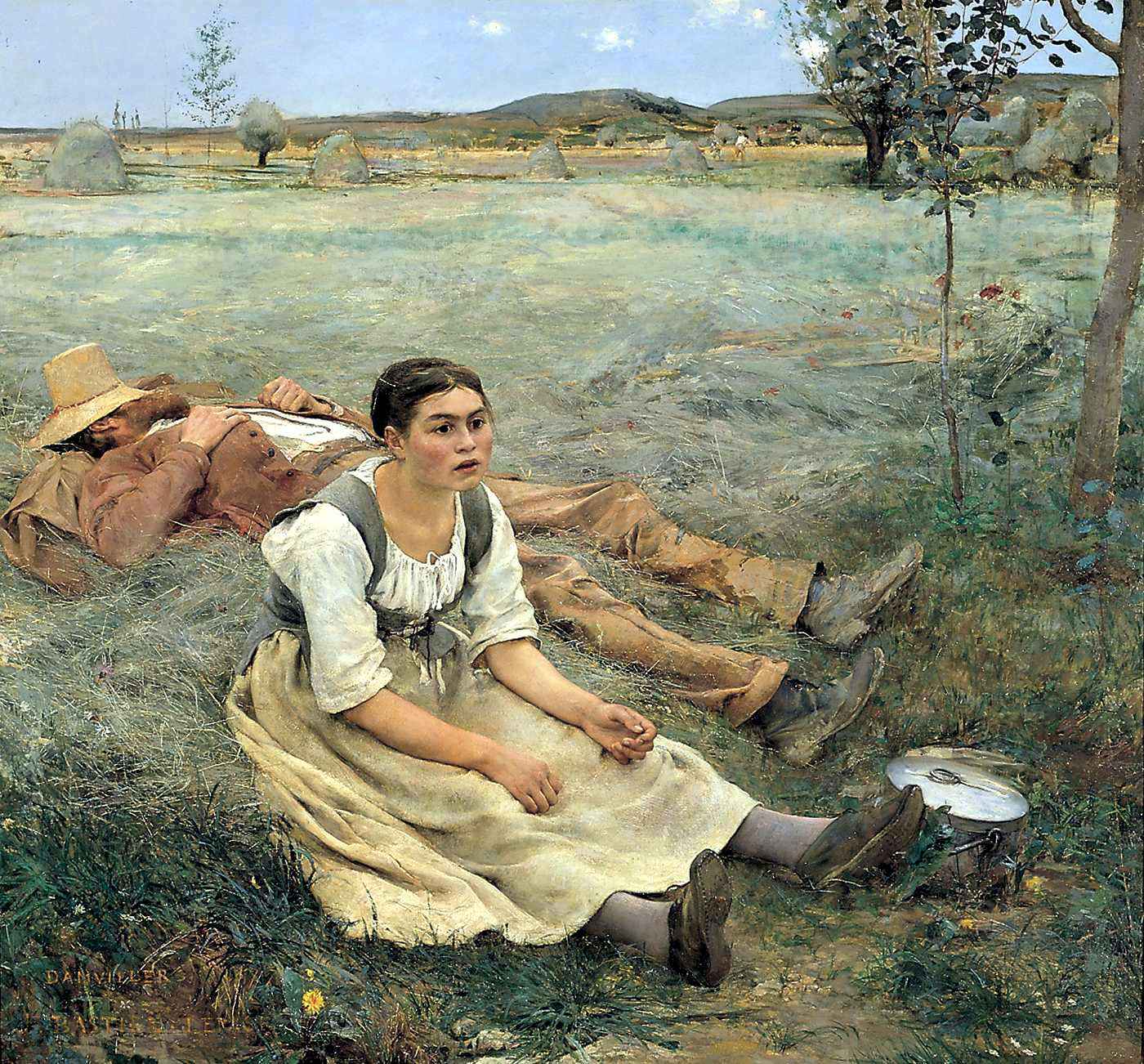
Subjects came directly from real life, such as agricultural work, village routines, or still landscapes under specific lighting conditions.
Jules Bastien‑Lepage developed plein air methods that enhanced naturalism’s scientific clarity. In Haymaking (1877), two field workers are shown in natural light, their form and posture captured with observational care.
Naturalism vs Realism
Naturalism is closely tied to realism but more rigorous. Realism allows for interpretation or symbolic framing. Naturalism avoids both.
Romanticism, by contrast, prioritizes emotional intensity and dramatization, which naturalism opposes.
Scientific and Social Influence
Artists influenced by naturalism drew from contemporary science. Photography challenged painters to see more clearly, and raised questions about authenticity.
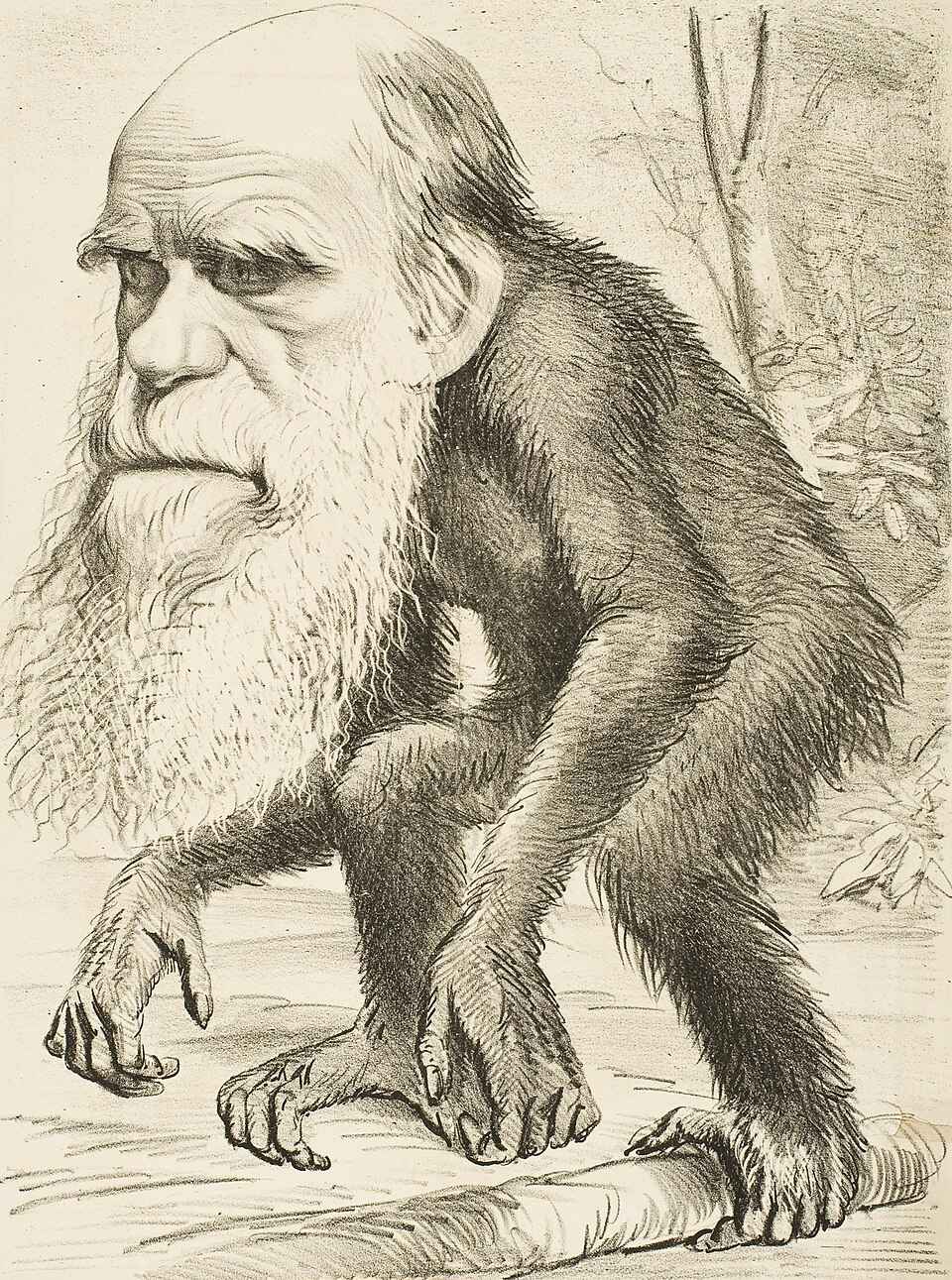
Darwin’s evolutionary theory reframed humans within nature. Optical studies informed how light was recorded. These developments helped turn painting into a disciplined field of study.
Naturalism in Film
Naturalism in film refers to a style that aims to make filmmaking techniques invisible so that scenes appear to unfold naturally and without artifice. It often features non‑professional actors, improvisation, ambient sound, and natural lighting.
Examples of Naturalist Cinema

- The Bicycle Thieves (1948, Ente Nazionale Industrie Cinematografiche) – location shooting and non‑professional actors show post‑war Rome. Read my breakdown of the use of frame within frame shots in Bicycle Thieves.
- Rosetta (1999, Les Films du Fleuve) – everyday routine captured in real time
- Wendy and Lucy (2008, Filmscience) – ambient sound and still framing depict homelessness without melodrama
To explore how naturalism functions in cinema, see What Is Naturalism in Film.
Summing Up
Naturalism in art began with a commitment to visual truth. It avoided fantasy, symbolism, or emotional staging. In film, it remains a way of seeing, one that trusts the world to speak for itself. From painting to cinema, naturalism insists on patience, clarity, and the discipline to look closely.
Read Next: Curious how art movements shaped film?
Explore our full Visual Art Timeline to see how styles like Surrealism, Cubism, and Suprematism influenced cinema’s most experimental moments.
Or keep browsing our Film Movements & World Cinema section for more on the histories that shaped screen culture around the globe.
