

Published: June 12, 2019 | Last Updated: October 15, 2025

What is Classicism in art? Definition & Meaning
Classicism in art is a style based on the principles of ancient Greek and Roman art, emphasizing harmony, proportion, idealized form, clarity of structure, and a rational approach to composition.
Origins of Classicism in Art

Classicism developed in ancient Greece during the 5th century BCE, grounded in ideals of rational beauty, order, and mathematical proportion. These principles later spread through Roman art and architecture.
During the 15th century, the Italian Renaissance revived Classical models by rediscovering Greek texts, sculptures, and architectural forms.
Artists like Leon Battista Alberti and Andrea Mantegna reintroduced balance, perspective, and anatomical study into painting and architecture. These ideals returned again in the 18th century with the rise of Neoclassicism across Europe.
Core Characteristics
- Balance and symmetry in composition
- Clear contours and smooth surfaces
- Idealized human anatomy and proportion
- Use of linear perspective and rational spatial design
- Mathematical principles like the golden ratio and triangular composition
- Subjects drawn from history, mythology, and classical literature
Notable Artists and Works
Classicism has shaped painting and sculpture for over two thousand years, beginning with Greek ideals of proportion and continuing through the Renaissance and Neoclassical periods.
Artists across eras returned to classical models for structure, moral clarity, and technical precision. The following examples show how classical principles adapted to changing historical contexts while retaining their core values.
Ancient Models
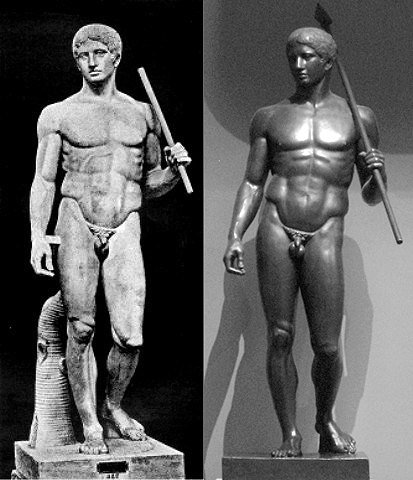
Classical sculpture such as Doryphoros by Polykleitos (c. 440 BCE) established standards of ideal proportion and contrapposto stance.
Architecture like the Parthenon in Athens demonstrated precise column spacing, harmonious ratios, and calculated visual corrections.
Renaissance Classicism

Leonardo da Vinci’s Vitruvian Man (c. 1490) visualized human symmetry through geometric construction.
Raphael’s The School of Athens (1511, Vatican) combined myth, reason, and architectural depth in one coherent classical tableau.
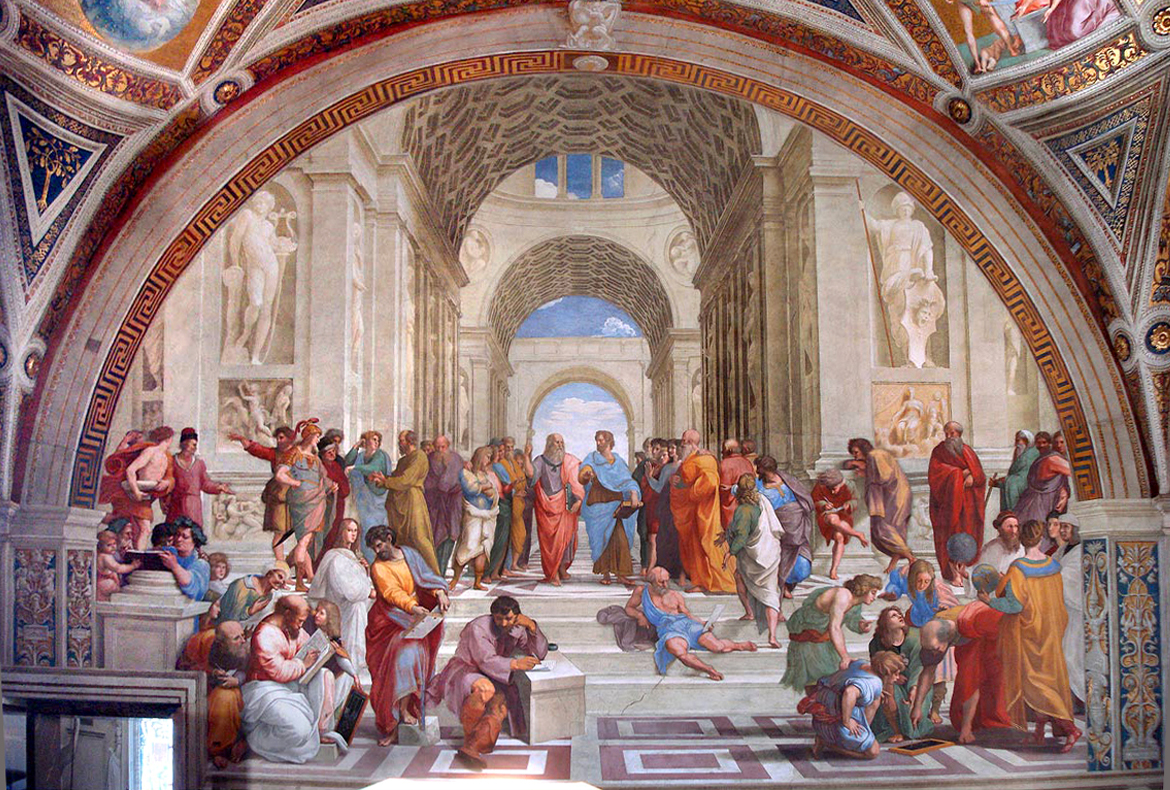
Renaissance artists also used techniques like sfumato for soft transitions, triangular composition for stability, and golden ratio layouts for balance.
Neoclassicism and the Enlightenment

Jacques-Louis David’s Oath of the Horatii (1784, Louvre) defined Neoclassical painting through moral clarity, strong outlines, and simplified structure.
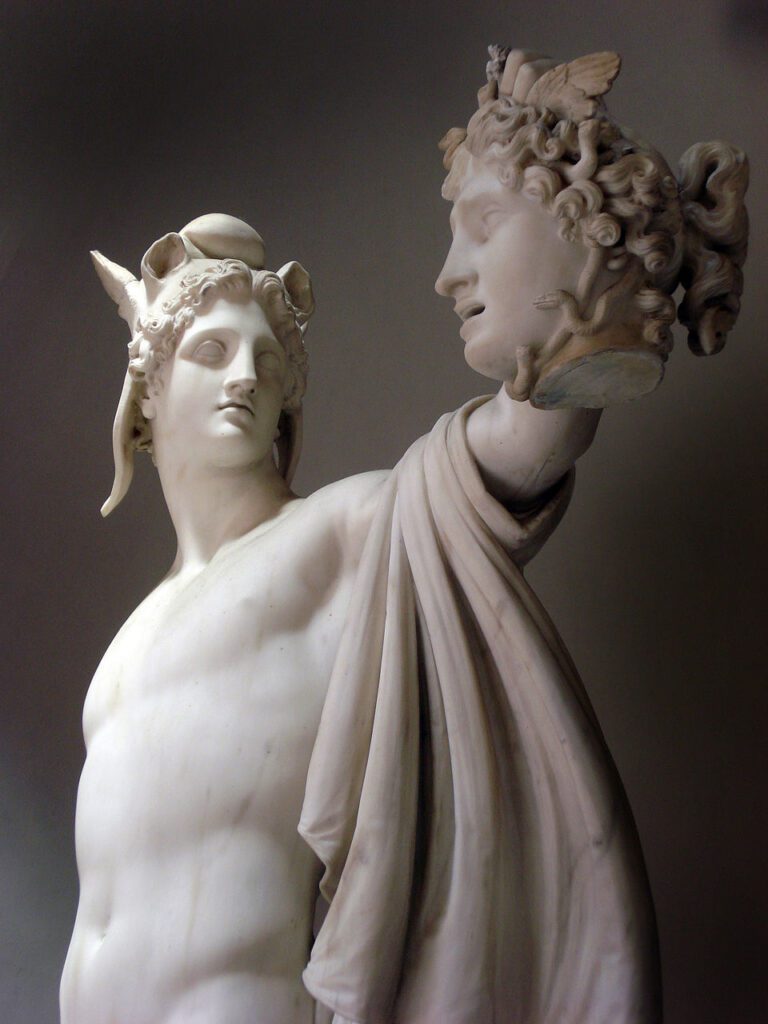
Sculptor Antonio Canova returned to the purity of marble, creating works like Perseus with the Head of Medusa (1804) that mirrored Greek ideals in anatomy and stillness. These artists rejected Rococo’s excesses and aligned their work with Enlightenment ideals of reason and civic virtue.
Classicism in Architecture

Architects expressed classical ideals through column orders, symmetry, and geometric planning. The Renaissance revival began with Filippo “Pippo” Brunelleschi’s dome designs, continued in Palladio’s villas, and culminated in state structures across Europe and America.
The Parthenon’s Doric columns represent Classical precision, while Roman contributions like concrete vaults expanded the possibilities of scale.
Legacy and Influence
Classicism continues to influence visual culture. In fashion, designers like Versace reinterpret Greco-Roman drapery and silhouettes for contemporary runways.
In digital art, creators use classical composition tools like golden ratio grids, 3D modeling based on architectural orders, and balanced spatial layouts.
In architecture, modern civic buildings still feature porticos, columns, and pediments derived directly from classical prototypes.
Classicism and Film
In cinema, Classicism appears through formal composition, symmetry, and control. Directors frame scenes with balanced geometry and lighting that echoes classical painting.
Historical epics often reproduce tableaux vivant compositions based on classical art. For an in-depth breakdown, see our full guide on Classicism in Film.
Summing Up
Classicism in art centers on harmony, proportion, and ideal form. From ancient Greece to Neoclassical France to digital media today, it remains a foundational aesthetic system.
Whether in painting, sculpture, architecture, or design, its structure and discipline continue to shape how we construct visual meaning.
Read Next: Curious how art movements shaped film?
Explore our full Visual Art Timeline to see how styles like Surrealism, Cubism, and Suprematism influenced cinema’s most experimental moments.
Or keep browsing our Film Movements & World Cinema section for more on the histories that shaped screen culture around the globe.
