
Published: June 3, 2024 | Last Updated: November 28, 2025

What is a Camera dolly? Definition & Meaning
A camera dolly is a moving platform that lets you film smooth horizontal shots. You can use it to push in, pull back, or track sideways. This helps you follow characters, reveal space, or build tension without handheld shake. Dollies give you more control over camera movement and help you tell the story with clean, steady motion.
Types of Dollies
You can find all kinds of camera dollies, from small tabletop wheels to full-size track dollies with mounted cranes. Some fold into a suitcase. Others need a whole crew to operate. You can also mix gear, like putting a tripod or gimbal on the dolly for more control.
If you’re on a tight budget, a wheelchair and a steady push can still get the job done. Here are the most common types of dollies:
Standard Dolly
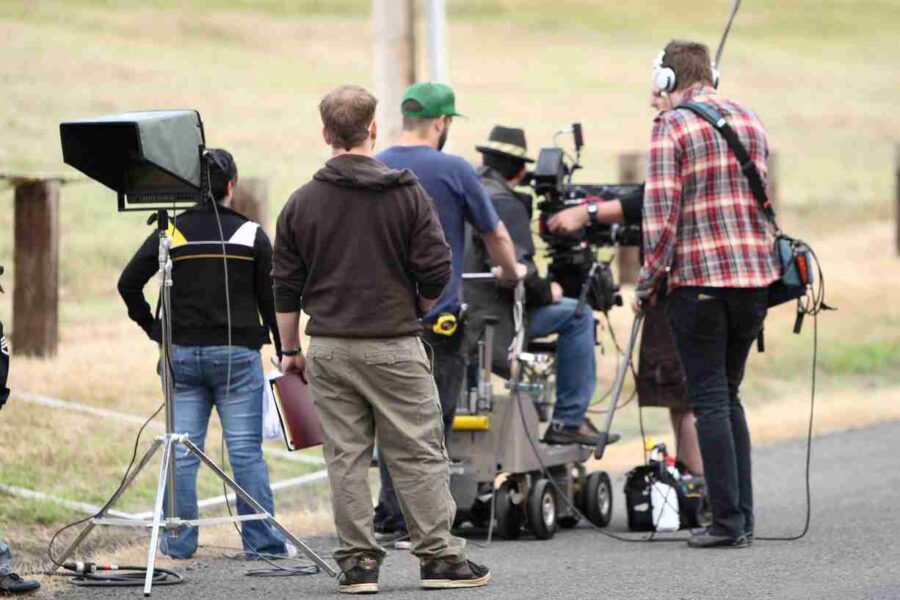
With its pneumatic or rubber wheels, the standard dolly serves multiple purposes. It can operate on flat surfaces or tracks to provide smooth motion. Its platform can hold a tripod or a camera jib, allowing various vertical and horizontal movements.
Track Dolly

A track dolly runs on a set of rails, offering precise and smooth camera movement. This dolly suits scenes requiring long, continuous shots. The track can be curved or straight, depending on the scene’s needs.
Doorway Dolly

A doorway dolly is designed to fit through tight spaces like doorways and narrow hallways. Its compact design and flexible wheels are ideal for indoor shoots in confined areas.
Table Dolly
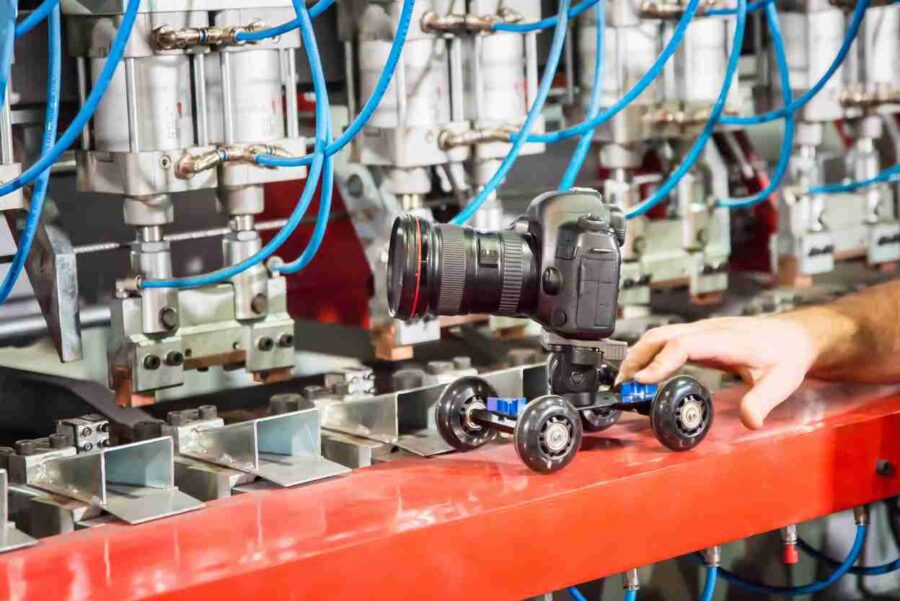
A table dolly is similar to the standard dolly, but much smaller and uses inline skate wheels.
Camera Slider
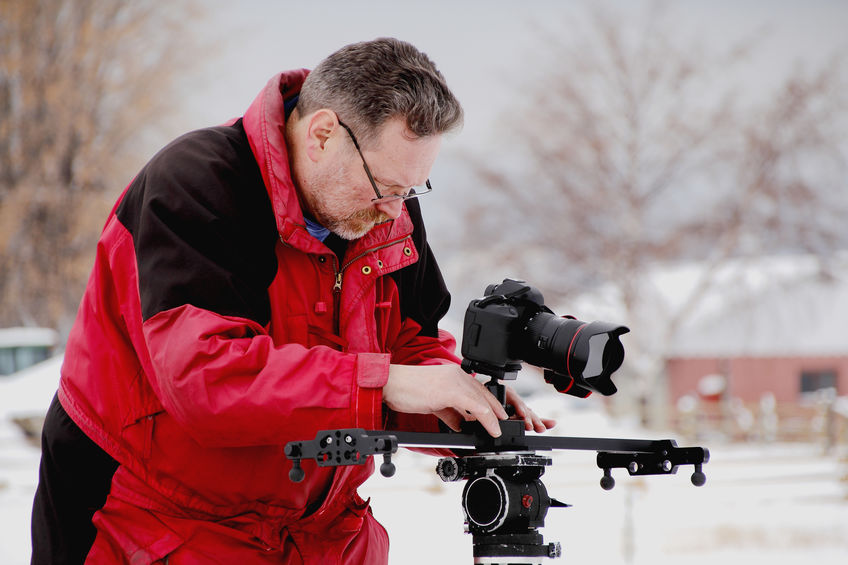
A camera slider is a smaller, simplified version of a track dolly. It allows for short, linear camera movements and is often used for close-up shots or when space is limited.
You can get sliders, where the small cart runs on wheels like the Dana Dolly. It’s basically a track dolly in a miniature version.
Other gear to achieve a dolly shot
You can also use a gimbal or glidecam to achieve a similar effect. You can even sit on a skateboard, an office chair, or in a wheelchair (or mount your camera to any of these) to create a dolly shot.
Read more about camera sliders.
Techniques and Usage
There are many types of shots you can create with a dolly. Here’s a brief overview:
Tracking Shots
Tracking shots involve moving the dolly along a path parallel to the action. This technique follows characters or objects, creating motion and continuity.
Push-Ins and Pull-Outs
Push-ins and pull-outs are achieved by moving the dolly closer to or farther from the subject. These movements emphasize a character’s emotional state or reveal key details within the frame.
Camera Movement List
Arcing Shots
Arcing shots involve moving the dolly in a curved path around the subject. This technique adds a dynamic quality to the scene.
Consider using Compound Movements.
Compound movements combine multiple dolly techniques to create complex camera movements. For example, a dolly could track alongside a character while simultaneously pushing in to highlight their emotional state.
Things to Consider when Setting up a Dolly
When setting up a dolly shot, there are many things to consider. What are you trying to convey with the shot? Do you need tracks? Will the tracks get in the shot? How fast should you move?
You get the point. Here are a few basics to consider when setting up a dolly:
Plan the Shot
Proper planning is critical when setting up a dolly shot. Consider the path, speed, and timing of the movement. Storyboards and shot lists can help visualize the desired outcome and align all elements.
Lay a Level and Stable Track.

When using a track dolly, align and secure the tracks. Use a spirit level to check for inclines or declines affecting the shot’s smoothness.
Tracks can be laid straight or curved, depending on the desired camera movement.
Mount the Camera
Secure the camera to the dolly using a tripod or mounting plate. Tighten all connections and balance the camera to prevent unwanted movement during the shot.
Rehearse the Movement
Rehearsals ensure that the dolly movement is smooth and precise. Use markers on the track or floor to guide the dolly operator. Practice the movement several times, adjusting the speed and timing to achieve the desired effect.
Summing Up
A dolly is a fundamental tool for directors, cinematographers, and camera operators, offering a range of dynamic camera movements.
Using a dolly adds depth and dimension to scenes, whether they’re tracking shots, push-ins, pull-outs, or complex compound movements.
Fortunately, you don’t have to have a large budget to get a nice dolly—an old wheelchair or even a skateboard can do the trick.
Read Next: Want to master how camera movement affects tone and pacing?
New to camera language? Start with our Camera Shots & Angles FAQ for quick answers and visual breakdowns.
Then explore all camera movement techniques — from tracking shots and whip pans to handheld, Steadicam, and crane setups.
Or return to the Cinematography section to dive into lenses, lighting, and visual composition.