
Published: April 23, 2026

Before Dario Argento, before Lucio Fulci, there was Mario Bava. He shot other directors’ films for twenty years, solving problems with light and camera that no one else knew how to solve, and then in 1960, he directed his first feature and built Italian horror cinema more or less from scratch. He did it with almost no money, extraordinary ingenuity, and a cinematographer’s understanding of what light can do to a human face.
Who Is Mario Bava? Career and Filmmaking Techniques
Mario Bava (1914–1980) was an Italian cinematographer and director who effectively founded the Italian horror genre with Black Sunday (1960) and went on to pioneer the giallo thriller with Blood and Black Lace (1964). Working within the constraints of extremely low budgets, he developed a set of cinematographic techniques: colored gel lighting, forced perspective sets, and in-camera optical effects, all of which created atmosphere and visual richness out of minimal resources. His work influenced virtually every Italian genre filmmaker who followed him and had a direct impact on horror cinema internationally.
Bava came from a cinematography family (his father Eugenio was a cinematographer and special-effects pioneer in early Italian cinema) and trained as a painter before moving into film. This background in both technical image-making and fine art is visible throughout his work: his frames often have the compositional logic of paintings, and his approach to lighting draws on the Italian tradition of chiaroscuro that runs from Caravaggio through the theatrical arts.
The Cinematographer’s Toolkit
Bava’s greatest technical advantage was that he was his own cinematographer for most of his career. He did not need to communicate his visual intentions to a separate department head. He could move a light himself, adjust a gel, position the camera exactly where he wanted it, and see the result immediately. This gave him a speed and precision that directors working through a conventional crew hierarchy could not match, and it meant that visual problems on set were solved by the person best equipped to solve them.
Colored Gel Lighting
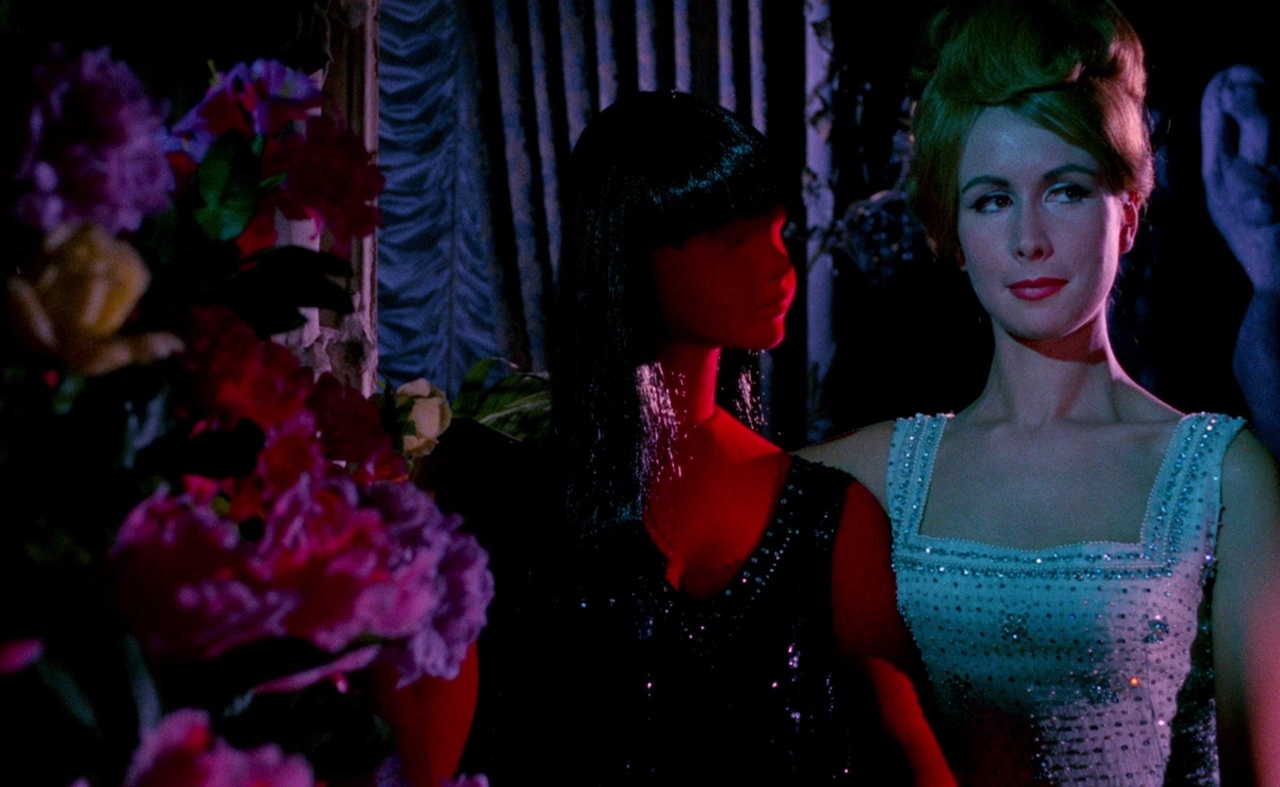
Bava’s signature technique is the use of multiple colored light sources within a single shot, each fitted with a different colored gel. A typical Bava horror scene will have a cold blue wash as its base illumination, a burst of green coming from one direction, and an accent of red or amber from another. These colors are not motivated by any visible source in the scene. They are frankly artificial, and Bava makes no attempt to disguise this. The result is a visual environment that feels divorced from the natural world: low-key in its overall tone but saturated in its use of color, creating darkness that nonetheless contains vivid, competing chromatic information.
This approach pre-dates Dario Argento’s more extreme color work by a decade. When Argento arrived with Suspiria in 1977, he was building on a technique that Bava had already developed and refined across more than a dozen films. Tim Lucas, an American film critic and the author of the definitive Bava study Mario Bava: All the Colors of the Dark, argues that the entire visual language of Italian horror cinema flows from Bava’s early experiments with colored light in the 1960s. The title of Lucas’s book is itself a Bava tribute: all the colors of the dark is exactly what his lighting gives you.
Budget Solutions as Aesthetic Choices
Many of Bava’s most striking techniques began as budget solutions and became aesthetic strategies. His sets were frequently too small for the stories he needed to tell, so he developed miniatures and forced-perspective tricks to extend their apparent scale. He built environments that looked enormous on screen and were barely large enough to accommodate a camera. For the forest sequences in Kill, Baby, Kill (1966), he used the same stretch of woods repeatedly, repositioned and re-lit to appear as different locations. The disorienting repetition this produced accidentally enhanced the film’s atmosphere of supernatural circularity.
In Bay of Blood (1971), budget limitations meant he could not afford elaborate production design, so he concentrated visual interest in extreme close-ups and unusual camera angles rather than in the environments themselves.
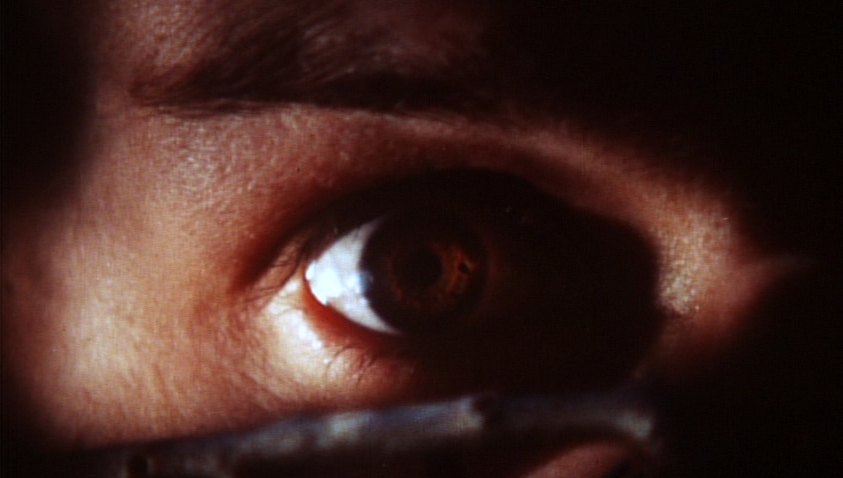
The film’s compositions are often abrupt and geometrically strange: low angles that make ordinary spaces feel threatening, tight framings that exclude context and force attention onto a single detail. These are the adaptations of a filmmaker who has learned to work within constraints so consistently that the constraints have become invisible and the solutions have become a style.
Four Films That Define Bava’s Technique
Below, I’ve picked four films that I think are central to his work.
Black Sunday (1960): Establishing the Template
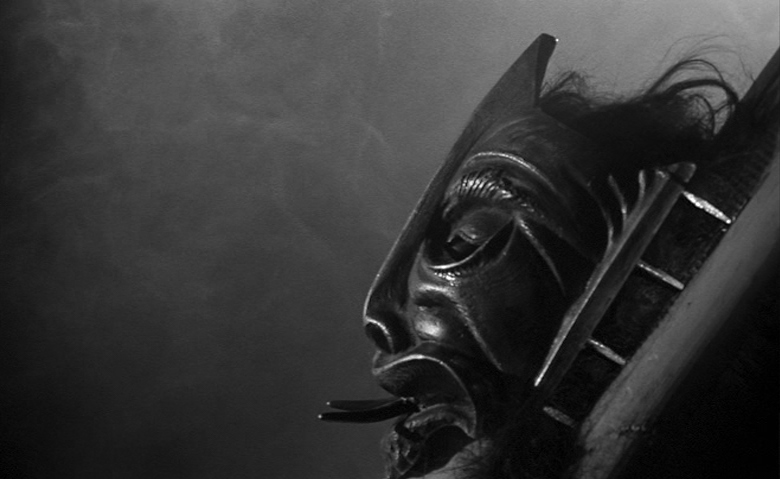
Black Sunday (Italian title: La maschera del demonio) is Bava’s directorial debut and the film that established his approach. Shot in black and white, it shows Bava’s lighting operating without color: everything depends on the placement and quality of light sources, the depth of shadow, and the contrast between illuminated and dark areas of the frame. The film’s opening sequence, in which a spiked mask is hammered onto a condemned witch’s face, is lit in a way that makes the violence feel ceremonial rather than gratuitous. The shadows are architectural. The light falls with precise intention. Every frame looks considered.
Bava based his visual approach on the tradition of chiaroscuro that runs through Italian painting: the use of extreme contrast between light and dark to give subjects a sculptural quality and a sense of moral weight. The witch in Black Sunday is lit like a Caravaggio figure: emerging from deep shadow, with light catching the planes of her face and leaving everything else in darkness. This is visual storytelling at the level of craft, not concept.
Blood and Black Lace (1964): The Giallo Template
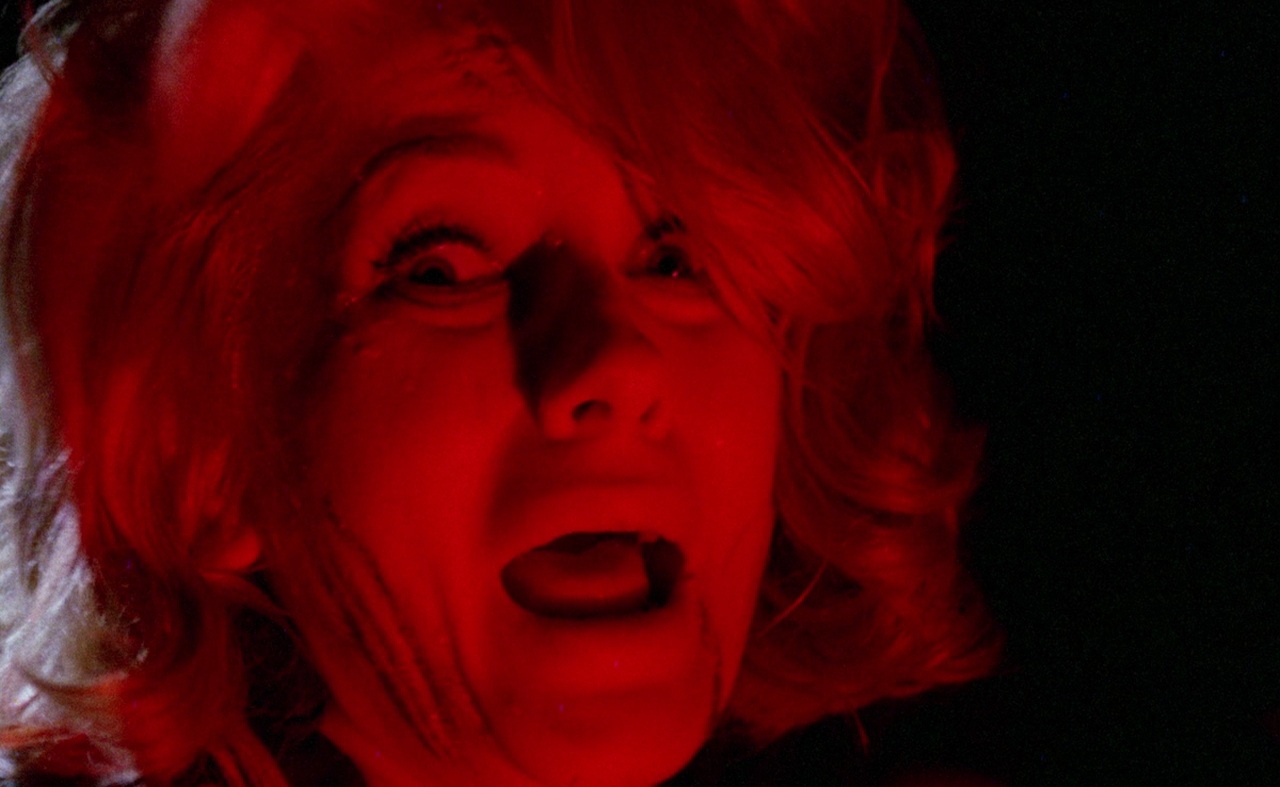
This film is where Bava invented the modern exploitation horror film as it would be understood for the next thirty years. It has a masked killer, a series of victims killed in elaborately staged set pieces, and a plot that exists primarily to connect the killings. But what makes it significant is the color. Shot in full vivid color with an aggressive gel-lighting approach, Blood and Black Lace treats each murder as a formal color composition. Different scenes have different dominant hues. The fashion house setting gives Bava an excuse to fill frames with vivid fabrics and dramatically lit spaces that he uses as canvases for his lighting experiments.
The film established what would become the giallo’s visual grammar: saturated color, stylized violence, and a detached aesthetic that frames horror as visual spectacle. Every subsequent Italian horror director, including Argento, learned from what Bava did here.
Read more on color psychology in film.
Kill, Baby, Kill (1966): Atmosphere Over Plot
Kill, Baby, Kill is arguably Bava’s most atmospheric film, and the one where his technique is most purely in service of feeling rather than narrative. The story, involving a ghost child haunting an Eastern European village, is thin by design. Bava is not interested in the plot. He is interested in building a sustained state of dread through visual means: the repeated forest, the long corridors of the baroque villa, the extreme close-ups of the ghost child’s face appearing in windows and mirrors.
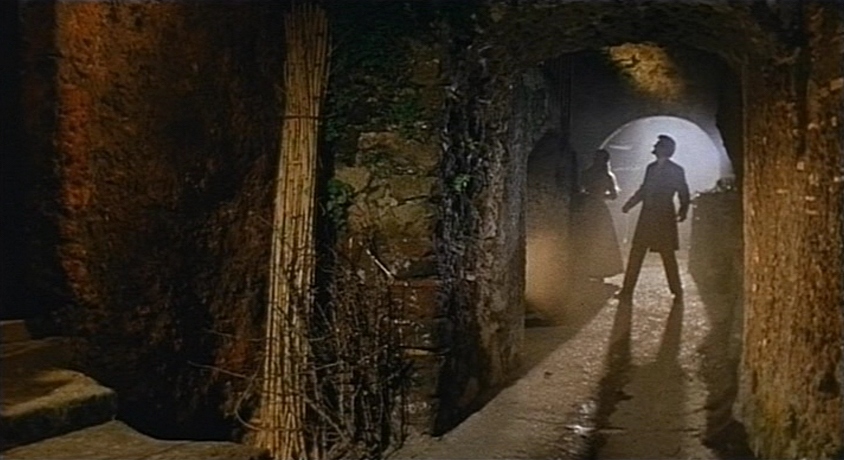
The film uses the mise-en-scène of gothic literature, turning physical spaces into psychological states. The corridors of the villa feel labyrinthine, not because they are complex but because Bava’s camera moves through them in disorienting ways that deny the viewer a stable spatial map. This is a technique Kubrick would later deploy in The Shining (1980), and it is not coincidental that Kubrick was familiar with Bava’s work.
Bay of Blood (1971): The Slasher Blueprint
Bay of Blood (also released as Twitch of the Death Nerve) is the film that proto-invented the slasher genre a decade before it became a Hollywood staple. The film’s structure (multiple killers, a high body count, death scenes that display the mechanics of violence with unusual specificity) was directly lifted by the makers of Friday the 13th (1980), which reproduces two of its kill sequences almost shot for shot. Bava himself found the imitation less than flattering.
What the slasher films that followed generally missed was Bava’s formal intelligence. His kill sequences in Bay of Blood are not gratuitous by accident. They are composed with the same precision as everything else he shot, using angle and framing to control what the viewer sees and how they process the violence. The camera is never in the wrong place. Every shot is a decision.
Influence and Legacy
Bava’s influence operates at two levels. The direct influence is visible in Argento, Fulci, and the wider wave of Italian genre cinema in the 1970s and 80s. All of them inherited his colored gel technique, his approach to spatial disorientation, and his willingness to treat violence as a formal rather than purely dramatic element. The indirect influence runs through every American horror film that absorbed Italian genre cinema during the 1970s and 80s, when films like Black Sunday and Blood and Black Lace were reaching American drive-in audiences through exploitation distributors.
Bava died in 1980, the same year his heir Argento was producing his most extreme color work and the year Friday the 13th was demonstrating that his structural innovations had been thoroughly absorbed by mainstream cinema. He left behind a body of work that holds up not as curio horror but as a genuine achievement in cinematographic art, made under conditions of extreme constraint by someone who understood light the way a painter understands pigment.
Summing Up
Mario Bava invented Italian horror cinema with a painter’s eye and a cinematographer’s technical knowledge, working within budgetary constraints so severe that the solutions he developed became the genre’s defining aesthetic. His colored gel lighting, his approach to shadow, his willingness to prioritize atmosphere over narrative logic: these techniques built a template that Italian horror filmmakers used for two decades and that influenced genre cinema internationally. If you want to understand where Italian horror came from and why it looks the way it does, Bava is where you start.
Read Next: Want to see theory in action?
Explore our full Film History, Theory & Genre hub to learn how movements, styles, and structure have shaped screen culture.
Then dive into our Case Studies & Analysis section for close reads of iconic films, scenes, and techniques—broken down with high school-friendly examples you can use in class or on set.
References
- Lucas, Tim. 2007. Mario Bava: All the Colors of the Dark. Cincinnati: Video Watchdog.
- Bondanella, Peter. 2001. Italian Cinema: From Neorealism to the Present. 3rd ed. New York: Continuum.
- Koven, Mikel J. 2006. La Dolce Morte: Vernacular Cinema and the Italian Giallo Film. Lanham, MD: Scarecrow Press.
- Hawkins, Joan. 2000. Cutting Edge: Art-Horror and the Horrific Avant-garde. Minneapolis: University of Minnesota Press.
- Hunt, Leon. 2000. “A (Sadistic) Night at the Opera: Notes on the Italian Horror Film.” In The Horror Reader, edited by Ken Gelder. London: Routledge.
- Hughes, Howard. 2011. Cinema Italiano: The Complete Guide from Classics to Cult. London: I.B. Tauris.
