

Published: June 13, 2019 | Last Updated: June 17, 2025

What is Gothic art? Definition & Meaning
Gothic art is a medieval style that began in 12th-century France and spread across Europe. It’s known for pointed arches, stained glass, tall vaults, and figures that feel stretched and full of emotion. Churches were designed to feel taller and brighter, guiding people’s eyes toward heaven. Oh my Goth!
Origins and Historical Development
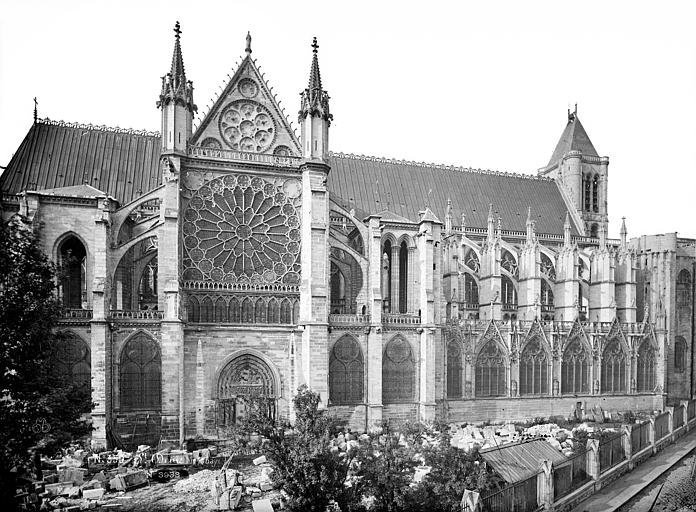
Gothic art originated around 1140 at the Abbey Church of Saint-Denis near Paris, under the direction of Abbot Suger. It marked a departure from Romanesque styles, emphasizing light, height (with towers and windows stretching towards the divine heavens), and theological symbolism.
The style expanded across France, England, Germany, Italy, and Spain, where local variations developed. It was supported by the Catholic Church and often tied to the rise of cities and cathedral building programs.
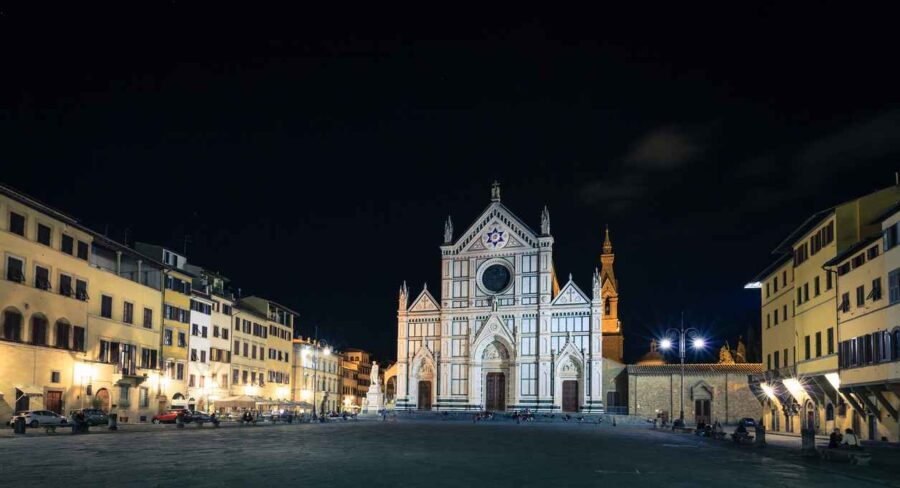
The term “Gothic” was first used in the 16th century by Renaissance scholars such as Giorgio Vasari. They viewed the style as a crude departure from classical Roman ideals and linked it to the historical Goths who had invaded Europe centuries earlier. The name was intended as an insult, although it eventually became the standard term in later art history.
Core Characteristics of Gothic Art
Gothic art developed a distinct visual language across architecture, sculpture, and painting. Each medium reflected shared theological and structural aims.
Architecture
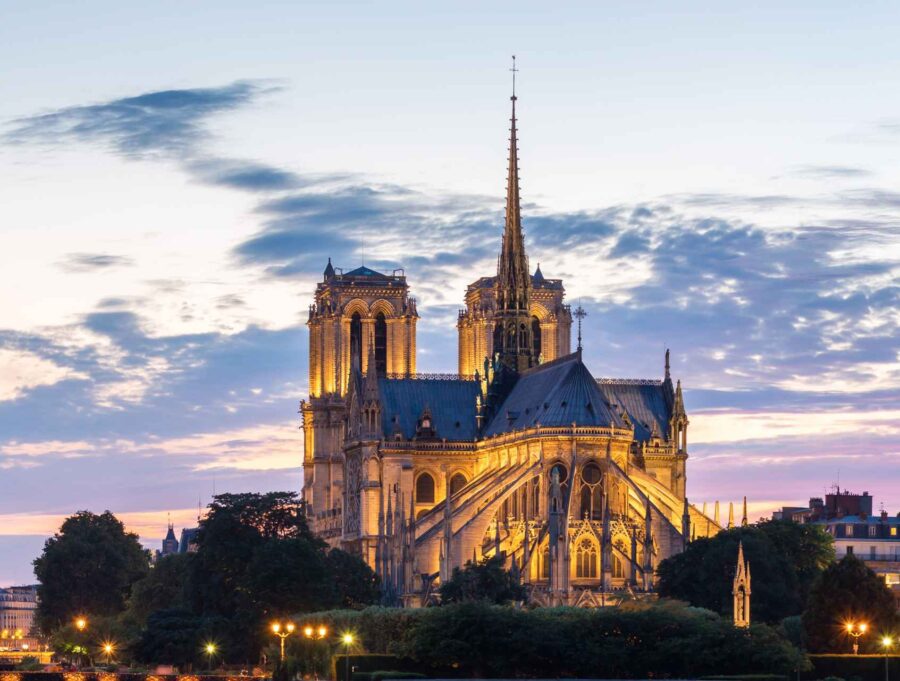
Gothic architecture is defined by structural innovations that made churches taller, lighter, and more open. Pointed arches distributed weight more efficiently than rounded Romanesque forms. Ribbed vaults reinforced ceilings with intersecting stone ribs. Flying buttresses transferred the outward thrust of walls to exterior piers, allowing for thinner walls and larger stained glass windows.
Other key features include clerestories (elevated window zones), triforia (shallow arcaded galleries), and pinnacles that added both decorative emphasis and structural stability. Cathedrals like Notre-Dame de Paris, Chartres, and Amiens were designed to draw the eye upward, symbolizing spiritual ascent and the presence of the divine.
Pilgrimage, Light, and Symbolism
Gothic churches were often designed to accommodate pilgrims visiting sacred relics. Structures such as Chartres Cathedral were rebuilt with expanded ambulatories and chapels to manage increased traffic. Religious function shaped form.
Light was central to Gothic theology. Abbot Suger described divine light as a physical manifestation of God’s presence. Stained glass windows filtered colored light into the interior, transforming the church into a sacred space filled with visual narrative and symbolic meaning. Windows served not just as decoration but as theological instruction in glass.
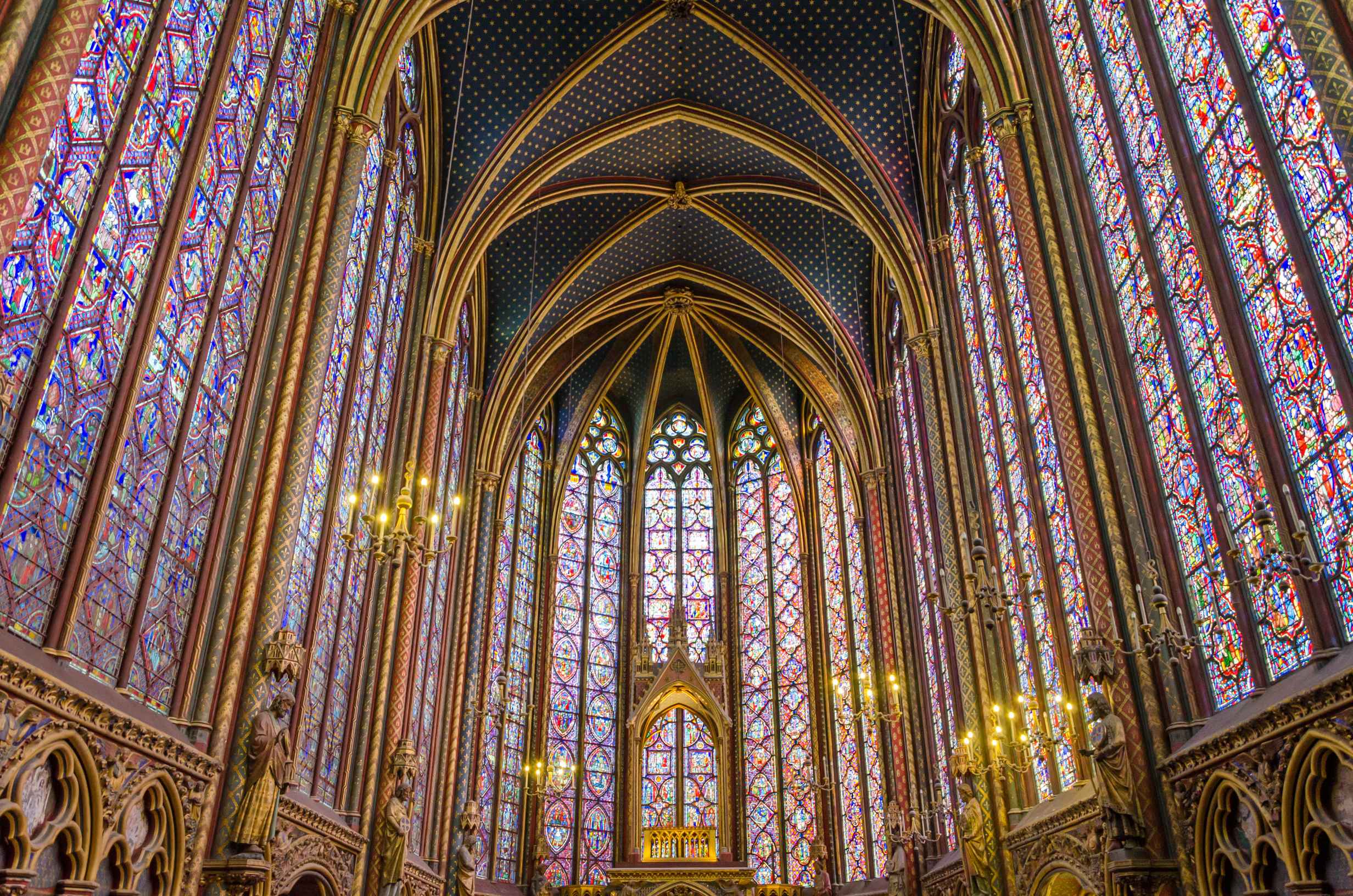
Sainte-Chapelle in Paris represents the height of Rayonnant Gothic. Built by Louis IX to enshrine holy relics, the chapel eliminates wall surfaces in favor of towering stained glass. The upper chapel glows with over 1,100 biblical scenes rendered in radiant jewel tones.
Here, structure is almost invisible, dissolving into pure light and narrative. It is Gothic architecture pushed to symbolic extremes, and it becomes a visual manifestation of divine order and biblical history.
Sculpture and Decorative Arts
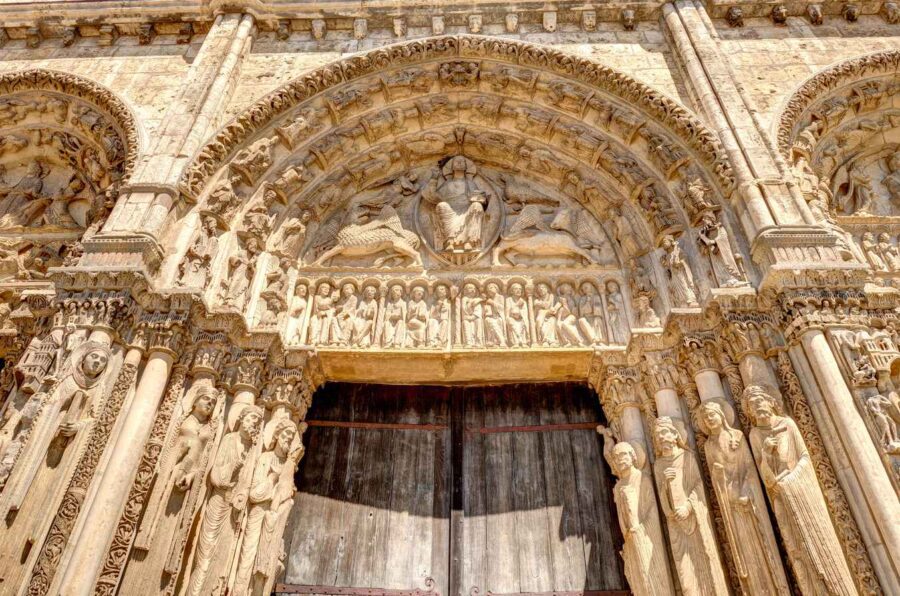
Gothic sculpture was often built into the structure of churches, carved directly into façades, doorways, and columns. The figures were tall and slightly curved, and over time, they showed more emotion and movement.
Scenes from the Bible were carved in stone above entrances and on decorative pillars, helping to tell stories to visitors who couldn’t read.
Inside, churches also featured detailed wooden choir stalls, ivory panels, and gold or enamel containers for holy relics. Metalwork and textiles added color and texture, creating a unified visual experience throughout the entire church.
Painting and Manuscript Illumination
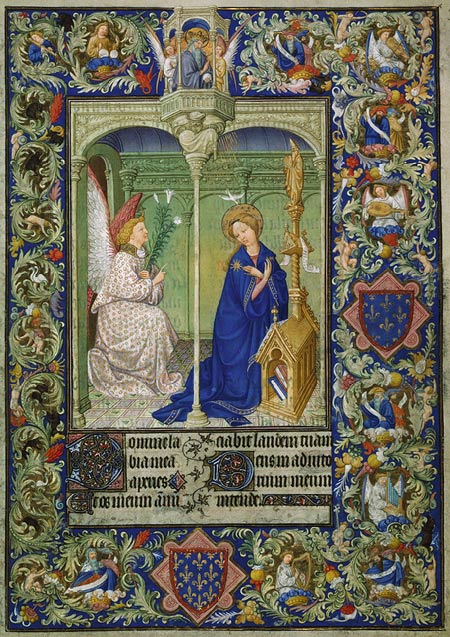
Gothic painting appeared in both wall frescoes and illustrated books. Artists began to show more depth, space, and lifelike figures instead of the flat, symbolic style used before.
In France and the Netherlands, painters like the Limbourg Brothers filled prayer books with colorful scenes, gold leaf, and detailed borders (like the one above).
Panel painting grew more important in the later Gothic period. In Northern Europe, especially in what is now Belgium, Jan van Eyck was one of the first painters to use oil paint with great precision. He showed light, texture, and reflections in ways that felt lifelike.

In Italy, Giotto di Bondone was a painter from Florence working in the early 1300s. He broke with older styles by giving figures real weight, emotion, and presence. His frescos helped move Italian art toward the Renaissance.
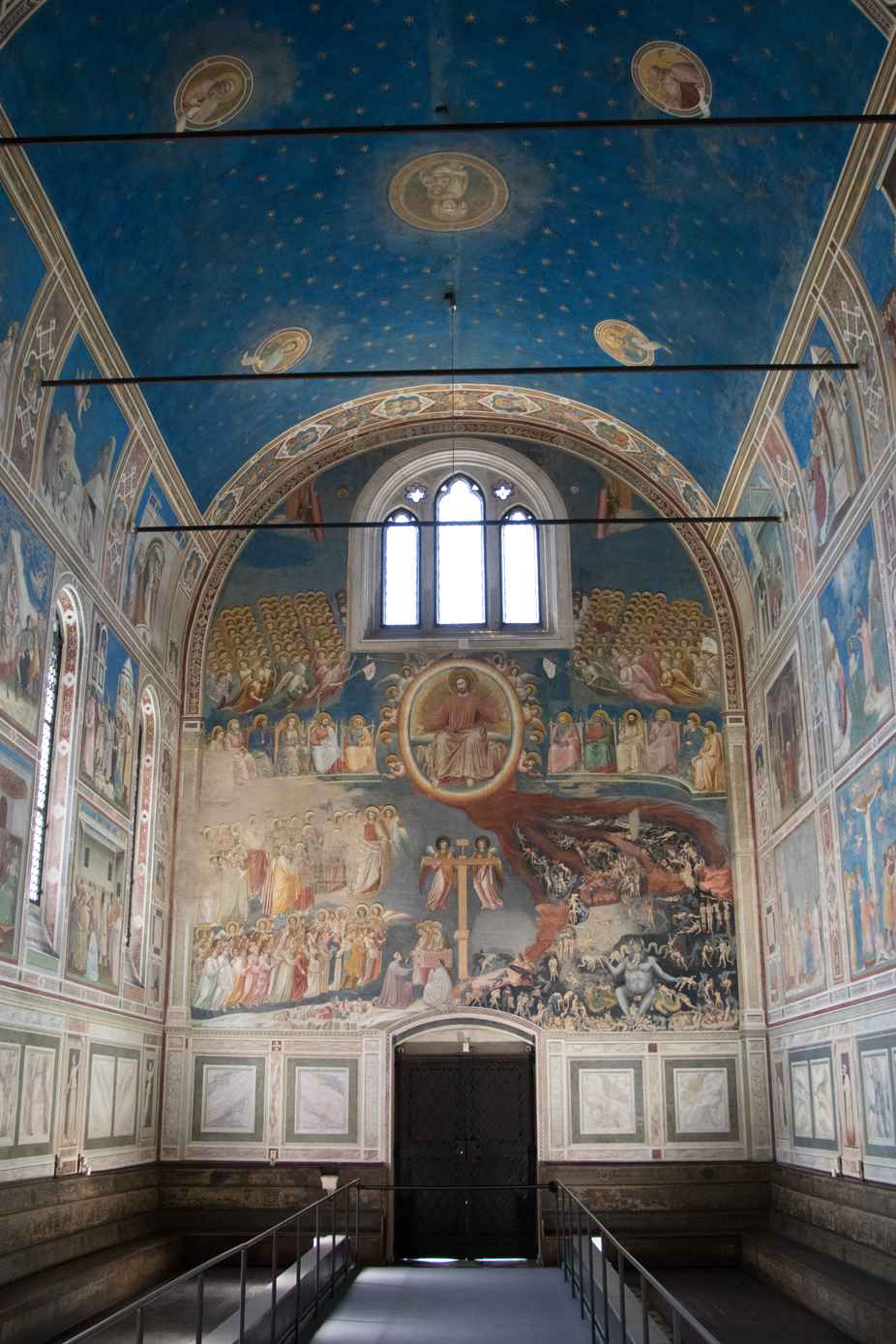
Giotto’s works are sometimes referred to as proto-renaissance. I’ll get back to this transition in a minute.
Regional Styles in Europe
French Gothic emphasized height and luminosity, as seen in cathedrals like Amiens and Chartres.
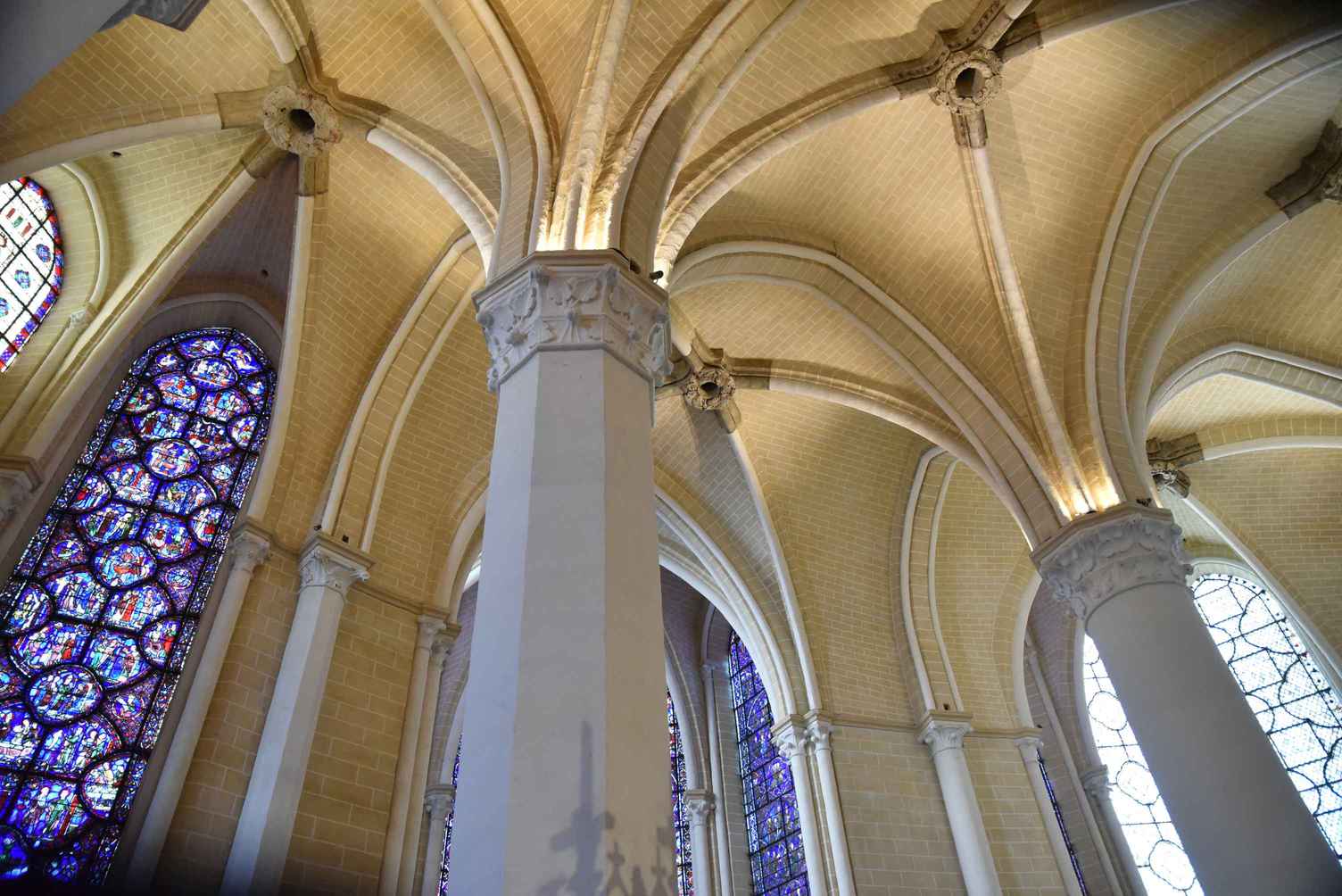
English Gothic leaned toward horizontal structure, with features like fan vaulting in King’s College Chapel.
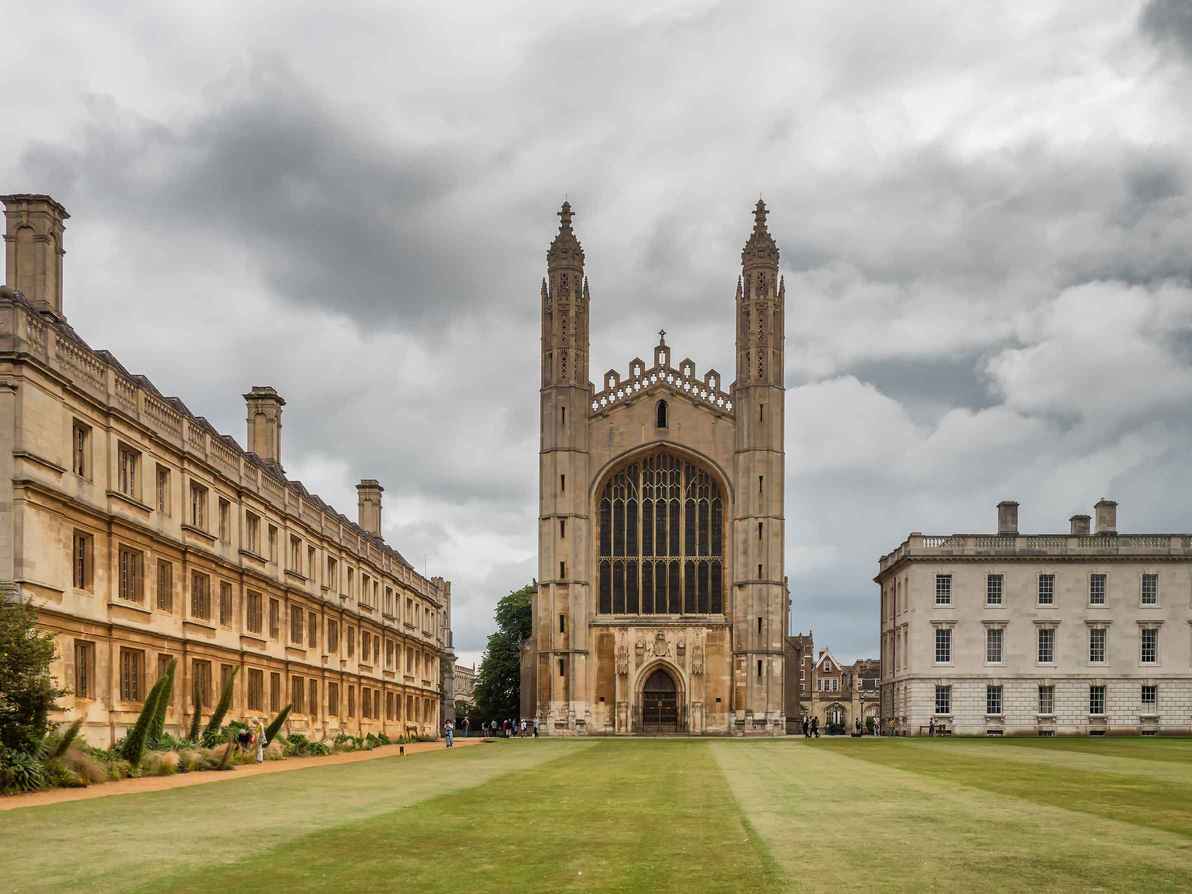
German Gothic architecture developed the hallenkirche, or hall church, where nave and aisles were of equal height.
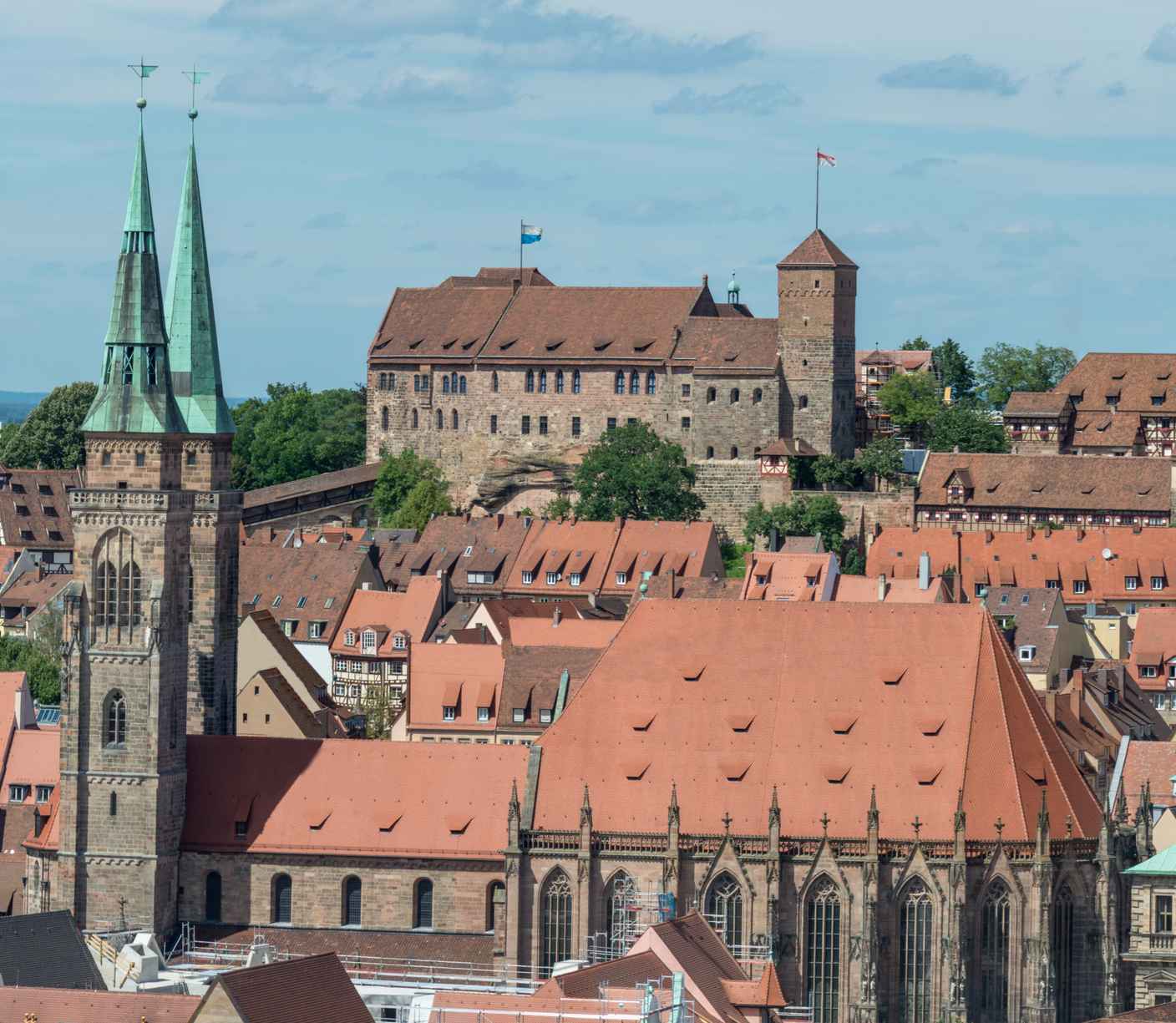
Italian Gothic retained classical influences, often with colorful marble façades and flatter decorative schemes.
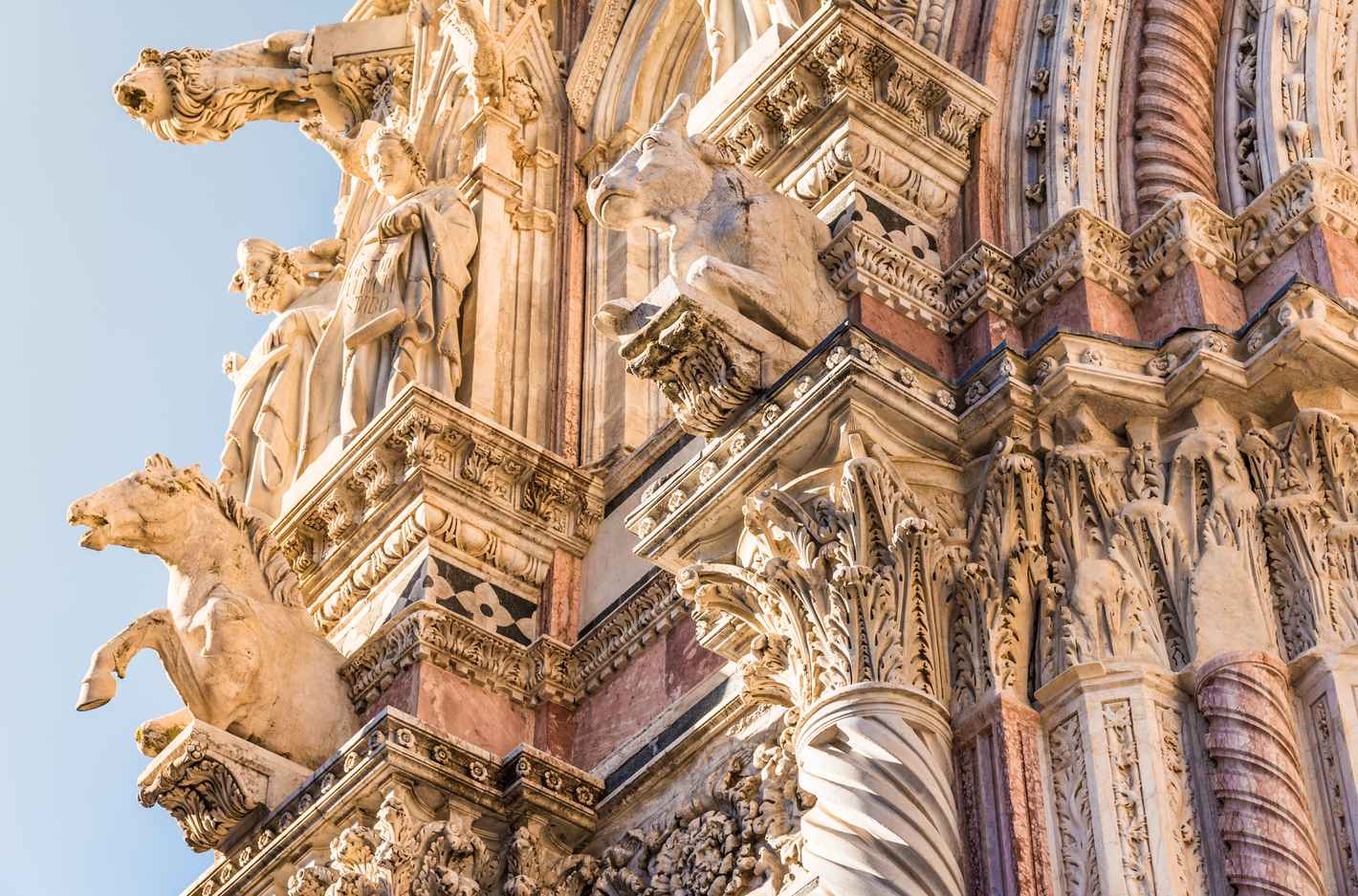
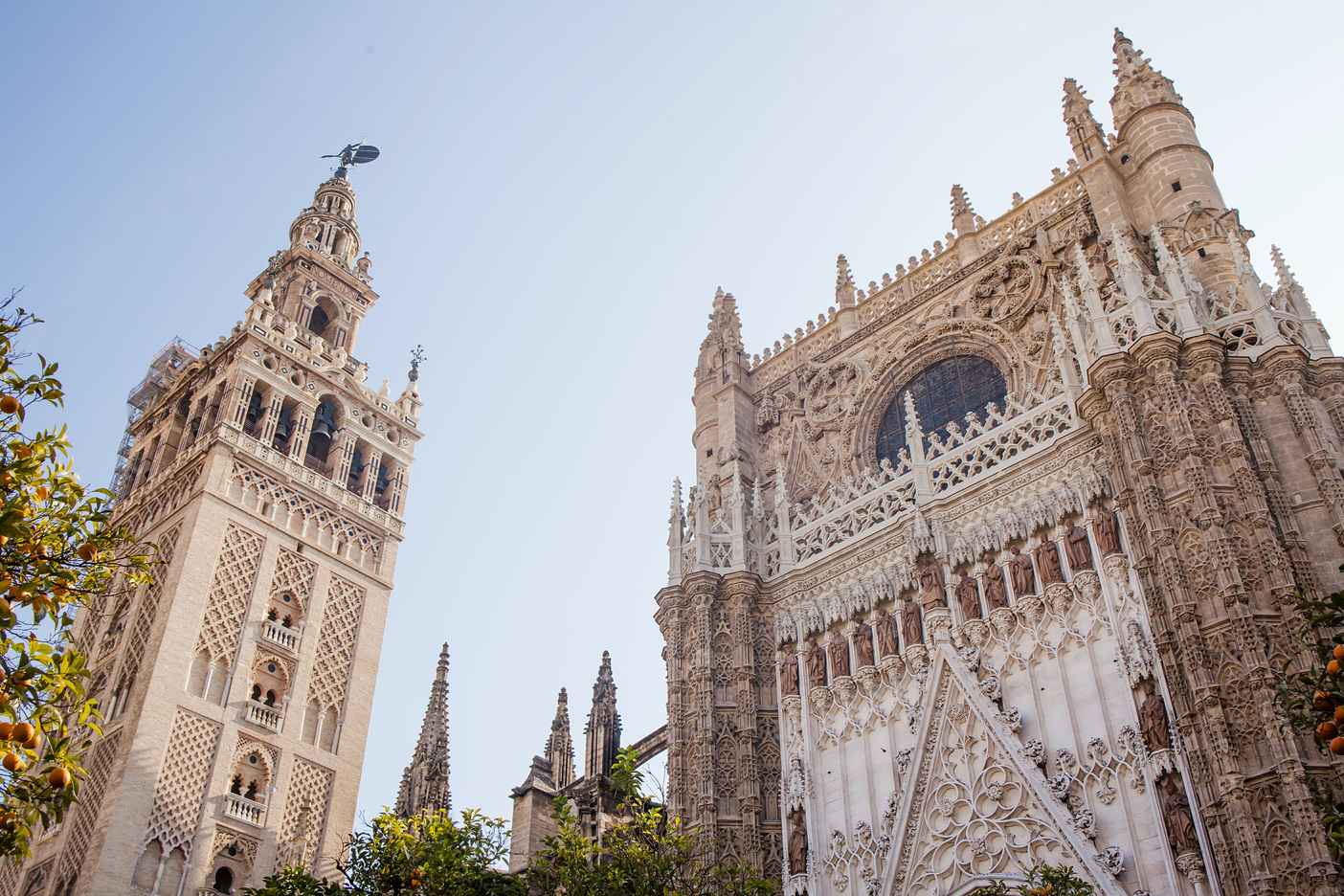
In Spain, Gothic forms mixed with Islamic architectural traditions, producing richly detailed interiors and sculptural altarpieces known as retablos.
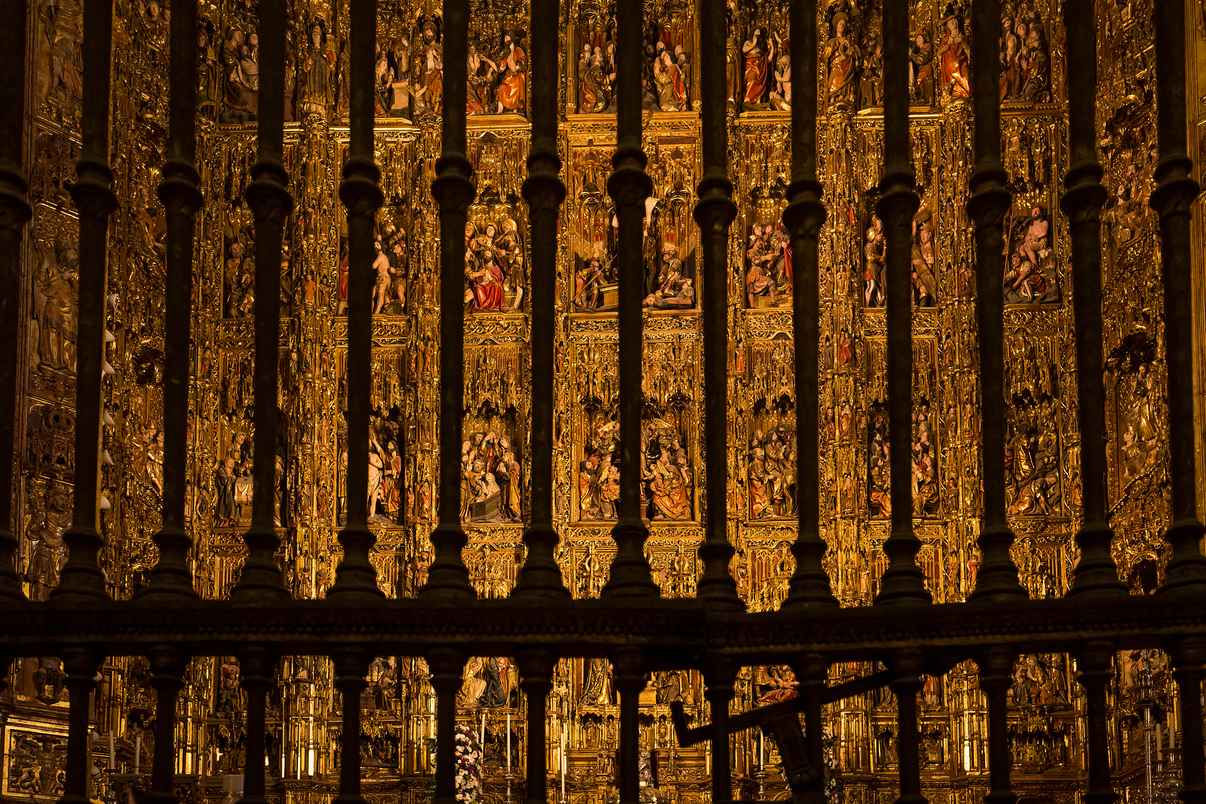
Catalan Gothic, found across northeastern Spain, emphasized horizontal lines, structural clarity, and open interiors.
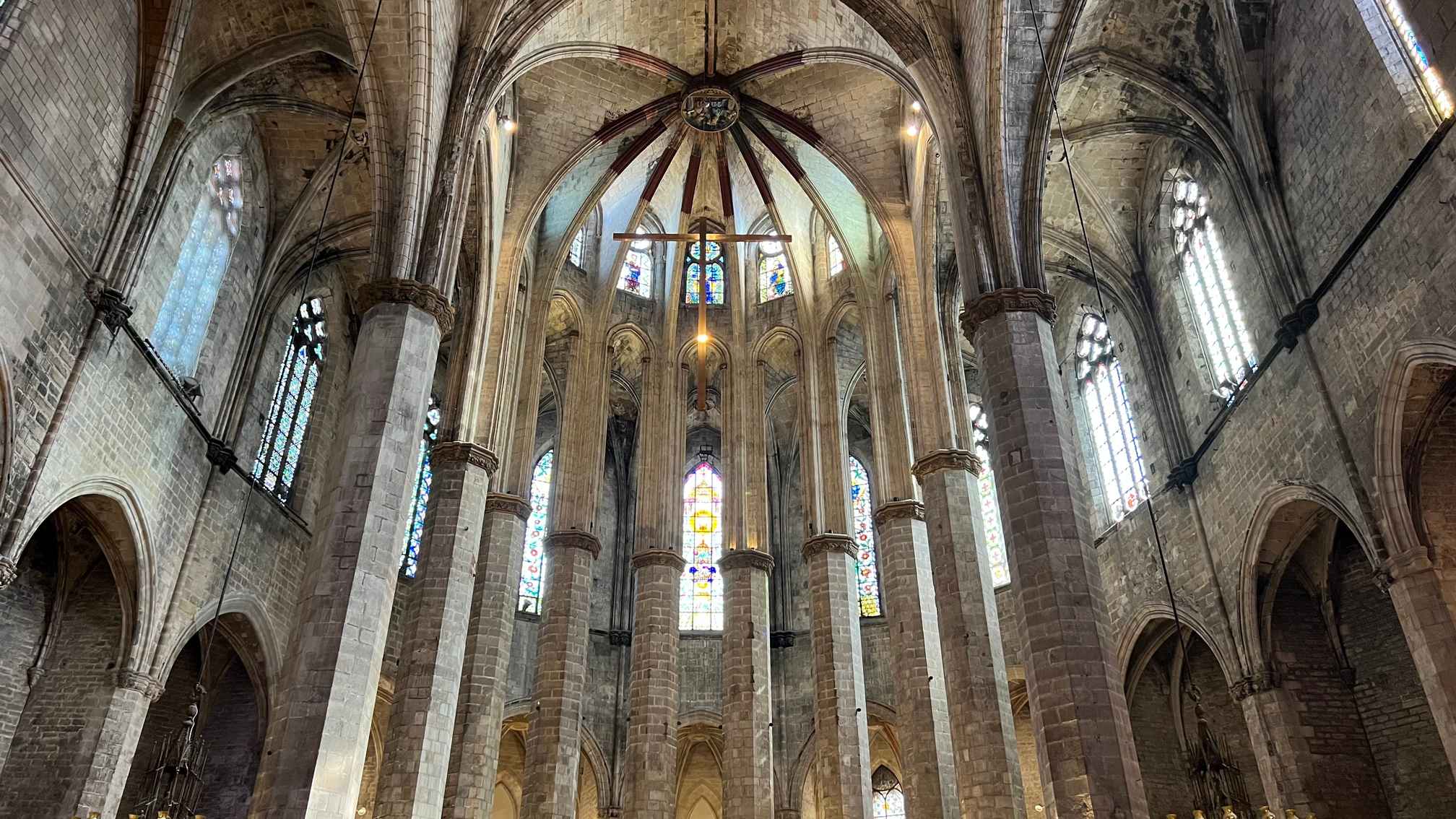
The Basilica of Santa Maria del Mar in Barcelona, constructed in the 14th century, features a wide, aisleless nave flanked by equally tall side aisles. Slender octagonal columns create a sense of rhythmic space rather than vertical tension. Its exterior is plain, but the interior wants us to feel solemnity and connect with God through scale and light.
Late Gothic and the Transition to the Renaissance
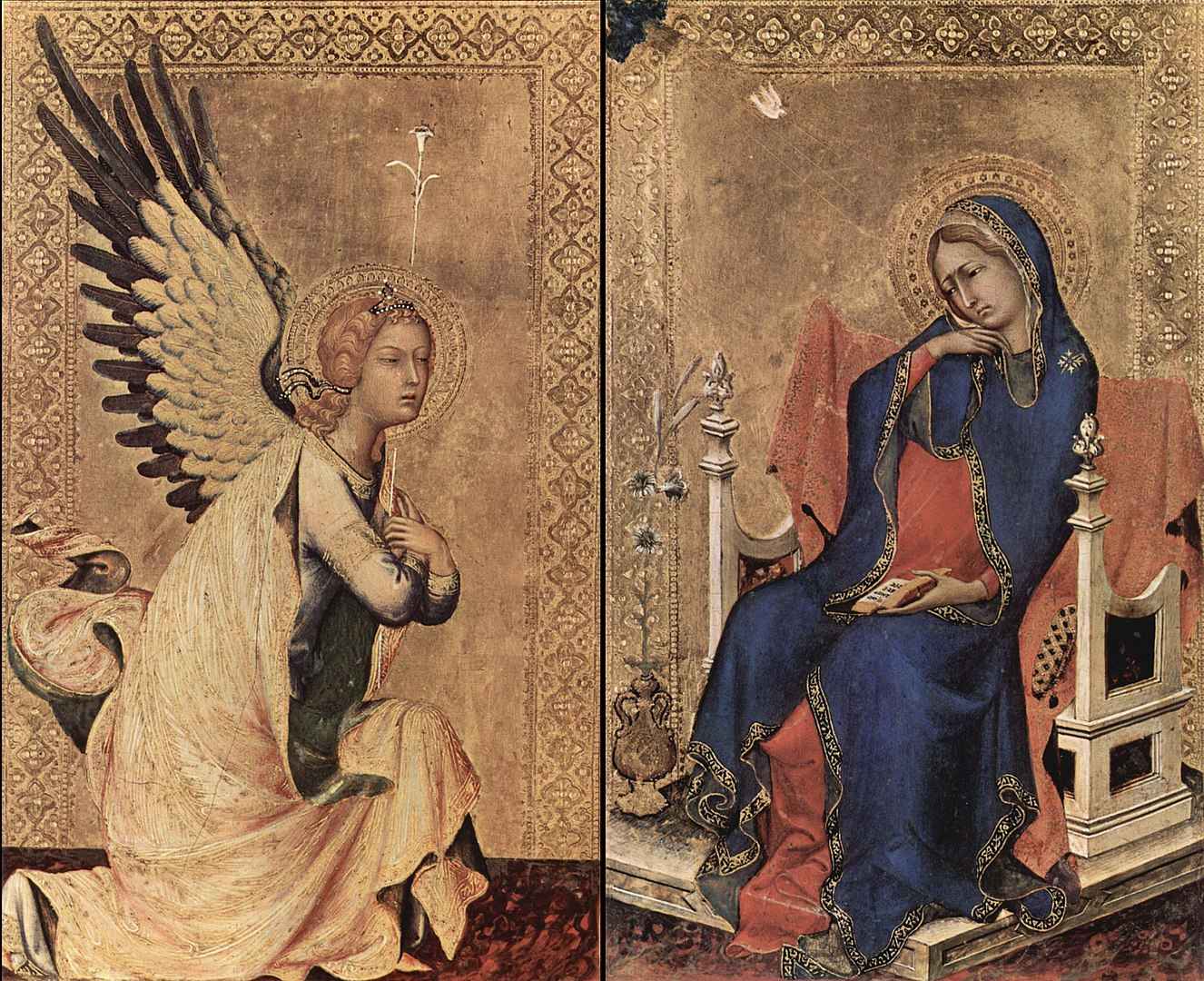
By the 1300s and 1400s, Gothic art changed across Europe. A new style called International Gothic spread in courts and cities. It mixed graceful figures with more realistic detail. Artists like Simone Martini and Gentile da Fabriano helped shape this look.
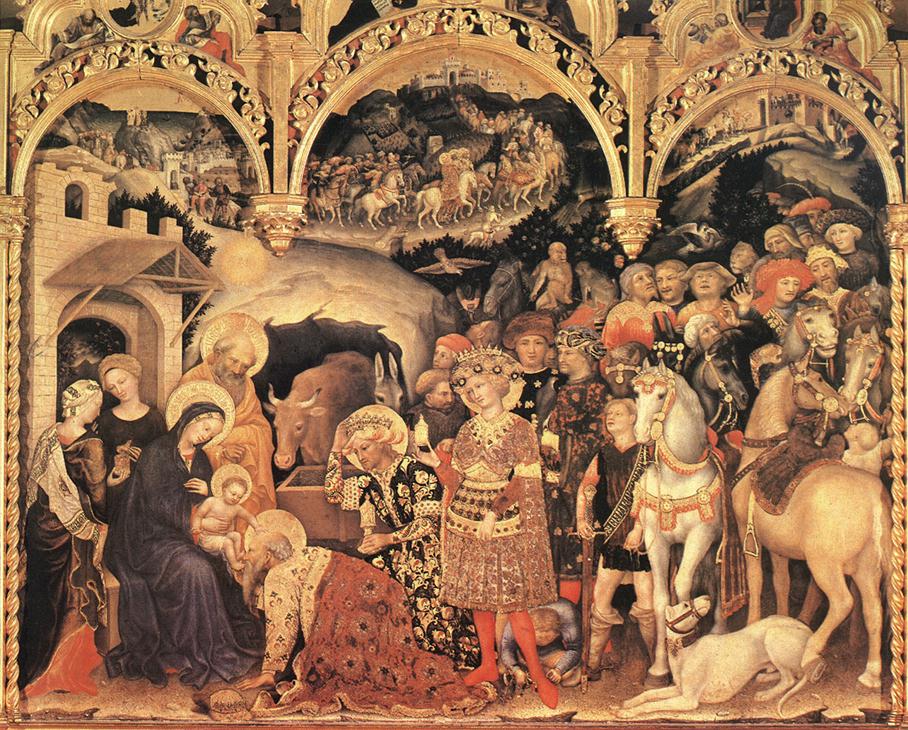
In Northern Europe, painters began using oil paint. This let them show textures, light, and color with more precision. Their focus on everyday life and emotion helped set the stage for Renaissance art, both in the North and in Italy.

Decline and Historical Disruption
Large Gothic building projects slowed down in the late 1300s. The Black Death, the Hundred Years’ War, and a split in the Catholic Church disrupted funding and construction. Artists had fewer commissions for grand cathedrals.
Instead, Gothic art in this period often turned inward. Paintings and sculptures focused more on personal devotion and emotional themes. These changes helped prepare the way for Renaissance ideas.
Legacy in Architecture and Painting
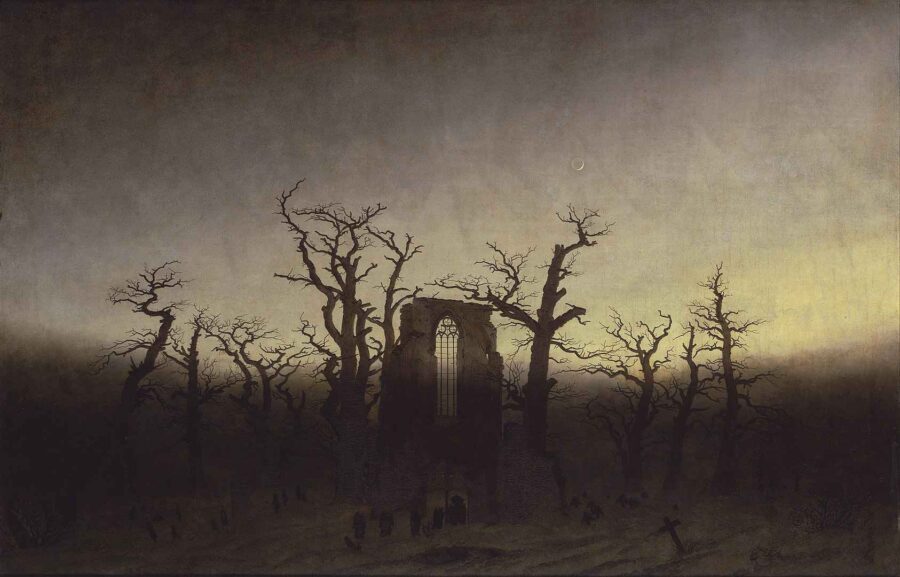
In the 1700s and 1800s, the Gothic style came back. Architects used pointed arches and detailed stonework in churches, schools, and government buildings.
In London, the Houses of Parliament, designed by Charles Barry and Augustus Pugin, copied medieval forms to show power and faith. At the same time, painters like German Romantic landscape painter Caspar David Friedrich used Gothic ruins to suggest mystery, nature, and the unknown.
Legacy in Film
In movies, Gothic buildings often signal themes like isolation, belief, or inner conflict.
In The Name of the Rose (1986, Neue Constantin Film), a 14th-century monastery creates a cold, isolated setting. The film was shot at Kloster Eberbach in Germany, a real medieval abbey with vaulted ceilings, narrow passageways, and pointed arches.
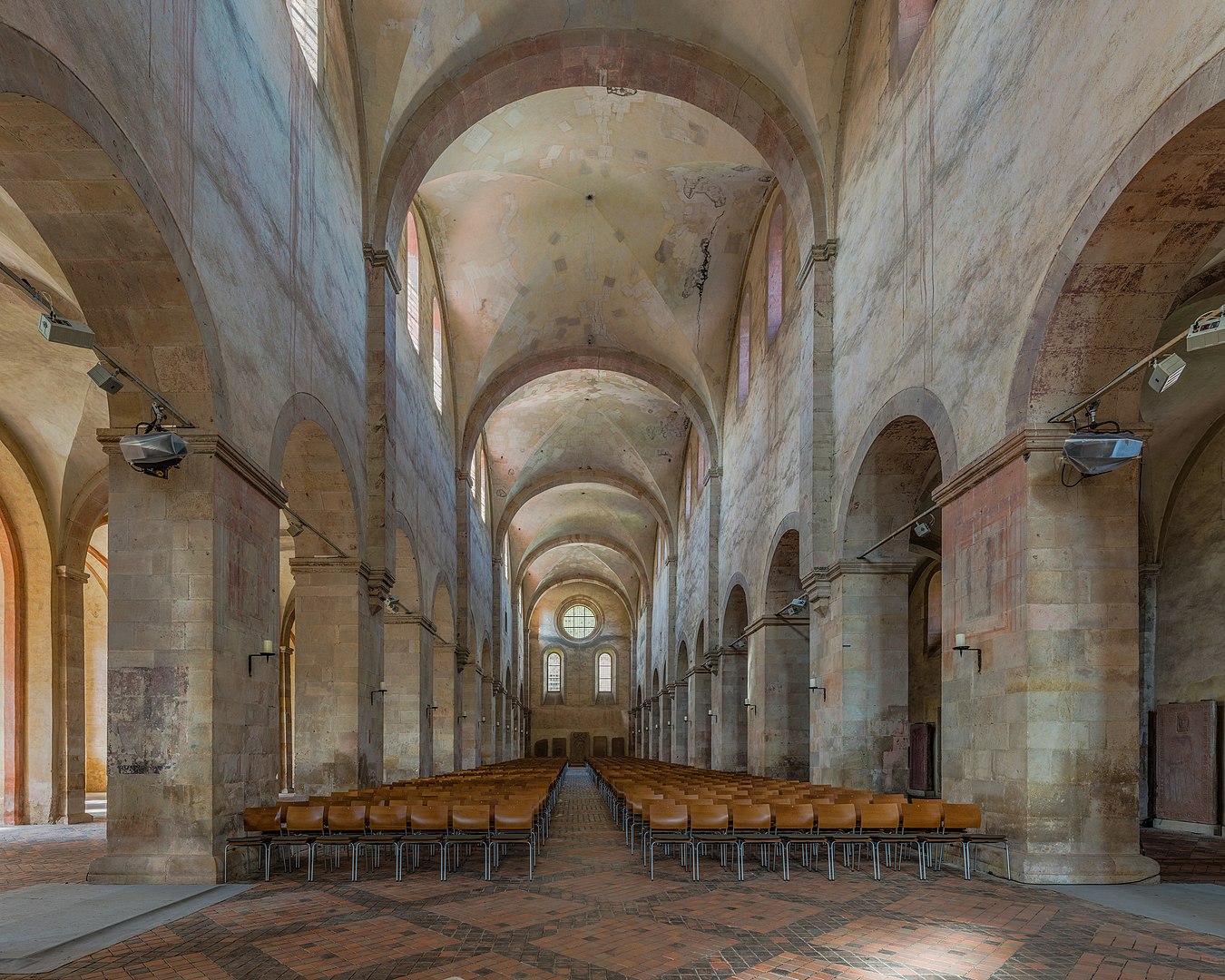
A massive library tower was built for the set, echoing Gothic forms. The architecture helps create a mood of secrecy and fear.
In Bram Stoker’s Dracula (1992, Columbia), directed by Francis Ford Coppola, blends Gothic horror with theatrical design. The castle interior features vaulted halls, stained glass, and medieval arches, though many elements are exaggerated or anachronistic.
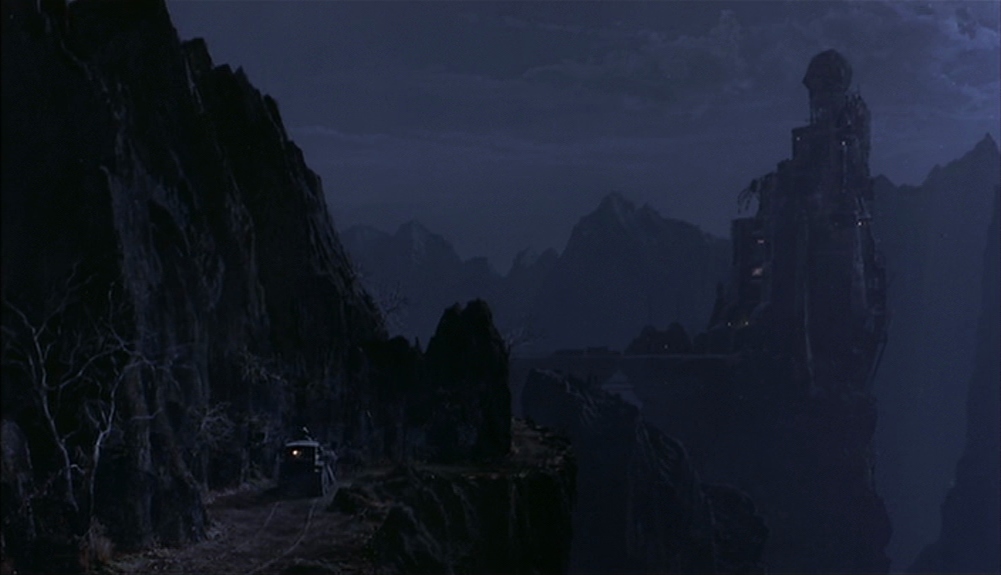
Religious symbols and Gothic-style decor give the film a dark, romantic tone, even if the architecture doesn’t always match historical Gothic buildings.
In Edward Scissorhands (1990, 20th Century Fox), Tim Burton uses a Gothic Revival mansion to highlight the character’s loneliness. The house stands on a hill with high towers, iron gates, and shadow-filled rooms.
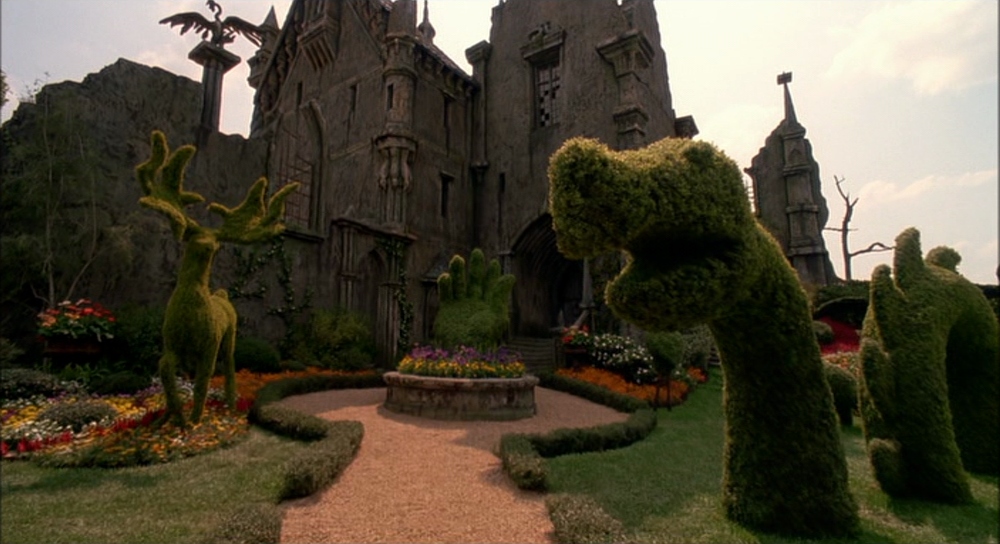
Inside, the décor includes arched windows, carved walls, and dark wood, which are all key features of Gothic style. The building becomes a symbol of emotional distance and otherness.
Summing Up
Gothic art fused engineering innovation with theological purpose. From cathedral vaults to stained glass to illuminated manuscripts, it created spaces where architecture and belief were inseparable.
Its legacy remains visible in modern buildings, museum collections, and film set design, in other words, wherever verticality, light, and expressive form are used to represent something greater than the material world.
Read Next: Curious how art movements shaped film?
Explore our full Visual Art Timeline to see how styles like Surrealism, Cubism, and Suprematism influenced cinema’s most experimental moments.
Or keep browsing our Film Movements & World Cinema section for more on the histories that shaped screen culture around the globe.
