
Published: June 17, 2021 | Last Updated: June 17, 2025

What is ? Definition & Meaning
Rhythm in art is the repetition or structured variation of visual elements that guides the viewer’s eye through a composition in a deliberate pattern.
Artists use rhythm to create movement, direct attention, and connect parts of an image. Like rhythm in music, it works through repeated shapes, colors, lines, or textures. The patterns help the viewer move across a work instead of just looking at one spot.
Types of Rhythm in Art
There are five main types of rhythm in visual art. Each one affects how we experience movement or stillness across a composition.
1. Regular Rhythm
Regular rhythm repeats elements at even intervals. This can look like a row of columns, windows, or evenly spaced shapes. A good example is Broadway Boogie Woogie (1943, Museum of Modern Art) by Piet Mondrian:
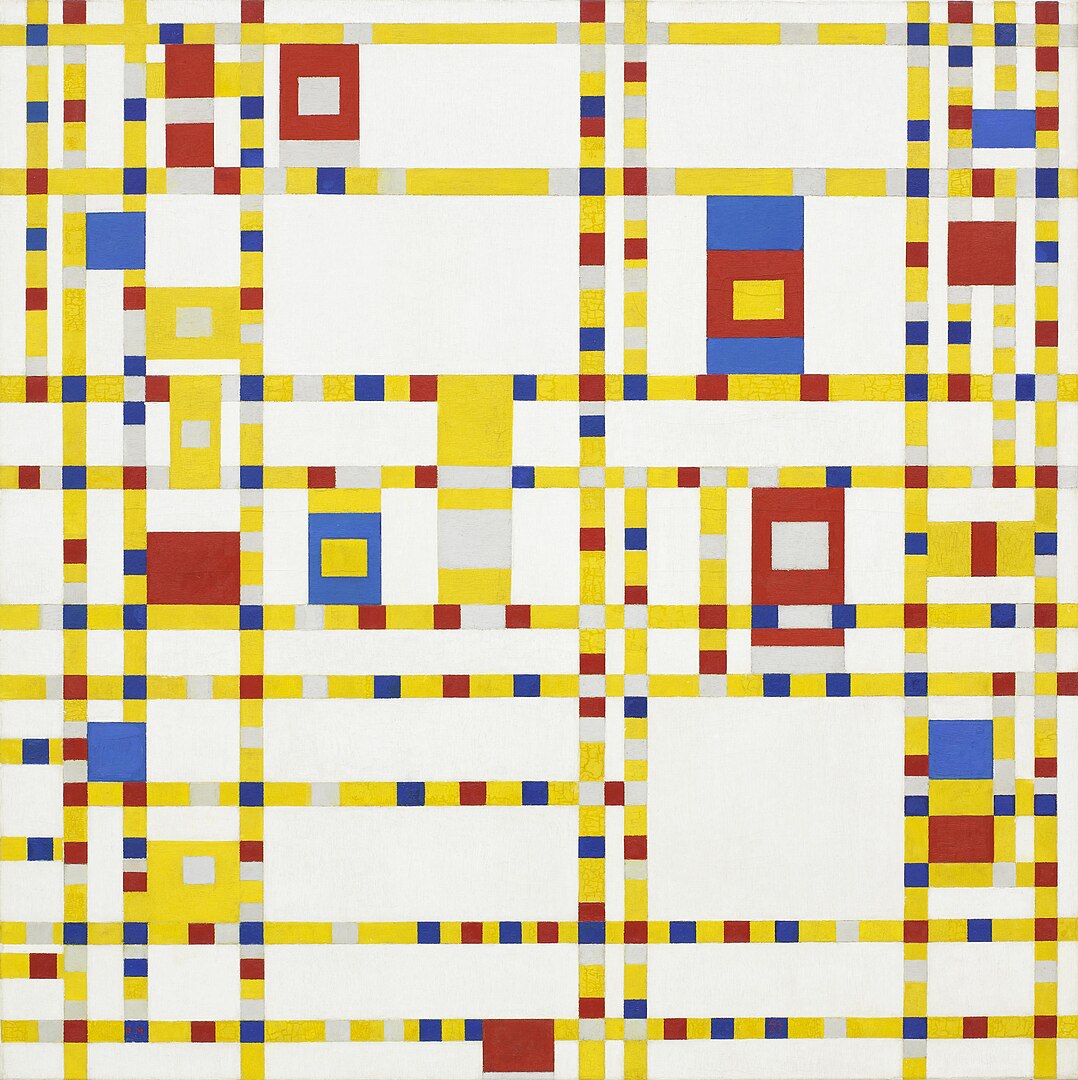
The colored squares and grid lines repeat at steady intervals, creating a visual beat across the canvas.
2. Alternating Rhythm
Alternating rhythm switches between two or more elements. This appears in architecture, design, and painting. A clear example is the use of red and white arches in the Mosque–Cathedral of Córdoba (built in 987 CE):
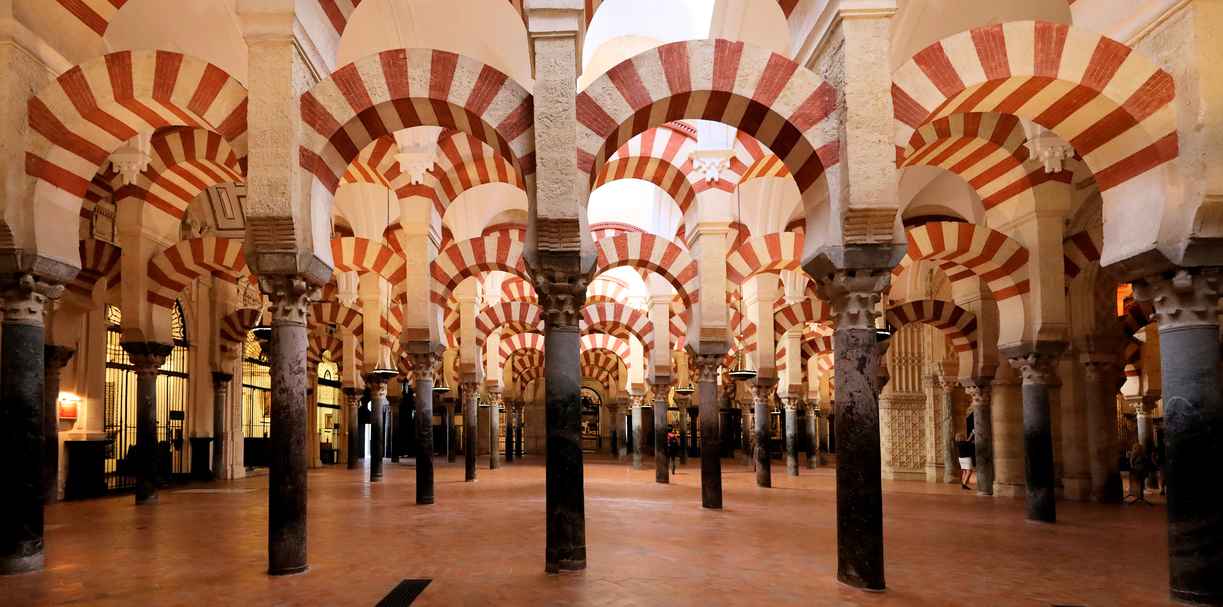
The arches alternate colors in a repeating pattern across the space, creating rhythm through contrast.
3. Flowing Rhythm
Flowing rhythm uses curves, spirals, or organic lines that lead the eye in waves. Katsushika Hokusai’s The Great Wave off Kanagawa (1831, Metropolitan Museum of Art) repeats curved wave forms that echo across the image:
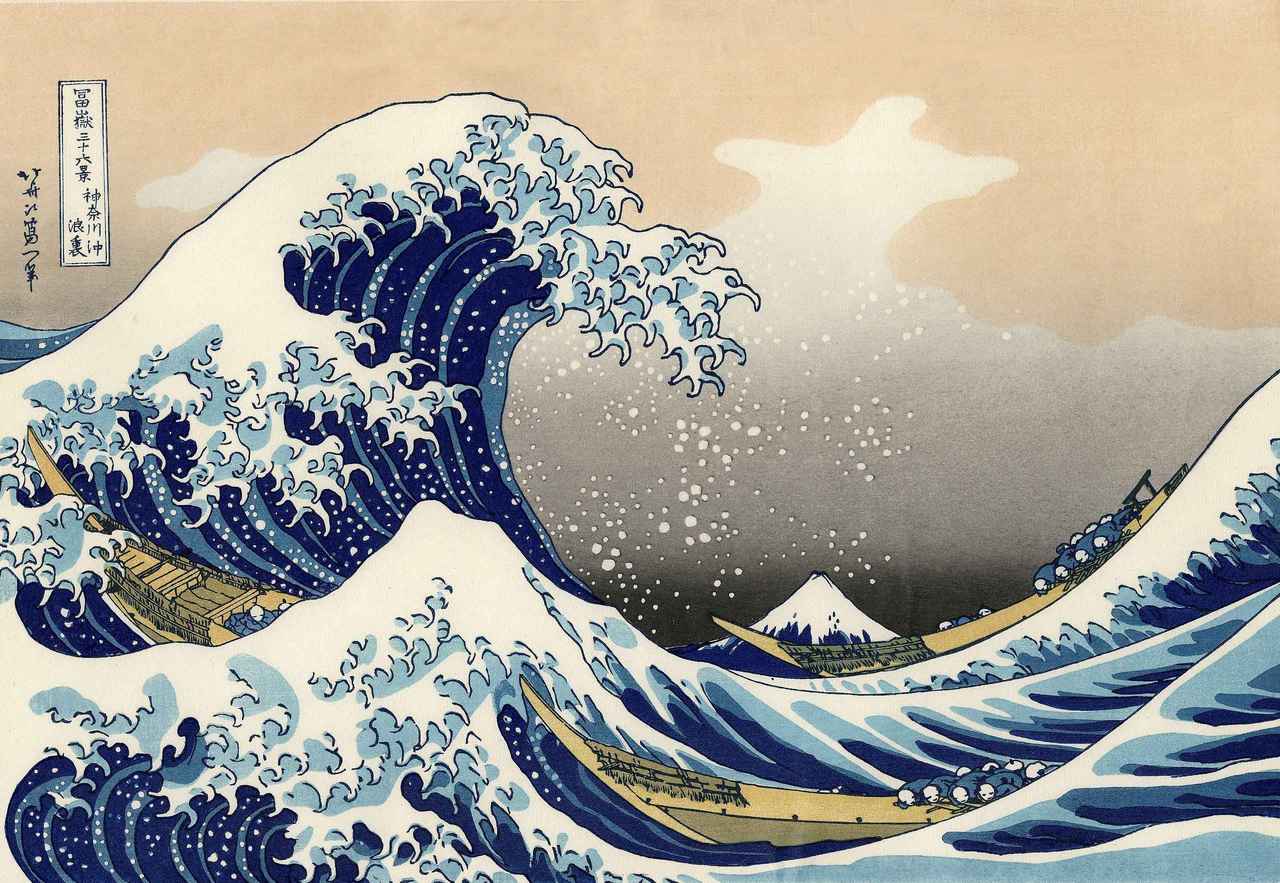
Each wave guides the viewer’s eye toward Mount Fuji in the distance.
4. Progressive Rhythm
Progressive rhythm shows a gradual change in size, color, or shape. This creates movement through transformation. A good example is the sculpture Nude Descending a Staircase, No. 2 (1912, Philadelphia Museum of Art) by Marcel Duchamp:

The figure breaks down into repeated forms that shift position and size, suggesting movement through progressive rhythm.
5. Random Rhythm
Random rhythm repeats elements without a set order, but still creates unity. Jackson Pollock’s One (Number 31) (1950, Museum of Modern Art in New York City) shows this clearly.

The paint splatters repeat across the surface, but with no predictable spacing. The result is chaotic, but still rhythmic.
How Artists Use Rhythm
Artists create rhythm through repetition and spacing. They can repeat colors across a canvas, place similar shapes at key points, or use brushstrokes to build momentum. Rhythm can be slow and steady or fast and sharp, depending on the intervals and direction.
Example: van Gogh’s The Starry Night
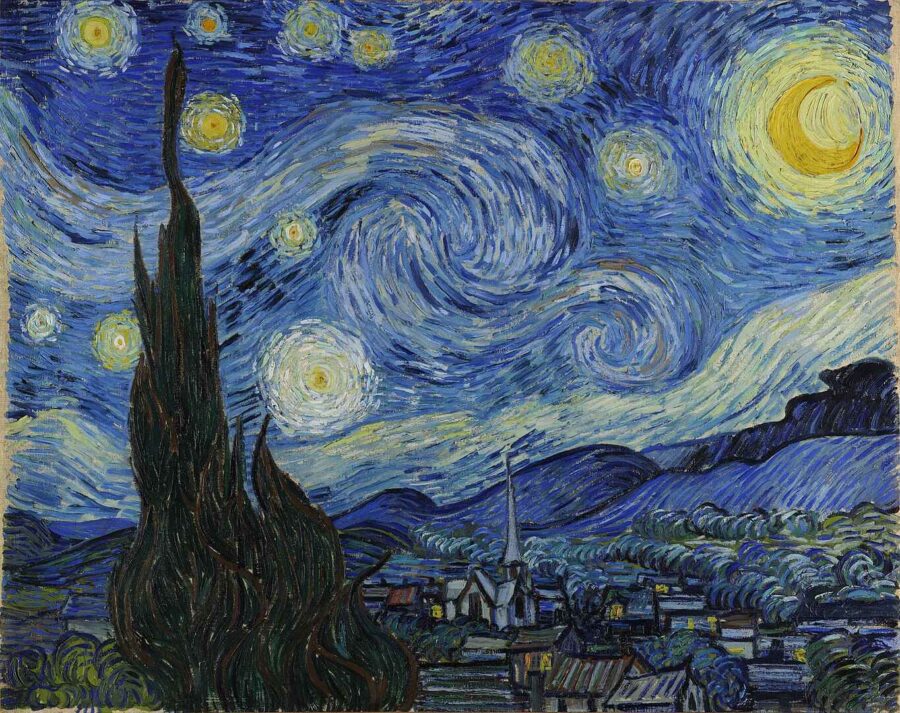
In The Starry Night (1889, Museum of Modern Art), van Gogh paints swirling lines that repeat across the sky. Each brushstroke curves into the next, creating a flowing rhythm that contrasts with the town’s stillness below.
Rhythm in Architecture and Design
Architects use rhythm to create order and flow. In the Parthenon (Athens, 447 BCE), the columns repeat at even intervals, forming a regular rhythm. The spacing builds harmony and structure across the facade.
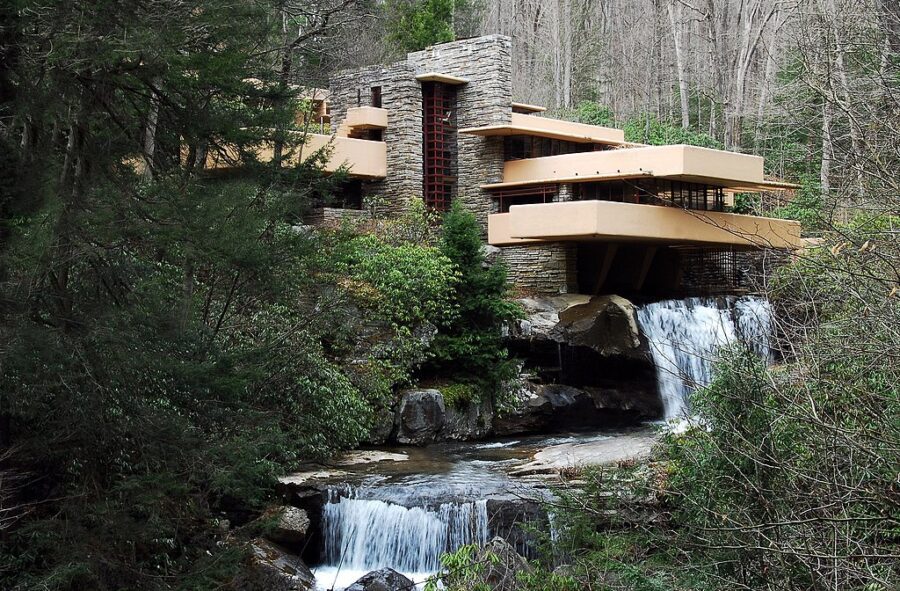
Modern examples include Frank Lloyd Wright’s Fallingwater (1939, Pennsylvania), where alternating stone and glass panels repeat horizontally. The materials and pattern build a subtle alternating rhythm along the walls.
Rhythm in Film and Animation
In film, rhythm appears through editing, movement, and visual repetition. Directors use rhythmic cuts or repeating visual motifs to structure scenes. Rhythm also appears in the way characters move or how a set is designed.
In Rashomon (1950, Daiei Film), Akira Kurosawa repeats camera angles and shot sequences during each character’s version of events. This builds a regular visual rhythm that helps the viewer follow the story’s structure.
Kurosawa retells the same event multiple times from different perspectives, using rhythmic repetition and parallel structure. He does this to emphasize the unreliable nature of truth while maintaining viewer clarity through familiar visual setups.
In animation, rhythm often matches sound. Fantasia (1940, Walt Disney) turns musical rhythm into visual motion. Sequences like “The Sorcerer’s Apprentice” use repeated forms and synchronized movement (called ‘Mickey Mousing’) to create flowing rhythm:
Why Rhythm Matters
Rhythm helps hold a composition together. It controls how the viewer sees the work, i.e., what they notice first, where their eye moves next, and how long they stay with it. Strong rhythm builds unity, keeps attention, and adds energy to still images.
Summing Up
Rhythm in art refers to the repetition or structured variation of visual elements that guides the viewer’s eye through a composition in a deliberate pattern. Whether it’s a pattern of tiles, a series of brushstrokes, or a rhythm in film editing, it gives structure to how we see. From painting and sculpture to architecture and cinema, rhythm turns static forms into visual movement.
Read Next: Curious how art movements shaped film?
Explore our full Visual Art Timeline to see how styles like Surrealism, Cubism, and Suprematism influenced cinema’s most experimental moments.
Or keep browsing our Film Movements & World Cinema section for more on the histories that shaped screen culture around the globe.