

Published: June 17, 2021 | Last Updated: November 20, 2025

the difference between formalism and realism in film?
Formalism and realism are two different approaches to filmmaking. Formalism controls and stylizes every frame to create meaning through design. Realism presents everyday life as it appears, aiming to feel natural and unfiltered.
Two Ways to Shape a Film
Directors use different tools to shape how we experience a film. Some create stylized worlds where every detail is designed to serve a visual idea. Others try to strip back technique and show life as it is. These approaches form the basis of formalism and realism.
Formalism
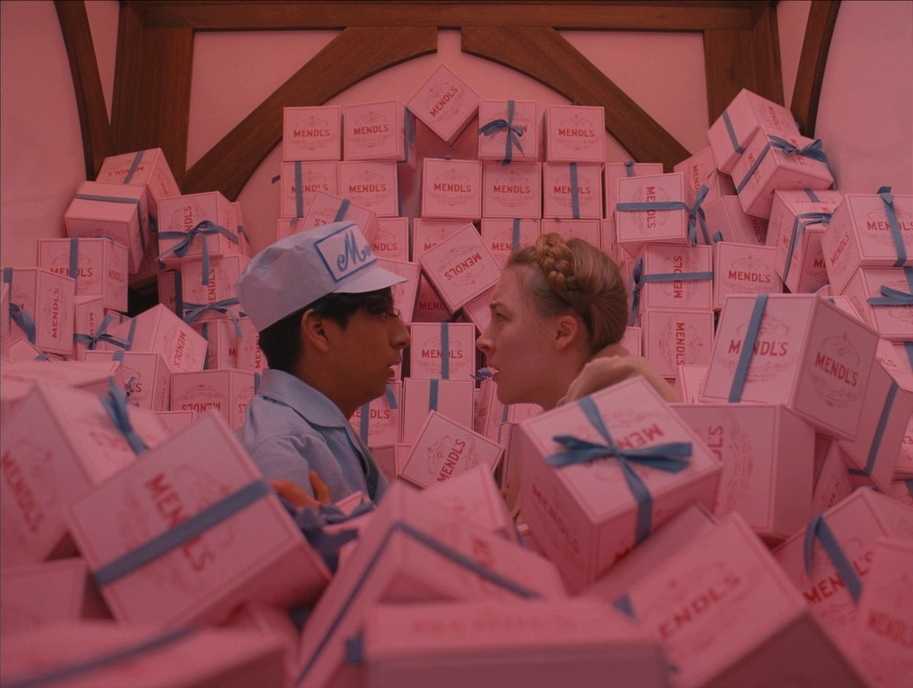
Formalism is a filmmaking style that highlights the artistic design of each shot and scene. It uses lighting, sound, editing, and composition to express meaning. Formalist directors shape the film’s world through careful visual choices. The goal is not to copy reality, but to create a controlled experience.
Examples of formalist films include:
The Grand Budapest Hotel (2014, Fox Searchlight) uses symmetrical framing, pastel color palettes, and theatrical design to build a fantasy-like world. Each room is a miniature set, with hand-crafted props, painted backdrops, and vintage costumes. The film’s dollhouse symmetry and artificial scale give it the feel of a storybook brought to life.

Blade Runner 2049 (2017, Warner Bros.) uses brutalist architecture, soft-focus neon, and textured surfaces like glass, concrete, and fog to build a futuristic world that feels lived-in but broken. The lighting is dim and tinted, and the electronic score deepens the film’s mood of decay and isolation:
Realism

Realism is a filmmaking style that focuses on believable settings, natural performances, and minimal manipulation of the camera or sound. The goal is to reflect real life without calling attention to the filmmaker’s hand. Realist films often use handheld cameras, real locations, and long takes.
Examples of realist films include:
Bicycle Thieves (1948, Produzioni De Sica) – shot on the streets of postwar Rome with non-professional actors to show poverty and dignity.

I, Daniel Blake (2016, eOne) uses handheld cameras, natural light, and real locations to follow a man caught in the UK welfare system. Ken Loach casts non-actors and shoots in live environments like council offices and food banks. Scenes unfold without stylized cuts or dramatic angles. The realism comes from observation. Every pause, silence, and conversation feels grounded in lived experience.
See also the difference between realism and naturalism in art and film.
The Different Key Techniques for both Styles
Here’s a breakdown of common differences in how filmmakers approach camera work, lighting, editing, sound, and performance in either Realism or Formalism.
Note that these techniques are general patterns I’ve observed, not hard rules. Most films mix techniques from both styles. Realism and formalism describe tendencies, not categories.
| Technique | Realism | Formalism |
|---|---|---|
| Camera | Handheld or fixed cameras follow natural movement | Camera motion, angles, and framing guide focus |
| Lighting | Available light or simple setups mimic real conditions | Lighting is designed for mood, with bold color or shadow |
| Editing | Continuity editing preserves time and space | Jump cuts, montage, or rhythm disrupt flow |
| Sound | Uses ambient sound recorded on location | Uses voiceover, music, or artificial effects |
| Acting | Feels natural and grounded in real behavior | May be theatrical, symbolic, or stylized |
Blending Styles
Most films blend realism and formalism. Few movies are fully one or the other. A film may use realistic performances but rely on expressive editing. Or it may tell a realistic story inside a stylized world.
For example, Children of Men (2006, Universal) uses documentary-like camera work inside a dystopian setting.

Summing Up
Formalism and realism shape how a film looks and feels. Formalism highlights the director’s creative control. Realism focuses on life as it is. Learning to recognize these styles helps you see how a film’s techniques affect its meaning.
Read Next: Curious how film movements shape cinema?
Read our full guide to What Is a Film Movement? for clear definitions and iconic examples, or explore more in our Film Movements & World Cinema section.
Want broader context? Visit our Film History, Theory & Genre archive for deeper dives into the evolution of cinematic style.
