

Published: February 27, 2026

Overview
Neoformalism is a way to analyze films that starts from what the film does on screen. It treats a film as a system of choices in film form and film style, then asks how those choices guide the spectator’s attention, expectations, and inferences across a scene.
The central question is practical: how does the film’s construction lead the spectator to notice, assume, predict, and revise what they think is happening? The approach is closely linked to David Bordwell and Kristin Thompson, and it is often taught as a method for turning close description into a defensible argument. (Bordwell 1985; Thompson 1988)
Neoformalism belongs to a broader “poetics of cinema” tradition that studies how films are built and how different traditions develop different norms for storytelling and style. For the wider map of frameworks, see film theory. (Bordwell 2008)
Many students first meet neoformalism as “evidence-first analysis,” but the method has a sharper identity than that phrase suggests. Neoformalism treats film technique as a set of devices that do jobs. A device can be a framing pattern, an editing routine, a sound cue, an information delay, or a repeated staging choice. The critic’s task is to explain what the device is, what it does, and how it changes the spectator’s viewing work. (Thompson 1988)
What is Neoformalism in film studies? Definition & Meaning
Neoformalism is a film theory method that explains how a film’s devices create specific viewing effects by guiding perception and inference in real time. It treats the spectator as an active problem-solver who builds meaning from cues in image, sound, performance, and editing order. (Bordwell 1985; Thompson 1988)
Scope: Neoformalism is strongest when the research question is about how a film works, especially in narration and style. It can also be historical, since it asks how norms develop inside film traditions and industries. A major model of that historical work is The Classical Hollywood Cinema, which connects stylistic norms to production practices and standardization. (Bordwell, Staiger, and Thompson 1985)
Evidence standard: Evidence is repeatable and checkable. A neoformalist claim should point to a pattern, a deviation from an established pattern, or a timing choice that changes what the spectator can know or assume. Evidence often includes continuity editing routines, framing emphasis, sound highlights, and the release of story information through point of view control. (Bordwell 1985)
Key terms you will see: Norm is a familiar option a film relies on, often shared by a tradition or genre. Deviation is a noticeable departure that redirects attention or expectation. Motivation is how a film makes a device feel justified, whether through realism, narrative usefulness, genre convention, or style-for-its-own-sake. (Thompson 1988; Kokeš 2019)
Neoformalism also sets limits. It does not begin by assuming that a film is mainly a coded message that needs decoding. It begins with mechanism, then moves outward to interpretation if the evidence supports that move. That is why it is often paired with approaches that foreground ideology or subject formation. (Bordwell and Thompson 1982)
Historical Background
Neoformalism draws inspiration from Russian formalism, a critical tradition that studies how artistic devices organize attention and make perception less automatic. One classic formalist concept is defamiliarization, which means making the familiar feel strange so the spectator notices form and texture instead of sliding into habit. (Shklovsky 1965 [1917])
Neoformalism developed in film studies as scholars asked for clearer standards of evidence in criticism. The approach became visible in print through the work of Bordwell and Thompson and through early debate texts that argued over what “theory” should demand from analysis. Those debates helped define neoformalism as a method that explains effects through observable construction choices. (Salvaggio 1981; Bordwell and Thompson 1982)
Bordwell’s Narration in the Fiction Film (1985) is central because it treats narration as information management. The book explains how films control what the spectator knows, when the spectator learns it, and how certain that knowledge feels. (Bordwell 1985)
Thompson’s Breaking the Glass Armor (1988) is central for method. It frames neoformalism as a flexible toolkit that adapts to each film’s problems, with special attention to motivation, delay, and the way patterns develop across scenes. (Thompson 1988)
The Classical Hollywood Cinema matters because it models historical poetics. It describes classical Hollywood norms for storytelling and style, then ties those norms to production organization and industry routines. A publisher overview is available through Columbia University Press. (Bordwell, Staiger, and Thompson 1985)
Core Mechanism: How the Theory Works
Neoformalism works through a chain: device to function to spectator activity. The critic identifies a patterned choice, explains what job it performs in the scene, then explains what that job asks the spectator to do in perception or inference. The claim stays accountable because each step can be checked by rewatching. (Thompson 1988)
A common starting point is the split between plot as presented and story as constructed. Bordwell uses the terms syuzhet for the plot’s presentation order and fabula for the story the spectator builds in the mind while watching. Neoformalism tracks how the syuzhet supplies cues and gaps, then tracks how the spectator fills those gaps to build the fabula. (Bordwell 1985)
The method also relies on norms and deviations. A film usually establishes a baseline for how it cuts space, frames faces, uses music, or reveals information. When the film departs from that baseline, the deviation often signals a shift in importance, uncertainty, danger, or surprise. Neoformalism treats that shift as a designed effect, not a vague mood claim. (Thompson 1988; Kokeš 2019)
Motivation keeps the analysis precise. Thompson argues that devices rarely appear as “random style.” Films motivate devices so the spectator accepts them as appropriate. A device can be motivated by realism, by narrative clarity, by genre convention, or by an artistic aim that makes the device noticeable as style. The type of motivation matters because it changes how the spectator reads the device. (Thompson 1988)
The approach often overlaps with cognitive film theory because both traditions treat the spectator as active. Neoformalism typically stays closer to the film’s patterned construction and historical norms, while cognitive work often expands into models of attention, inference, and emotion. In practice, they meet in the same place: a cue-based explanation of what the spectator can reasonably infer at each moment. (Bordwell 1985; Bordwell 2008)
Neoformalism stays grounded in technique. It asks how mise-en-scène, framing, editing, and sound steer attention. It asks how film style becomes legible as a pattern rather than a single “look.” It also asks how those patterns support narration and comprehension rather than sitting on top of the story as decoration. (Bordwell 1985; Bordwell 2008)
What to Look For
This checklist keeps neoformalism concrete. Each item points to something that can be observed in a specific scene, then connected to what the spectator is led to notice or infer.
In the checklist section, use the prompts as you watch. Take short notes, then return to the scene and tighten them into evidence with time stamps.
- Established norms: What baseline does the film set for framing, cutting rhythm, sound emphasis, and performance focus?
- Deviations: Where does the film depart from the baseline, and what changes in the spectator’s certainty or attention?
- Information timing: What does the spectator learn now that they did not know thirty seconds earlier, and how is that knowledge delivered?
- Range and depth: How wide is the spectator’s knowledge, and how close does the film place the spectator to a character’s experience?
- Attention steering: What in the frame, the sound mix, or the cut pattern makes one detail the detail that matters?
- Motivation: How does the film make a device feel justified through realism, narrative clarity, genre convention, or stylistic display?
- Patterning: What repeats or develops across the scene, and what effect does that pattern create?
- Spatial and temporal clarity: How does the scene teach where things are and when events happen?
After the list, turn notes into analysis with a three-step sentence chain. First, name the device as a pattern. Second, describe its function in the scene. Third, explain the spectator task it creates. For example, a claim about match on action should explain how the cut keeps space legible and how that legibility changes what the spectator can track moment to moment.
Micro-Analysis
This micro-analysis uses the opening passage of Rear Window (1954) to show neoformalism in action. The goal is to describe devices, show their functions, and explain how they guide the spectator’s inference.
The sequence begins by establishing a norm of looking. The camera surveys the courtyard and neighboring apartments in a sustained movement that turns the setting into a readable field of information. Windows become frames inside the frame, and the spectator learns that partial visibility is the rule. That device sets up the film’s main viewing task: scan, compare, and infer from fragments. (Bordwell 1985)
The sequence then anchors the spectator to a constrained position. The film introduces the protagonist through details that explain limitations before it explains conflict. The camera’s access stays tied to what can be seen from the apartment, which establishes restricted narration without a lecture. The spectator understands that knowledge will come through observation rather than through direct access to private conversations.
The scene’s style supports that narrational setup. Framing keeps the courtyard legible as a grid, and the cut pattern gives enough duration for searching and recognition. Sound adds texture and cues, but it does not grant full explanatory access. The spectator often hears a world that feels alive while still lacking the specific information that would settle interpretation. That gap keeps hypothesis-building active. (Bordwell 1985)
Neoformalism sharpens the analysis by naming what the sequence motivates. The film motivates the spying setup through realism and situation, since the protagonist has time, heat, injury, and a clear line of sight. It also motivates the setup through compositional need, since the courtyard grid becomes a machine for delivering controlled information. The spectator accepts the device because the film gives reasons inside the scene’s construction. (Thompson 1988)
The result is a clear device to function to spectator chain. The window grid device organizes perception. The restriction device controls what can be known. The pattern of partial cues forces inference and revision. A neoformalist argument stays strong here because each step points back to what is visible and audible rather than treating “suspense” as a free-floating label. (Bordwell 1985; Thompson 1988)
Additional Film Examples
Neoformalism travels well because it is not tied to one genre or one national cinema. The method holds as long as the critic can identify patterns, track norms, and explain how those choices guide spectator inference.
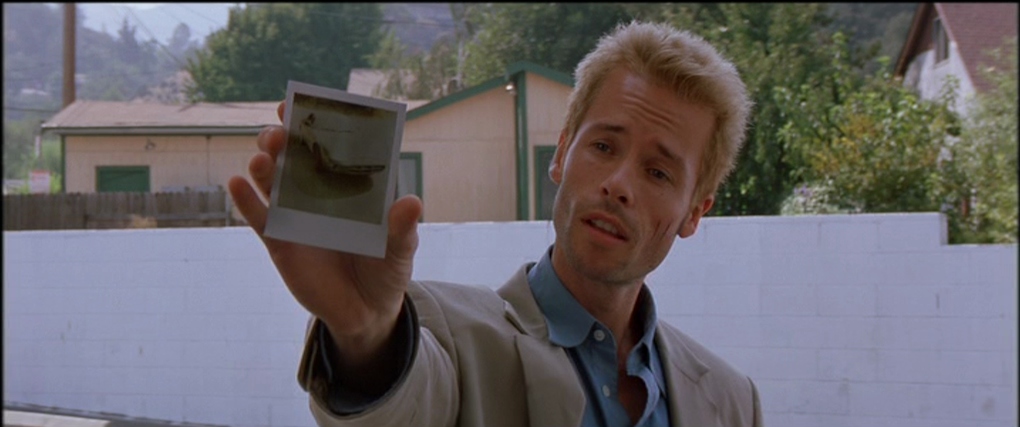
In Memento (2000), the film establishes a norm of fragmented information and forces the spectator to build a coherent fabula under that constraint. Each segment gives just enough cues to form a provisional explanation, then the next segment forces a revision. A neoformalist analysis focuses on how that structure makes comprehension itself the engine of engagement. (Bordwell 1985)
In Mad Max: Fury Road (2015), the key neoformalist question is how fast action stays readable. The film establishes strong stylistic norms for goal-centered framing and for cutting that preserves spatial direction.

When the film breaks those norms, the deviation usually signals disruption, surprise, or danger. The analysis stays grounded in how the action is built for perception, not in general claims about “energy.”

In Mildred Pierce (1945), a neoformalist reading can focus on how the film manages uncertainty about causality and responsibility through its narrational framing. The film uses a structured release of information that invites suspicion, then redirects it as new cues arrive. The mechanism can be traced through what is delayed, what is repeated, and what gets reframed as the spectator’s working story changes. (Bordwell 1985)
Common Misconceptions
Misconception 1: Neoformalism is only description. Description is the entry point, but the method demands an explanation. A neoformalist claim should show what the device does and how it changes the spectator’s inference or attention in that moment. (Thompson 1988)
Misconception 2: Neoformalism rejects interpretation. Neoformalism often treats interpretation as a later-stage move that must be anchored in evidence. Interpretation is allowed, but it should not replace the analysis of how the film builds its effects. (Bordwell 2008)
Misconception 3: Neoformalism ignores context. Neoformalism can be historical, but it tends to treat context as a way to explain why certain formal options become likely in a tradition. That is the logic behind historical poetics and large-scale studies of norms such as The Classical Hollywood Cinema. (Bordwell, Staiger, and Thompson 1985)
Misconception 4: Neoformalism means the spectator is always the same. The approach often describes shared viewing pressures, but it does not require identical reactions from every spectator. A careful neoformalist argument explains what cues make certain inferences reasonable, then stays cautious about claiming universal effects. (Bordwell 1985; Kokeš 2019)
Key Debates and Scholarly Criticism
Neoformalism has been debated since it was named. Many disagreements come from different ideas about what film theory should prioritize. Some scholars want theory to begin from ideology, power, and representation. Neoformalists usually want theory to begin from a checkable description and a mid-level explanation. Early debate texts made those differences explicit. (Salvaggio 1981; Bordwell and Thompson 1982)
The debates below matter for students because they clarify what neoformalism can do well and where it can struggle. The goal is not to “pick a side.” The goal is to match the theory to the research question and evidence standard.
One line of criticism argues that a form-first method can bracket politics too easily. The worry is that a critic can explain devices and viewing effects while leaving social consequences unspoken. Neoformalists reply that political claims become stronger when they specify mechanisms, since representation and ideology still work through framing, narration, and attention control. The disagreement often turns on whether the critic treats politics as the starting frame or as a claim that must be built from film form. (Bordwell and Thompson 1982)
A second debate concerns explanation versus interpretation. Critics sometimes argue that neoformalism prefers “how it works” at the expense of larger questions about meaning. Neoformalists tend to respond that “how it works” is a precondition for responsible interpretation, since interpretation without mechanism becomes difficult to test. This debate often appears in discussions of Bordwell’s “poetics of cinema” project, which frames film studies as a research program that uses evidence and comparative method. A publisher overview of Poetics of Cinema is available through Routledge. (Bordwell 2008)
A third line of criticism targets the concept of norm. Critics have argued that norm and deviation can become slippery if the critic does not show how a norm is established and what sample supports it. That critique matters because neoformalism often depends on the claim that a pattern is typical for a tradition or for a film’s internal system. Kokeš’s article is useful here because it presses for clearer handling of what counts as a norm and how the critic justifies it. An open-access version is available through Panoptikum. (Kokeš 2019)
Quick Contrast With Related Theories
A useful comparison is Russian formalism, since neoformalism borrows the device-centered impulse and adapts it to cinema. Russian formalists analyze how devices organize perception, and Shklovsky’s account of defamiliarization is a classic statement of the idea that art disrupts habit and forces renewed attention. (Shklovsky 1965 [1917])
Neoformalism keeps that focus on devices, but it adds two major shifts. First, it treats film narration as a cue system that manages information across time, often using fabula and syuzhet to describe how the spectator builds story from plot presentation. Second, it places devices inside film history and film practice, with a strong emphasis on norms that develop across traditions. A nearby approach that also studies spectatorship and positioning but uses a different history and vocabulary is suture theory, which tends to treat shot relations as part of a broader account of how the spectator is positioned. (Bordwell 1985; Bordwell, Staiger, and Thompson 1985)
Why It Still Matters
Neoformalism still matters because it trains a disciplined way of seeing. It pushes the critic to replace broad claims with evidence-first explanation, and it offers a clear method for writing scene analysis that can be checked by other readers. That is why it remains common in university film studies, especially in courses on narration and style. (Thompson 1988)
The approach also has clear limits that remain relevant. Neoformalism can become thin when a research question depends on social history, power relations, or reception communities that are not visible in form alone. In practice, neoformalism works best when the critic treats it as a toolkit for specific questions, then adds other frameworks when the question demands them. (Bordwell and Thompson 1982; Kokeš 2019)
Summing Up
Neoformalism is an evidence-first approach that explains how films guide the spectator through devices, patterns, and information timing. It treats film form and style as choices that perform functions, then ties those functions to spectator activity such as inference, prediction, and revision. (Bordwell 1985; Thompson 1988)
The method remains useful because it clarifies what counts as proof in film analysis. A neoformalist argument shows what the film does, explains how the construction creates an effect, and states why that mechanism matters for narration or style. That clarity also makes it easier to combine with other theories when the research question demands a broader frame. (Bordwell 2008)
Read Next: Curious how film theory shapes the way we watch movies?
Start with the Film Theory section to break down realism, formalism, structuralism, and more — with examples from iconic films.
If you want studying film theory I recommend starting with The FilmDaft overview of film theory discourses to break down realism, formalism, structuralism, and more — with examples from iconic films.
Then explore the full Film History, Theory & Genre collection to see how movements, styles, and storytelling traditions have evolved.
Whether you’re into Soviet montage or 2000s genre mashups, there’s something here to sharpen your understanding.
References
The list below uses Chicago author-date style. It includes primary neoformalist texts, early debate documents, and later peer-reviewed discussion of key concepts such as norms.
- Bordwell, David. 1985. Narration in the Fiction Film. Madison: University of Wisconsin Press.
- Bordwell, David. 2008. Poetics of Cinema. New York: Routledge.
- Bordwell, David, Janet Staiger, and Kristin Thompson. 1985. The Classical Hollywood Cinema: Film Style and Mode of Production to 1960. New York: Columbia University Press.
- Bordwell, David, and Kristin Thompson. 1982. “Neoformalist Criticism: A Reply.” Journal of the University Film and Video Association 34 (1): 65–68.
- Kokeš, Radomír D. 2019. “Norms, Forms and Roles: Notes on the Concept of Norm (Not Just) in Neoformalist Poetics of Cinema.” Panoptikum 22: 52–78. https://doi.org/10.26881/pan.2019.22.02.
- Salvaggio, Jerry L. 1981. “The Emergence of a New School of Criticism: Neo-Formalism.” Journal of the University Film Association 33 (4): 45–52.
- Shklovsky, Viktor. 1965 [1917]. “Art as Technique.” In Russian Formalist Criticism: Four Essays, edited by Lee T. Lemon and Marion J. Reis, 3–24. Lincoln: University of Nebraska Press.
- Thompson, Kristin. 1988. Breaking the Glass Armor: Neoformalist Film Analysis. Princeton, NJ: Princeton University Press.
