

Published: February 11, 2024 | Last Updated: February 4, 2026

Overview
Definition: Juxtaposition is when you place two contrasting images, characters, ideas, or moments close together so the difference creates meaning.
What you’ve seen before: You have felt this when a film cuts from comfort to danger, or from tenderness to cruelty. The second moment hits harder because of what came right before it.
Example: In The Godfather (1972, Paramount), the film cuts between a church baptism and a wave of murders ordered by Michael Corleone. The holy ritual sits next to the violence, so you read the moment as hypocrisy and a turn toward cold control.
Why it matters: Juxtaposition lets you communicate fast because the cut, the frame, or the sound contrast carries the point. It steers what you compare, so you can reveal hypocrisy, raise stakes, or pin a theme to something you can see and hear.
- Key takeaway 1: Put the two elements close together in time or space so you compare them automatically.
- Key takeaway 2: Pick one contrast point, such as tone, status, safety, or power. Too many contrast points can blur the message.
- Key takeaway 3: Support the contrast with choices you control, such as lighting, framing, sound, music, and shot length.
Next, let’s zoom out and pin down what juxtaposition is, then break down the main types you can build on screen.
What is Juxtaposition in Film? Definition & meaning
Juxtaposition is a technique where you place two elements close together so their contrast becomes the point. You can do it inside one shot, across two shots, or between sound and image. The same idea shows up in film, photography, literature, and painting.
A famous literature example comes from Charles Dickens, a 19th-century English novelist. In A Tale of Two Cities (1859), the opening line reads, “It was the best of times, it was the worst of times,” which places extremes side by side so you feel the tension right away.
Some figures of speech use juxtaposition inside one sentence. Antithesis and oxymoron both place opposites close together so the clash carries meaning.
Different kinds of juxtaposition
Juxtaposition often works best when you can name what is being compared. That can be two characters, two spaces, two time periods, or two moods that collide.
Juxtaposition can also support irony or humor, since the meaning often lives in the gap between the two elements.
| Type | Description | Example |
|---|---|---|
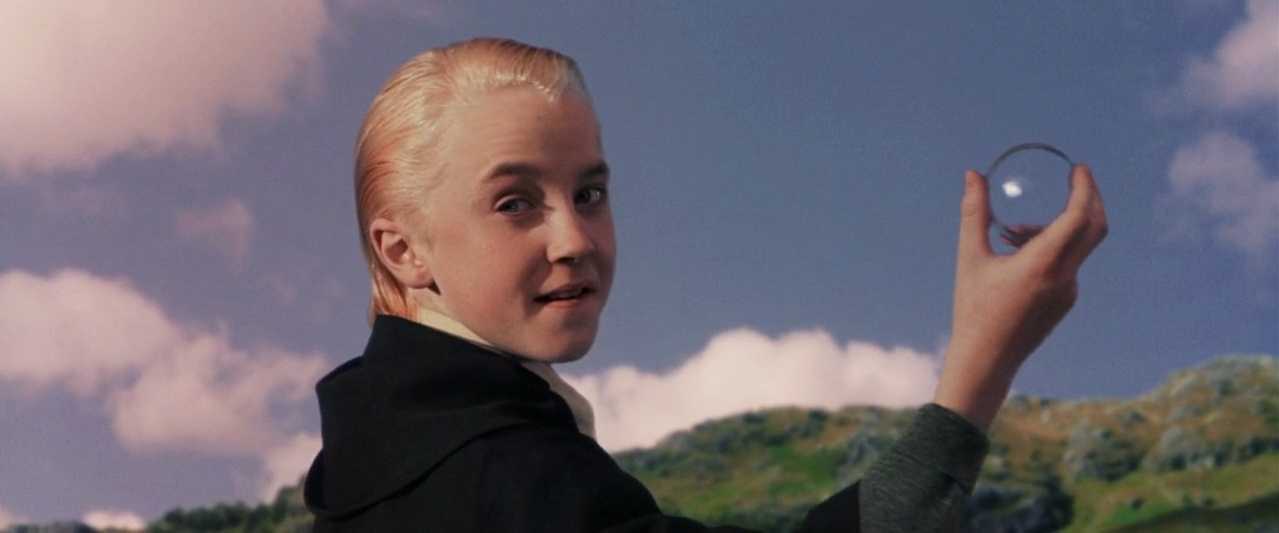
| Character juxtaposition | Two characters with opposing traits are placed close together so the contrast stays visible. See also foil characters in film. | Harry Potter and Draco Malfoy across the Harry Potter films. |
| Setting juxtaposition | Two settings are contrasted to show how the environment changes behavior and stakes. | The Wizard of Oz (1939, MGM) contrasts dull Kansas with the bright color of Oz. |
| Idea or theme juxtaposition | Opposing themes are placed side by side so the conflict becomes the point. | The Social Network (2010, Columbia) pits “connection” against isolation. |
| Time juxtaposition | Past and present sit close together so change (or lack of change) becomes obvious. See also flashbacks in film. | Eternal Sunshine of the Spotless Mind (2004, Focus Features) places early joy next to the breakup aftermath through memory scenes. |
| Tonal or mood juxtaposition | Different tones or moods collide so you feel two emotions at once. | Jojo Rabbit (2019, Fox Searchlight) places childlike humor next to Nazi brutality. |
| Action juxtaposition | Two event lines are intercut so their moral meaning rubs against each other. | The Godfather (1972, Paramount) intercuts a baptism with coordinated murders. |
| Visual juxtaposition | Contrasting images are placed back-to-back so the second image re-frames the first. | Schindler’s List (1993, Universal) uses the girl in the red coat against a black-and-white world as a simple symbol of innocence inside mass violence. |
| Conceptual juxtaposition | Two abstract ideas collide, such as truth vs performance or freedom vs control. | The Truman Show (1998, Paramount) places “real life” next to a manufactured TV reality. |
Related devices that rely on juxtaposition
Some devices are not “types” of juxtaposition, but they use the same side-by-side logic to create meaning.
- Contrast: You point to differences directly, even when the elements are not physically side by side.
- Antithesis: You place opposing ideas in a balanced structure so the opposition feels sharp.
- Paradox: You place ideas together that seem to clash, then the meaning appears after you think about it.
- Oxymoron: You compress opposites into a short phrase, such as “deafening silence.”
- Foils: A foil contrasts with another character so a trait becomes easier to read.
- Binary oppositions: Paired concepts such as light/dark or order/chaos that define each other through opposition.
- Chiasmus: A mirrored structure that flips the order to force a comparison. Example: “You frame the scene, then the scene frames you.”
How you create juxtaposition in film (with examples)
Juxtaposition is not one tool. It is a result you build with choices in writing, staging, shooting, editing, and sound.
The sections below show where the contrast can be created, plus a concrete example for each craft area.
Directors
Directing choices place opposites next to each other through scene order, blocking, and what you show first.
Visual contrast: You can design two spaces that feel like different planets, then cut between them so the gap becomes the point.
Example: In Parasite (2019, CJ Entertainment), the Kim family’s cramped semi-basement life sits next to the Park family’s clean, elevated home, so class difference becomes something you can see in space, height, and movement.
Character juxtaposition: You can place two characters with opposing moral rules close together so every choice reads as a comparison.
Example: The Dark Knight (2008, Warner Bros.) places Batman’s rule-bound control next to the Joker’s chaos, so each scene turns into a test of what “order” costs.
Cinematographers
Cinematography can make contrast land through light, lens choice, distance, and what you keep in the same frame.
Lighting: You can shift from soft light to harsh contrast so the image itself signals safety vs threat.
Example: In The Shawshank Redemption (1994, Columbia), the film often contrasts bright yard exteriors with dim interior spaces, so “freedom” and “confinement” become a visual rhythm.
Framing and composition: You can place two characters in the same shot but give them very different visual weight, distance, or depth.
Example: Citizen Kane (1941, RKO) uses deep focus so foreground and background stay readable at the same time, which lets power distance live inside one frame.
See also some of the best films to learn filmmaking on your own.
Screenwriters
Writing can build juxtaposition through dialogue that collides in values, or through scenes that answer each other back-to-back.
Dialogue and monologue: You can put two belief systems in the same conversation so the contrast becomes the engine of the scene.
Example: In Good Will Hunting (1997, Miramax), Sean’s monologue lands against Will’s defensive worldview, so love and vulnerability feel like a threat to him at first.
Parallel plotlines: You can write two story tracks that mirror each other so choices in one track comment on the other.
Example: The Godfather Part II (1974, Paramount) places Vito’s rise next to Michael’s decline, so “building a family” and “destroying a family” sit in one structure.
Editors
Editing is where “side by side” becomes literal. Your cut order decides what the viewer compares.
Parallel editing / cross-cutting: You can cut between two scenes so their meanings clash or echo.
Example: In The Godfather (1972, Paramount), the baptism sequence uses cross-cutting to place sacred vows next to murder, so the moral meaning comes from the cut pattern itself.
See also The Kuleshov Effect in film.
Match cuts: You can connect two shots by shape or movement, then let the new context change the meaning.
Example: 2001: A Space Odyssey (1968, MGM) cuts from a bone thrown into the air to a spacecraft, so one shape jump covers a massive idea jump.
Sound and music
Sound contrast can collide with the image on purpose. The mismatch can make the moment feel colder, stranger, or more ironic.
Sound-image contrast: You can play cheerful music over violence, or you can pull sound away during chaos, so your brain fights the mismatch.
Example: In A Clockwork Orange (1971, Warner Bros.), a cheerful musical reference sits inside a violent moment, which makes the violence feel even more cruel because the tone is wrong on purpose.
Example: In Saving Private Ryan (1998, DreamWorks), the mix sometimes drops into muffled hearing after blasts, which mirrors shock and disorientation during combat.
Other film crew
Juxtaposition also comes from physical design choices. Clothes, sets, and props can carry the contrast even before the edit.
Costume designers: Costume contrast can show class, power, or time period in one glance.
Example: In Marie Antoinette (2006, Columbia), Milena Canonero’s candy-color gowns push luxury to the surface, which makes the gap between court life and real suffering feel wider.
Production designers: Set contrast can place two worlds next to each other so theme becomes architecture.
Example: Blade Runner (1982, Warner Bros.) contrasts neon city density with cleaner elite spaces, so social divide becomes a place you can walk through.
Music choices: You can place modern music over period images (or the reverse) so time itself becomes the contrast.
Example: Marie Antoinette (2006, Columbia) uses modern pop and post-punk against 18th-century visuals, so the character feels like a teenager trapped in a costume drama.
Summing Up
Juxtaposition helps you make meaning through placement. You control what sits next to what.
When you plan the contrast point and build it with staging, image, cut order, and sound, you can say something fast without spelling it out in dialogue.
Read Next: Curious how film theory shapes the way we watch movies?
Start with the Film Theory section to break down realism, formalism, structuralism, and more — with examples from iconic films.
If you want studying film theory I recommend starting with The FilmDaft overview of film theory discourses to break down realism, formalism, structuralism, and more — with examples from iconic films.
Then explore the full Film History, Theory & Genre collection to see how movements, styles, and storytelling traditions have evolved.
Whether you’re into Soviet montage or 2000s genre mashups, there’s something here to sharpen your understanding.
Juxtaposition FAQ
Here are answers to common questions about juxtaposition.
Can juxtaposition include more than two things?
Yes. You can juxtapose a whole set of elements, such as three characters with three value systems, or several locations that each represent a different kind of life. The key is that you still guide the comparison, so the meaning does not scatter.
What is the difference between “unusual juxtaposition” and “juxtaposition”?
Juxtaposition is any side-by-side comparison that creates meaning. Unusual juxtaposition pushes the pairing into something you do not expect, so the surprise becomes part of the point.
- Juxtaposition: Put two different things side by side so the comparison becomes obvious. Example: an old, worn book next to a new tablet to compare past and present.
- Unusual juxtaposition: Put things together that feel like they do not belong, so the clash forces attention. Example: a classical statue wearing a virtual reality headset to collide “ancient” with “cutting-edge.”
