
Published: February 2, 2024 | Last Updated: February 25, 2026

Overview
Definition: Mood is the emotional atmosphere you feel while you read a passage or watch a scene.[1]
What you’ve seen before: You have felt mood when a story makes you tense before the threat appears, or when a quiet moment feels safe even though no character explains that feeling out loud.
Example: In The Tell-Tale Heart (1843), Edgar Allan Poe, an American writer, creates a claustrophobic, paranoid mood through tight first-person attention, repeated sound cues, and nervous detail.
Why it matters: Mood changes how a scene feels before you fully interpret it. The same plot event can feel funny, sad, or threatening depending on the word choice, sensory detail, pace, and presentation.
3 key takeaways:
- Mood is what you feel from a scene’s cues.
- Mood comes from patterns, not one word or one shot.
- In film, mood comes from image, sound, performance, and editing rhythm working together.[3]
This article starts with the writing meaning of mood, then moves into screenwriting and film so that you can use the same core idea across all three forms.
What Mood Means in Writing, Screenplays, and Film
Mood keeps the same core meaning across media, but the evidence changes. In literature, you prove it with language. In film, you prove it with what we can see and hear.
Mood is the emotional effect produced by a pattern of cues within a story. It is part of a larger craft framework because it connects language, narration, setting, performance, sound, and editing to the audience’s emotional response.[2][3]
How it appears in each medium: In literature, mood appears through diction, imagery, syntax, and rhythm. In a screenplay, mood is planned through filmable cues in action lines, scene details, dialogue behavior, and sound notes. In film, mood is delivered through lighting, color, framing, music, ambience, performance, and cutting pace.
What counts as evidence in analysis: Naming a feeling is not enough. You need to point to repeated details, then explain how those details guide the scene toward a specific emotional state.
Core Explanation for Mood in Writing and Literature
This section focuses on the main search intent first. If you searched for mood in literature, this is the part that gives you the definition, method, and distinctions you need for classwork, writing, and analysis.
What mood is in writing
Mood in literature is the feeling a passage creates through language choices. It often depends on connotation, imagery, syntax, and rhythm, even when the plot action is simple.[2]
How authors create mood
Authors create mood by selecting details with emotional weight, then repeating or varying those details so the passage keeps moving in a clear emotional direction.
- Word choice: Words like “damp,” “thin,” “stale,” or “faint” can push unease. Words like “warm,” “soft,” or “familiar” can push comfort.
- Imagery: Sensory description makes the mood feel physical. If a room is described through cold metal, weak light, and echo, the mood starts to feel harsh or empty. See FilmDaft’s guide to imagery for the page-level mechanics.
- Setting detail: Place matters because the objects, weather, and space limits tell you how to feel before a character explains anything. See setting and mood in film for the same logic on screen.
- Sentence rhythm: Short lines can feel tense or sharp. Longer flowing lines can feel calm, dreamy, or reflective.
- Literary devices: Repetition, symbolism, alliteration, and contrast in imagery can reinforce one mood by keeping your attention on the same emotional cues.
Types of mood and how writers shift mood
Mood can be tense, playful, melancholic, romantic, eerie, hopeful, bleak, or many other things. What matters is not the label alone. What matters is the evidence that supports the label.
Writers shift mood by changing the cue pattern. A scene can move from calm to fear when the sound focus changes, the sentence rhythm tightens, and the setting details become narrower or more threatening.
How to recognize mood in a text
Mood becomes easier to identify when you look for evidence clusters instead of one “mood word.”
- Which sensory cues dominate the passage, such as sound, light and shadow, temperature, or texture?
- Which word families repeat, such as rot, pressure, sweetness, heat, or silence?
- Does the passage move with speed or delay?
- What details does the narrator focus on, and what does that focus make you feel?
Why writers use mood
Writers use mood to prepare you for how events will feel when they happen. Mood can build dread before danger appears, create warmth before intimacy, or make an ordinary room feel wrong before a reveal.
Mood vs tone vs atmosphere
These terms overlap, so you need clear distinctions when you analyze a text or a film scene.
- Mood is what you feel while reading or watching.[1]
- Tone is the writer’s or filmmaker’s attitude toward the subject or material.[1] FilmDaft’s guide to tone in film shows the screen version of this distinction.
- Atmosphere is the felt environment created by place, sensory detail, and presentation. Atmosphere often helps produce mood, but the two terms do not always name the same thing.[1]
Common mistakes when analyzing mood
Mood analysis gets weak when the explanation names a feeling but does not show the evidence that creates it.
- Unsupported label: “The mood is sad” is incomplete unless you show which details keep producing sadness.
- Tone confusion: A narrator’s attitude can be sarcastic while the scene’s mood stays tense or bleak.
- Setting confusion: Setting helps create mood, but the mood is the emotional effect, not the location itself.
The psychology of mood in storytelling
Mood affects the audience quickly because readers and viewers react to cues before they finish a full interpretation. Darkness limits information. Silence can make you search for a cause. Repetition trains expectation. Stories use these basic responses, then guide them with craft choices and timing.[3][4]
Concrete Examples in Literature and Writing
These examples are chosen because the cues are easy to point to and defend. Each example shows what the mood is doing and how the text creates that effect.
The Raven (1845) by Edgar Allan Poe
Mood: gloom, dread, and obsession.
How the effect is created: Poe builds this mood through sound pattern, repetition, and a closed night setting. The repeating word “Nevermore” acts like a pressure point because it keeps cutting off hope and keeps the poem in the same emotional space.
Short quote: “Once upon a midnight dreary, while I pondered, weak and weary,”[5]
The Tell-Tale Heart (1843) by Edgar Allan Poe
Mood: claustrophobic and paranoid.
How the effect is created: The narration stays locked inside one mind, and that mind keeps returning to tiny sounds, timing, and control. That narrow focus makes ordinary details feel threatening.
Macbeth (c. 1606) by William Shakespeare
Mood: foreboding and moral decay.
How the effect is created: Shakespeare repeats darkness, blood, and unnatural events and weather cues, so the world feels disturbed before Macbeth’s downfall is complete.[6]
Wuthering Heights (1847) by Emily Brontë
Mood: stormy, unsettled, and trapped.
How the effect is created: The moors, the weather, and the house keep returning as emotional signals. Wind, cold, distance, and enclosed rooms make the setting feel harsh and closed instead of neutral.
How to Use Mood in a Screenplay
This is the FilmDaft angle for writing. Mood in a screenplay must be planned in ways that can be filmed, performed, recorded, and edited.
Choose a mood target and repeat filmable cues
Pick 2 to 4 cues that can recur across scenes. Repetition helps the audience feel the mood as a pattern, not as an accident.
- Space cue: cramped rooms, long empty hallways, crowded buses, wide fields.
- Light cue: hard shadows, flat daylight, flickering practical lamps. If you want a shadow-heavy mood, FilmDaft’s guide to low-key lighting is a useful reference.
- Color cue: a restricted palette can make the mood feel controlled, cold, nostalgic, or artificial. See color palette in film.
- Sound cue: distant traffic, a vent hum, a loud clock, or near-silence. Sound and score are major mood tools, so your page notes should leave room for them.[4]
Write what the camera can prove
Do not write private feelings the camera cannot show. Write behavior, sound, and visible detail.
- Weak: He feels nervous.
- Filmable: He wipes his palms on his jeans. He checks the door twice. He stops breathing when the hallway goes quiet.
Use page rhythm to support mood
Page rhythm affects mood before the movie exists. Short paragraphs and quick beats can increase urgency. Longer description and delayed reveals can increase dread, calm, or reflection.
Use dialogue and silence on purpose
Dialogue changes mood through line length, interruptions, and what characters avoid saying. Silence changes mood by forcing attention onto breath, room tone, and small sounds.
What defines a “mood film”
A mood film is a common critical label for a film where atmosphere, scene feeling, and sensory design carry as much weight as plot movement. Plot still matters, but the film’s impact depends heavily on how each scene feels moment to moment.
How to write a logline for a mood-driven film
A mood-driven logline works best when it includes (1) a simple situation, (2) a clear pressure source, and (3) one or two concrete mood cues that match the film you plan to make.
- Pattern: “In a bleak coastal town, a night-shift worker starts hearing a sound no one else hears, and the silence around it turns his routine into a trap.”
How to Analyze Mood in a Film Scene
Use a repeatable method so your analysis stays clear and does not turn into vague labels. Start with evidence, then explain function, then explain effect.
- Describe what we see and hear: light level, color, space, camera distance, movement, music, ambience, silence, and performance detail.
- Find repeated cues: identify what returns within the scene or across nearby scenes.
- Name the mood precisely: use specific labels like unease, tenderness, dread, nostalgia, or playful warmth.
- Explain the mechanism: connect the cues to the feeling. For example, low light hides information, slow cutting delays answers, and a low drone keeps the body tense.
- Add tone, motif, or theme only when needed: connect bigger ideas after you establish the scene-level evidence.
Film Examples (Scene-Level)
These examples use the same evidence-first format. Each example describes what we see or hear, what the mood is doing, and how the film creates the effect.
Blade Runner (1982, Warner Bros.)

- What we see/hear: Rain, steam, neon glow, dark corners, slow movement, and a synth-heavy score.
- What the mood is doing: The scene creates unease and isolation even in public space.
- How the film creates the effect: Low light hides information, neon color keeps the frame unnatural, and slow pacing keeps you in the space long enough to feel trapped.
Jaws (1975, Universal Pictures)
- What we see/hear: Underwater movement, limited visibility, and a repeating music figure by John Williams, an American film composer.
- What the mood is doing: The scene builds dread before the threat becomes fully visible.
- How the film creates the effect: The score repeats with rising pressure, underwater and waterline views limit what you can confirm, and the sequence delays a full reveal. This is a clear mood-building use of suspense in film.
The Grand Budapest Hotel (2014, Fox Searchlight Pictures)

- What we see/hear: Centered framing, clean geometry, bright color design, and controlled camera movement.
- What the mood is doing: The scene feels whimsical, but it also feels like a memory that cannot return.
- How the film creates the effect: Strict framing makes the world feel carefully arranged, color design keeps it storybook-like, and controlled pacing keeps the sadness measured instead of spilling out.
There Will Be Blood (2007, Paramount Vantage)
- What we see/hear: Long stretches of quiet, harsh landscapes, controlled movement, and tense pauses in performance.
- What the mood is doing: The scene sustains unease and pressure, so even small actions feel heavy.
- How the film creates the effect: Silence pushes attention onto small sounds, slow pacing delays relief, and framing keeps distance between people in the space.
Memento (2000, Newmarket Films)
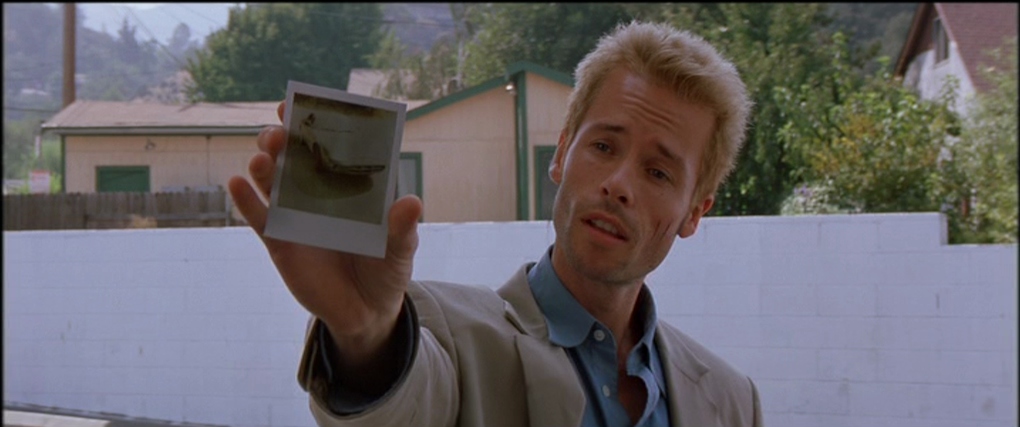
- What we see/hear: Polaroids, notes, repeated checking, and a structure that withholds full context.
- What the mood is doing: The scene creates disorientation and anxiety.
- How the film creates the effect: The film controls what you know and when you know it, so each new detail changes how the last detail felt.
Pulp Fiction (1994, Miramax)
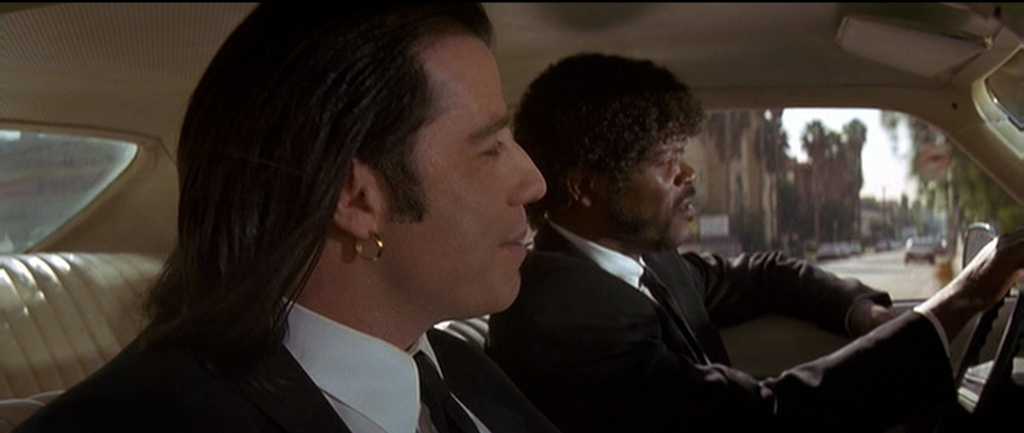
- What we see/hear: Ordinary conversation, relaxed delivery, and a setting that feels routine.
- What the mood is doing: The scene creates unpredictability because the tone of the talk and the stakes around the characters do not fully match.
- How the film creates the effect: Dialogue rhythm stays casual while the larger crime context stays present, so the scene carries humor and tension together.
Marie Antoinette (2006, Sony Pictures Releasing)

- What we see/hear: Extravagant costumes, elaborate hair, rich color, and polished surfaces.
- What the mood is doing: The scene creates decadence and distance, which supports the film’s emotional view of court life.
- How the film creates the effect: The design layers visual richness into every frame, so the mood comes from repeated luxury cues rather than one costume alone.
Whiplash (2014, Sony Pictures Classics)
- What we see/hear: Fast cutting, sharp sound hits, tight framing, escalating tempo, and sudden corrections.
- What the mood is doing: The scene creates urgent stress, so the rehearsal space feels like a threat zone.
- How the film creates the effect: Editing rhythm turns each musical beat into a test, and sound emphasis on hits, stops, and mistakes makes pressure feel immediate. You can connect this directly to pacing in film and film scoring and rhythm.
Related Terms and Internal Links
If you are studying mood, the most useful follow-up terms are the ones people confuse with it. Start with tone (attitude), then study the tools that create mood, such as lighting, sound design, and style.
Helpful FilmDaft follow-ups include tone in film, film style, diegetic and non-diegetic sound, and color palette in film.
Summing Up
Mood is the emotional atmosphere you feel from a passage or a scene. In writing, you prove mood through word choice, imagery, setting detail, and rhythm. In film, you prove mood through lighting, color, framing, sound, performance, and editing pace. When you stay evidence-first, you can create mood on purpose and analyze it clearly.
Read Next: Curious how film theory shapes the way we watch movies?
Start with the Film Theory section to break down realism, formalism, structuralism, and more — with examples from iconic films.
If you want studying film theory I recommend starting with The FilmDaft overview of film theory discourses to break down realism, formalism, structuralism, and more — with examples from iconic films.
Then explore the full Film History, Theory & Genre collection to see how movements, styles, and storytelling traditions have evolved.
Whether you’re into Soviet montage or 2000s genre mashups, there’s something here to sharpen your understanding.
Sources and Suggested Further Reading
This article’s literature examples are based on direct reading of the listed texts. Film examples are based on direct viewing. The notes below provide lightweight edition references for key claims and quoted material.
- M. H. Abrams and Geoffrey Galt Harpham, A Glossary of Literary Terms, 11th ed. (Boston: Cengage, 2014), entries on tone, atmosphere, and related literary terms.
- X. J. Kennedy and Dana Gioia, Literature: An Introduction to Fiction, Poetry, Drama, 13th ed. (Boston: Pearson, 2016), sections on connotation, imagery, and literary response.
- David Bordwell and Kristin Thompson, Film Art: An Introduction, 12th ed. (New York: McGraw-Hill, 2019), chapters on film form, style, and viewer cueing.
- Michel Chion, Audio-Vision: Sound on Screen, trans. Claudia Gorbman (New York: Columbia University Press, 1994), on sound and scene perception.
- Edgar Allan Poe, The Raven and Other Poems (New York: Wiley and Putnam, 1845), “The Raven.”
- William Shakespeare, Macbeth, in The Norton Shakespeare, 3rd ed., ed. Stephen Greenblatt et al. (New York: W. W. Norton, 2015).
Suggested further reading (external): Edgar Allan Poe’s The Raven and The Tell-Tale Heart, Shakespeare’s Macbeth, Emily Brontë’s Wuthering Heights, Bordwell and Thompson’s Film Art, and Michel Chion’s Audio-Vision.