

Published: June 17, 2019 | Last Updated: January 16, 2026

What is Contrast in art? Definition & Meaning
Contrast in art is the deliberate placement of unlike visual elements side by side (light vs. dark, warm vs. cool, rough vs. smooth, big vs. small) to create clarity, emphasis, and structure.
In other words, contrast turns difference into design. It’s one of the fastest ways to control what your viewers notice first, how their eyes move through the image, and what the work feels like emotionally.
Why contrast matters
Most artworks (and film frames) have to solve the same problem: the viewer can’t look at everything at once. Contrast helps you “steer” attention by creating:
- Separation (the subject doesn’t blend into the background)
- Hierarchy (some elements clearly matter more than others)
- Energy (visual tension, rhythm, impact, mood)
If you’re coming at this from a filmmaking angle, you’ll see the same principles in shot design and post. FilmDaft’s Visual Composition in Film guide is a great companion piece, and color choices are explored in color psychology in cinematography, and color grading.
Types of contrast in art (with examples)
Below are the most practical contrast “families.” In real artwork, you’ll usually find several working together.
1) Contrast of color
Color contrast appears when different hues sit next to each other. The strongest clashes often come from complementary colors (opposites on the color wheel), while warm-vs-cool contrast can make subjects pop forward or sink back.

Learn more about color relationships in color psychology (and how filmmakers weaponize hue).
Reference: Yale University Art Gallery object page.
Useful mental model: color contrast is rarely just “pretty.” It can signal danger, romance, alienation, nostalgia, or irony depending on context and genre.
2) Contrast of value (light and dark)
Value contrast is the difference between light and dark. It’s one of the most universal contrast tools because it reads clearly even in grayscale. High value contrast can feel dramatic and sculptural; low value contrast can feel soft, hazy, or calm.

Film parallel: this is the same logic behind chiaroscuro lighting and silhouette staging.
Read: What is Chiaroscuro? and Lighting in Film 101.
Reference: Smarthistory overview.
3) Contrast of shape and form
Shape contrast is about geometry vs. organic form, simplicity vs. complexity, and hard edges vs. soft contours. You can create strong separation without color or texture—purely through silhouette logic.
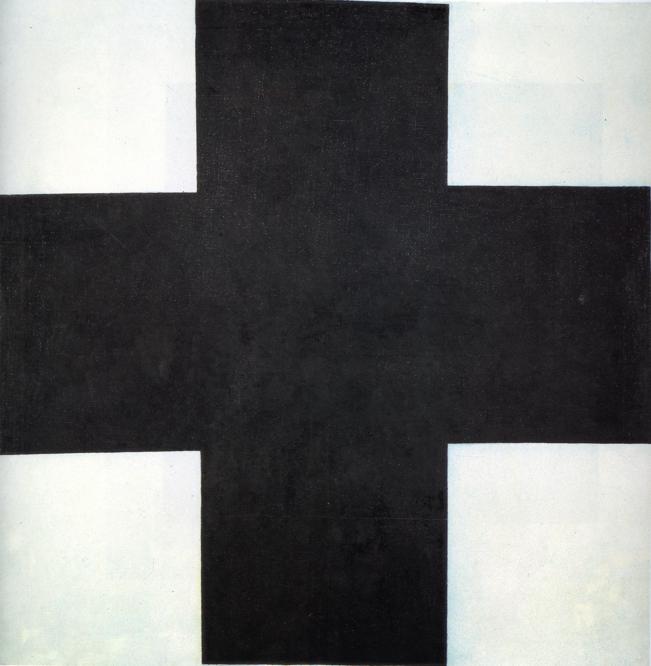
Want the “less is more” side of this? See simplicity in art.
Reference: Russian Museum (Virtual) collection note.
Artists like M.C. Escher built entire illusions from shape contrast and figure-ground reversals. If you want a film-and-art bridge for that idea, FilmDaft’s deep dive on positive vs. negative space includes Escher examples and explains why the “background” can become the subject.
4) Contrast of texture
Texture contrast is rough vs. smooth, dense vs. airy, glossy vs. matte. Texture can be physical (materials) or implied (brushwork, line density). It’s a powerful way to create “feel” even when you can’t touch the work.

If you want more on how texture creates mood, read What Is Texture in Art?
Reference: MoMA collection entry.
5) Contrast of scale
Scale contrast is the relationship of big to small. It can suggest power, comedy, menace, vulnerability, or awe—often instantly.

To go deeper on the concept, see Scale in Art (and how scale differs from proportion).
Reference: Yale University Art Gallery object record.
6) Contrast of line and direction
Line contrast is straight vs. curved, diagonal vs. horizontal, calm vs. kinetic. Different line types create different “movement cues” for the eye.

This is closely related to rhythm—see rhythm in art.
Reference: Guggenheim artwork page.
7) Contrast of space (positive vs. negative space)
Space contrast often means placing a small subject against a large “quiet” area. The emptiness isn’t filler—it becomes an emotional amplifier.

If you want the concept explained with film frames, read positive vs. negative space in film and art.
Reference: Smarthistory overview.
8) Contrast of style (realism vs. abstraction, flat vs. rendered)
Style contrast happens when different visual “languages” collide—painted vs. printed, flat pattern vs. shaded form, realism vs. abstraction. It can feel playful, disruptive, or intellectually “layered.”
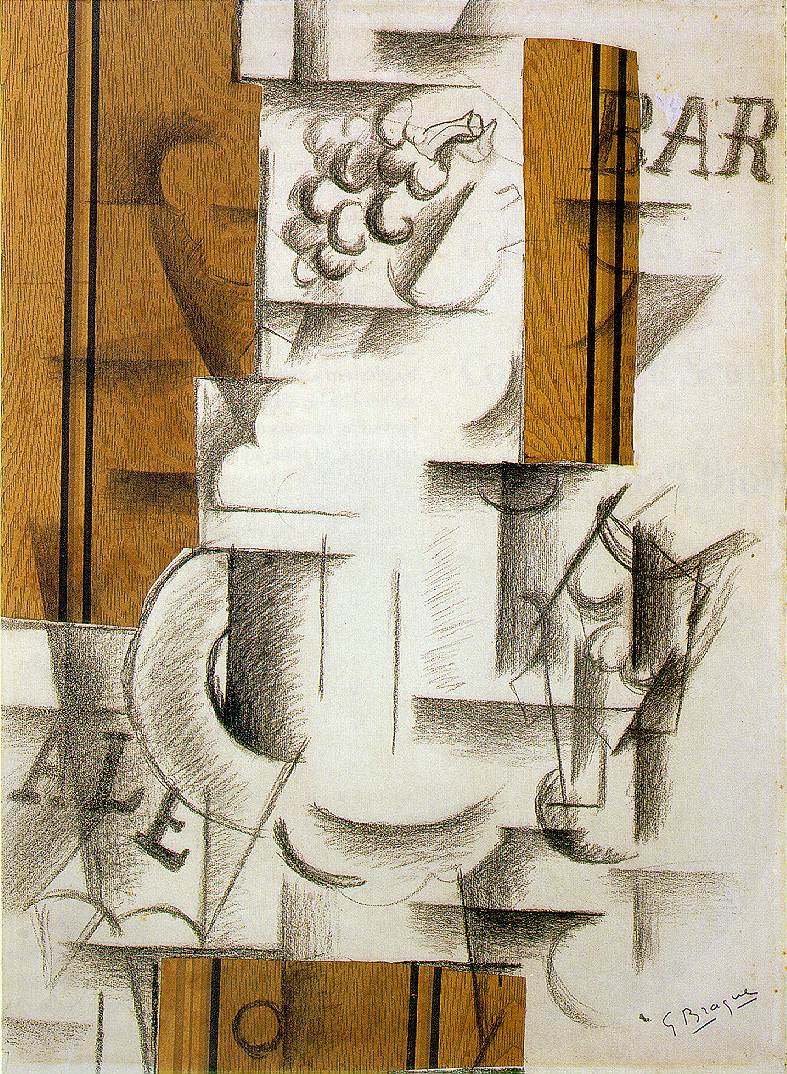
Reference: The Met collection note.
Contrast in film composition (how to apply the same toolset)
Film uses the exact same contrast families—just with time, camera, and performance added on top. Here are three practical ways cinematographers and directors deploy contrast on purpose:
1) Separate subject from background
- Value separation: put the subject in light against a darker background (or the reverse).
- Color separation: use warm/cool contrast or complementary hues. Read more on color theory.
- Texture/shape separation: silhouette staging, wardrobe vs. set patterning.
Start with composition basics, then layer contrast. If you need a refresher, FilmDaft’s composition in art article maps cleanly onto framing choices in film.
2) Use contrast to control pacing and emphasis
Contrast isn’t only “inside” the frame—it also works between shots (a bright shot after a dark one, a crowded frame after emptiness, chaos after symmetry). That kind of contrast can shape how fast or intense a sequence feels.
Related reading: pacing in film.
3) Build meaning through symbolic contrast
Some of the strongest visual storytelling comes from repeating a baseline look, then breaking it with a deliberate contrast (a single discordant color, a sudden shadow, an empty frame in a crowded film). That “break” often signals a plot turn or emotional shift.
Related reading: symbolism in film.
A quick checklist for using contrast intentionally
Here is a quick checklist for working with or analyzing the use of contrast in film:
- What’s the focal point? (Name it in one sentence.)
- Which contrast type supports that focal point best? (Value? Color? Scale? Space?)
- What’s the “quiet” area? (Give the subject room to read.)
- Are you using more than one contrast at once? (That can be great—unless everything competes.)
- Does the contrast match the mood? (High contrast often feels sharper or more dramatic; low contrast often feels softer, calmer, or more ambiguous.)
If you want a broader map of how these principles connect across styles, bookmark FilmDaft’s Visual Art History Timeline.
Summing up
Contrast is one of the most direct tools for making images readable and meaningful. Whether you’re working in paint, photography, design, or film, the same core idea applies: make differences deliberate. Use contrast to separate, prioritize, and energize, then let the viewer’s eye do the rest.
Read Next: Curious how art movements shaped film?
Explore our full Visual Art Timeline to see how styles like Surrealism, Cubism, and Suprematism influenced cinema’s most experimental moments.
Or keep browsing our Film Movements & World Cinema section for more on the histories that shaped screen culture around the globe.
Sources & further reading (artwork references)
- Van Gogh, The Night Café (1888): Yale University Art Gallery
- Caravaggio, The Calling of Saint Matthew (c. 1599–1600): Smarthistory
- Van Gogh, The Starry Night (1889): MoMA collection entry
- Kandinsky, Composition 8 (1923): Guggenheim artwork page
- Friedrich, The Monk by the Sea (1808–1810): Smarthistory
- Braque, Fruit Dish and Glass (1912): The Met
