

Published: September 9, 2025 | Last Updated: September 10, 2025

What is A camera obscura? Definition & Meaning
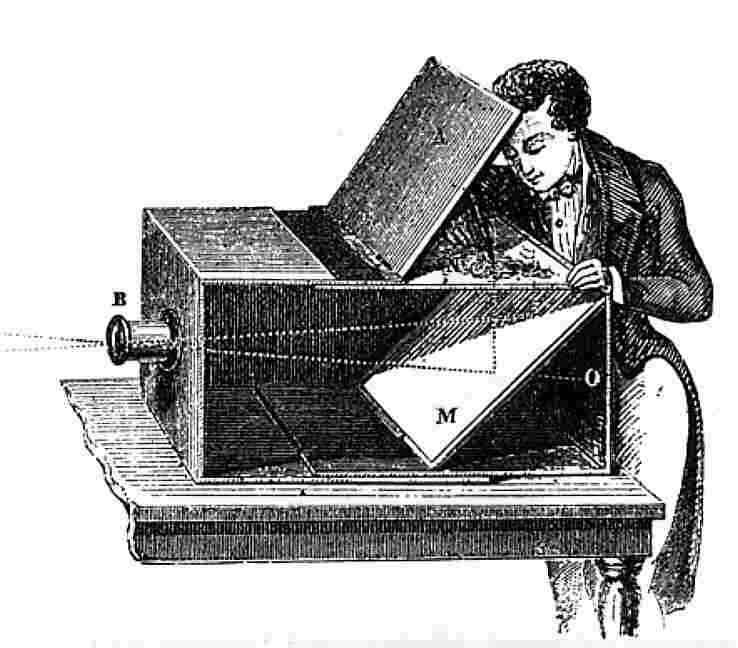
A camera obscura is a darkened chamber, room, or box with a small hole or lens that projects an inverted and reversed image of the scene outside onto a surface inside. It’s still useful for teaching students how light travels and how images form, and it even preserves color, shape, and perspective.
How a Camera Obscura Works in Photography

Light travels in straight lines. When rays pass through a small aperture, they produce an upside-down and left‑to‑right reversed image on the opposite surface inside the dark space. This happens whether the opening is a simple pinhole or a lens. A very small hole yields a sharper but dimmer image; a lens brightens and sharpens it even more.
Understanding how a camera obscura works helps you see how early cameras functioned without electronics. All cameras receive an upside-down, reversed image on the sensor or film.
What you see right-side-up in the viewfinder or screen in a regular camera is the result of mirrors, prisms, or digital correction. Large-format cameras still show the image upside down.
Camera Obscura History and Artistic Uses

The camera obscura has a long history across science and art. Ancient philosophers noticed the effect early on, and later scientists and artists refined the tool for observation and image-making. Here’s a quick overview of key developments:
Ancient Origins of the Camera Obscura
The idea of the camera obscura dates back to ancient China and Greece. Mozi, a Chinese philosopher and scientist active around 500 BCE, was one of the first to describe how light passes through a pinhole to form an image.
A century later, Aristotle, the Greek philosopher known for his work in logic and natural science, noticed inverted images during solar eclipses, when sunlight passed through small gaps between leaves.

In the 11th century, Ibn al-Haytham (also known in the West as Alhazen) gave the first full scientific explanation of how the effect worked. He was a mathematician and physicist from the Islamic Golden Age, and he showed how light enters a dark room and creates a sharp, inverted image when it passes through a small opening. His work helped shift the understanding of vision from philosophical theory to testable science.
Renaissance Innovations in Optical Projection
During the Renaissance, Leonardo da Vinci described the concept again in the early 1500s, and Giambattista della Porta and Daniel Barbaro improved it by adding a lens and an adjustable diaphragm. These early updates made the images brighter and easier to trace.
Artists and Portable Camera Obscuras
Artists began using portable versions (wooden boxes with lenses and mirrors) to project live scenes onto drawing surfaces. This let painters trace outlines and preserve accurate perspective. Two well-known artists often associated with the technique are Johannes Vermeer and Canaletto (real name Giovanni Antonio Canal).
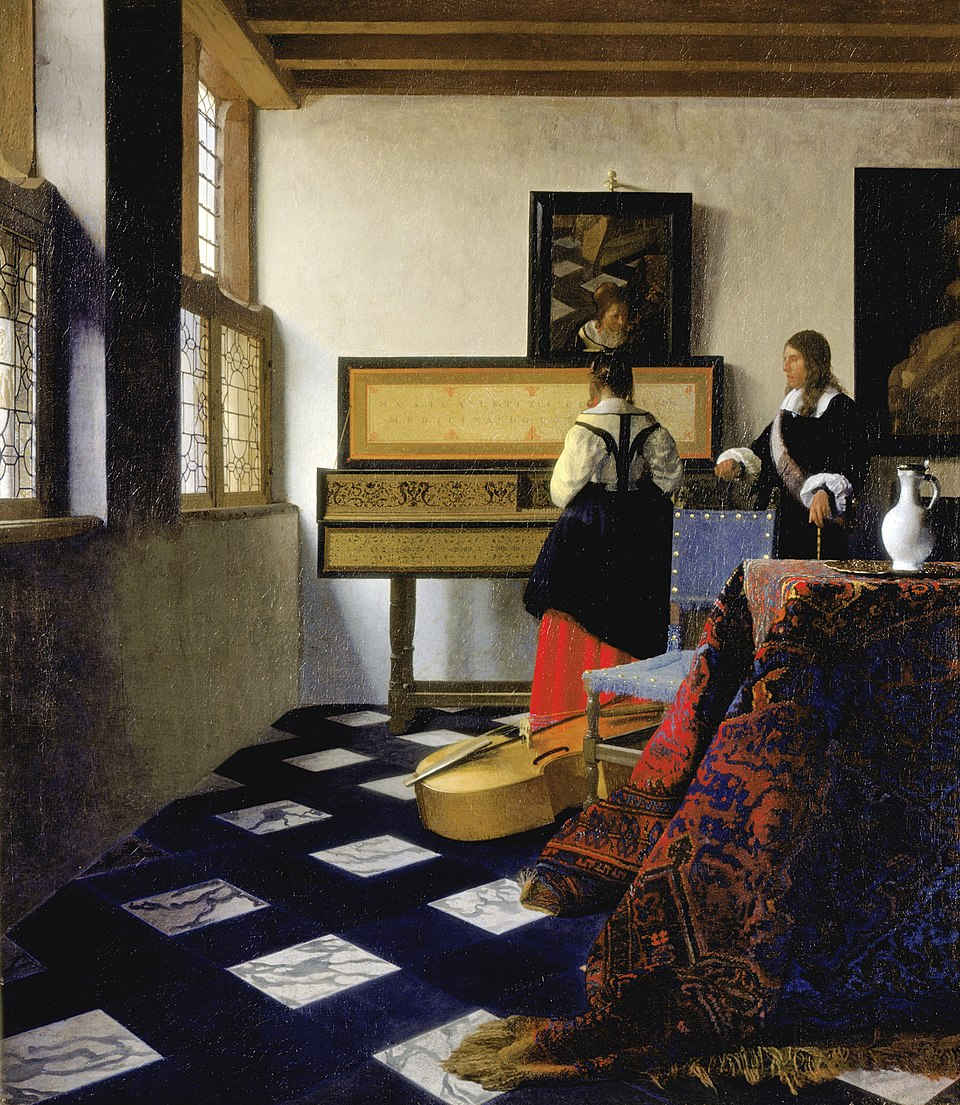
Vermeer worked in the mid-1600s during the Dutch Baroque period, part of the Dutch Golden Age. He is known for interior scenes with precise lighting and depth. Scholars believe he may have used a camera obscura to study how light behaved across surfaces, especially in paintings like The Music Lesson.
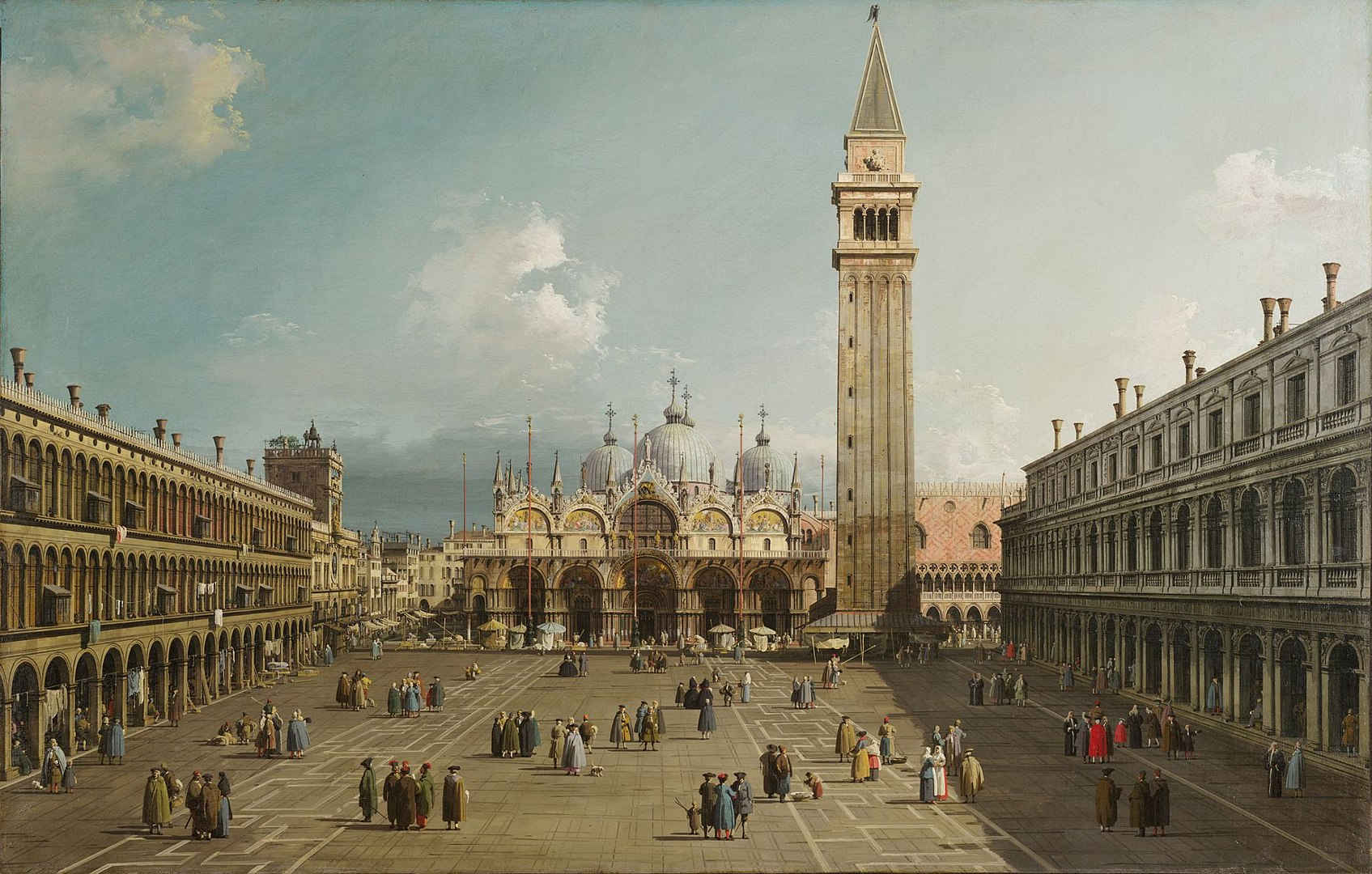
Canaletto, active in the early 1700s during the Venetian Rococo period, is famous for his detailed cityscapes of Venice and London. His use of linear perspective and architectural accuracy suggests he likely used a camera obscura to assist with preliminary sketches.
Scientific Use for Safe Eclipse Observation
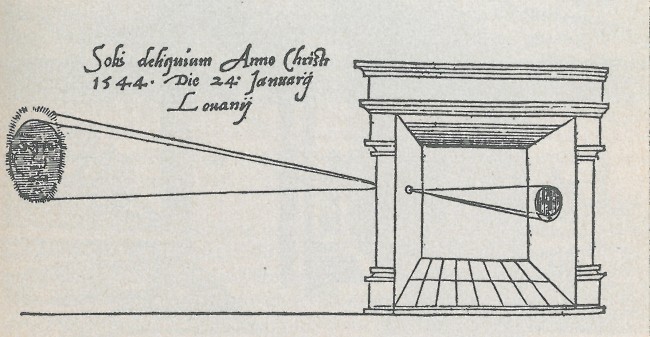
Camera obscuras were also used to observe solar eclipses safely. Because camera obscuras project the sun’s image onto a surface inside a dark room or box, so you’re not looking at the sun itself, scientists and students could study bright celestial events without damaging their eyes.
Public Attractions and Surviving Examples
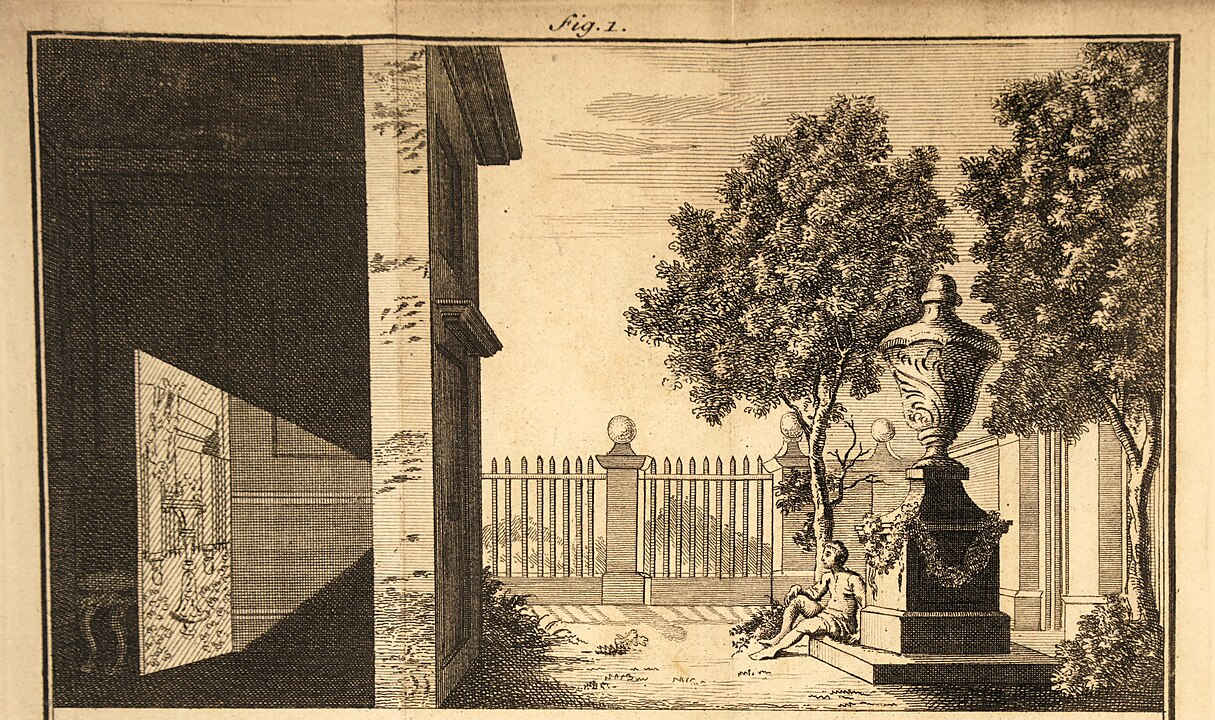
Full-sized camera obscura rooms even became tourist attractions in the 18th and 19th centuries, where visitors could see real-time panoramic projections of the city around them.
Two surviving examples include the Camera Obscura & Holograph Gallery in San Francisco, built in 1946 near the Cliff House, and the Camera Obscura & World of Illusions in Edinburgh, which has operated near Edinburgh Castle since the mid-1800s.
How Camera Obscuras Led to Modern Photography
The shift from live projection to permanent images started with the same optical setup as a camera obscura. When inventors added light-sensitive materials, photography began. This section explains that turning point.
The camera obscura directly led to the invention of the modern photographic camera. Early designs were nearly identical: a sealed box, a lens, and a projection surface.
The key difference came when inventors like Thomas Wedgwood and Joseph Nicéphore Niépce began capturing these images on light-sensitive materials. Niépce succeeded in the 1820s, creating the first permanent photograph using a bitumen-coated plate.
How to Make a Simple Camera Obscura at Home
You don’t need complex gear to try a camera obscura yourself. This hands-on project helps you understand camera basics using only everyday materials. Here’s what you need to build one:
- A shoebox or cardboard box
- Black paint or tape to block all light
- A small pinhole or lens
- A translucent screen (wax paper or tracing paper)
Make the pinhole or insert a lens on one side. Place the screen inside opposite that hole. Point the hole at a bright scene. The outside scene will appear, upside-down, on the screen. You see how the image forms by tracing the patterns of light.
Why Camera Obscuras Still Matter in Photography Today
Even though photography has gone digital, camera obscuras are still used in education and visual arts. They help you learn the fundamentals of exposure, lens optics, and framing, all without needing a camera. Here’s why they still matter:
Today, camera obscuras are used in classrooms and workshops to teach how cameras, lenses, and exposure work. They offer a hands-on way to explore image projection without electronics or software. You can study how image sharpness and brightness change with aperture size, and how lenses improve clarity.
It’s also a useful tool for understanding framing, composition, and the link between light and time.
Summing Up
The camera obscura is a dark space with a small aperture or lens that projects an inverted, reversed image of the outside world inside. It helped us grasp how light and vision work. It shaped art and led directly to the invention of photography. By building or observing one, you learn the main principles behind every camera you use today.
Read Next: Want to level up your photography skills?
Explore our Photography section for guides on lighting, composition, camera settings, and creative techniques across genres like portrait, landscape, and street.
Whether you’re shooting on a mirrorless camera or your phone, you’ll find sharp, practical tips to take more intentional and creative photos.
Also check out our Visual Composition section, with deep dives into framing, color psychology, and visual art history—key tools for any photographer thinking like an image-maker.
