

Published: June 12, 2020 | Last Updated: June 12, 2025

What is Rococo art? Definition & Meaning
Rococo art is an 18th-century European style defined by decorative elegance, pastel colors, playful themes, and a focus on aristocratic leisure and romance.
Rococo emerged in France around 1715, during the reign of Louis XV. It developed in early 18th-century Paris salons as aristocratic patrons moved away from religious solemnity.
At the same time, it presented a shift away from the weight of Baroque toward lighter, more ornamental work. Interiors became intricate and gilded.
Paintings turned toward flirtation, fantasy, and idyllic countryside scenes. The mood changed, but the craftsmanship remained refined.
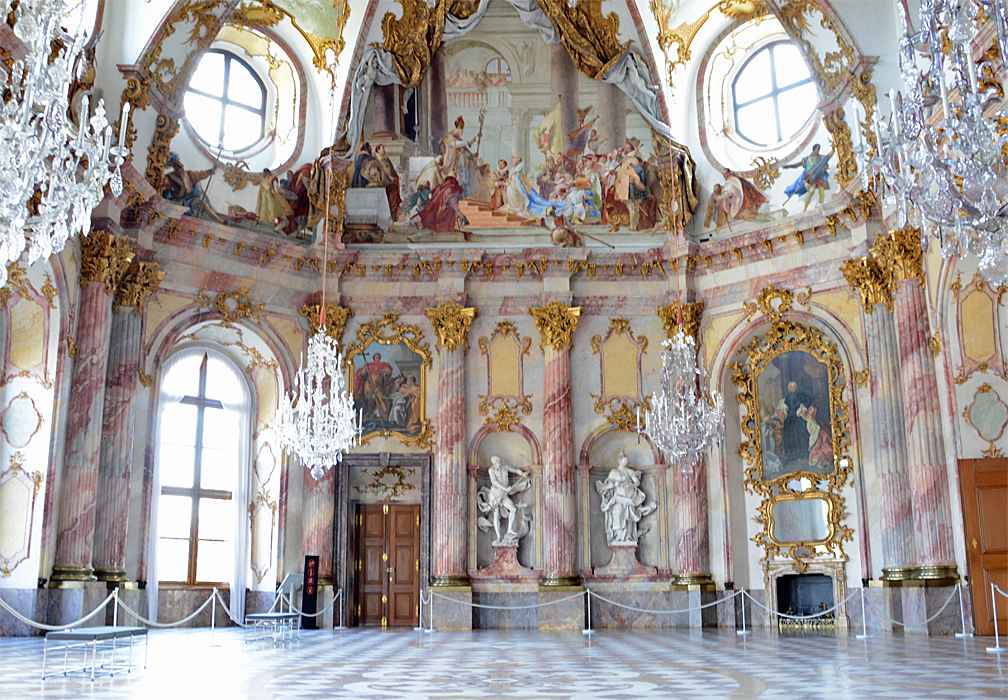
The word “rococo” likely derives from “rocaille,” a term used to describe shell and rock ornamentation in French garden design.
This motif appeared in both architecture and painting, paired with flowing curves, mirrors, and bright wall panels. The art was closely aligned with the social life of the French court and upper classes, where elegance and indulgence dominated the aesthetic.
Key Characteristics
Rococo reflected a society centered on comfort, beauty, and pleasure (well, at least for the aristocratic class). This was expressed through some key characteristics, including:
- Soft pastel color palettes
- Asymmetrical, curved compositions
- Themes of love, mythology, leisure, and music
- Ornate decoration and flowing, organic forms
- Intimate, playful scenes and decorative excess
Rococo thrived before the Enlightenment and the French Revolution, when politics and philosophy began demanding clarity and restraint in art.
Important Rococo Artists
Rococo art developed through painters who focused on elegance, curved forms, and aristocratic subjects. Their work gave the movement its visual identity in 18th-century Europe.
Jean-Antoine Watteau

Watteau helped define Rococo painting through his invention of the “fête galante”, meaning scenes of romantic figures in theatrical outdoor settings.

In Pilgrimage to the Island of Cythera (1717), he paints couples drifting through lush landscapes, suspended between fantasy and courtship.
François Boucher
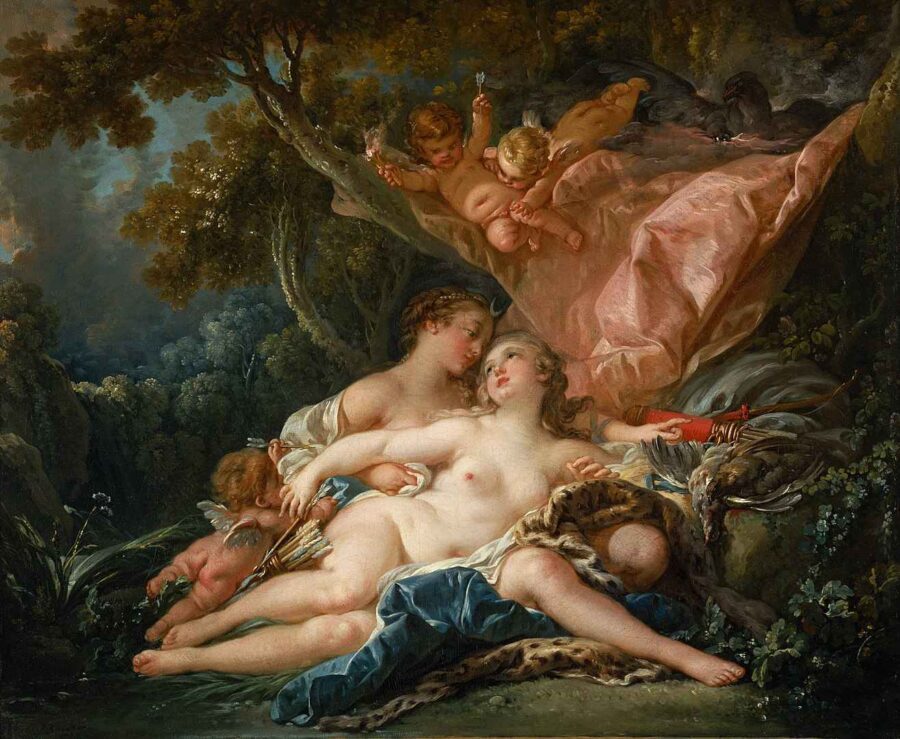
François Boucher became the leading painter of Rococo sensuality. Known for his voluptuous figures and soft textures, he filled mythological scenes with erotic charge.
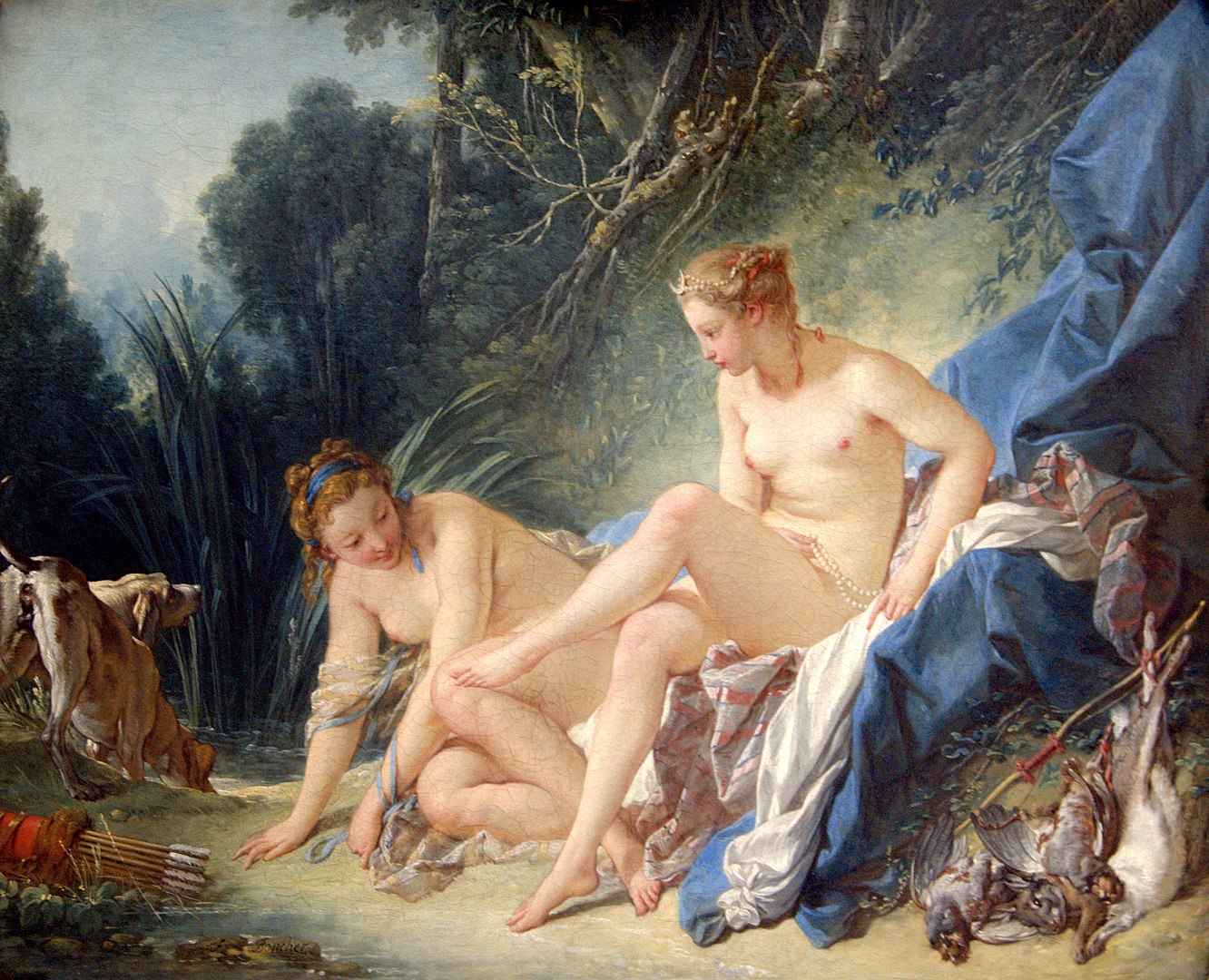
In Jupiter in the Guise of Diana and Callisto (1759), he turns a classical tale into a lush fantasy of drapery, flesh, and suggestion.
Jean-Honoré Fragonard

Jean-Honoré Fragonard was one of the last great Rococo painters. His work is known for its playful tone, fluid brushwork, and sensual subjects. Drawing from myth, flirtation, and leisure, Fragonard painted scenes filled with movement, layered glances, and theatrical settings that captured the spirit of pre-revolutionary France.

Fragonard’s The Swing (1767) epitomizes Rococo’s playfulness and flirtation. The woman arcs through space in a diagonal composition, framed by trees and lace. Her lover watches from the shadows as a shoe flies into the air.
Architecture and Decorative Design
Some say less is more; Rococo did not! Rococo interiors featured curved forms, shell-like motifs, mirrors, and pastel wall panels. Walls and ceilings dissolved into unified decorative programs, often using fresco, gold leaf, and carved plaster.
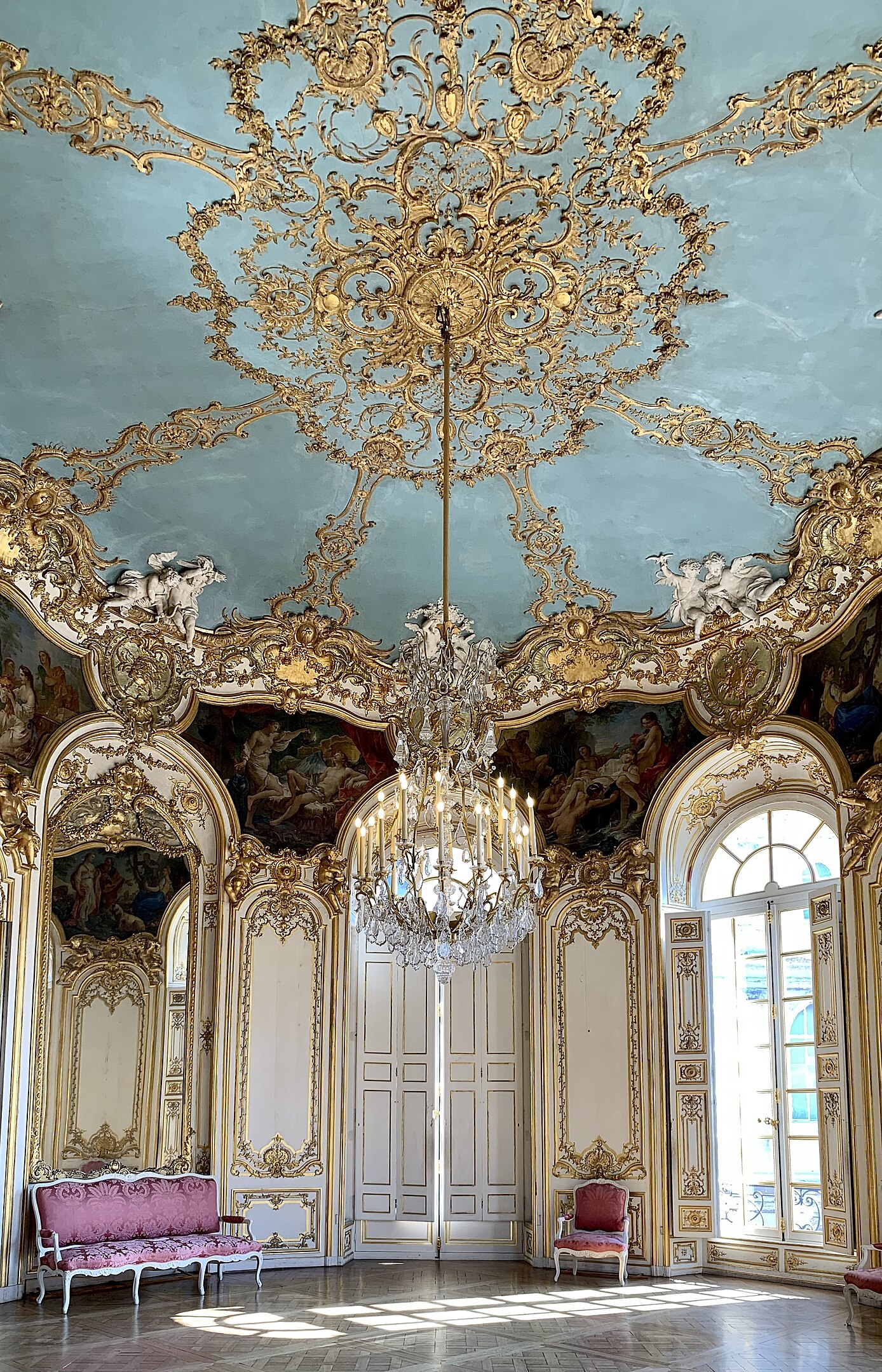
Designers such as Germain Boffrand in France and François de Cuvilliés in Bavaria transformed aristocratic spaces into theatrical environments filled with curved walls, gilded stucco, mirrored surfaces, and ceiling frescoes that draw the eye continuously from one detail to the next.

In Germany, Bavarian churches like the Wieskirche used dramatic gilded stucco and painted ceilings. In Italy, Venetian palaces incorporated pastel frescoes with mythological scenes and curved architecture. In Russia, Rococo appeared in aristocratic interiors in St. Petersburg, mixing French forms with Orthodox motifs.
Furniture and Decorative Arts
Rococo design extended into everyday objects, where furniture, porcelain, and decorative pieces mirrored the elegance and excess of the style’s interiors. Mirrors and clocks, for example, were covered in ornamental scrollwork and gold leaf. These pieces served as both luxury items and visual anchors within Rococo rooms.
Furniture Design

Cabinetmakers used curved silhouettes, floral marquetry, and gilt bronze mounts. Chairs and tables featured cabriole legs, carved acanthus leaves, and asymmetrical frames. Comfort became a priority alongside display.
Music
Rococo music favored light textures, graceful melodies, and ornamentation that paralleled the movement’s visual delicacy and charm. Rococo music is not as well known as Baroque and later styles. However, music is often also depicted in paintings and arts and crafts as a favorable leisure.
Porcelain and Ceramics

Meissen and Sèvres factories created porcelain figurines, tableware, and sculptures decorated with gold accents and soft hues. Themes included pastoral scenes, lovers, cherubs, and mythological characters.
Fashion

Fashion during the Rococo period embraced elaborate silhouettes, soft fabrics, and pastel colors, reflecting the style’s emphasis on refinement and display.
Themes in Rococo Painting
Rococo painters often portrayed love, music, mythology, and flirtation. Boucher and Fragonard painted Venus, Cupid, and courtship in lush gardens.
Scenes typically avoided religious or heroic content. Instead, they suggested escapism, elegance, and indulgence.
The Decline of Rococo
- Philosophy: Enlightenment critics like Diderot and Rousseau dismissed Rococo as decorative and morally empty, calling for art that upheld reason, simplicity, and civic virtue.
- Politics: The French Revolution and its values rejected aristocratic aesthetics.
- History: Excavations at Pompeii reignited interest in ancient art, leading to Neoclassicism.
By the late 18th century, Rococo was seen as superficial. Artists and patrons turned to order, symmetry, and classical ideals.
Rococo in Modern Culture & Film
Rococo aesthetics reappear in luxury fashion, interior design, and visual art. Contemporary artists like Jeff Koons and Takashi Murakami borrow its playfulness and surface detail.
Koons has explicitly cited Rococo as an influence, particularly in his exploration of luxury, sensuality, and ornament. In interviews and exhibition texts (e.g. for Antiquity and Made in Heaven), Koons aligns himself with artists like Boucher and Fragonard, noting their ability to elevate pleasure, eroticism, and material excess into high art.
Murakami draws on Rococo as part of his “Superflat” aesthetic, collapsing distinctions between high and low art, decoration, and content.
In exhibitions like Murakami Versailles (2010), he installed his manga-inspired sculptures inside the Château de Versailles, directly confronting the Rococo environment with contemporary excess.
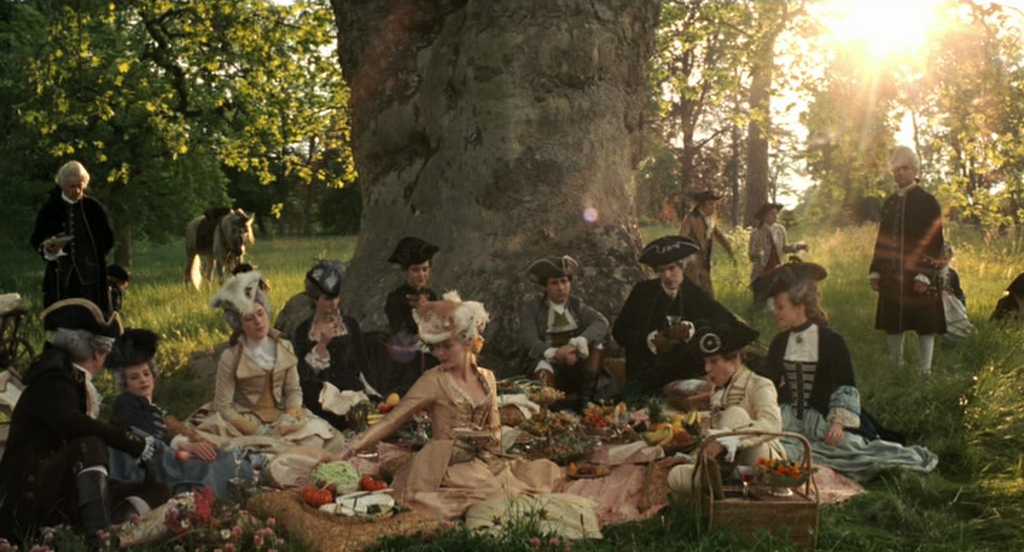
Films such as Marie Antoinette (2006, Columbia) recreate the Rococo visual language and themes, albeit anachronistically in this case, to comment on power, gender, and excess.
Summing Up
Rococo art represents a moment of elegance and escape. It focuses on romance, fantasy, and intricate decoration rather than religious or moral gravity. From salons and palaces to porcelain and furniture, it turned everyday life into aesthetic performance. Though it gave way to Neoclassicism, Rococo remains a key example of how art reflects society’s taste for beauty, play, and power.
Read Next: Curious how art movements shaped film?
Explore our full Visual Art Timeline to see how styles like Surrealism, Cubism, and Suprematism influenced cinema’s most experimental moments.
Or keep browsing our Film Movements & World Cinema section for more on the histories that shaped screen culture around the globe.
