

Published: April 14, 2024 | Last Updated: July 29, 2025

What is Steampunk? Definition & Meaning
Steampunk is a science fiction genre that blends technology and aesthetic designs inspired by 19th-century industrial steam-powered machinery. It often features an alternative Victorian era history where steam power remains in mainstream use or a fantasy world that similarly employs steam power. Steampunk works frequently portray anachronistic technologies or futuristic innovations as Victorians might have envisioned, based on a steam-driven machinery paradigm.
Origin and Meaning
[…]I think Victorian fantasies are going to be the next big thing, as long as we can come up with a fitting collective for Powers, Blaylock and myself. Something based on the appropriate technology of that era; like “steampunks,” perhaps[…]
–K.W. Jeter, in a letter to Locus Magazine, April 1987
The term “Steampunk” was coined in 1987 by science fiction writer Kevin Wayne Jeter. In an April 1987 letter to Locus Magazine, Jeter playfully suggested using the term to describe the type of speculative fiction that he and fellow authors like Tim Powers and James Blaylock were writing.
Jeter imagined a genre in which technological advancements are powered by steam rather than electricity. This genre was similar to cyberpunk but was set in an alternative version of the 19th century.
Instead, steampunk diverges from our historical timeline around the 19th century and draws on elements reminiscent of Victorian-era technology and aesthetics, coupled with futuristic innovations and machinery.
Jeter sought a term that would hold the essence of these works and coined the term “steampunk” to capture the anachronistic juxtapositions and the blending of the old with the speculative new that characterized their stories.
Read more on anachronism in film.
Literary Precursors
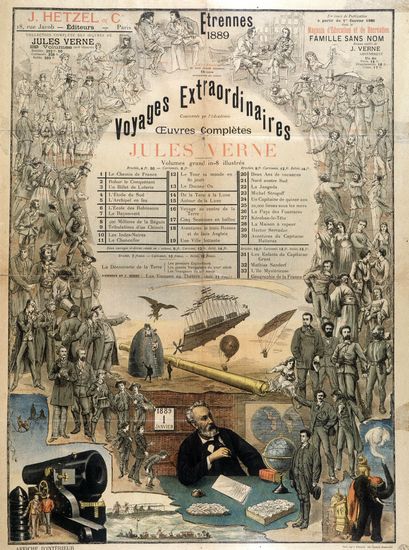
Of course, steampunk didn’t spring from nothing. Like all other genres, it evolved from earlier ideas and cultural works, especially within early science fiction literature.
The foundations of steampunk lie in the works of the 19th century, particularly in the writings of Jules Verne and H.G. Wells. Verne’s novels, such as Twenty Thousand Leagues Under the Sea (1870) and Around the World in Eighty Days (1873), often feature advanced steam-powered technology set in the Victorian era.
Wells contributed with his pioneering works like The Time Machine (1895), which showcased a Victorian gentleman using a steam-powered machine to travel through time.
Another significant influence was the American author Edgar Allan Poe, whose story The Balloon-Hoax (1844) fantastically described an air voyage across the Atlantic in a gas balloon, filled with detailed technical descriptions that prefigured steampunk’s fascination with retro technology.
The Cultural Establishing of Steampunk Aesthetic.
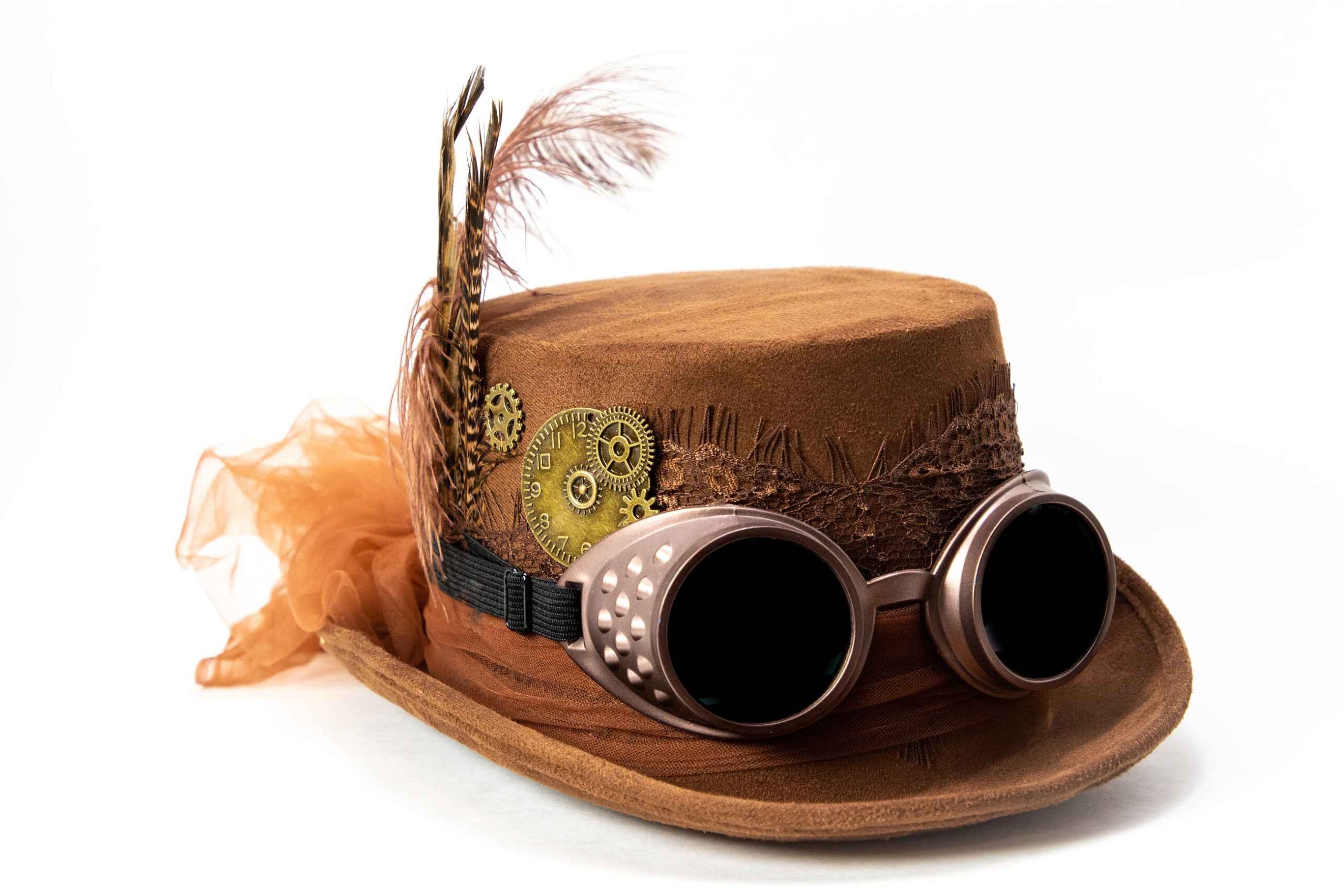
Steampunk can be seen as a nostalgic retro-futuristic quest to regain human control over technology (although it can still dominate man in the stories) from the mega-factories of the East that produce digital processors at nano-level scales. Steampunk is like the dream of a pre-Tesla time when inventions could still be made by anyone with a good idea and a few tools in a garage.
However, the fascination with technology in steampunk spans multiple centuries, not just re-imagined Victorian-era gizmos, but can be traced back to the inventions of Leonardo da Vinci.
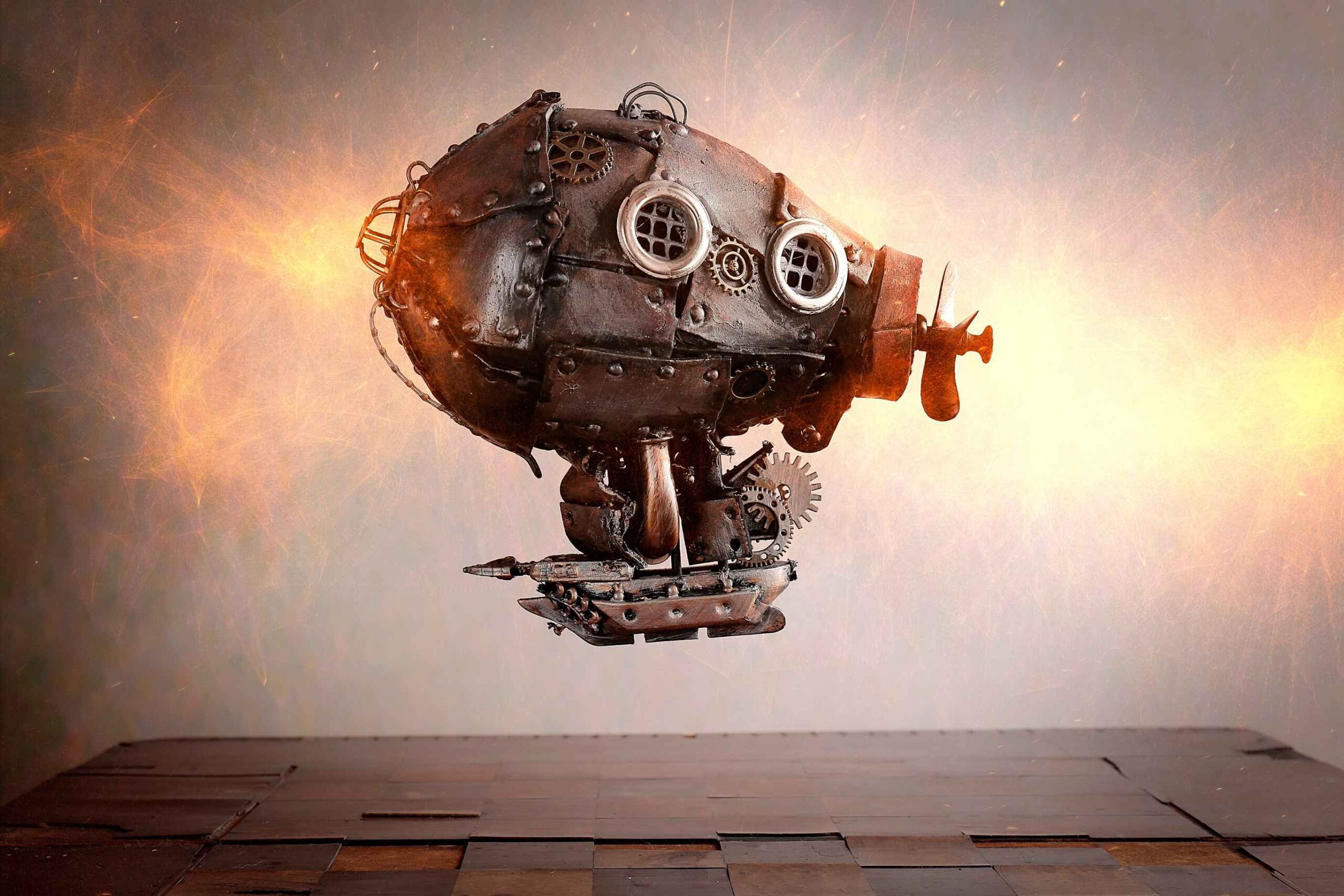
Steampunk includes a fascination with all technology tinkered with in a shed – from the intricate cogwheels of tiny clocks to giant steam-powered mechanical beasts and buildings and flying dreadnought airships.
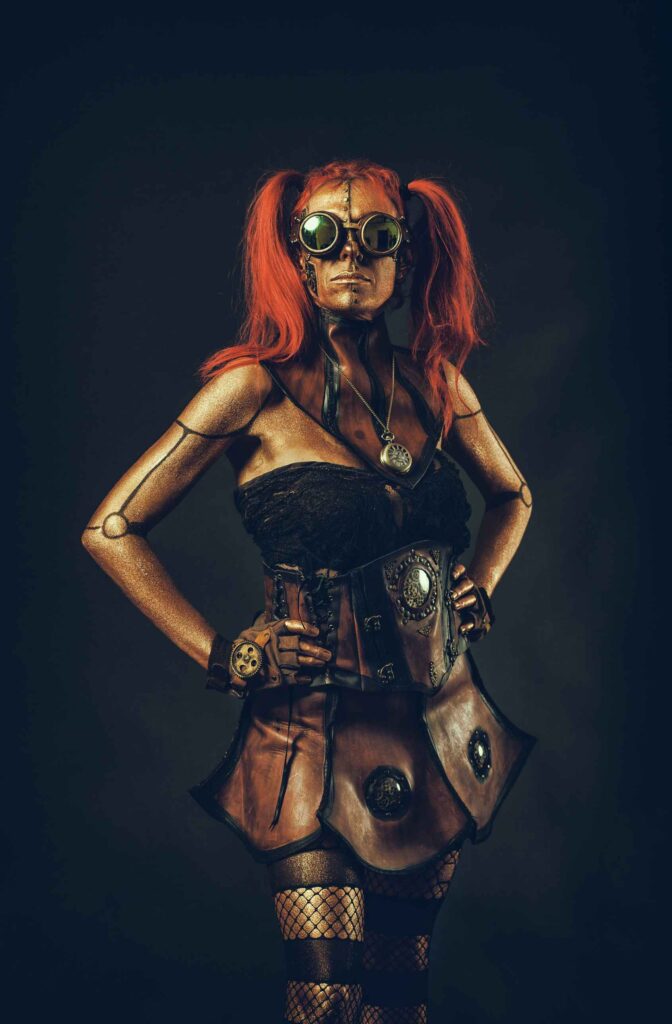
Contemporary steampunk movies draw on multiple visual inspirations within technology, comic books, role-playing games, video games, cosplay, fashion, lifestyle, conventions, online magazines, crafts, and music.
This broad influence has helped steampunk develop a unique, recognizable aesthetic that has become even more prominent than its literary roots. As with all cross-cultural and trans-medial fertilization, Steampunk injects its adapted version into these influences in an infinite feedback spiral that keeps the genre fresh.
What’s still clear, though, is that steampunk is centered around pre-digital, pre-electric analog technology, with steam sometimes being the fuel.
Common Themes in Steampunk Movies
Steampunk typically explores themes such as:
Innovation and Technology: Steampunk films often focus on human ingenuity and the complex relationship between people and machines. They highlight both the potential and the peril of technological advancements.
Social Change and Class Conflict: Many steampunk movies portray a society where the disparity between the wealthy and the poor is stark, often exacerbated by technology, similar to cyberpunk.
Both genres frequently question the distribution of power and wealth, reflecting social justice and equity concerns. Likewise, characters in steampunk movies frequently challenge the status quo, resist authority, or rebel against oppressive systems, which mirrors historical revolutions and uprisings during the industrial era.
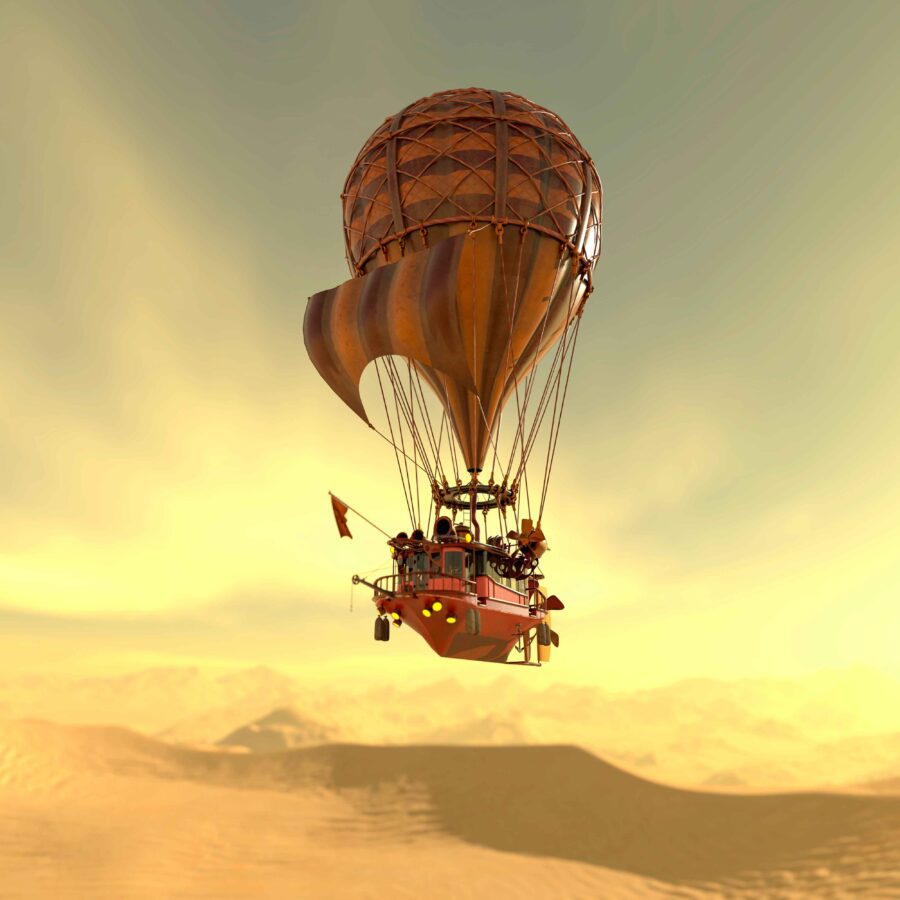
Adventure and Exploration: The genre commonly includes exploration elements, reflecting the Victorian era’s fascination with discovering new territories and the unknown. This theme often serves as a backdrop for the narrative, pushing characters into exciting and sometimes perilous situations.
Retro-futurism: Steampunk combines historical elements with futuristic ideas. This juxtaposition can serve as a critique (and nostalgia, as I already mentioned), provoking thoughts about the direction of current technological progress and its implications for the future.
Steampunk Precursors in Early Cinema.
Like steampunk literature, the steampunk look in movies didn’t appear out of nothing. As Robbie McAllister points out in his book Steampunk Film. A Critical Introduction (2019), “the steampunk imagination is thoroughly ingrained within an industry defined by its own ability to create lavish celebrations of mechanical wonder and power.” (p.3).
This is apparent in some of the earliest cinema movies, such as A Trip to the Moon (1902) and The Impossible Voyage (1904) by Georges Méliès.
Later films from German Expressionism, such as Fritz Lang’s sci-fi Metropolis (1927), featured towering skyscrapers, flying vehicles, and massive industrial machinery that would heavily inspire steampunk cinema’s architectural and mechanical visuals.

Also, depicting a stratified society, with the elite leveraging the machinery operated by the working class, echoes Steampunk’s frequent themes of social disparity and technological exploitation.
Another example is Things to Come (1936), adapted from H.G. Wells’ book. This film explores a future society after a devastating war, showcasing advanced technologies and societal transformations.
The visuals include streamlined, art deco-inspired designs mixed with elaborate machines and futuristic aircraft, elements commonly seen in steampunk narratives.
Lastly, the movie adaptation of 20,000 Leagues Under the Sea (1954) of Jules Verne’s novel features the iconic Nautilus submarine, designed with Victorian influences and futuristic capabilities.
The film’s blend of adventure, technology, and historical setting provides a clear template for steampunk aesthetics long before the term was coined.
Establishing Steampunk in Contemporary Cinema
Interestingly enough, mainstream Steampunk cinema is fairly established, as a handful of live-action movies have defined the genre’s style.
Jean-Pierre Jeunet’s and Marc Caro’s The City of Lost Children (1995) captures the essence of steampunk through its visual style and narrative. The setting is a surreal, mechanical world filled with bizarre gadgets and inventions characteristic of steampunk aesthetics.
Wild Wild West (1999) has often been described as a turning point for steampunk’s presence within mainstream film, although it is based on the 1960s television series of the same name. Directed by Barry Sonnenfeld and starring Will Smith and Kevin Kline, it integrates Western elements with steampunk technology, such as a giant mechanical spider and various steam-powered devices.
The Golden Compass (2007), directed by Chris Weitz, is based on Philip Pullman’s novel and presents a universe with prominent steampunk elements.
The film features airships, intricate gadgets, and a unique blend of magic and machinery that aligns well with the steampunk genre. Although the movie adapts a broader fantasy narrative, its inclusion of steampunk aesthetics helps define the visual standards of steampunk in big-budget films.
Steampunk Comic Book to Movie Adaptations
Several comic book adaptation films have successfully woven steampunk elements into their fabric, drawing from or inspiring the aesthetic of various graphic novels.
Joe Johnston’s The Rocketeer adapts Dave Stevens’ 1980s comic book into a feature film that combines elements of 1930s pulp magazines and serial films with a steampunk vibe.
The story revolves around a stunt pilot who discovers a jet pack that allows him to fly, featuring retro-futuristic technology and art deco styling, often associated with steampunk themes.
The League of Extraordinary Gentlemen is a film adaptation of Alan Moore and Kevin O’Neill’s comic book series, directed by Stephen Norrington. The movie features a team of Victorian literary characters, including Captain Nemo, Mina Harker, and Dr. Jekyll, who come together to combat a global threat.
The film is set in an alternative Victorian age where technological advancements are significantly advanced, showcasing steampunk influences through its depiction of advanced submarines, weaponry, and other gadgets.
Directed by Guillermo del Toro, the Hellboy films—based on Mike Mignola’s Dark Horse Comics series—blend supernatural elements with a steampunk aesthetic. Although not pure steampunk, the movies include Victorian themes and machinery, particularly evident in the gadgets used by the Bureau for Paranormal Research and Defense and the Golden Army in Hellboy II:
Animated Steampunk Movies
Like live-action films and comic book adaptations, Steampunk cinema has simultaneously developed within animated movies. In this case, animated movies are considered just as central to the genre as the live-action versions. This is especially true of anime.
A lesser-known but visually captivating film, The Secret Adventures of Tom Thumb (1993) intertwines dark fantasy and steampunk elements. The story presents a tiny boy named Tom Thumb navigating a gritty, mechanized world.
This film uses stop-motion animation to create its distinctive steampunk atmosphere, emphasizing themes of industrialization and alienation.
Disney’s Atlantis: The Lost Empire (2001) blends adventure and steampunk aesthetics. The film follows a young linguist who joins an expedition to find the lost city of Atlantis.
Equipped with submarines and other steampunk-inspired machinery, the movie integrates ancient civilizations with advanced technologies, contributing significantly to the steampunk genre in animation.
Another Disney film, Treasure Planet (2002), adapts Robert Louis Stevenson’s classic Treasure Island into a space-bound narrative with strong steampunk influences.
The film features sailing ships traversing the galaxy, powered by solar sails and complex mechanical structures. This fusion of pirate tales and steampunk elements helped expand the boundaries of the genre in animated cinema.
Directed by Hayao Miyazaki and produced by Studio Ghibli, Howl’s Moving Castle offers a fantastical interpretation of steampunk.
This film tells the story of a young woman transformed into an old lady by a witch’s curse who finds refuge in a magical, walking castle powered by a steampunk engine. The integration of magic and steampunk elements, alongside the moving castle itself — a blend of metal and classical architecture powered by steam — showcases a unique take on steampunk aesthetics that has captivated audiences and inspired filmmakers.
Directed by Katsuhiro Otomo, Steamboy (2004) is one of the major anime contributions to the steampunk genre. The film’s plot revolves around an inventor in the 19th century who receives a mysterious and powerful steam ball.
The visual representation of steam-powered machinery and inventive gadgets in Steamboy is impeccable, making it a significant reference point for steampunk aesthetics in animation.
Lastly, Tim Burton’s animated film 9 (2009) features a post-apocalyptic world where sentient rag dolls battle for survival against machines.
The movie’s use of old-world technology and machinery, set against a backdrop of a ruined Earth, aligns well with steampunk themes, exploring the intersection of humanity, technology, and resilience.
Summing Up
Steampunk cinema, blending Victorian aesthetics with futuristic technology, has captivated audiences for decades.
It is, as Cherie Priest, author of Boneshaker (2009), says in the 2015 documentary Vintage Tomorrows, “It’s the science fiction of a future that never happened.”
The genre draws on literary sources and early cinema, significantly influencing its development in other media, including comics and video games. It has long ago become an established subculture and mainstream darling, and it’s unique that mainstream movies helped spark the subculture, as it’s often the other way around.
Films like Wild Wild West and The League of Extraordinary Gentlemen showcase this genre’s mainstream appeal through their imaginative use of steampunk elements. Also, animated movies like Atlantis: The Lost Empire and Howl’s Movie Castle explore similar themes, combining old-world charm with advanced technology.
As Steampunk has become part of the cultural canon, I expect to see even more genre crossover in cinema in the near retro-future.
Read Next: What are Tech Noir Movies?
