

Published: November 26, 2025

What is film colorization? Definition & Meaning
Film colorization is the process of adding artificial color to black-and-white, sepia, or tinted footage using manual or digital methods. The goal is to make monochrome film appear as if it were shot in color. Film colorization is used on silent films, classic Hollywood titles, and historical footage.
While colorization can make old footage feel more immediate or familiar to modern viewers, it also changes the original image, raising questions about artistic control, historical accuracy, and whether the final version reflects the filmmaker’s original intent.
Early Color Techniques: Hand-Painting, Tinting, and Toning
Before color film existed, early filmmakers found creative ways to bring color to the screen. It wasn’t to create realistic colors, but instead to suggest emotion or highlight specific scenes, like the use of color palettes and color grading still does today. Understanding them shows that color was part of film long before modern color stock.
Hand-painted film frames
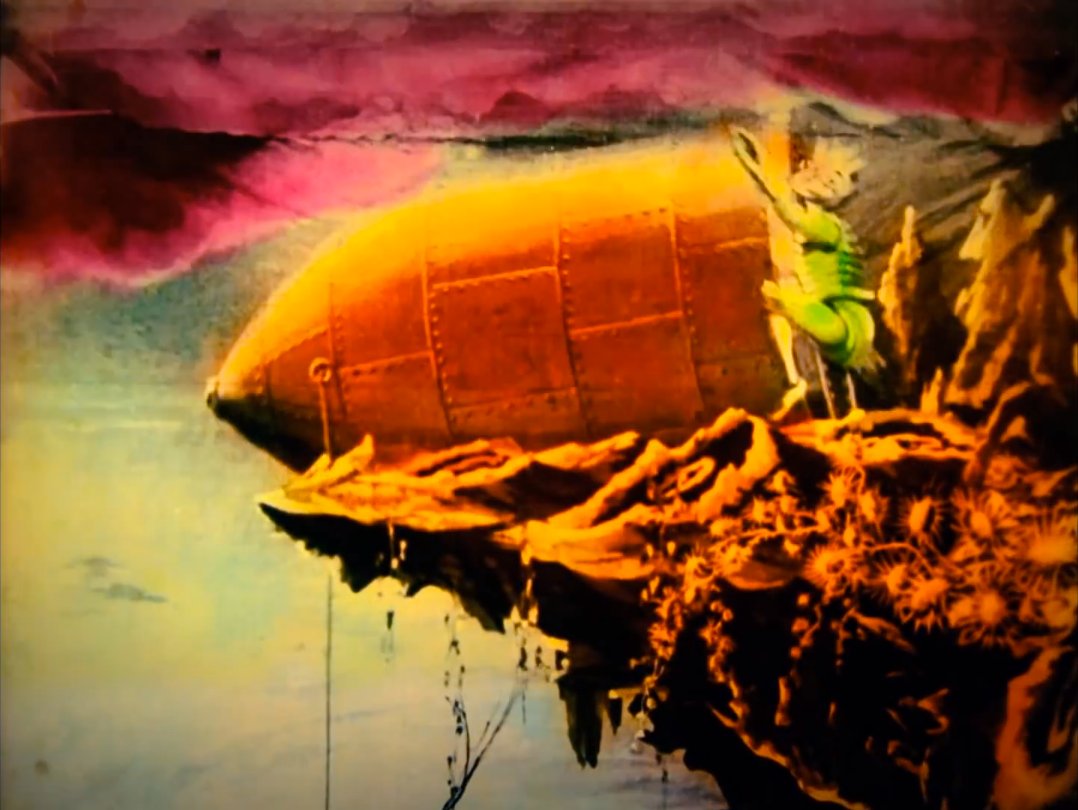
In the early 1900s, some prints of Georges Méliès’s A Trip to the Moon (1902) were hand-colored frame by frame by a studio in Paris. Most versions were released in black and white, and for decades, that was the only version available. A rare hand-colored print was rediscovered in 1993, fully restored by 2011, and re-premiered that year at the Cannes Film Festival.
Coloring studios like Elisabeth Thuillier’s painted each frame using fine brushes, often with 20 or more colors per scene. The result was a surreal, dreamlike image that made the action feel theatrical and dreamlike instead of realistic.
Stencil-based color systems

Pathécolor (later called Pathéchrome) used stencils to apply dyes only to specific parts of the image, like skies or clothing. This allowed mass production of partially colored prints with bold color highlights that made dramatic elements stand out.
Tinting and toning
Many silent films used tinting, where a single color was applied across the entire frame: blue for night, amber for daylight, red for fire. Toning affected only the darker areas of the image.
Modern Digital Colorization: How It Works Today
Today, colorization is done using digital tools. While software speeds up tracking and consistency, human input is still essential to apply the correct skin tones, lighting changes, and historically accurate colors.
Even with AI, colorization depends on decisions about what objects likely looked like based on limited visual evidence.
Frame scanning and separation
The original film is scanned into high-resolution digital frames. Colorists use masks and rotoscoping to isolate specific elements (faces, clothing, buildings, or skies) on each frame. Here’s how you use the rotobrush tool in Adobe After Effects to do this.
Assigning and tracking colors
Colors are assigned based on reference photos, costume research, or educated guesses. Software then tracks these areas across moving frames so the color remains consistent, even if the lighting or camera angle shifts.
AI-assisted workflows
Tools like DeOldify use machine learning to apply colors automatically. These tools guess skin tones, sky colors, and clothing based on patterns found in modern photos. However, the results often require manual correction, especially for ethnic diversity, historical uniforms, or faded lighting.
Why and When Is Colorization Used?
Colorization is used for different reasons depending on the context. Some projects aim to increase viewer interest, while others try to help modern audiences better visualize the past. Understanding the purpose helps you weigh the benefits of accessibility against the risk of distorting the original film’s design.
TV and commercial markets
In the 1980s, many studios colorized older black-and-white films to make them more appealing on television. Viewers were less likely to watch monochrome content, so adding color helped boost ratings and VHS sales. Titles like It’s a Wonderful Life (1946) were re-released in color for this reason.
Education and documentaries
Films like They Shall Not Grow Old (2018, Warner Bros.) used colorization to help viewers visualize historical people and events more realistically.
The film colorized World War I footage, added synced voices, and adjusted motion to make the century-old material feel closer to modern life.
Public domain re-releases
Many companies colorize films that are out of copyright, like the classic zombie movie Night of the Living Dead (1968) or the early sci-fi Plan 9 from Outer Space (1959).
These color versions are legal to produce and distribute, even if the original creators would not have approved the change. Just don’t expect every movie aficionado to love them.
Read more about licenses such as the public domain and Creative Commons.
Creative Ethics: Should We Change What the Director Intended?
Colorization can help viewers better understand history, but it also changes how scenes are lit, framed, and emotionally read. Many directors and critics argue that it risks undoing the design choices built into the original black-and-white version.
Altering visual design
Black-and-white cinematography uses contrast, low-key lighting, and negative space as part of the image structure. When color is added, those elements can become harder to read.
Restoration vs. Colorization
These two terms are often confused. Restoration keeps the original image intact while fixing damage. Colorization changes the image by adding visual elements that were never part of the original film.
Restoration means cleaning a film to remove scratches, dust, or flicker. The goal is to make it look as it did when first shown. Colorization means digitally adding color that replaces the original lighting and contrast with a modern interpretation.
Institutions like the Library of Congress, BFI, and Criterion Collection argue that original black-and-white versions must always be preserved. If a film is colorized, the new version should be labeled clearly. Archives stress that colorization is a reinterpretation, not a restoration.
Global and Cultural Questions
Colorization can unintentionally rewrite cultural or ethnic details. When footage from non-Western or colonized regions is colorized using AI trained on Western images, the process can assign incorrect colors to clothing, buildings, and people, removing local identity and authenticity in the process.
For example, traditional fabrics may be colored inaccurately. Religious buildings might be tinted with modern Western hues. Skin tones can be over-smoothed or standardized, ignoring actual regional variation. In these cases, colorization changes more than the look of the footage; it changes how that history is remembered.
This raises the question: Should modern artists or software decide what people from the past looked like, especially when visual records are incomplete or missing?
Summing Up
Film colorization is a manual or digital process that adds color to footage originally captured without it. It can make films feel more accessible, but it also changes how they look, feel, and are understood. Directors, critics, and archivists agree that original black-and-white films must be preserved. Colorized versions can offer a new experience, but they should never replace the one the filmmaker actually made.
Read Next: Want a deeper look at global film history?
Start with our Film History, Theory & Genre hub to see how early studios, national movements, and major shifts shaped the language of cinema.
Then explore our full Film Movements & World Cinema section for guides on movements like German Expressionism, French New Wave, Italian Neorealism, and more.
You can also check out our Visual Art Timeline to see how global art movements shaped the look, tone, and rhythm of film across decades.
