

Published: July 30, 2025 | Last Updated: October 1, 2025

What is A silent movie? Definition & Meaning
A silent movie is a film made without synchronized recorded sound, especially spoken dialogue. Instead images, title cards, and music tell the story. Silent movies were the standard from the 1890s to the late 1920s.
How Silent Films Started
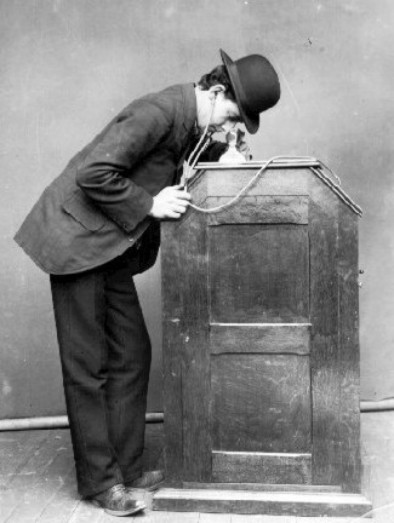
Silent cinema began with major inventions in the late 19th century. Thomas Edison’s team built the kinetoscope, a machine that let people watch short films through a peephole.
The Lumière brothers in France developed the cinématographe, a camera that could also project film to an audience. The early cameras and projectors turned moving pictures into a shared public experience.
Read more about the early inventions of movie technology.
In the early 1900s, filmmakers like Georges Méliès began using editing and special effects to tell fantasy stories. His film A Trip to the Moon (1902, Star Film Company) showed how visual tricks could turn film into something magical.
In the United States, D.W. Griffith used cross-cutting (aka intercutting) in The Birth of a Nation (1915, Epoch Producing Co.) to show parallel action and increase tension during chase and rescue scenes. He also used close-ups to highlight characters’ emotional reactions. Also, this was new.
Acting, Music, and Visual Style
Because audiences couldn’t hear the actors, silent film performances had to be clear and expressive; every movement and facial expression had a purpose.

Actors like Charlie Chaplin and Buster Keaton mastered this kind of physical storytelling, making people laugh or feel sympathy with just a glance or a gesture.
Music played a big part in the viewing experience. In theaters, a pianist, organist, or even a full orchestra would perform music to match the film’s emotion. Suspenseful scenes had fast, sharp music. Sad scenes had slower, softer tunes. This helped guide how the audience felt during each moment.
Title Cards
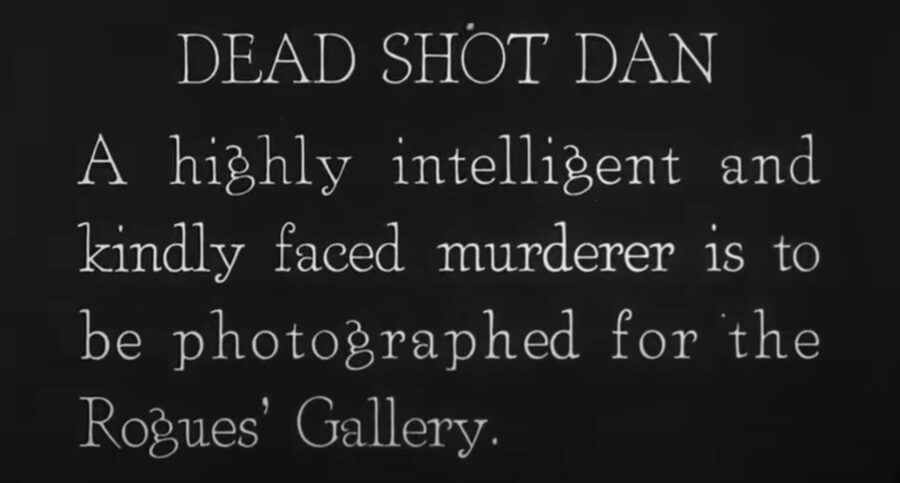
Title cards gave viewers key lines of dialogue or background information. Music, either performed live or added later, helped create the right mood for each scene.
Silent Film in Europe and Russia
Filmmakers also used strong visual techniques. In Germany, directors like Robert Wiene and F.W. Murnau made expressionist films with twisted sets and dramatic shadows.
A good example is The Cabinet of Dr. Caligari (1920, Decla-Bioscop), which used jagged designs and tilted buildings to show madness and fear.
Sergei Eisenstein of the Soviet Montage Theory movement in Russia used fast editing, called montage, to create energy and rhythm in films like Battleship Potemkin (1925, Goskino).
The End of the Silent Era
Everything changed when sound technology arrived. The Jazz Singer (1927, Warner Bros.) was the first feature film to include synchronized speech. It was a major hit.
Within a few years, most studios had switched to sound films, often called “talkies.” Silent film production quickly faded as audiences demanded sound and dialogue. Some silent stars made the transition, but others struggled because their voices or acting styles didn’t work in the new format.
Why Silent Films Still Matter
Silent movies helped shape the way films are made today. Techniques like close-ups, camera movement, and editing for emotion were developed in this period. Directors like Alfred Hitchcock, who started during the silent era, carried those lessons into later sound films.

Many silent films have been restored and are shown at festivals or in film schools. Classic titles like Metropolis (1927, Universum Film) and Nosferatu (1922, Prana Film) are still studied for their bold design and storytelling. The lack of dialogue makes them accessible across languages and cultures. Their stories still connect with modern viewers.
Summing Up
Silent movies are more than old black-and-white films. They are the foundation of everything we know about cinema today. With just images, music, and performance, early filmmakers found powerful ways to tell stories, and their influence can still be seen in how movies are made now.
Read Next: Curious how art movements shaped film?
Explore our full Visual Art Timeline to see how styles like Surrealism, Cubism, and Suprematism influenced cinema’s most experimental moments.
Or keep browsing our Film Movements & World Cinema section for more on the histories that shaped screen culture around the globe.
