

Published: August 26, 2025 | Last Updated: December 18, 2025

What is A scenic artist in film? Job description & Definition
A scenic artist is responsible for painting, texturing, aging, and finishing sets so they match the film’s visual world. You take rough surfaces and turn them into believable environments. This work relies on colour theory, perspective, and texture. You study the screenplay, research its era and location, and talk with the production designer to understand the mood and story. From that brief, you plan how walls, floors, and backdrops should look and feel.
Scenic Artist Job Description
A scenic artist’s job starts with concept and design. You read the screenplay and meet with the director and production designer to decide how each set should look.
Once the design is approved, you create scenery. That can mean painting backdrops, applying glazes, sculpting foam shapes, or carving textures so plywood reads as brick or stone. Modern productions use traditional brushwork alongside digital printing and other techniques. You might paint a vast skyline on canvas or age a small prop to look centuries old.
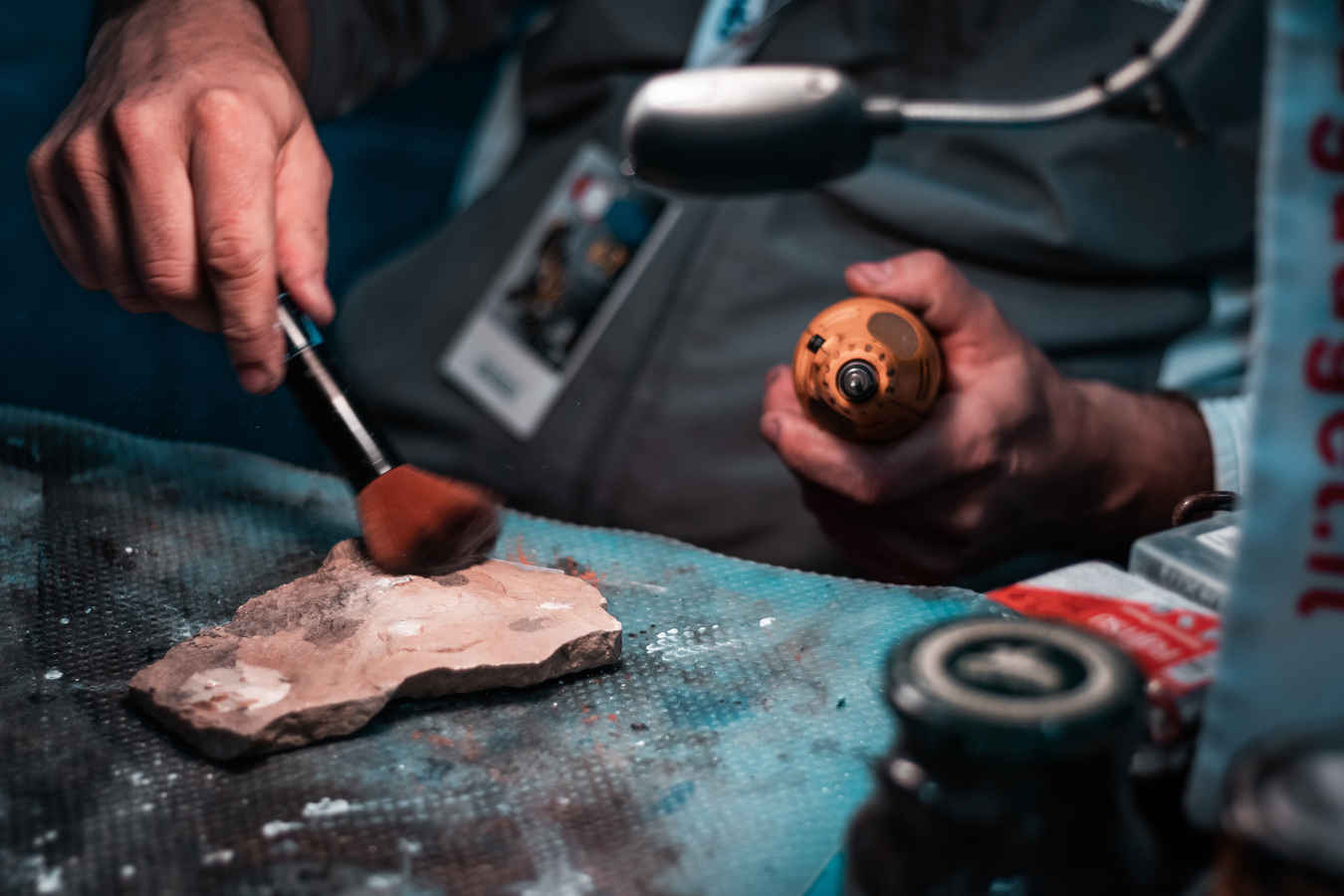
Film budgets often depend on your ability to replicate materials. Instead of building real stone walls or marble pillars, you paint and texture surfaces to look authentic, saving money. Key scenic artists also handle signs and graphics, supervise other painters, and track the budget for paints and supplies.
During rehearsals and shooting, you stay available for notes and touch‑ups. You work with lighting designers, costume departments, and special effects teams so your finishes read correctly on camera. You also maintain and preserve sets, touching up paint and making sure scenery withstands heavy use.
- Interpret design renderings and research period styles.
- Study scripts to understand mood, era, and geography.
- Mix and match colours based on samples and palettes.
- Create stencils and pounces to transfer designs onto large surfaces.
- Paint base coats, texture layers, and finish coats on walls, props, and backdrops.
- Sculpt and carve foam or plaster to build organic shapes.
- Apply faux finishes such as wood grain, marbling, aging, and distressing.
- Schedule your own work and coordinate with other departments.
- Purchase or request paints and materials and manage supply budgets.
- Maintain cleanliness and safety in the workspace, including using personal protective equipment and following health protocols.
- Handle touch‑ups, repairs, and continuity checks during shooting.
- Assist with load‑in and strike of scenery after production.
Where You Work and Who You Work With
You work in the art department. On large productions, there is often a hierarchy: the production designer and art director set the look, the key scenic supervisor supervises painters, and you may be part of a team.
You collaborate closely with construction crews, prop makers, lighting technicians, and special effects. Scenic artists also work with costume designers to ensure fabrics and surfaces complement each other.
Depending on the production, you might paint on location, inside a studio, or in a scenic shop. Key scenic artists rarely remain on set during shooting, but they prepare everything beforehand and are on call for problems.
You can work as a scenic artist in many different contexts.
A scenic artist can get work in many different contexts beyond film. And the medium affects your process. In film, your finishes need to hold up under close-ups and complex lighting setups. In television, speed is critical, and you often need to work quickly and efficiently.
In theatre, sets are seen from far away, so your work has to read at a distance. In the theatre, you may also be responsible for striking sets after the final performance. Live shows and theme parks demand finishes that last longer and resist wear.
Some productions use LED cyclorama walls instead of green screens. Scenic artists may help match physical set textures with digital backdrops.
Tools and Techniques
You use a wide range of tools: brushes, rollers, sponges, spray guns, airbrushes, stencils, and pounces. You mix acrylic and latex paints, glazes, and sealers.
For textures, you might use rags, plastic, sand, or sawdust. Foam carving tools help shape organic forms. Modern scenic shops also use digital printers to output large backdrops.
You also need to understand how pigments behave under film lights. Some scenic artists use digital tools to map out their designs before painting begins.
Working Safely
The job is physically demanding. You work at heights on ladders or lifts, stand for long periods, and sometimes lift heavy materials. You may need to wear a respirator when spraying or mixing paints.
A scenic artist keeps the workspace clean, stores chemicals safely, and follows all health and safety guidelines. Personal protective equipment and adherence to safety protocols protect you and your co‑workers.
Training, Skills, and Career Path
Most scenic artists study fine art, theatre design, or a related field, though a degree is not mandatory. Formal education helps you develop drawing, painting, and design skills.
Many start as apprentices, interns, or scenic assistants and learn on the job. Continuing education through workshops on painting techniques, carpentry, or digital design keeps your skills current.
You need excellent artistic ability, a strong grasp of painting techniques, color mixing, and material simulation. Knowledge of art history and architecture helps you replicate period styles.
Communication and teamwork skills are a must
Effective communication and teamwork are essential because you interpret other people’s visions and often supervise assistants. Time management and adaptability are critical to meet tight deadlines and respond to changes.
Typical Career Paths and Pay
Scenic artists typically begin as apprentices or junior painters. With experience, they can become lead painters or charge scenic artists who oversee the entire painting process and train new staff.
Those with leadership and budgeting skills may advance to key scenic positions that supervise crews and manage materials and budgets.
Pay varies widely: entry‑level scenic artists in the U.S. earn around $30,000–$40,000 per year, while experienced lead painters can earn $70,000 or more.
Common Challenges on Set
Scenic artists face tight deadlines, changing notes, budget constraints, and unpredictable conditions. You might have to repaint a surface minutes before a take because the director requests a darker tone.
Weather can ruin outdoor paint jobs, requiring quick solutions. You also juggle supply shortages and budget limits, so improvisation is part of the job. Maintaining continuity across reshoots and matching finishes between sets are ongoing challenges.
How Scenic Artists Differ from Matte Painters and Background Artists
Scenic artists often get confused with other visual roles like matte painters or background artists. But each job does something different in the production process.
Scenic artists paint real sets, walls, and props on location or in the studio. Matte painters create digital backgrounds that don’t exist physically. Background artists (in animation) paint the scenery behind characters in animated shows or films.
| Role | Works On | Medium | Department | When |
|---|---|---|---|---|
| Scenic Artist | Physical sets, props, and walls | Paint, texture, sculpture | Art Department | Before and during filming |
| Matte Painter | Digital landscapes or set extensions | Photoshop, 3D software | VFX / Post-Production | After filming or during pre-vis |
| Background Artist (Animation) | 2D or 3D animated environments | Digital painting or illustration | Animation Art Department | Before animation begins |
The roles sometimes overlap, especially when real sets blend with digital effects. But they each serve a different step in the production pipeline.
Summing Up
A scenic artist paints, textures, ages, and preserves sets so they match the story world. You collaborate with designers to plan surfaces, apply paints and textures to make plywood look like stone or metal, manage materials and safety, and keep sets looking right throughout filming. With strong artistic skills, technical knowledge, and teamwork, you turn blank walls into believable environments and help bring every scene to life.
Read Next: How do you design the look of a film?
Visit our Production Design section to learn how sets, props, and color palettes support story, character, and tone from the start.
Want the full picture? Explore the Pre-Production archive for everything that happens before cameras roll—from visual planning to script breakdowns.
