

Published: July 30, 2025 | Last Updated: November 18, 2025

What is A 3D movie? Definition & Meaning
A 3D movie is a film that uses stereoscopic imaging to create the illusion of depth, making objects on screen appear to exist in three-dimensional space when viewed with special glasses.

3D movies are designed to copy how your eyes see depth in real life. Each eye sees a slightly different version of the same image. Special technology splits the screen image into two views, one for each eye.
When you wear 3D glasses, the brain combines these views into a single picture with depth. This makes the screen feel like it has layers or distance, instead of being flat.
How Do 3D Glasses Work?
3D glasses let each eye see only one of the two images on the screen.

The traditional method is called anaglyph 3D, which uses colored lenses (usually red and blue or red and cyan) to filter two overlapping images on the screen. Each lens blocks one image and lets the other through, so each eye sees a different version. This creates the illusion of depth, but it also distorts the film’s colors. Anaglyph 3D was standard in older movies and home video releases, but it’s rarely used in modern theaters.
The most common type today uses polarized lenses. The lenses block certain light waves, so each eye only sees the image meant for it.
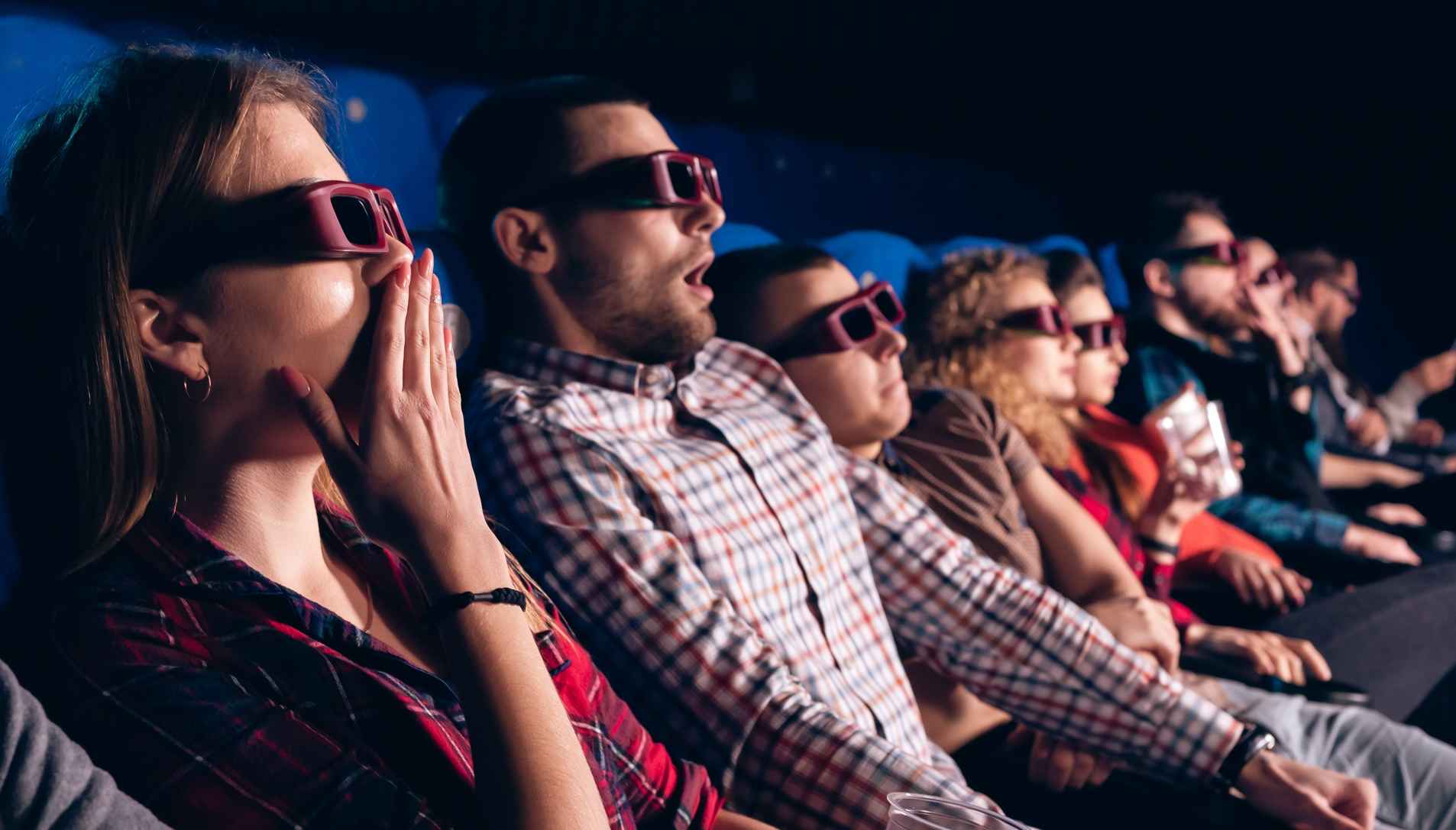
The last method is called active shutter glasses. These use fast flickering synced to the screen, showing left and right images in rapid turns. These are most common in 3D TV screens and home theatres, especially during the peak years of home 3D (around 2010–2015).
However, they don’t work well when you lie down (or even tilt your head too far off-axis), because they require precise synchronization and line-of-sight to the TV screen.
All methods create a 3D effect that matches how you normally see the world.
How Are 3D Movies Filmed?
Some 3D films are shot using dual-lens cameras. These cameras have two lenses placed at the same distance as human eyes. Each lens records the scene from a slightly different angle.

When combined during editing or projection, the result gives the viewer a sense of real depth. This setup helps the depth feel more natural than post-production conversions, where a 2D film is later turned into 3D.
A Short History of 3D Cinema
3D technology dates back to the early 20th century. The first public 3D film was The Power of Love (1922, Perfect Pictures). The format became popular in the 1950s, with titles like House of Wax (1953, Warner Bros.) drawing big crowds. Over time, interest faded due to technical problems and changing audience tastes.
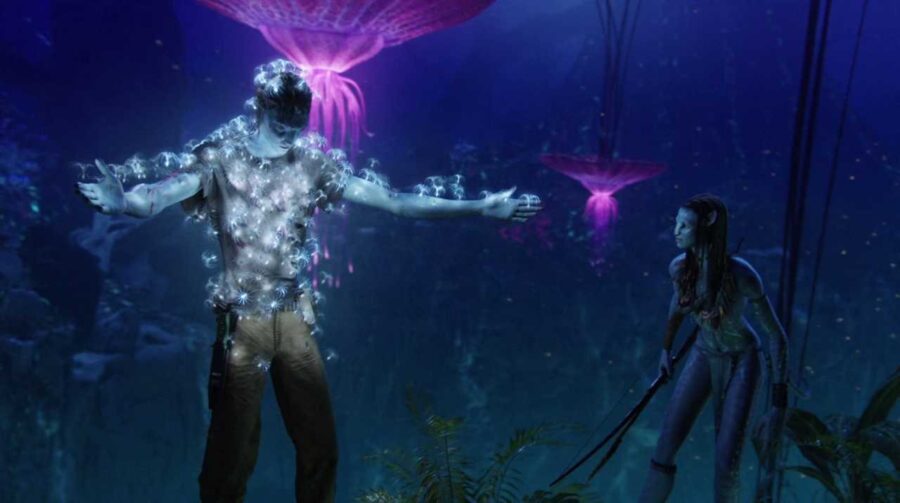
In the 2000s, digital projection made 3D more stable. The release of Avatar (2009, 20th Century Fox) was a turning point. James Cameron used new 3D cameras and computer animation to create the world of Pandora. The success of the film led to a new wave of 3D releases, especially in action, fantasy, and animated genres.
Projection Systems and Theater Setups
To show 3D films, theaters use advanced projection systems. Most use a single digital projector with a special lens or filter that switches quickly between the left and right images.
Others use dual projectors, one for each eye’s image, with polarization. The screen must also be coated to reflect polarized light correctly.
Notable 3D Movies
Many types of films have used 3D in different ways, from big-budget adventures to experimental arthouse cinema. Here are a few well-known examples that show what 3D can do when used with purpose:
- Avatar (2009, 20th Century Fox) – A sci-fi epic that redefined modern 3D cinema
- Gravity (2013, Warner Bros.) – A space thriller that uses 3D to show danger and distance
- Hugo (2011, Paramount) – A story about early film history told with modern 3D techniques
- Life of Pi (2012, 20th Century Fox) – Uses 3D for both beauty and emotion
- How to Train Your Dragon (2010, DreamWorks) – Animated flight scenes with layered depth
- Love (2015, Wild Bunch) – Gaspar Noé used 3D for an intimate, experimental arthouse drama
Read more on how sex scenes are filmed in movies.
What’s Next for 3D Movies?
Some filmmakers are now testing how 3D can work with virtual reality (VR) or augmented reality (AR). Instead of just watching, you may soon be able to look around a full 3D environment using headsets. This could change how films are made, especially for animation, gaming crossovers, and experimental cinema.
Summing Up
3D movies use separate left-eye and right-eye images to create the illusion of depth. This format has gone through many changes since the 1920s. While its popularity has gone up and down, 3D still plays a major role in visual storytelling, especially in animation and blockbuster action films. With new tools like VR, it may continue to evolve in the future.
Read Next: Wondering how aspect ratios shape storytelling?
Dive into our Screen Formats section to see how widescreen, Academy ratio, and IMAX influence the way we watch movies.
Looking for more historical context? Explore our Film History, Theory & Genre archive for visual storytelling across time and technology.
