

Published: September 4, 2025 | Last Updated: December 18, 2025

What is The exposure triangle in photography? Definition & Meaning
The exposure triangle describes the relationship between aperture (f-stop), shutter speed, and ISO that sets image brightness and shapes motion blur, depth of field, and noise.
How the Triangle Works

Think in steps called “stops” (also known as f-stops on photography lenses). One “stop” more light doubles exposure. One stop less light halves exposure. Each control moves in stops, so you can trade between them and hold the same brightness.
You adjust one side of the triangle, and you usually adjust one or both of the others to maintain correct exposure. The goal is consistent: set the look first, then balance light.
Aperture (F-Stop)

Aperture sets the size of the lens opening. Lower f-numbers mean wider openings and more light. Higher f-numbers mean smaller openings and less light.
- Look control: Lower f-numbers give a shallow depth of field. Higher f-numbers keep more of the scene sharp. A high f-number is useful when you want to create a deep focus shot.
- Typical moves: f/2.8 for portraits or night scenes. f/8 to f/11 for landscapes and product shots.
- Trade-off: Lower f-numbers risk focus misses. Higher f-numbers can soften detail from diffraction at very small apertures.
Shutter Speed

Shutter speed sets how long the sensor gathers light.
- Look control: Fast speeds freeze motion. Slow speeds blur motion.
- Typical moves: 1/1000 s for sports. 1/50 s to 1/125 s for dialog. 1 s or longer for light trails.
- Trade-off: Slow speeds risk camera shake. Fast speeds need more light or higher ISO.
ISO

ISO sets the sensor sensitivity to light.
- Look control: Low ISO gives clean images. High ISO adds noise but helps in low light.
- Typical moves: ISO 100 outdoors. ISO 800–3200 indoors.
- Trade-off: Higher ISO lifts noise and can reduce dynamic range.
Balancing the Three: Direct Examples
You open the aperture one stop from f/4 to f/2.8. To keep the same brightness, you either double the shutter speed (for example, 1/125 s to 1/250 s) or lower the ISO one stop (ISO 400 to ISO 200).
You slow the shutter speed one stop from 1/250 s to 1/125 s. To hold brightness, you close the aperture one stop (f/4 to f/5.6) or lower the ISO one stop.
Quick Equivalent Exposures
Different combinations of aperture, shutter speed, and ISO can give the same overall brightness. This happens because closing down one control and opening another by the same number of stops keeps exposure equal.
In other words, the brightness matches, but the look changes; depth of field, motion blur, and noise all shift based on your choices.
| Aperture | Shutter | ISO | Depth of Field | Motion | Noise |
|---|---|---|---|---|---|
| f/2.8 | 1/250 s | 100 | Shallow | Frozen | Clean |
| f/4 | 1/125 s | 100 | Moderate | Frozen | Clean |
| f/5.6 | 1/60 s | 100 | Deeper | Slight blur risk | Clean |
| f/5.6 | 1/125 s | 200 | Deeper | Frozen | Low noise |
| f/8 | 1/60 s | 200 | Deep | Slight blur risk | Low noise |
Common Setups You Can Use
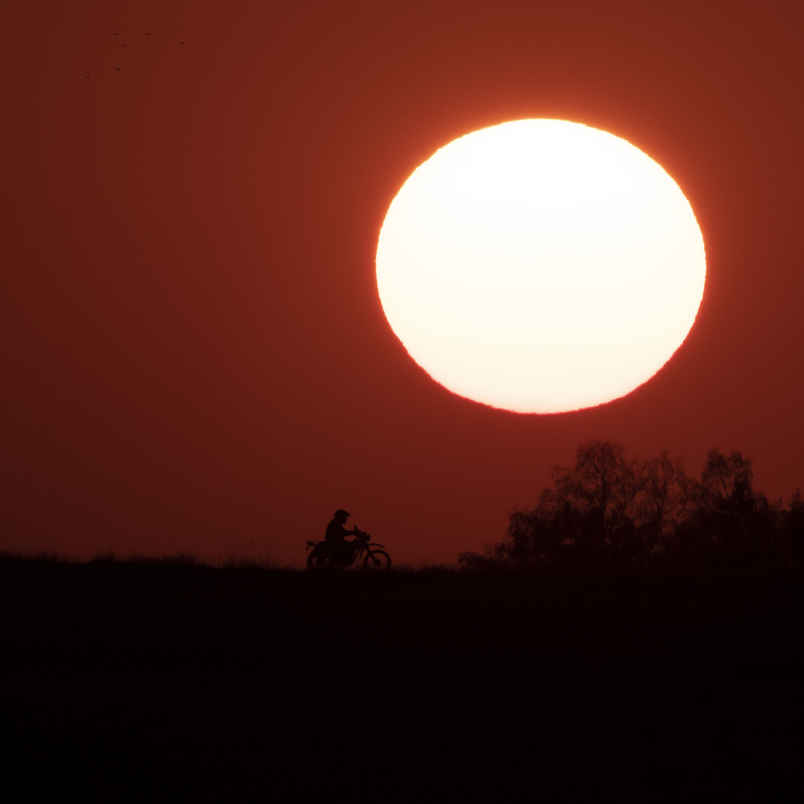
Below, I’ve created a list of some starting points you can try out for good results. Remember, these are just starting points to get you in the ballpark and capture some nice, sharp images.
- Portrait at dusk: Start f/2 or f/2.8 for shallow depth. Set the shutter at 1/125 s to avoid blur. Raise the ISO until the meter reads correctly.
- Handheld street: Start 1/250 s to freeze people. Set f/4 to f/5.6 for some depth. Adjust ISO to taste.
- Landscape midday: Start f/11 for depth. Keep ISO 100. Set the shutter to match the light, then fine-tune with filters if needed. Also, learn what hyperfocal distance is.
- Action sports: Start 1/1000 s. Open to f/2.8 or f/4 as needed. Raise ISO until exposure lands.
- Night city trails: Start 10–20 s on a tripod. Set ISO 100–200. Use f/8 for sharpness and star shapes on bright points.
You might also find the 500-rule in astrophotography relevant if you want to capture stars and the Milky Way.
Sometimes you want to get creative. For example, you might want motion blur for street photography to convey a sense of urgency and movement, in which case you can lower your shutter speed to something like 1/5 second, compared to the example below.
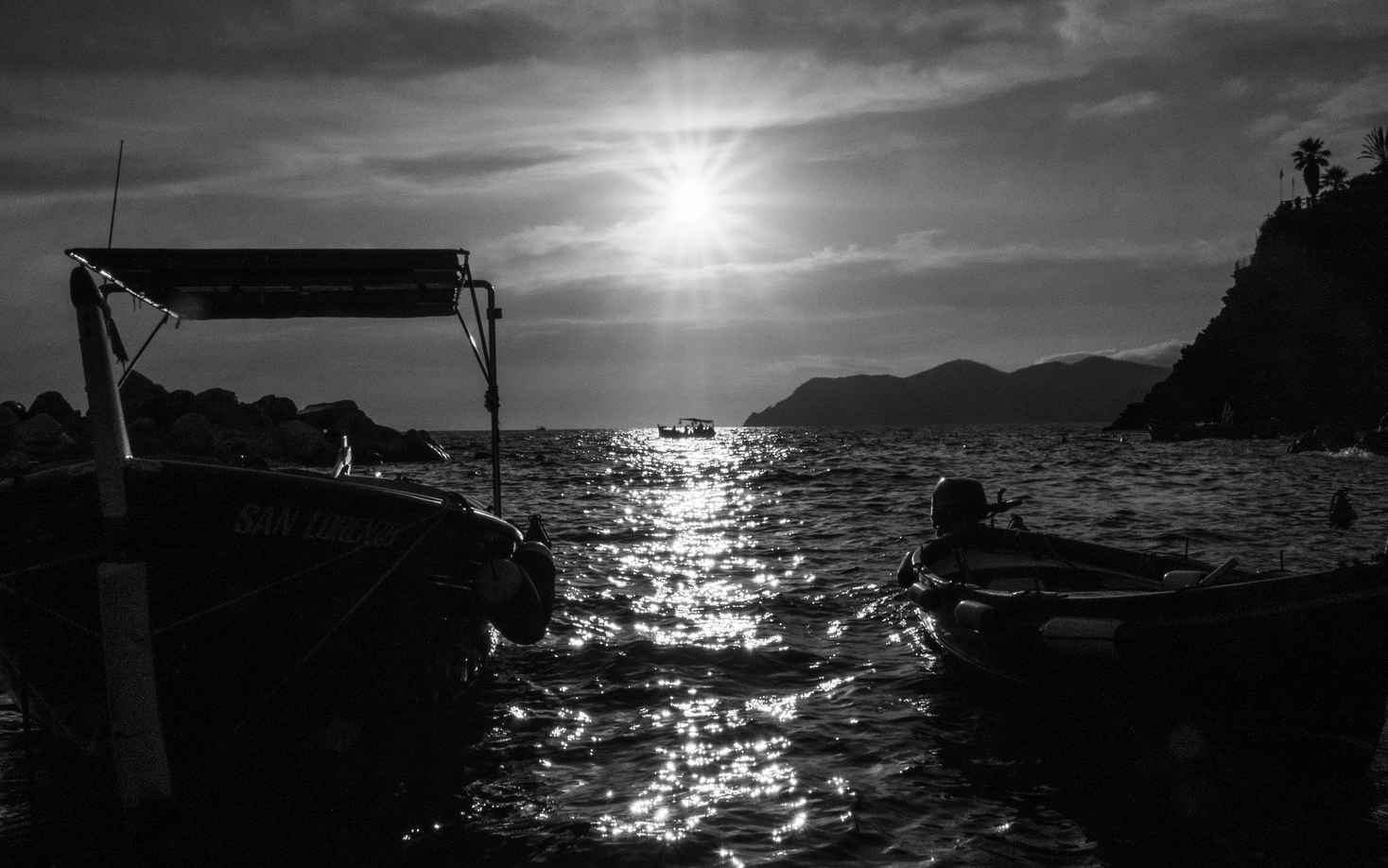
Another trick I love to use is to stop down to an aperture setting between f/11 and f/22 to capture sunbursts and even choose a high shutter speed to make the sky darker and redder. This works wonders for sunrise and sunset photos.
Video Note: Shutter Angle
In video, many cameras show shutter angle as well as shutter speed. A 180° shutter at 24 fps gives 1/48 s.
Keep that angle for natural motion blur, then set exposure with aperture and ISO. Break the rule when you want a specific look.
Read more on how to choose the right camera settings for video.
Simple On-Set Workflow
When you’re on set, exposure choices need to be quick and deliberate. A clear workflow helps you lock down the look before fine-tuning the technical side. Think of each step as a priority order: style first, balance second.
- Pick the look. Set the aperture for the depth of field you want.
- Lock motion. Set the shutter for the action or your chosen shutter angle.
- Match brightness. Set ISO to reach the correct exposure.
- Check details. Review focus, highlights, and noise. Nudge one stop and counter with another if needed.
Pitfalls to Watch
Even with a solid workflow, exposure can still break down in common ways. Knowing the most frequent problems lets you spot them before they ruin a take.
- Motion blur: Shutter too slow for handheld or action.
- Noise: ISO too high for clean shadows.
- Diffraction: Very small apertures can soften fine detail.
- Focus misses: Very wide apertures can shrink the sharp zone too much.
Summing Up
The exposure triangle links aperture, shutter speed, and ISO. Set the look first with aperture and shutter. Use ISO to land the exposure. Think in stops. Trade one stop here for one stop there. With practice, you will set the triangle fast and shape both brightness and style with confidence.
Read Next: Want to level up your photography skills?
Explore our Photography section for guides on lighting, composition, camera settings, and creative techniques across genres like portrait, landscape, and street.
Whether you’re shooting on a mirrorless camera or your phone, you’ll find sharp, practical tips to take more intentional and creative photos.
Also check out our Visual Composition section, with deep dives into framing, color psychology, and visual art history—key tools for any photographer thinking like an image-maker.
