

Published: October 7, 2025

What is The axis of action? Definition & Meaning
The axis of action is an imaginary straight line, also known as the 180° line or rule, that defines the spatial relationship between characters or objects in a scene. Cameras should remain on one side of that line to maintain consistent screen direction.
Why the Axis Matters and How to Use It

The axis of action helps you keep direction and blocking clear. It runs between two characters, or along the path of a moving object. Once this line is drawn, all your shots should stay on one side of it.
This keeps left/right screen direction consistent and makes spatial relationships easy to follow. If you cut across the line, character positions and eye-lines flip, which can confuse the viewer.
Example: Dialogue Across a Table
Two people sit face to face. You draw the axis between them. On one side of the line, you place cameras for shot A and shot B.
Shot A (over shoulder of Character 1) shows Character 2 facing right.
Shot B (over shoulder of Character 2) shows Character 1 facing left.
Both shots respect the same left/right relationship. If you cut to a new angle from the opposite side of the line, the characters suddenly face the wrong way or seem to switch places. That break in logic pulls the viewer out of the scene.
Screen Direction and Movement
The axis of action also applies to movement. If a character runs from left to right, you should maintain that screen direction across all cuts. A sudden flip in direction (unless clearly shown or motivated) makes it feel like they turned around or doubled back, even if they didn’t.
How to Cross or Reset the Axis Safely
You can break the 180° rule, but only with clear visual steps that guide the viewer:
- Neutral shot: A centered shot (like a head-on close-up) sits directly on the axis and resets spatial orientation.
- Camera movement: A tracking shot or arc shot that physically moves across the line can reorient the space without confusion.
- Cutaway or insert: Cutting to something else (like an object or a reaction) gives a break in continuity that lets you reset on the other side of the line.
When and Why to Break the Rule
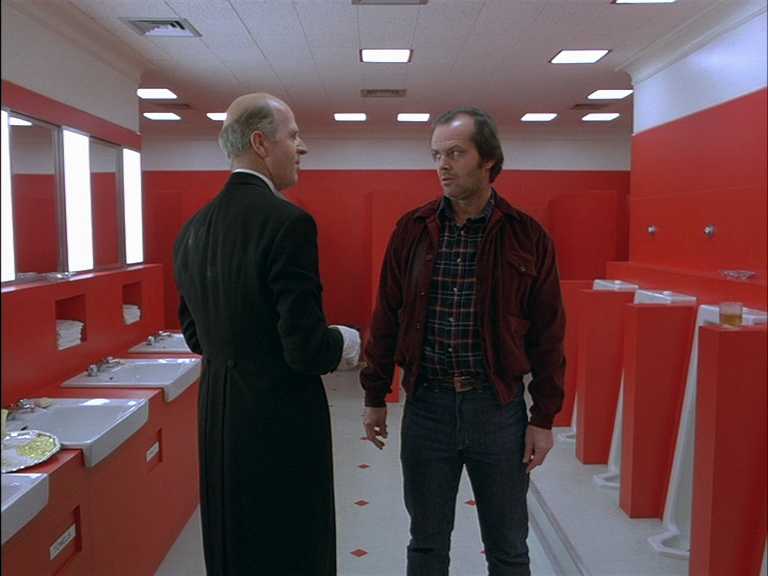
Some directors break the axis on purpose to create tension or disorientation. In The Shining (1980, Warner Bros.), Stanley Kubrick crosses the line in key moments to make scenes feel unstable. This works because the rest of the film builds strong spatial structure first. Breaking the rule without setup just looks sloppy. You need a reason.
Other Tips and Advanced Cases
In scenes with more than two characters, multiple axes can form as characters interact. Each new focus point might require a new line. To avoid confusion, always re-establish the axis before crossing it.
Also, keep in mind the 30-degree rule: when cutting between two angles of the same subject, make sure the camera moves at least 30 degrees between shots.
Otherwise, the cut feels like a jump. But even if you follow that rule, you still need to stay on the same side of the axis unless you reset it properly.
Summing Up
The axis of action is your invisible guide for keeping direction clear on screen. It keeps characters grounded, eyelines correct, and movement logical. You can cross it, but only with purpose and a plan. When used well, the axis makes your scenes feel smooth and easy to follow. When ignored, it makes your film look clumsy and confusing.
Read Next: Curious how film theory shapes the way we watch movies?
Start with the Film Theory section to break down realism, formalism, structuralism, and more — with examples from iconic films.
If you want studying film theory I recommend starting with The FilmDaft overview of film theory discourses to break down realism, formalism, structuralism, and more — with examples from iconic films.
Then explore the full Film History, Theory & Genre collection to see how movements, styles, and storytelling traditions have evolved.
Whether you’re into Soviet montage or 2000s genre mashups, there’s something here to sharpen your understanding.
