

Published: November 17, 2025 | Last Updated: December 2, 2025

What is forced perspective? Definition & Meaning
Forced perspective is a practical camera technique that creates an optical illusion to make subjects appear larger, smaller, closer, or farther away than they really are. It works by changing the distance between the camera and each subject in the frame. With careful positioning, you can make something tiny look full-size, or something big appear small. The viewer accepts the illusion because the camera flattens space into a single image.
To give you an idea about how this looks, here’s a fun video:
Even today, despite all our fancy CGI tech, this old-school in-camera technique is still used because it creates a real, shared space for actors and props. It doesn’t require green screens or digital effects, and it gives directors more control over lighting, staging, and timing on set.
How to Create Forced-Perspective Works in Practice in Film & Photography

Forced perspective is based on how our eyes judge size and distance in flat images. You can change the perceived scale of people or objects by adjusting camera distance, lens choice, and depth of field. This section explains how each part of the technique works together to sell the illusion.
Correct Placement
Start by placing the object or person you want to appear larger closer to the lens. Place the object or person meant to look smaller farther away. Frame the shot so their positions look aligned in the same plane. This hides the real distance between them.
Lens and aperture
Use a wide-angle lens to exaggerate the space between subjects. Then use a narrow aperture (like f/16) so both subjects stay sharp. This prevents the background from blurring, which would reveal the illusion.
Use Depth Cues
You also need to manage depth cues. The viewer uses light, shadow, size comparison, and focus to judge how far away something is. If the lighting on both subjects matches, and their edges are sharp, the brain will assume they’re close together, even if they’re not.
What Are Depth Cues?
Depth cues are the visual clues that help your brain judge distance in a flat image. When you look at a shot in a movie, your brain decides what’s near and what’s far based on lighting, focus, size, and more. Forced perspective works by tricking these cues.
- Relative Size: Smaller objects look farther away.
- Overlapping: If one thing covers part of another, it’s closer.
- Focus: Sharp subjects feel closer than blurry ones.
- Light and Shadow: Softer light usually means distance.
- Texture: Clearer texture feels closer.
- Perspective Lines: Lines that meet at a point show depth.
- Motion Parallax: Closer objects move faster when the camera moves.
To keep a forced perspective shot believable, you have to control these cues. If the lighting or focus gives away the real distance, the illusion won’t hold.
Camera moves are tricky
The forced-perspective illusion is fragile. When you introduce various camera moves, the angle between objects shifts, and the trick stops working. Some productions build moving platforms that track with the camera to preserve alignment in motion shots.
That’s also why it’s easier to play around with forced perspective in photography, because the camera stays still.
Try it on miniatures
Forced perspective also works with miniatures, models, and sets. A small spaceship can look massive if it’s close to the lens and filmed against the right background. The trick is to hide the true scale by flattening the distance within the frame.
Classic Film Examples
Forced perspective has been used in major films across genres, from fantasy to comedy. These examples show how filmmakers built size illusions with simple in-camera setups—no CGI required.
The Lord of the Rings (2001, New Line)
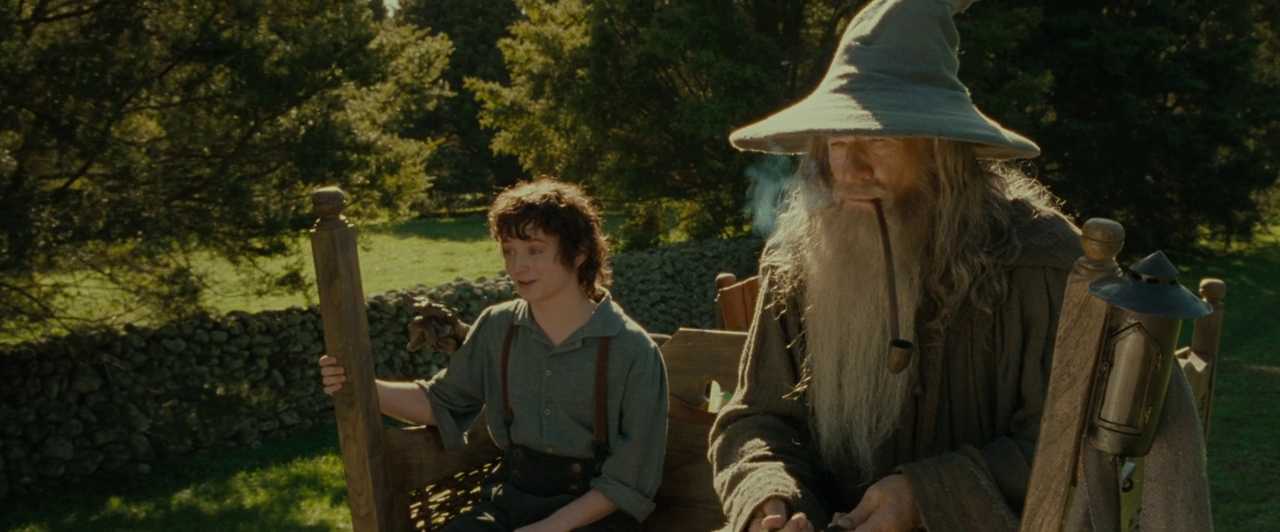
Director Peter Jackson made the Hobbits look much smaller than other characters by placing them farther from the lens and lining them up with the actors playing taller characters. Frodo and Gandalf often appeared side-by-side, even though they were sitting several feet apart.
Elf (2003, New Line)
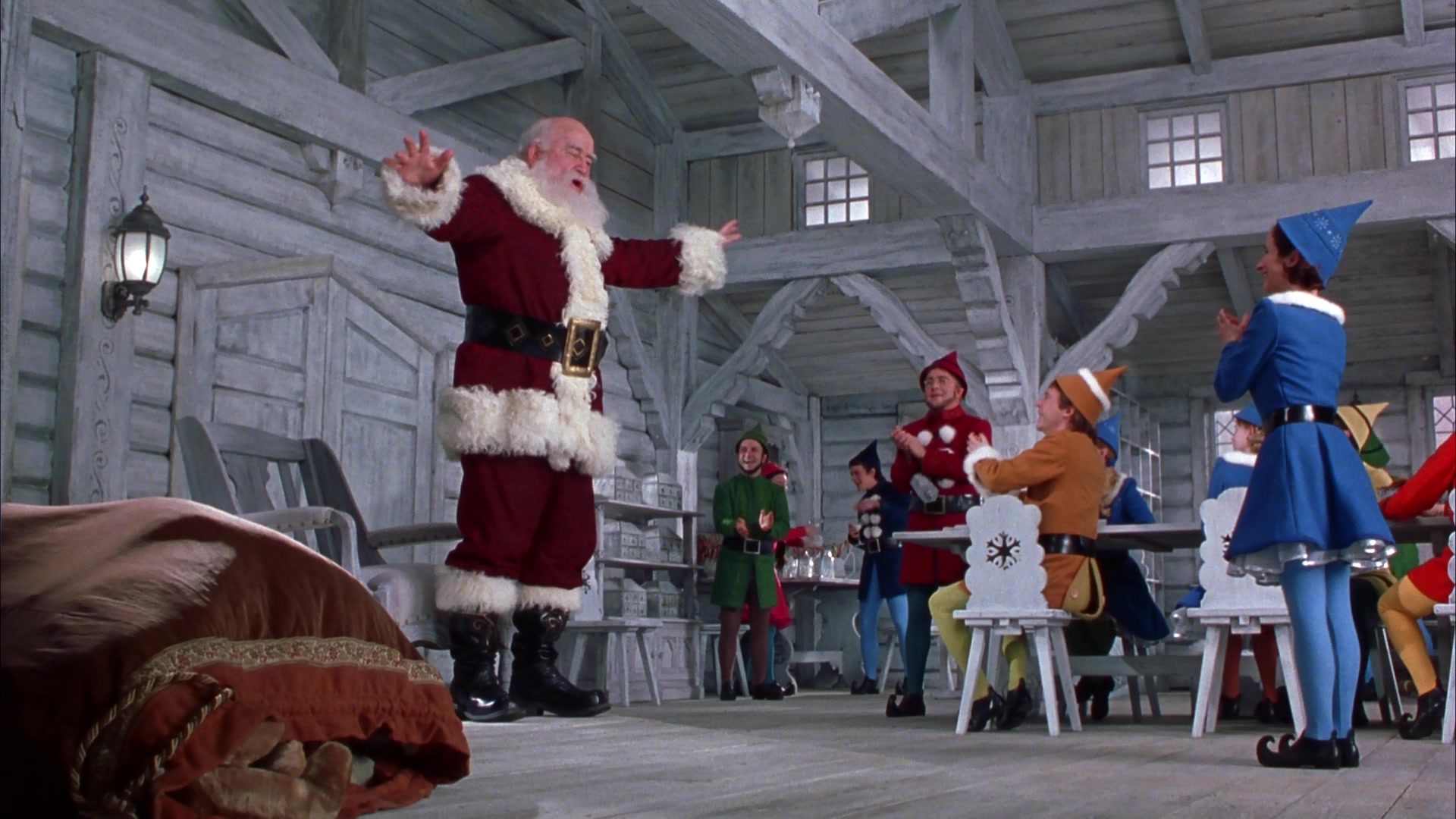
In Elf, forced perspective makes Santa and Buddy look enormous next to Santa’s helpers. Oversized props and precise placement created the illusion on set. The camera didn’t move, and background actors were carefully lit to match the foreground.
Darby O’Gill and the Little People (1959, Disney)
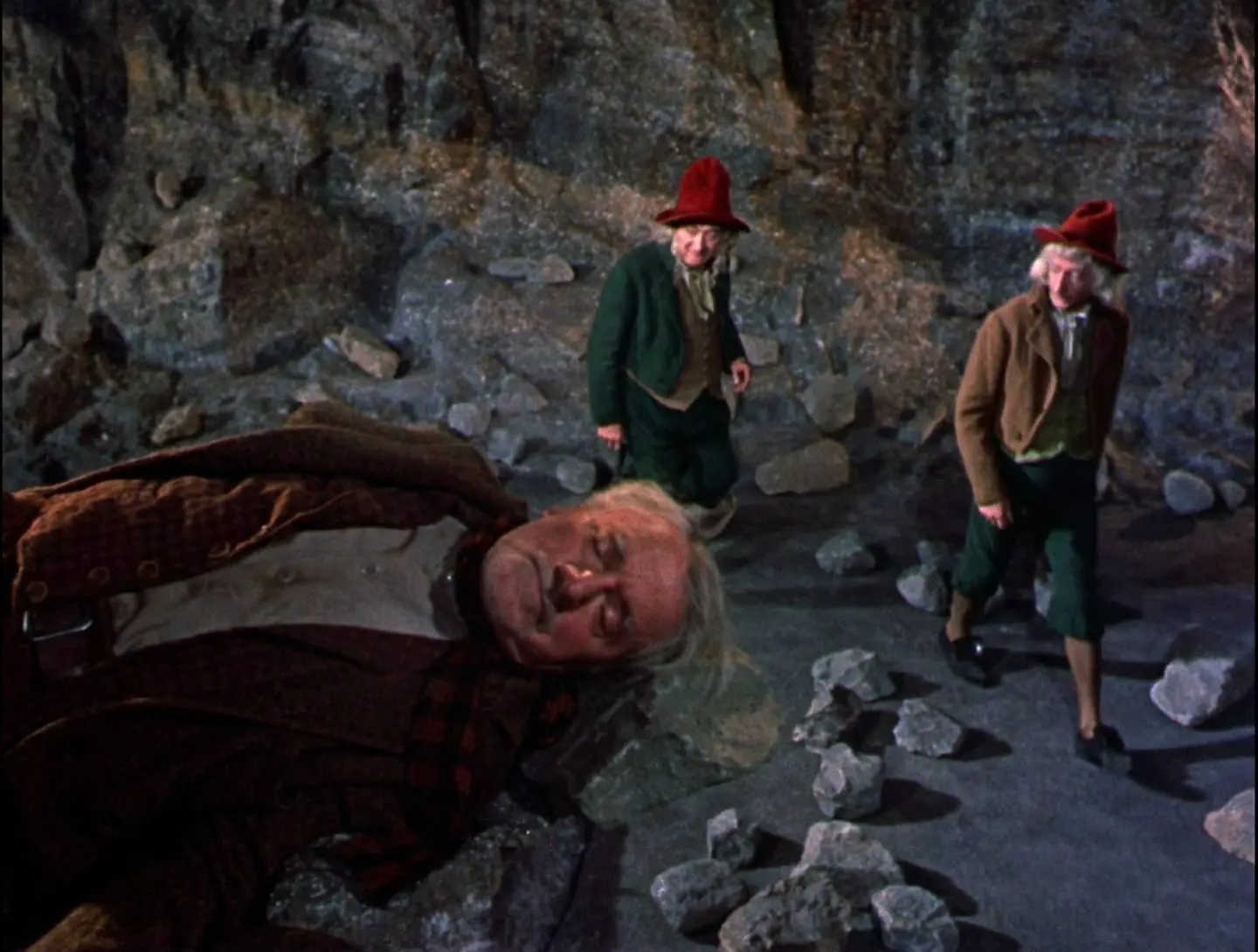
This early Disney film used platform staging and camera tricks to show human actors interacting with leprechauns. The smaller actors were filmed from a distance on raised surfaces to match the eye lines of the foreground characters.
Practical Tips for Shooting Forced Perspective
To make forced perspective work, you need to control every part of the image. Here’s what to focus on when building a shot from scratch.
- Subject placement: Put the subject you want to appear larger closer to the lens. Place the “smaller” subject farther away, but align them carefully in the frame.
- Lens choice: Use a wide-angle lens to increase depth and exaggerate the size difference.
- Aperture: Set a narrow aperture (f/11 or smaller) so both near and far subjects stay sharp.
- Lighting: Make sure both subjects are lit evenly to avoid depth-revealing shadows.
- Camera movement: Keep the camera locked, unless everything in the scene is mounted to move with it.
Summing Up
Forced perspective lets you change how big or small things look by shifting the camera and subjects. It works by controlling distance, lens distortion, and depth cues to create a single, flat illusion. You can use it with people, props, or miniatures. When done well, it’s a simple way to create surreal or fantasy scenes without relying on post-production effects.
Read Next: Want to improve how you shoot and move the camera?
Explore all shooting techniques — from handheld and Steadicam to whip pans, slow motion, and continuous takes.
Or head back to the Cinematography section for lighting, lenses, framing, and more visual tools.
