

Published: June 12, 2024 | Last Updated: July 26, 2025

What is Celluloid film? Definition & Meaning
Celluloid film is a type of early plastic used to make motion picture film. Invented in the late 19th century, it consists of a thin strip of transparent material coated with light-sensitive chemicals. When exposed to light through a camera, it captures images, creating a sequence of pictures that can be played back as a movie. Although highly flammable, celluloid was widely used before safer materials were developed.
Celluloid film revolutionized the film industry by enabling the creation of motion pictures. Before its invention, early attempts at capturing motion, such as zoetropes and phenakistoscopes, were limited to short, repetitive loops of images.
The introduction of celluloid film allowed for longer, continuous sequences to be recorded and projected, marking the birth of modern cinema.
One of the earliest and most famous uses of celluloid film was by the Lumière brothers in their Cinematograph. Their short film, L’Arrivée d’un train en gare de La Ciotat (1895), is often cited as one of the first public exhibitions of motion pictures, showing the potential of this new medium.
Directors like Christopher Nolan, Quentin Tarantino, and Paul Thomas Anderson prefer celluloid film’s texture, film grain, and color rendition.
Celluloid has a certain organic quality that some feel digital cannot replicate, and they often advocate for its continued use.
Composition and Structure
Celluloid film, primarily made from cellulose nitrate, was first introduced in the late 19th century. Cellulose nitrate is derived from cellulose, a natural polymer found in plant cell walls, and treated with nitric acid to form a highly flammable compound. This material was chosen for its clarity and flexibility, making it suitable for capturing and projecting moving images.
In the 1950s, cellulose acetate replaced cellulose nitrate due to its non-flammability and increased safety. Cellulose acetate, also known as “safety film,” retains properties similar to its predecessor but with reduced risks of fire and degradation.
Technical Details

Film Gauge: Celluloid film comes in various gauges or widths, with 35mm being the industry standard for theatrical releases. Other gauges, such as 16mm and 8mm, are used as an aesthetic choice today.
Read more in What is Film Gauge?
Emulsion Layers: The film’s surface is coated with multiple emulsion layers containing light-sensitive silver halide crystals. When exposed to light, these crystals undergo a chemical reaction that forms a latent image, which is later developed into a visible picture using a series of chemical baths.
Perforations: To ensure smooth transport through cameras and projectors, celluloid film is punctuated with perforations along its edges. These sprocket holes align with corresponding pins in the equipment, maintaining consistent frame alignment and preventing slippage.
Preservation and Challenges
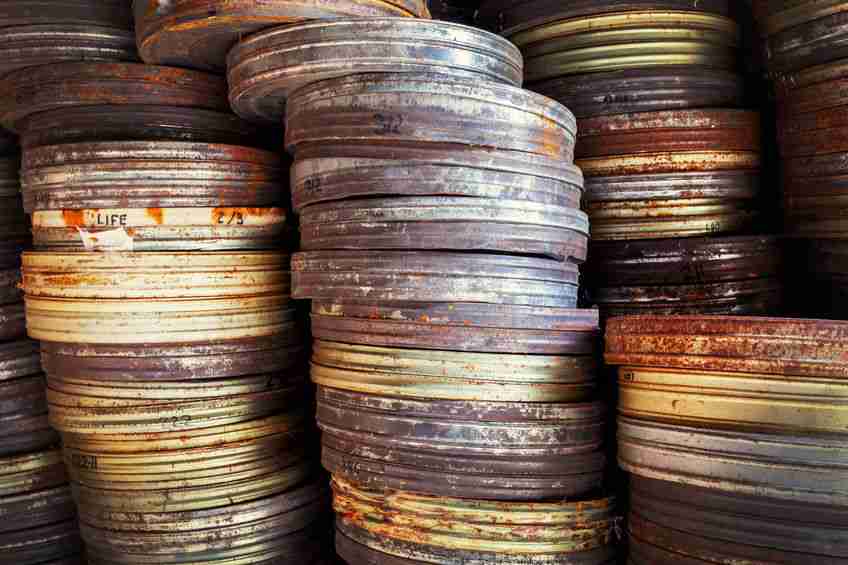
While celluloid film is celebrated for its historical and artistic value, it presents significant preservation challenges. Cellulose nitrate is highly flammable and deteriorates over time, leading to “nitrate film decay.” Cellulose acetate is more stable but still susceptible to “vinegar syndrome,” a condition where the film base emits acetic acid, causing the film to become brittle and shrink.
Efforts to preserve celluloid films include transferring them to digital formats and storing them in climate-controlled archives. Organizations like the Library of Congress and the Academy Film Archive play crucial roles in these preservation endeavors.
Closing Summary
Celluloid film has played an indispensable role in the evolution of cinema, offering a unique combination of aesthetic qualities and technical capabilities that have shaped the art form.
Read Next: When Was the First Video Camera Invented?
