

Published: December 11, 2025

What are Microphone polar patterns? Definition & Meaning
Microphone polar patterns (aka pick-up patterns) are the directional shapes that show how a microphone picks up sound from different angles around its capsule, which helps you choose the right mic type and placement for cleaner dialogue, controlled ambience, and better separation on set.
When you record film sound, you rarely get a perfect room. You deal with reflections, crew noise, traffic, and actors who move. Microphone polar patterns give you a simple way to predict what a mic will prioritize and what it will capture less from the sides or rear. If you want the bigger umbrella view of where this topic fits, start with Sound, Audio & Music.
Why polar patterns matter for film sound
Directionality gives you control in real locations. The right pattern helps your boom or lav keep the actor’s voice louder than the room and the environment. This supports your wider sound design choices later because cleaner production tracks give you more options in post.
- Cleaner dialogue because the mic favors the actor’s position.
- Lower room noise because some patterns reduce side pickup.
- Better separation when two voices share the same space.
- More consistent edits because you can match sound across angles and takes.
How to read a polar pattern chart
A polar chart is a circle that maps sensitivity around a microphone. The front is usually 0 degrees. The back is 180 degrees. The closer the line is to the outer edge, the more sensitive the mic is in that direction.

Use the chart to plan your aim and your noise control. Then confirm the result in the real room. Hard walls can bounce sound into the mic from unexpected angles, so a perfect chart can still produce a messy take if placement is wrong. When you want to reduce unpredictable location noise, a controlled space like a soundstage can make these choices easier.
Polar patterns change with frequency
Polar charts often show clean shapes, but real microphones can behave differently at low and high frequencies. You will notice this most with shotgun microphones.
A shotgun uses an interference tube that creates stronger forward focus at mid and high frequencies. Low frequencies remain less controlled. This is why a shotgun often sounds controlled outside, but less natural in a small reflective room. If you want a practical overview of how you use these mics with boom poles, read What Is a Shotgun Microphone?.
The main microphone polar patterns
Most film setups rely on a few core patterns. Each pattern solves a specific problem related to distance, movement, reflections, or background noise.
Omnidirectional (omni)

The omnidirectional pattern picks up sound from all directions. It can sound open and natural. It also requires close placement when the location is noisy.
- How you use it: Place an omni lavalier close to the actor’s chest. The short distance keeps the voice strong even with wide pickup.
- Where it shines: Hidden lav work, wardrobe rigs, and controlled interiors.
- Watch out for: Extra room tone and environmental noise when the mic is far from the voice.
If you need practical concealment methods for your wardrobe, see 5 Inexpensive Ways to Hide Your Lavalier Microphone Under Clothes.
Cardioid
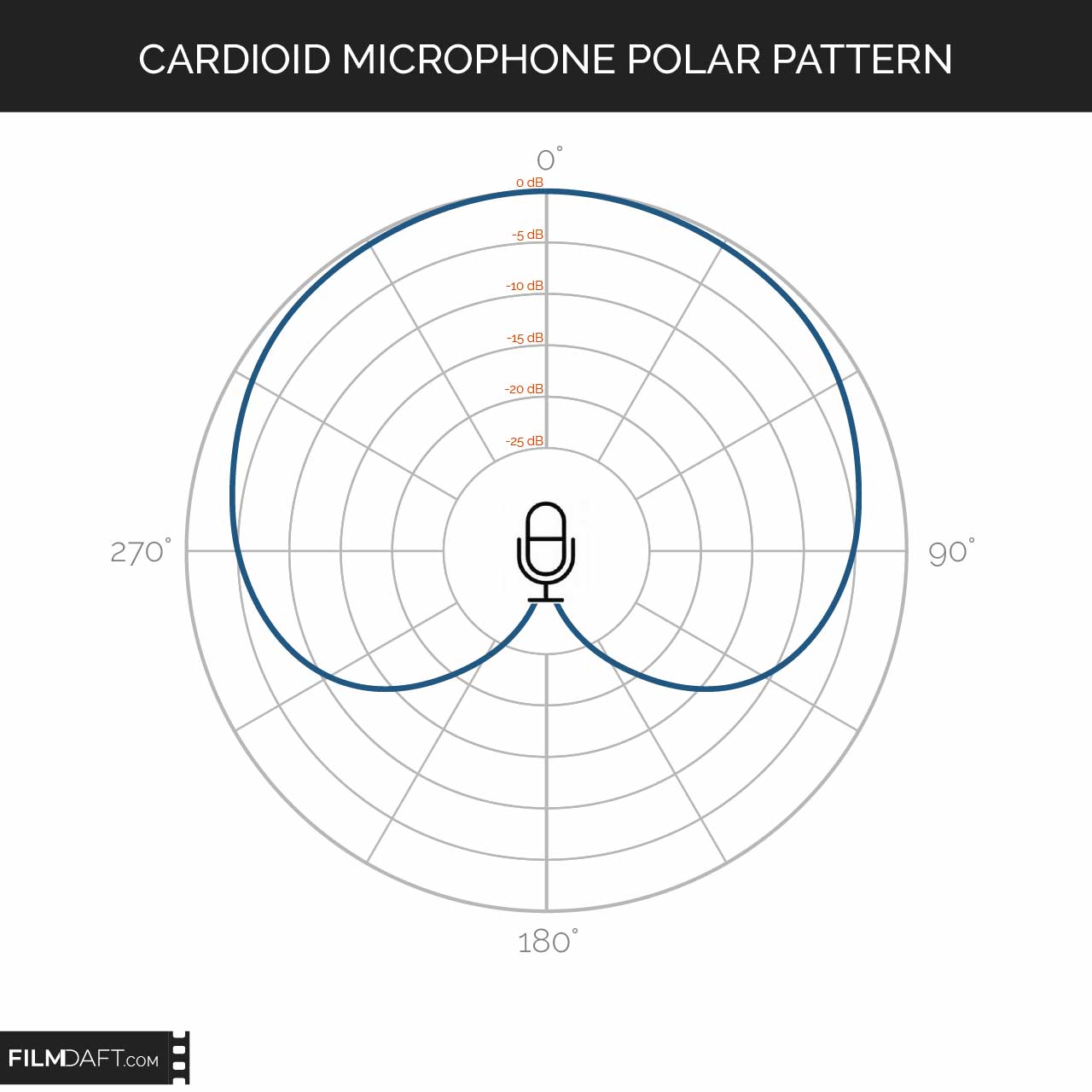
The cardioid pattern favors sound from the front and reduces sound from the rear. It is a strong everyday choice when you want focus without losing all sense of space.
- How you use it: Aim the mic toward the actor’s mouth and keep it just out of frame on a boom.
- Where it shines: Indoor boom dialogue, interviews, and voiceover.
- Watch out for: Side reflections in tight rooms. A better angle can matter more than a different mic.
Wide cardioid and subcardioid
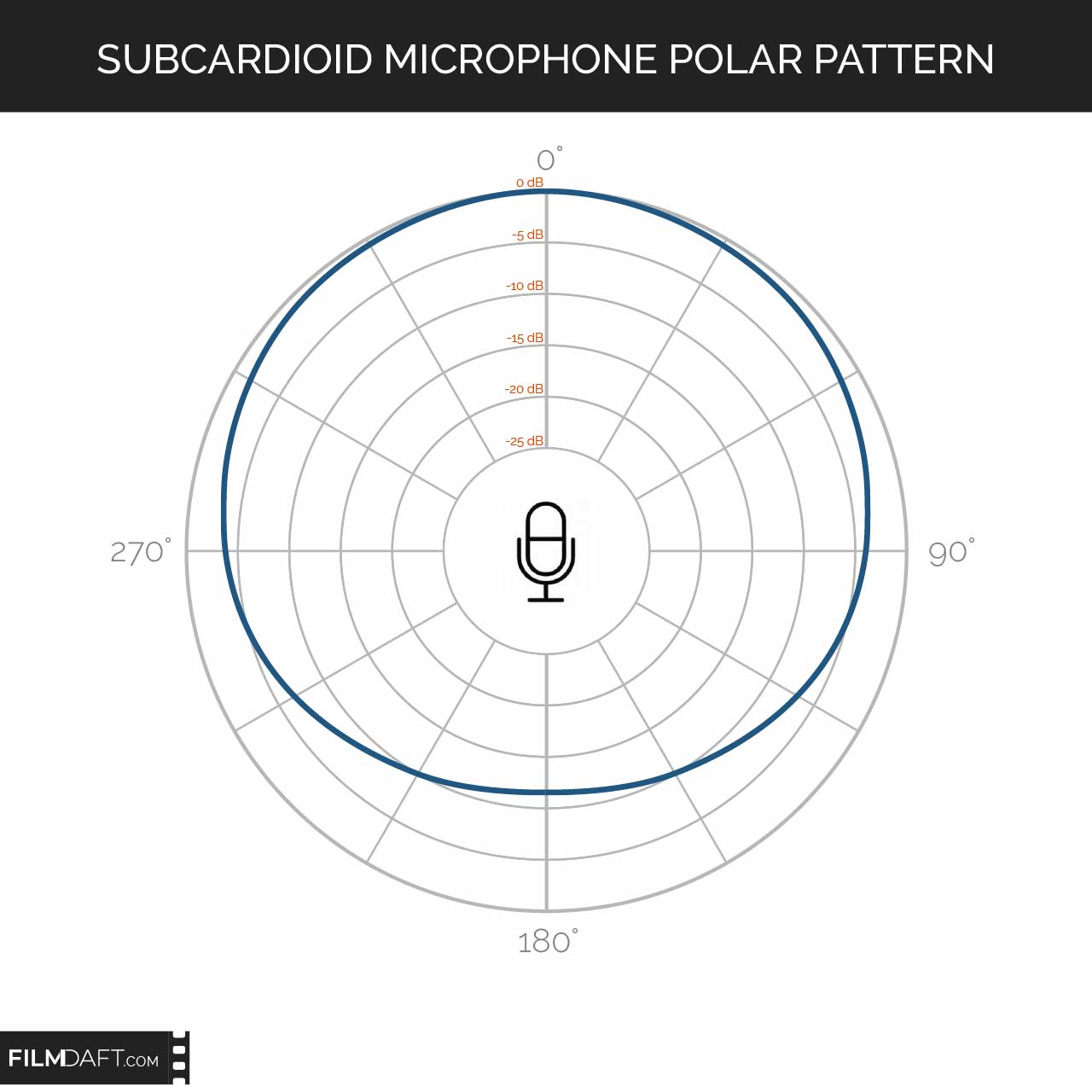
Wide cardioid and subcardioid patterns sit between omni and cardioid. They can keep dialogue more even when an actor leans, turns slightly, or misses a mark in a quiet interior.
- How you use it: Use this option when a standard cardioid feels too tight for movement.
- Where it shines: Soft dialogue scenes and controlled documentary setups.
Supercardioid
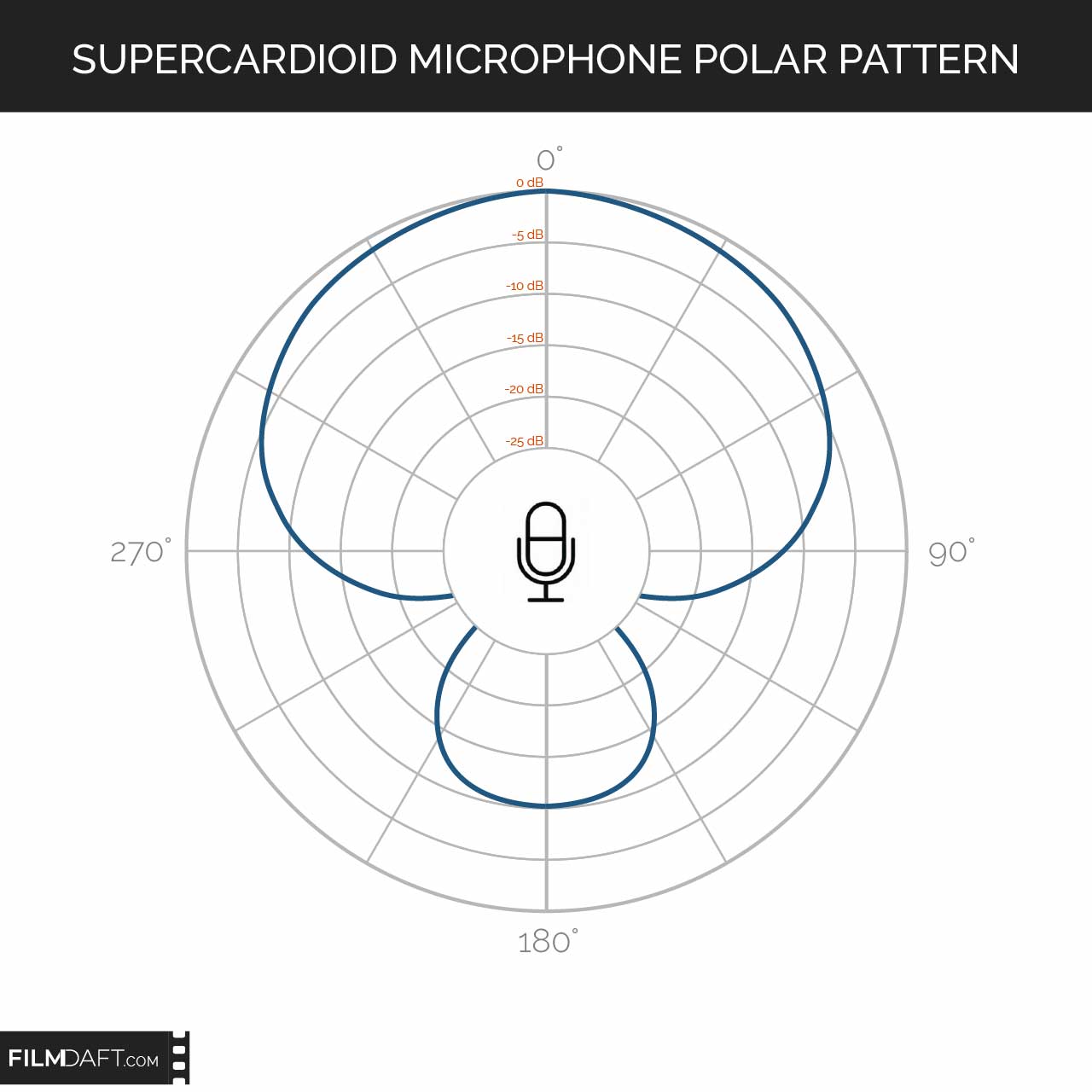
The supercardioid pattern narrows the front pickup and rejects more from the sides. It also has a small rear lobe.
- How you use it: Choose for most interior dialogue. Aim carefully and keep the rear of the mic away from a loud wall or crew cluster.
- Where it shines: Many indoor locations with moderate noise.
- Watch out for: The rear lobe that can catch a reflecting wall or an off-camera device.
Hypercardioid
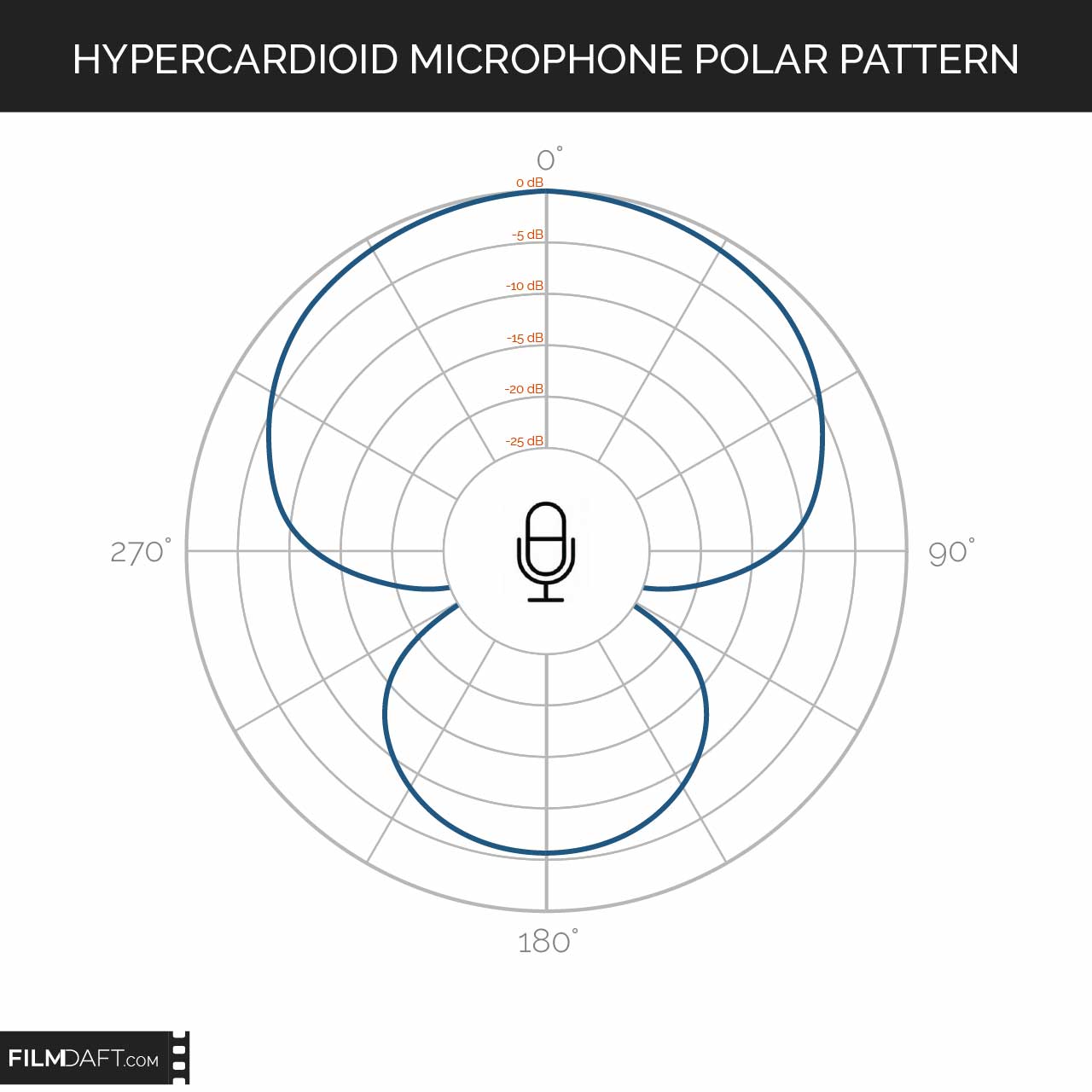
The hypercardioid pattern is even tighter in front than supercardioid. It often has a stronger rear lobe.
- How you use it: Use in small, reflective rooms such as kitchens or hallways where side reflections are harsh.
- Where it shines: Difficult interiors and cramped sets.
- Watch out for: Rear pickup. Point the back toward something quiet or acoustically soft.
Figure-8 (bidirectional)
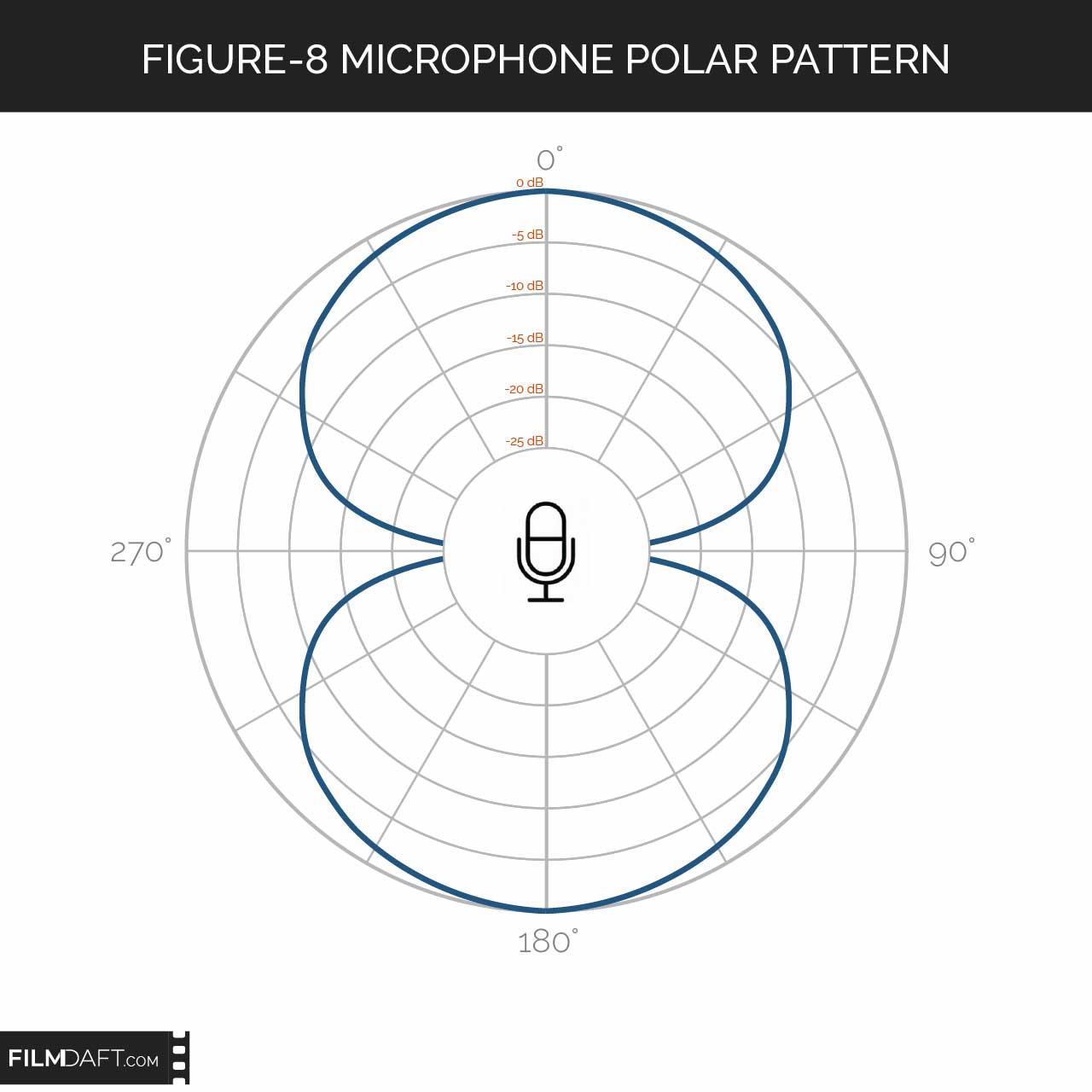
The figure-8 pattern picks up sound from the front and back and rejects the sides. Its deep side null points can reduce a noise source that sits to the left or right of the mic.
- How you use it: Place one mic between two speakers across a table. Each voice sits on the front and rear axis.
- Where it shines: Controlled interviews and studio dialogue tests.
- Watch out for: Loud sound directly behind the mic because the back pickup is part of the pattern.
Lobar (shotgun-style pattern)
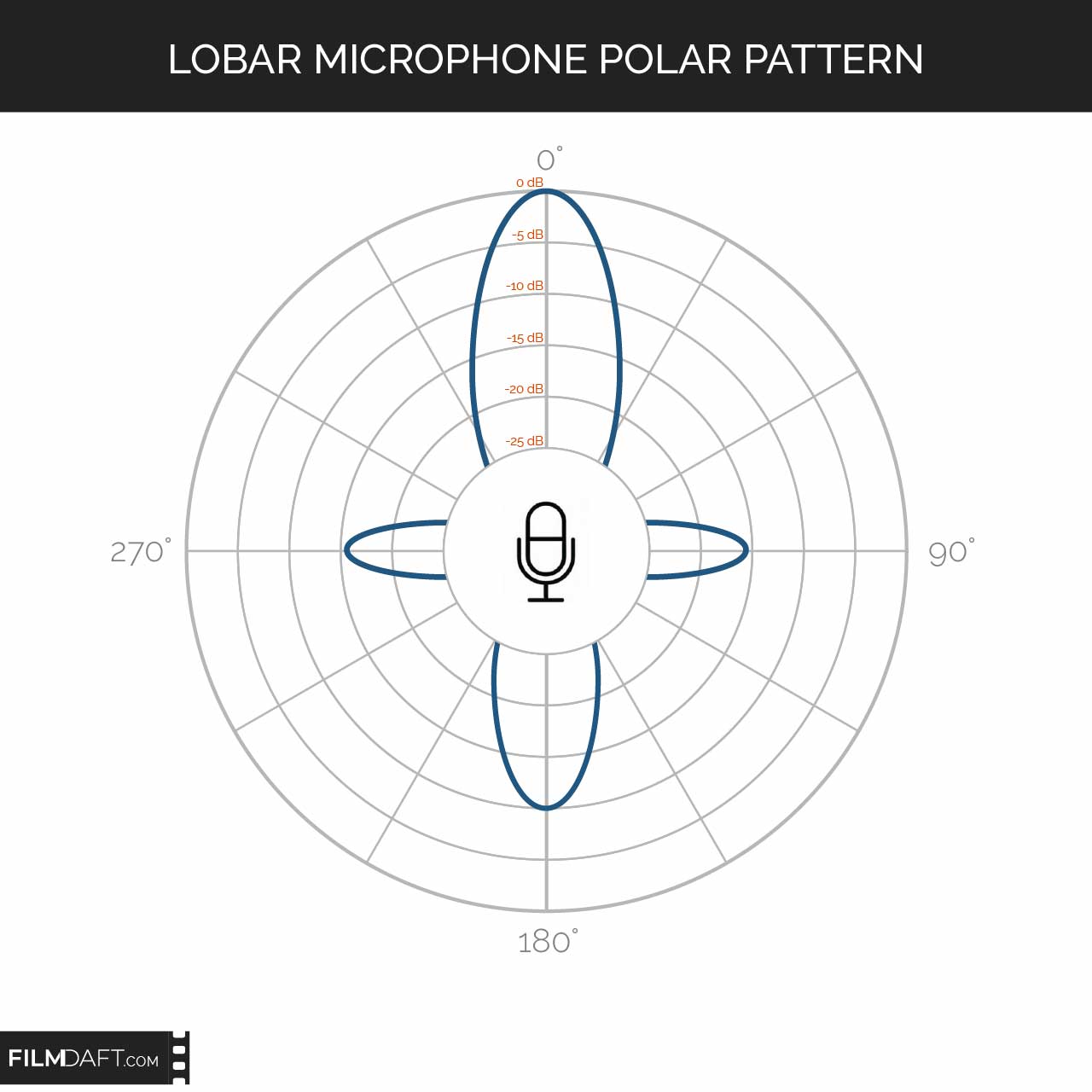
Many shotgun microphones create a lobar response. This gives strong forward focus at mid and high frequencies, which helps you cut through exterior noise.
- How you use it: Boom a shotgun outside and aim at the actor’s upper chest or mouth.
- Where it shines: Outdoor scenes, large spaces, and run-and-gun setups.
- Watch out for: Small reflective rooms where the interference tube can interact with reflections and reduce clarity.
In this video, you can hear examples of each polar pattern type:
Proximity effect and why it matters
Pattern choice also affects tone. You may notice extra bass when you move a directional mic closer to the actor.
Proximity effect is a low-frequency boost that appears with directional patterns at close distances. Omni microphones do not show this effect in the same way. Patterns closer to figure-8 behavior often show stronger bass buildup.
- How you use it: Keep a consistent boom distance across takes so the voice stays even in close-ups and wide angles. If you want that deep, warm podcast or broadcast radio voice, get very close to the mic.
- What to watch for: A voice that sounds fuller in one take and thinner in the next, even though the performance is the same.
Choosing the right pattern for common film setups
You can make fast choices if you match the pattern to the space and your working distance. Your priority is a strong voice-to-noise ratio.
Interior boom dialogue

Indoor rooms often create reflections that soften consonants and add unwanted room tone. That is why narrower patterns are common for interior boom work. The person who manages these decisions in real time is often the boom operator.
- Best starting point: Supercardioid.
- If the room is very tight or reflective: Hypercardioid.
- If the room is quiet and you want natural space: Cardioid or wide cardioid.
Exterior dialogue with traffic or crowds
Outdoor locations add traffic, wind, and distant voices that you cannot control. A tighter forward pickup helps you keep the actor’s voice louder than the environment.
- Best starting point: Shotgun on a boom.
- Backup plan: Omni lavaliers on talent for stable close sound.
Lavalier placement

Lav work depends on stable levels during movement and head turns. A wide pattern often helps you avoid sudden changes when the mic shifts under clothing.
- Best starting point: Omni lavalier for most dialogue scenes.
- When a directional lav can help: A controlled setup with secure placement and minimal wardrobe movement.
Two speakers in a controlled sit-down
A sit-down interview can benefit from strong side rejection. You can use a pattern with clear null points to reduce off-camera noise.
- Best starting point: Figure-8 in a quiet or treated room.
- Alternative: Two cardioid mics, each aimed at one speaker.
Room tone and ambience

When you need the space itself, a wider pickup gives you steadier room tone that you can lay under dialogue in post. This supports the realistic layer of diegetic sound you build across a scene.
- Best starting point: Omni placed at ear height in a neutral position.
- Consistency tip: Record room tone after each major blocking or location change.
Common polar pattern mistakes
Most issues come from trusting the pattern more than the room. A smart pattern choice still needs smart placement.
- Using a shotgun in a tiny reflective room: Switch to a supercardioid or hypercardioid boom mic.
- Forgetting rear lobes: Keep the back of a supercardioid or hypercardioid away from loud sources.
- Relying on pattern instead of distance: A closer mic almost always beats a different pattern.
- Ignoring off-axis tone: Re-aim the boom when an actor drifts off-axis during blocking.
Quick reference guide

This overview helps you pick a pattern quickly during prep or a tight shoot day.
| Pattern | Main strength | Best use on set | Main risk |
|---|---|---|---|
| Omni | Natural pickup, stable with movement | Lavaliers, ambience, quiet interiors | More room and background noise at distance |
| Wide cardioid | Gentle direction with natural space | Quiet interiors with mild movement | Less rejection than cardioid |
| Cardioid | Balanced focus and room | Indoor boom, interviews | Side reflections in tight rooms |
| Supercardioid | Narrow front with useful side rejection | Most interior dialogue | Rear lobe pickup |
| Hypercardioid | Tight front for difficult rooms | Reflective interiors, cramped sets | Stronger rear lobe |
| Figure-8 | Deep side null points | Two-person controlled setups | Front and back pickup zones |
| Lobar (shotgun) | Forward focus at mid and high frequencies | Exterior boom dialogue | Reduced clarity in small reflective rooms |
Summing Up
Microphone polar patterns show you how a mic captures sound around its capsule. When you understand these shapes, you can match the right microphone to the right location and place it with intention. Omni lavaliers offer stable dialogue during movement. Cardioid, supercardioid, and hypercardioid patterns help you control indoor reflections on a boom. Shotgun mics with a lobar response often help outside. Figure-8 patterns can solve specific controlled setups with strong side rejection. Good placement still matters most, but pattern knowledge lets you make faster sound decisions and supports cleaner results for Foley and the rest of your post workflow.
Read Next: Want better audio in your film or video projects?
Explore techniques, tools, and workflows in the Sound, Audio & Music section for filmmakers.
From voice recording and field audio to scoring and mixing—this is where sound gets cinematic.
