

Published: February 27, 2026 | Last Updated: March 5, 2026

Overview
Marxist film theory studies how films represent class power, labor, ownership, and ideology, and how those ideas become convincing through film form (Wayne 2020). In this approach, a movie is not only a story. It is also a cultural product made inside real institutions, real markets, and real social hierarchies (Marx [1867] 2004).
The central question is straightforward: what does the film train the spectator to treat as normal about work, money, and power? Students encounter Marxist film theory because it gives a repeatable method. You can start from what is visible and audible in a scene, then explain how the construction of the scene supports a claim about class relations. If you want the larger map of where this approach sits among other university frameworks, see our guide to film theory.
What is Marxist film theory as a framework in film studies? Definition & Meaning
In film studies, Marxist film theory is a framework for connecting what a film shows to the social relations that produced it, especially relations between owners and workers. The theory does not claim that every shot “comes from the economy” in a simple way. It claims that cinema circulates inside class society, so films often carry assumptions about who deserves comfort, who is disposable, and what kinds of authority feel legitimate (Adorno and Horkheimer [1944] 2002; Wayne 2020).
This framework also explains ideology as something lived and practiced, not only something stated. In Althusser’s account, ideology has a material life inside institutions and routines that “hail” people into roles, such as worker, consumer, student, citizen, or criminal (Althusser [1970] 2001). In film analysis, ideology becomes visible when a story treats one set of options as “realistic,” rewards certain values with safety and status, and frames other values as childish, dangerous, or impossible.
Marxist film theory is strongest when it is clear about evidence. Evidence can include dialogue and plot, but it should also include patterns you can point to in the film’s construction. That means mise-en-scène, framing, editing rhythm, sound emphasis, performance style, and the way a film organizes space and time (Comolli and Narboni 1971; Baudry 1974). When a Marxist reading works, it does not float above the movie. It stays tied to what the spectator can observe.
This also clarifies scope and limits. Marxist film theory can analyze films that critique capitalism, but it can also analyze films that romanticize it. It can study realism, but it does not require realism. It can overlap with apparatus theory when a reading needs a tight account of how the spectator is positioned by cinema as a viewing system (Baudry 1974). Marxist analysis usually extends the question outward to class relations, ownership, and institutions.
Historical Background
Marxist approaches begin with Karl Marx (1818–1883), a German thinker who analyzed capitalism as a system where labor produces value that owners can capture and accumulate (Marx [1867] 2004). That basic account is useful for film because cinema repeatedly stages work, status, and consumption. Even films that avoid explicit politics often build a “common sense” picture of what people owe each other, what people can afford, and who gets protected.
In the twentieth century, Marxist thought about culture expanded in several directions. In the Soviet context, filmmakers and theorists linked montage to dialectical thinking, where meaning is produced through conflict and collision rather than smooth continuity (Eisenstein [1949] 1969). In Western Europe, the Frankfurt School argued that mass cultural production can turn art into standardized commodities and train habits of conformity, even when products feel entertaining (Adorno and Horkheimer [1944] 2002).
After 1968, Marxist film theory became central to academic film studies through debates about ideology and criticism. A landmark is Comolli and Narboni’s “Cinema/Ideology/Criticism,” published in Screen, which argues that films can reproduce ideology in their very forms, not only in their messages (Comolli and Narboni 1971). For the peer-reviewed record, see Oxford Academic’s Screen entry. In the same period, film theory drew on Althusser’s account of ideology and institutions, which helped scholars describe how cinema can “hail” spectators into social roles (Althusser [1970] 2001).
Political filmmaking debates also expanded beyond Europe. The manifesto “Towards a Third Cinema” framed filmmaking as part of anti-imperialist struggle, and it treated cinema as organization, not only representation (Solanas and Getino 2021). Later Marxist criticism added new tools for modern media. Walter Benjamin’s essay on mechanical reproduction explains how reproducible media change ideas of aura, authenticity, and political perception (Benjamin [1936] 1969). Fredric Jameson’s writing on mass culture and film is often assigned because it shows how a cultural text can contain both ideology and utopian wish, even when it looks fully commercial (Jameson 1979; Jameson 1992).
Core Mechanism: How the Theory Works
Marxist film theory becomes practical when you treat it as a sequence of analytic moves. The first move is to describe the film’s material relations. Who owns property, tools, and private space? Who must sell labor, take orders, or compete for survival? The film may never say “capitalism,” but it can still build a complete model of class power through routines and access. Social space matters here, so the analysis should pay attention to homes, workplaces, thresholds, and the difference between public exposure and private protection. Our guide to setting is useful for turning social environment into concrete evidence.
The second move is to show how the film organizes attention and sympathy through form. Films can make wealth look calm and “deserved” through controlled lighting, stable camera placement, and comfortable spatial composition. Films can make working-class life feel like constant pressure through tight spaces, noise, and time stress. These are not fixed rules. They are choices that you should test by looking for repetition and consistency across the film (Wayne 2020). If you need a clean way to separate the film’s overall structure from its technique patterns, see film form vs film style.
The third move is to track ideology as what the story treats as “realistic.” This is where Althusser’s idea of institutions matters. Schools, workplaces, the police, the media, and the family can function as systems that teach people how to behave, what to desire, and what to fear (Althusser [1970] 2001). In a film, ideology becomes visible when characters internalize those lessons, and when the narrative punishes them for stepping outside their assigned role.
The fourth move is to identify how the film treats objects and consumption. Marx’s concept of commodity fetishism describes a system where social relations between people can appear as relations between things, so objects seem to carry value and meaning on their own (Marx [1867] 2004). In film, commodity logic often shows up as fetish framing of goods, identity built through products, and desire attached to objects more than to social bonds. Jameson’s concept of reification helps at this stage, because it names the process where complex social relations get flattened into “things” that feel natural and unchangeable (Jameson 1979).
The fifth move is to test contradiction. Marxist readings often focus on moments where a film’s stated moral and its aesthetic pleasure do not match. A film can criticize greed while still making luxury look exhilarating. A film can claim to value freedom while building every major scene around discipline, surveillance, and time pressure. When you can show that mismatch through repeated formal patterns, the analysis stops being a slogan and becomes a scene-based argument (Comolli and Narboni 1971).
What to Look For (Checklist Section)
The checklist below is built for scene work. Use it when you take notes. Each item is something you can observe without guessing the filmmaker’s intentions.
- Work routines: what labor looks like on screen, how the body is used, and whether exhaustion is treated as normal.
- Ownership signals: who controls property, tools, information, and access to private space.
- Classed space: doors, gates, security, elevators, stairs, and who gets quiet, clean, protected environments.
- Time discipline: clocks, deadlines, quotas, and how editing rhythm makes pressure feel constant.
- Institutional hailing: moments where school, work, law, or media “calls” a character into a role (Althusser [1970] 2001).
- Commodity identity: when objects and brands stand in for personality, taste, or virtue (Marx [1867] 2004).
- Respectability tests: dress codes, speech registers, etiquette, and “professionalism” used to decide who belongs.
- Contradictions: scenes where the film condemns an action in words but rewards it with excitement, music, or glamour.
After the list, turn notes into analysis by selecting two recurring patterns and proving them. For example, you can track how the same kind of space is always shot with the same framing logic, or how certain objects always get special emphasis. If you need a precise term for how details carry social meaning beyond their literal function, connotation gives you that vocabulary.
Micro-Analysis
This micro-analysis uses Modern Times (1936) because it makes class power visible through rhythm, space, and bodily discipline. The film’s comedy is a useful teaching case because it exaggerates mechanisms that many films hide behind “normal life.”
In the factory sequence, the assembly line sets the tempo for the scene. The camera repeatedly returns to the conveyor belt and to the worker’s small, repeated gesture. The staging makes the spectator feel that the job does not require thought or creativity. It requires submission to pace. That is a scene-level way of showing labor as fragmented and controlled, which is central to Marx’s analysis of capitalist production (Marx [1867] 2004).
Authority also enters the scene through surveillance. The boss appears through screens and interruptions, which means control does not need to share space with the worker to be effective. The film builds a hierarchy where management can see and intervene, while workers cannot control the system that controls them. The result is a clear image of loss of control over work conditions, work pace, and even bodily autonomy, which is a core Marxist problem in the analysis of labor under capitalism (Marx [1867] 2004; Wayne 2020).
Editing reinforces the argument by trapping the spectator in repetition. Cuts return to the same layout and the same tempo until the worker’s body begins to carry the rhythm outside the task. The joke works because the film has already established the mechanism. The line trains the body. The worker is treated as an attachment to a machine. A Marxist reading can therefore make a precise claim: the scene uses rhythm, surveillance, and repetition to present industrial labor as a system that disciplines bodies for production while keeping power remote and protected.
Additional Film Examples
The Grapes of Wrath (1940) invites Marxist analysis because the story repeatedly frames poverty as a consequence of institutions and ownership, not personal failure. The key is to stay with evidence. Track how the film stages law and authority around migrants, how property owners and deputies control movement, and how the camera treats crowding, waiting, and displacement as normal conditions of working-class life. The result is a class analysis built from space, access, and pressure, not only from sympathy.

Parasite (2019) makes class readable through vertical space and threshold control. The semi-basement home, the stair climbs, and the gated modern house create a spatial hierarchy that the film repeats until it feels like a physical law. A Marxist reading becomes sharp when it explains how that space trains the spectator’s sense of who belongs where, and how quickly “service” can turn into humiliation and risk. This is also where debates about authenticity can matter, because the film’s detailed spaces can feel like social truth even though they are carefully designed constructions (Benjamin [1936] 1969).
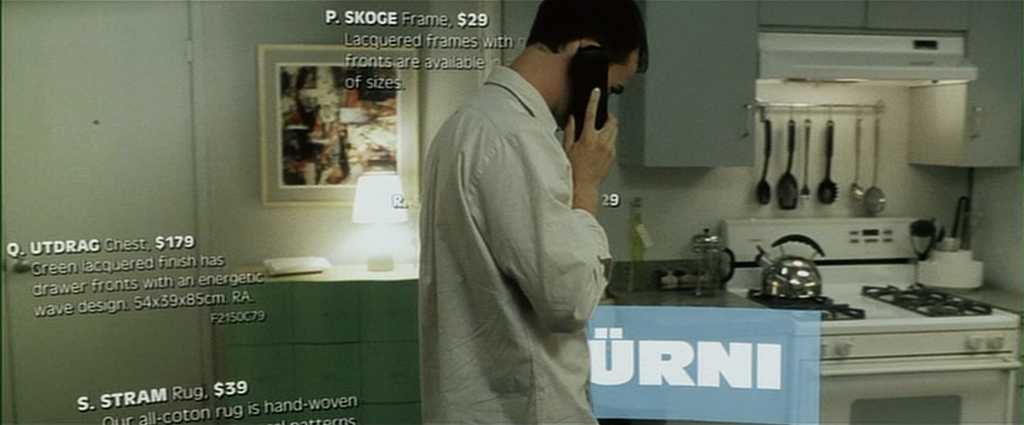
Fight Club (1999) is useful for showing how critique can circulate as a commodity. The film mocks consumer identity through repeated attention to products, catalogs, and lifestyle assembly, but it also sells rebellion as a look, a tone, and a spectacle. A Marxist reading can hold that contradiction by asking what the film condemns in dialogue and what it rewards with cinematic excitement, such as speed, music, and iconography (Jameson 1979; Wayne 2020). Genre expectations also matter here, because the film uses familiar patterns of escalation and transgression to keep the spectator engaged. Our guide to genre helps explain how those expectations can carry ideology through pleasure (Neale 2000).
Common Misconceptions
One misconception is that Marxist film theory is a shortcut to a moral judgment. A sentence like “this film is about capitalism” is not an argument. Marxist analysis still needs proof, and proof in film usually comes from patterns of form, not only from dialogue. If you cannot point to recurring choices in staging, framing, and narrative reward, the reading stays at the level of opinion (Comolli and Narboni 1971; Wayne 2020).
Another misconception is that Marxist analysis ignores aesthetics. Many major Marxist and Marxist-adjacent thinkers treat form as central. Benjamin’s writing on reproducible media is partly about perception and attention, not only about politics (Benjamin [1936] 1969). Film theory work that focuses on spectatorship and ideology also argues that cinematic systems can produce ideological effects through the organization of vision and identification (Baudry 1974).
A third misconception is that Marxist reading only applies to “poor people movies.” The framework also applies to luxury and success, especially when wealth is filmed as calm, tasteful, and deserved. This is why Marxist readings often focus on objects, surfaces, and the moral meanings attached to consumption (Marx [1867] 2004; Jameson 1979). If a character’s identity is built from what they own, then characterization becomes part of ideology critique, because desire and self-image become social lessons.
Key Debates and Scholarly Criticism
A major debate is the charge of reductionism. Some critics argue that Marxist readings can turn every aesthetic detail into a simple reflection of the economy, which can flatten historical differences and artistic variation. Many Marxist film scholars answer this by stressing mediation. Film form is not a direct mirror of the economy, but it is still made inside institutions, ownership structures, and labor relations that leave visible traces in genre, style, and narrative logic (Wayne 2020).
A second debate concerns spectatorship and the risk of treating the spectator as automatically “captured.” The Screen-era emphasis on ideology and viewing systems helped scholars describe how cinema can naturalize social assumptions (Comolli and Narboni 1971). Critics later argued that this model can underestimate pleasure, contradiction, and the fact that audiences can interpret against a film’s preferred meaning. This debate sits close to apparatus theory and the claim that cinema’s basic setup can carry ideological effects, even when a film appears critical (Baudry 1974).
A third debate focuses on political filmmaking and infrastructure. Third Cinema theory treats filmmaking as part of a struggle, but it also raises questions about distribution, censorship, and access to audiences outside commercial channels (Solanas and Getino 2021). Contemporary work on media labor extends this debate by showing how global media production often depends on unstable work arrangements and unequal protections. That context matters for Marxist film theory because it links on-screen representation to the conditions of production (Curtin and Sanson 2016).
Quick Contrast With Related Theories
Marxist film theory is often taught alongside frameworks that also study ideology and spectatorship. Apparatus theory is a useful neighbor because it clarifies where Marxist analysis tends to expand the question outward, toward institutions and class relations (Baudry 1974).
| Question | Marxist Film Theory | Apparatus Theory |
|---|---|---|
| Central question | How does cinema represent and normalize class power, labor relations, and ideology? | How do cinematic systems position the spectator and make meanings hard to notice as constructed? |
| Unit of analysis | Scenes plus social relations: work, ownership, institutions, commodities, classed space. | Viewing setup and formal systems: screen space, continuity, identification, spectator position. |
| Typical evidence | Labor routines, access control, commodity emphasis, institutional scenes, contradictions (Wayne 2020). | Shot relations and the basic viewing apparatus as an ideology-bearing system (Baudry 1974). |
In practice, the two can be combined. Apparatus theory can explain how a viewing position is built, while Marxist analysis explains what class assumptions become easy to accept inside that position (Comolli and Narboni 1971).
Why It Still Matters
Marxist film theory still matters because cinema remains tied to capital, labor, and ideology. Films are sold as commodities, and the industry is organized around ownership, financing, distribution, and labor systems that have direct effects on what gets made and how it gets marketed (Wayne 2020; Curtin and Sanson 2016). Those conditions do not determine meaning on their own, but they set pressures and incentives that show up in recurring patterns of genre and representation.
The framework also helps explain a common modern pattern: films that criticize capitalism while selling critique as an experience. Jameson’s argument about mass culture is useful here because it explains how a commercial text can carry ideology and utopian desire at the same time (Jameson 1979). That helps the spectator avoid a simplistic “the film is either for or against capitalism” reading.
For example, a Marxist reading of The Wolf of Wall Street (2013) can stay concrete by tracking how the film builds pleasure through speed, montage, music cues, and comic escalation while its dialogue condemns fraud and exploitation. The analysis does not need to guess intentions. It can show how the film’s formal excitement risks turning capitalist excess into a spectator thrill, even while the story signals moral disgust (Jameson 1979; Wayne 2020).
Summing Up
Marxist film theory is a set of methods for connecting films to class relations, labor, ownership, and ideology. It works best when it stays disciplined about evidence. The strongest readings begin with what the spectator can observe, then prove how the film’s patterns make a social assumption feel normal or inevitable (Comolli and Narboni 1971).
If you keep the method scene-based, Marxist analysis becomes usable in essays and close readings. It helps you move from a general claim about “class themes” to a specific argument about how mise-en-scène, framing, editing rhythm, and narrative reward teach the spectator what to accept about work, money, and power.
Read Next: Curious how film theory shapes the way we watch movies?
Start with the Film Theory section to break down realism, formalism, structuralism, and more — with examples from iconic films.
If you want studying film theory I recommend starting with The FilmDaft overview of film theory discourses to break down realism, formalism, structuralism, and more — with examples from iconic films.
Then explore the full Film History, Theory & Genre collection to see how movements, styles, and storytelling traditions have evolved.
Whether you’re into Soviet montage or 2000s genre mashups, there’s something here to sharpen your understanding.
References
- Adorno, Theodor W., and Max Horkheimer. [1944] 2002. Dialectic of Enlightenment: Philosophical Fragments. Edited by Gunzelin Schmid Noerr. Translated by Edmund Jephcott. Stanford, CA: Stanford University Press. https://www.sup.org/books/theory-and-philosophy/dialectic-enlightenment
- Althusser, Louis. [1970] 2001. “Ideology and Ideological State Apparatuses (Notes towards an Investigation).” In Lenin and Philosophy and Other Essays. Translated by Ben Brewster. New York: Monthly Review Press. JSTOR. https://www.jstor.org/stable/j.ctt9qgh9v
- Baudry, Jean-Louis. 1974. “Ideological Effects of the Basic Cinematographic Apparatus.” Film Quarterly 28 (2): 39–47. University of California Press. https://online.ucpress.edu/fq/article/28/2/39/38857/Ideological-Effects-of-the-Basic-Cinematographic
- Benjamin, Walter. [1936] 1969. “The Work of Art in the Age of Mechanical Reproduction.” In Illuminations: Essays and Reflections, edited and with an introduction by Hannah Arendt, translated by Harry Zohn. New York: Schocken Books. HathiTrust catalog record. https://catalog.hathitrust.org/Record/000013053
- Comolli, Jean-Louis, and Jean Narboni. 1971. “Cinema/Ideology/Criticism (2).” Screen 12 (2): 145–155. https://academic.oup.com/screen/article-abstract/12/2/145/1620647
- Curtin, Michael, and Kevin Sanson, eds. 2016. Precarious Creativity: Global Media, Local Labor. Oakland: University of California Press. https://www.ucpress.edu/books/precarious-creativity/paper
- Eisenstein, Sergei. [1949] 1969. Film Form: Essays in Film Theory. Edited and translated by Jay Leyda. New York: Harcourt, Brace. Google Books record. https://books.google.com/books/about/Film_Form.html?id=9akqAAAAYAAJ
- Hansen, Miriam Bratu. 2008. “Benjamin’s Aura.” Critical Inquiry 34 (2): 336–375. https://www.journals.uchicago.edu/doi/full/10.1086/529060
- Jameson, Fredric. 1979. “Reification and Utopia in Mass Culture.” Social Text, no. 1: 130–148. JSTOR. https://www.jstor.org/stable/466409
- Jameson, Fredric R. 1992. The Geopolitical Aesthetic: Cinema and Space in the World System. Bloomington: Indiana University Press. (Paperback ed. 1995.) https://iupress.org/9780253209665/the-geopolitical-aesthetic/
- Neale, Steve. 2000. Genre and Hollywood. London: Routledge. https://www.routledge.com/Genre-and-Hollywood/Neale/p/book/9780415026062
- Marx, Karl. [1867] 2004. Capital: A Critique of Political Economy, Volume I. Translated by Ben Fowkes, with an introduction by Ernest Mandel. London: Penguin Classics. https://www.penguin.co.uk/books/35192/capital-by-karl-marx-intro-ernest-mandel-trans-ben-fowkes/9780140445688
- Solanas, Fernando, and Octavio Getino. 2021. “Towards a Third Cinema: Notes and Experiences for the Development of a Cinema of Liberation in the Third World.” Black Camera 13 (1): 378–401. JSTOR. https://www.jstor.org/stable/10.2979/blackcamera.13.1.0378
- Wayne, Mike. 2020. Marxism Goes to the Movies. London: Routledge. https://www.taylorfrancis.com/books/mono/10.4324/9781315559308/marxism-goes-movies-mike-wayne
