

Published: December 12, 2025 | Last Updated: December 17, 2025

Early 3D animation used physical depth, miniature sets, and controlled camera systems that place 2D characters inside a three-dimensional space so you see parallax and scale changes that match real camera moves.
Popeye the Sailor Meets Sindbad the Sailor (1936, Fleischer Studios) remains one of the clearest Golden Age of Animation examples of this idea. First, here’s the short film:
Notice the parallaxing backgrounds in many of the scenes. Parallax is the visual effect where objects closer to the viewer appear to move faster than objects farther away when the camera moves. It creates a sense of depth, and it almost looks 3D animated.
In the animated short, you see Popeye march across cliffs that feel solid. You watch the camera slide past pillars placed at different distances. You see Sindbad’s island turn in space instead of sliding like a flat background. How did they achieve this in 1936?
The results came from a twelve-foot rotating miniature built for the Stereoptical Process. In this case study, I’ll do a deep dive into how the technique worked.
Production Context and Historical Significance
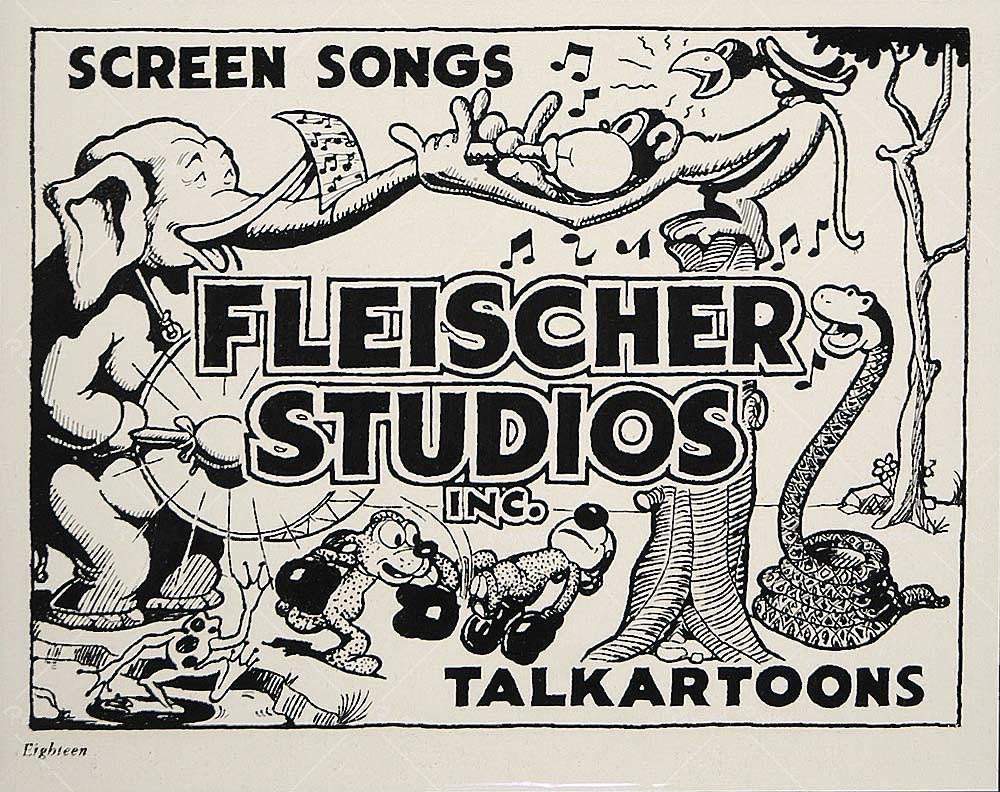
The film stood out because it treated a cartoon short like a small feature. It ran two reels, used Technicolor, and introduced a new sense of dimensional space.
It earned an Academy Award nomination and was later added to the National Film Registry. Ray Harryhausen also pointed to it as inspiration for his own Sinbad films. Ray Harryhausen (1920–2013) was a legendary American visual effects artist, best known for pioneering stop-motion animation in fantasy and science fiction films such as The 7th Voyage of Sinbad (1958) and Jason and the Argonauts (1963).
For a broader context on Max Fleischer’s technical influence on movement and performance in animation, you can explore FilmDaft’s guide to rotoscope animation.
The Stereoptical Process Explained
The Stereoptical Process is a 3D background system built around a rotating turntable, a forced-perspective miniature set, a fixed camera, and upright animation cels photographed together to create real parallax.
The Fleischer crew replaced flat painted backgrounds with miniature environments. They built Sindbad’s island on a twelve-foot turntable and gave it cliffs, arches, and staircases. They placed animation cels upright on a glass surface in front of the miniature.
The camera looked through the cels at the model and recorded both layers at once. You can learn how forced distance illusions work in animation and film by reading FilmDaft’s article on forced perspective.
How the System Worked Mechanically
The setup combined a few key parts that worked together to create depth. Each part controlled how objects moved across the frame and how the viewer read the space.
- A vertical glass platen held the animation cels in a fixed position.
- The turntable rotated in small steps that matched character motion.
- Foreground, midground, and background areas moved at different speeds.
- The crew could shift the miniature toward or away from the camera to change depth.
These physical moves produced parallax that matched how real objects move past a camera. Foreground rocks swept across the frame quickly. Midground towers drifted slower. Distant landscape pieces moved only a little. If you want a deeper foundation in how camera distance affects motion, FilmDaft’s cinematography overview and guide to camera shots and camera moves break down the basics of visual movement.
Optical and Structural Adjustments
The crew refined the process with lens adjustments and changes to the miniature’s shape. These decisions kept the image stable and helped the cels match the 3D set.
They used a custom lens focused on an artificial horizon inside the model. Some structures were built with distorted angles so they looked correct through the lens. The animators scaled Popeye’s drawings to match the miniature’s layout, for example, by drawing him smaller when he walked deeper into the set.
Foreground props softened when placed closer to the camera than the cel layer, which created a clear depth-of-field effect. You can explore how lens distance shapes depth cues in FilmDaft’s camera movement and framing guide.
Stereoptical Sequences in Popeye Meets Sindbad
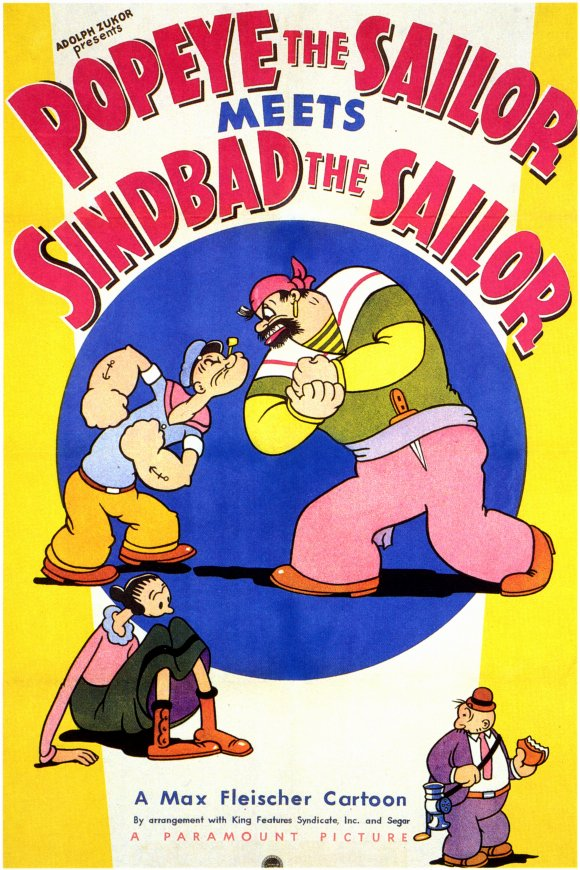
The short features several scenes that show how the Stereoptical Process supported long moves, interior spaces, and complex action.
Popeye Approaches the Island
The island sequence used rotation to simulate a camera move around a large object. The turntable moved under the fixed camera and produced a strong sense of depth.
Foreground rocks swept past the lens. Midground towers shifted at a slower pace. Distant cliffs barely moved. These shifts mirror what you learn in FilmDaft’s piece on tracking shots and motion cues.
Inside the Caves
The cave sequence relied on layered pieces inside the miniature. Each layer sat at a different distance from the camera and helped show how far back the tunnel continued.
Foreground pillars moved fast. Midground arches drifted slower. The crew placed extra miniature pieces in front of the cel plane so Popeye could pass behind them. This made it clear that he entered a physical space rather than a flat painting. The same principle appears in traditional layout design, explored in FilmDaft’s article on background artists in animation.
The Staircase and the Balustrades
The staircase scene mixed 2D drawings with 3D posts. This made the space feel solid because Popeye appeared to move between real objects.
The balustrades sat inside the miniature. Popeye moved between them on the cel layer. His foot placement matched the steps of the model, which kept the depth consistent.
The Treasure Chest Gag
The treasure chest scene pushed the system further by combining a 3D prop with 2D animated objects in one action. This made the world feel interactive.
Sindbad opened the real chest. He reached inside and pulled out 2D jewels. The timing and placement created a clean blend of miniature and cel animation.
Other Uses of the Stereoptical Process
The Stereoptical Process appeared in several Fleischer films before and after the Sindbad short. Each example shows how the studio tested the setup in chase scenes, walk cycles, and dramatic reveals. You can place these developments on a wider timeline with FilmDaft’s overview of the history of film and animation.
The crew first used the system in For Better or Worser (1935), although we don’t see any distinct parallax; it’s very subtly used. They used it again in Little Swee’Pea (1936), Let’s Get Movin’ (1936), and I Never Changes My Altitude (1937).
The Color Classics films also used miniature sets. Poor Cinderella (1934), Somewhere in Dreamland (1936), and Christmas Comes But Once a Year (1936) expanded the approach with larger and more detailed models.
The follow-up Popeye special, Popeye the Sailor Meets Ali Baba’s Forty Thieves (1937), used the system in several scenes. One example shows a miniature wagon with spinning wheels while 2D characters pull it. They also used it to create parallax in the foreground. Check the example below, and notice the foreground parallax in the desert scenes and the wagon.
Fleischer returned to similar ideas in the feature Mr. Bug Goes to Town (1941), which opens with a downward move across a miniature city.
Stereoptical vs. Disney’s Multiplane Camera
While both Fleischer and Disney aimed to add dimensional space to 2D animation, they used different systems to get there. The techniques worked on similar principles (foreground and background layers moving at different speeds), but they used different tools and workflows.
Fleischer’s Stereoptical Process (also called the Setback Camera) used real miniature sets and physical movement to create depth. It placed character cels upright in front of a miniature built on a rotating turntable. The camera shot through the cels into the model, recording both layers in real time. These setups used forced perspective and real distance to create parallax as the turntable rotated or shifted.
Disney’s Multiplane Camera, introduced around the same time, used stacked layers of painted glass artwork. Each layer sat at a different distance from the camera and moved separately. The camera could pan horizontally or vertically to produce a parallax effect between the layers. Unlike the Fleischer system, Disney’s multiplane setup stayed entirely within the 2D plane and relied on flat artwork rather than miniature construction.
Both systems shaped how depth worked in pre-digital animation, but Fleischer’s process physically built space, while Disney’s used optical illusions within flat planes.
Practical Lessons for Modern Projects
The Stereoptical Process gives you useful lessons about layout and depth. These ideas apply to digital and practical work, especially if you study how camera movement reveals distance. FilmDaft’s guides to cinematography and camera shots, angles, and moves give you a clear foundation for this.
- Plan the world as a real space before you draw characters.
- Use parallax to show distance in long or rapid moves.
- Block out sets in simple 3D software to test staging before final animation.
- Use lighting as a flexible layer that supports clear composition.
These ideas helped the Fleischer crew keep character positions readable in every shot. They can help you avoid confusing layouts in your own work.
Summing Up
Popeye the Sailor Meets Sindbad the Sailor used miniature sets, controlled camera moves, and precise cel placement to build a world with real depth. The short proved that 2D animation could inhabit a three-dimensional environment long before digital tools existed. When you study how the system worked, you see practical ideas for layout, scale, and camera planning that you can use in classic or modern animation pipelines.
Read Next: Want to see theory in action?
Explore our full Film History, Theory & Genre hub to learn how movements, styles, and structure have shaped screen culture.
Then dive into our Case Studies & Analysis section for close reads of iconic films, scenes, and techniques—broken down with high school-friendly examples you can use in class or on set.
