

Published: October 2, 2025 | Last Updated: October 10, 2025

What is The Bechdel Test? Definition & Meaning
The Bechdel Test is a simple metric for assessing whether women are meaningfully present in a film. A film passes if it has at least two named female characters who talk to each other about something other than a man. The test doesn’t measure quality or depth. It’s a tool that helps you notice gender imbalance in storytelling.
Where the Bechdel Test Came From
The Bechdel Test came from a comic strip, but it quickly became a way to question how women appear in movies. It’s based on three simple rules.
The test appeared in a 1985 strip by Alison Bechdel called Dykes to Watch Out For. In one of the strips, a woman says she’ll only watch a movie if it meets certain conditions.
Bechdel later credited her friend Liz Wallace with the idea, so it’s sometimes called the Bechdel-Wallace Test. She has also said it started as a joke, not a checklist, but it stuck because it revealed a larger pattern.
In the comic, the character says she’ll only watch a film if:
- It has at least two women in it,
- who talk to each other,
- about something other than a man.
Most versions also require that the women are named characters. Some stricter versions say their conversation must last more than a few seconds or go beyond surface topics.
What the Bechdel Test Reveals
The Bechdel test highlights how often women are left out of stories or only shown in relation to male characters. When a movie fails the test, it usually means the female characters are either absent or exist mainly to support the male lead.
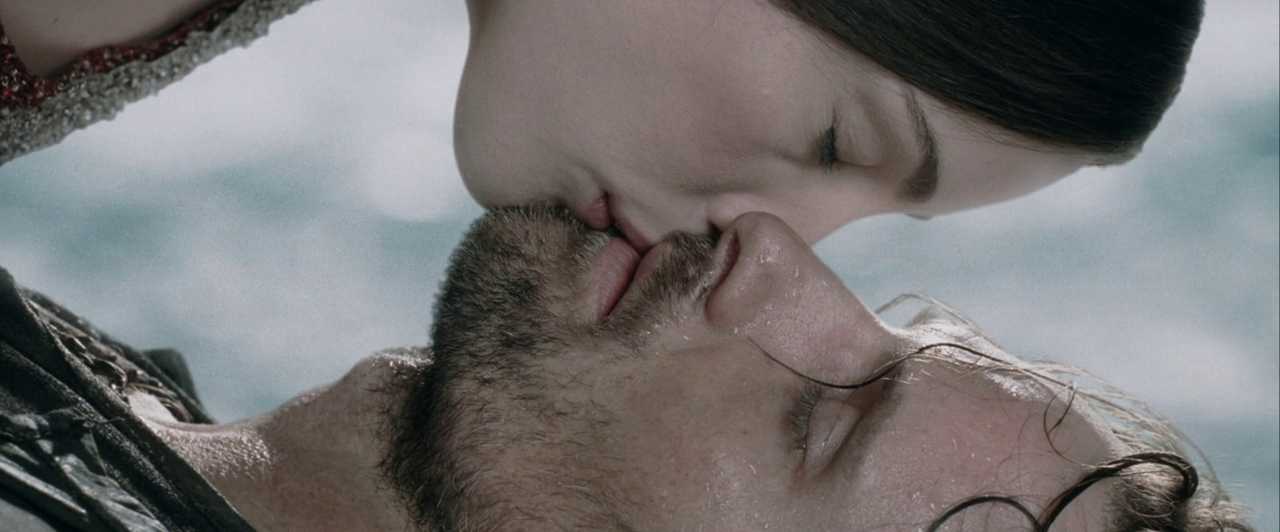
For example, The Lord of the Rings trilogy includes powerful female figures like Galadriel and Éowyn, but they never speak to each other about anything unrelated to men. That’s a clear failure of the test, even though both characters are well-acted and central to their scenes.
Other films technically pass, even if their overall message is still centered on men. Twilight (2008) passes because Bella talks to her friends about school, but critics still question how the film handles gender roles and emotional dependency.

So, while Twilight technically passes, many scenes still revolve around romantic tension, and Bella’s arc is heavily centered on her relationship with Edward. Most of the female interactions are brief, shallow, or tied back to social drama involving boys soon after.

In contrast, Gravity (2013) features a strong female lead but fails the test because there are almost no other characters for her to talk to.
In the top-grossing films from 2007 to 2014, only about 30% of speaking characters were women. In most of those films, men had two of the three biggest speaking roles. Another study looking back decades found that male characters still outnumber women 2 to 1 in film dialogue. Even today, many blockbusters still fail the test.
Why the Test Isn’t Enough
The Bechdel Test can reveal gender gaps, but it has limits. This section explains what it misses and why it shouldn’t be the only thing you rely on.
The test only checks for one basic thing. It doesn’t tell you if the female characters are realistic, complex, or central to the story. A movie can pass with a quick line between side characters. It can also fail even if it has a powerful lead, especially in stories with very few characters or isolated settings.
It also doesn’t address how women are portrayed, whether they’re reduced to stereotypes, or whether they show emotional range or growth. The test ignores race, sexuality, and other identities. So while it’s useful for sparking conversation, it’s just a starting point, not the full picture.
Other Representation Tests
Several other tests look at gaps the Bechdel Test doesn’t cover. These check for deeper character development, intersectional identity, and how much characters matter to the story.
- The Mako Mori Test: A film passes if it has at least one female character with her own narrative arc, separate from any man’s story.
- The DuVernay Test: Named after director Ava DuVernay, this test looks at whether people of color are portrayed as fully developed characters with their own goals and agency.
- The Vito Russo Test: Created by GLAAD (the Gay & Lesbian Alliance Against Defamation), this test looks at LGBTQ+ characters and asks if they are clearly identified, important to the story, and not just defined by their sexual orientation or gender identity. The Vito Russo Test is rooted in queer theory’s goals, but simplified for public use.
Summing Up
The Bechdel Test asks whether two named women talk to each other about something other than a man. It’s simple, but that simplicity helps reveal how often women are missing or minimized in film. While the test has limits, it’s a useful tool for noticing patterns and starting better conversations about who gets to exist and matter on screen.
Read Next: Curious how film theory shapes the way we watch movies?
Start with the Film Theory section to break down realism, formalism, structuralism, and more — with examples from iconic films.
If you want studying film theory I recommend starting with The FilmDaft overview of film theory discourses to break down realism, formalism, structuralism, and more — with examples from iconic films.
Then explore the full Film History, Theory & Genre collection to see how movements, styles, and storytelling traditions have evolved.
Whether you’re into Soviet montage or 2000s genre mashups, there’s something here to sharpen your understanding.
