Published: August 25, 2025 | Last Updated: December 18, 2025

What is A set dresser? job description & Definition
A set dresser is the person who arranges and maintains all props, furniture, and decorations on a film set to match the story and the director’s vision. You work under the art department, helping turn empty sets into believable locations, based on choices made in set design. Every lamp, pillow, plate, or bookshelf you see on screen has been placed by a set dresser or moved between takes to keep continuity. On period productions, you also research the time and place to find or build accurate items before anything is on camera.
What Does a Set Dresser Do?
I’ve divided the overall job tasks into three main phases: Research, Set Dressing on set (the prep-phase), and functions during shooting.
Research and Planning
Set dressing starts by reading the script and breaking it down scene by scene. This means listing every item that needs to appear on screen and researching what the location would look like.
For example, if the story is set in a 1970s kitchen, you might study magazines or catalogues to find the right style of appliances and decor. You also build a budget with the production team to figure out what can be rented, purchased, or built.
Set dressers are often responsible for tracking these expenses and keeping receipts for the accounting department.
Dressing the Set
A set dresser’s daily tasks depend on the phase of production. During prep, you transport furniture and decor to the set, place them according to the set decorator’s plan, and assemble or repair anything that needs adjustment.
Some productions require light construction. You may build small props, install air‑conditioning vents, or attach switch plates to make a set feel real. In productions with valuable props (like jewellery or antique furniture), you may also be the one who secures and locks up these items between scenes to prevent loss or damage.
- Pick up and transport set dressing items from prop houses or warehouses.
- Rough‑in furniture and decorations based on sketches, then refine placement with the set decorator.
- Photograph each dressed set so you can match it later and mark “hot set” signs to warn others not to disturb the arrangement.
- Assist the prop master during shooting by redressing the set when items are moved and locking up valuable pieces after wrap.
The Daily Tasks During Production
Once filming begins, a set dresser is often assigned to the set. You work under the property master and represent the set decoration department.
You supervise all the items on set, move them to accommodate camera and lighting equipment, and watch for continuity. You verify that reference photos are taken and redress the set if anything has been moved. If a lamp is bumped or a chair is moved between takes, you put it back before the next shot. When filming wraps, you help strike the set and return rented pieces.
You also protect the set by placing “hot set” signs (When a set is marked as “hot,” no one is allowed to move, touch, or remove props, furniture, or decorations) and preventing food or drinks from being on the set. If the schedule changes, you notify the lead person. At the end of each day, you secure valuable items and lock up the set.
Skills You Need
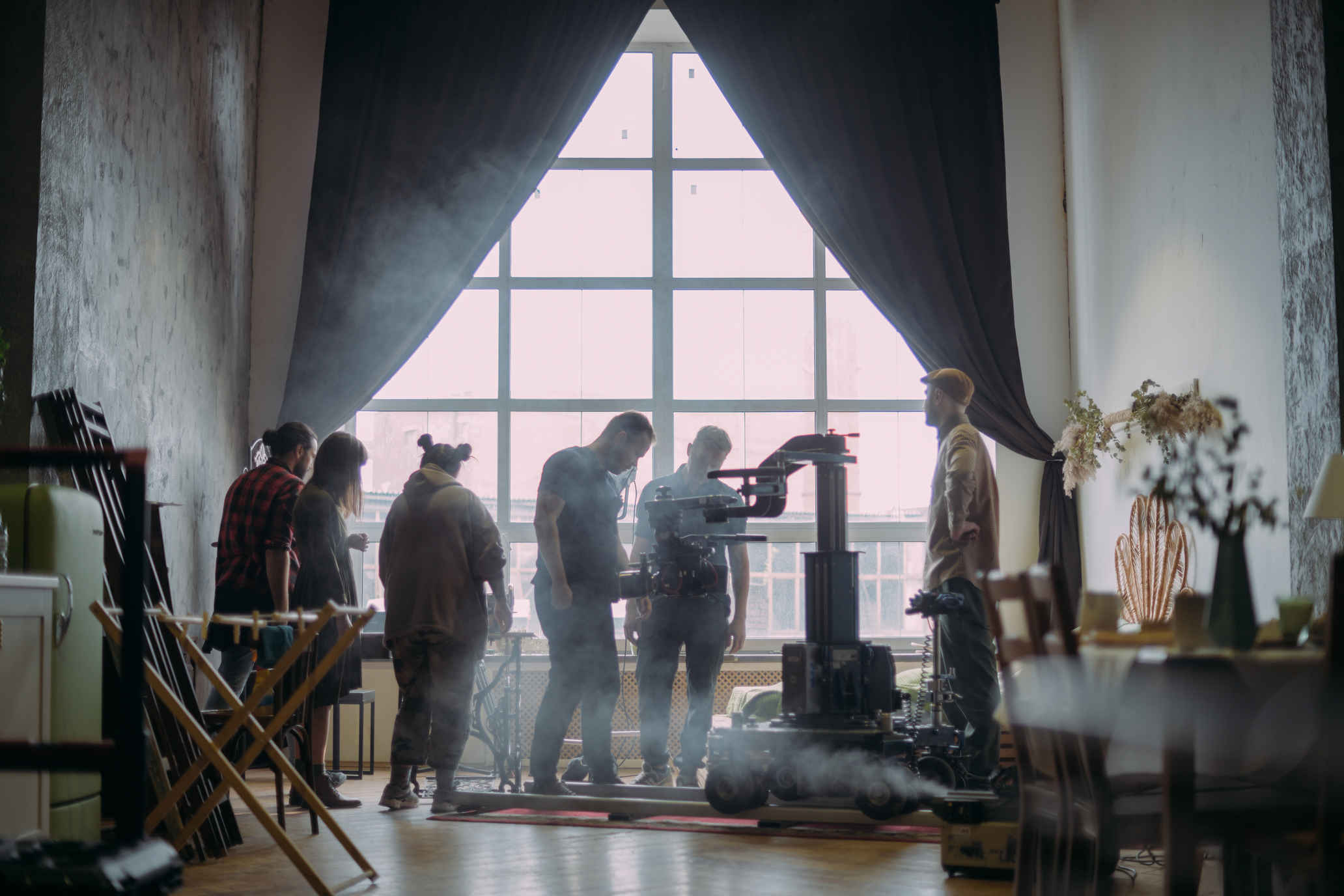
Set dressing demands both creative and practical skills. You need a sharp eye for detail to notice when something is out of place and a good sense of design to arrange objects in a way that supports the story.
Research skills help you find period‑appropriate items and understand the history behind them. Basic carpentry and tool use are important because you often fix or build small pieces on the spot.
You also need to manage budgets and track receipts, work quickly under pressure, and communicate clearly with the art department, camera crew, and other teams.
Also, note that physical stamina is a must: you will move heavy furniture, climb ladders, and work long days or overnight shoots.
Typical Pay and Hours
Pay varies by location, experience, and union status. According to industry sources, set dressers may earn from around $43,000 to over $75,000 per year, with hourly rates from about $25 to $35 on union productions (at the time of writing).
Non‑union jobs can pay much less, sometimes offering flat day rates for very long hours. Union membership (often through IATSE Local 44 in the United States) sets minimum hourly rates and provides overtime pay and benefits. Total pay for set dressers in the United States ranges between about $56,000 and $102,000 per year, with a median of around $75,000.
The schedule is demanding. You may start before call time to dress the set and work twelve‑hour days. Overnight shoots and weekend work are common. Because the job is physical, staying in shape and taking care of your health helps you keep up with the workload.
Career Path and Education
There is no formal degree required to become a set dresser, but studying interior design, art, theater technology, or architecture can help you understand space, color, and history.
Most people start in entry‑level positions, such as a production assistant or an art department assistant. From there, you can become a set dresser, then advance to lead person, set decorator, or production designer.
Joining a union often requires working a certain number of days on signatory productions and paying initiation fees, but it can significantly improve pay and working conditions.
Experience comes from working on sets. Student films, small commercials, and low‑budget projects allow you to build a portfolio of photos showing sets you have dressed.
Networking matters because many jobs come through word of mouth. Reach out to art departments, attend industry events, and let people know you’re available. Persistence and reliability are the traits that help you move up.
Working with Other Teams
Set dressers collaborate with many departments. You check with the lighting crew to ensure your furniture doesn’t block lights and confirm that practical fixtures work correctly.
You coordinate with the prop master to separate set dressing from hand props and to make sure items are passed between teams smoothly. You also communicate with costume designers and makeup artists if the color or style of set pieces needs to complement a wardrobe choice.
Understanding the difference between roles is important: the set decorator designs the overall look and selects items, while you physically place and maintain them; the prop master handles objects that actors use directly.
Summing Up
A set dresser builds the visual world of a film, one object at a time. You read the script, research the era, plan and budget for every item, place, and maintain those items on set, and ensure nothing breaks continuity. You work long hours and coordinate with many departments, but if you enjoy hands‑on problem‑solving and want to help tell stories through space and objects, set dressing is a path with room to grow.
Read Next: Not sure who does what on set?
Check out our Crew Roles & Equipment section to learn how each department runs, from lighting and sound to camera rigs and on-set protocols.
For a full behind-the-scenes breakdown, explore the entire Production archive and see how everything comes together during the shoot.