

Published: October 8, 2025 | Last Updated: July 4, 2026

What is A chiasmus? Definition & Meaning
A chiasmus is a rhetorical device where words or ideas are repeated in reverse order to create contrast, rhythm, or meaning. The structure usually follows an A-B-B-A pattern. The second part mirrors the first, but flipped. This cross shape is why it’s called a chiasmus, named after the Greek letter “chi,” which looks like an X.
How Chiasmus Works and Why It’s Used
Chiasmus flips the structure of a sentence to stress the relationship between two ideas. It helps you highlight a change, shift, or contrast. The form creates rhythm, adds weight, and helps a line stick in your mind.
Writers and speakers use chiasmus to add:
- Balance and rhythm
- Memorability
- Emphasis on contrast or connection
It works even if the words aren’t repeated exactly. You can reverse grammar, structure, or meaning. That’s what makes chiasmus different from basic repetition or parallel structure.
Chiasmus Examples from Literature, Speech, and Film
Many of the strongest quotes in writing and film follow a chiasmus structure. They sound balanced, but they also twist your expectations. Below are clear examples across different media.
Chiasmus in Speeches
In speeches, chiasmus often delivers a moral or call to action. John F. Kennedy’s famous line…
Ask not what your country can do for you — ask what you can do for your country
…uses the same words in reverse to flip focus and inspire service.
In a 1943 speech to the House of Commons, Winston Churchill said,
We shape our buildings, and afterward our buildings shape us.
He used the line to argue that physical spaces influence how we think and act.
Chiasmus in literature
Writers like Cormac McCarthy use chiasmus to show deeper internal or social tension.
In The Road (2006), McCarthy writes,
You forget what you want to remember, and remember what you want to forget.
This line shows how memory doesn’t follow logic, especially during trauma. The character (the father) wants to hold onto good memories, but they fade. At the same time, he can’t escape the painful or haunting ones. The line doesn’t appear in the 2009 film adaptation, but it captures the emotional damage he carries, haunted by memories he can’t control
The Bible offers another clear case…
The Sabbath was made for man, not man for the Sabbath (Mark 2:27)
…which reverses priority using mirrored grammar.
Chiasmus in Film
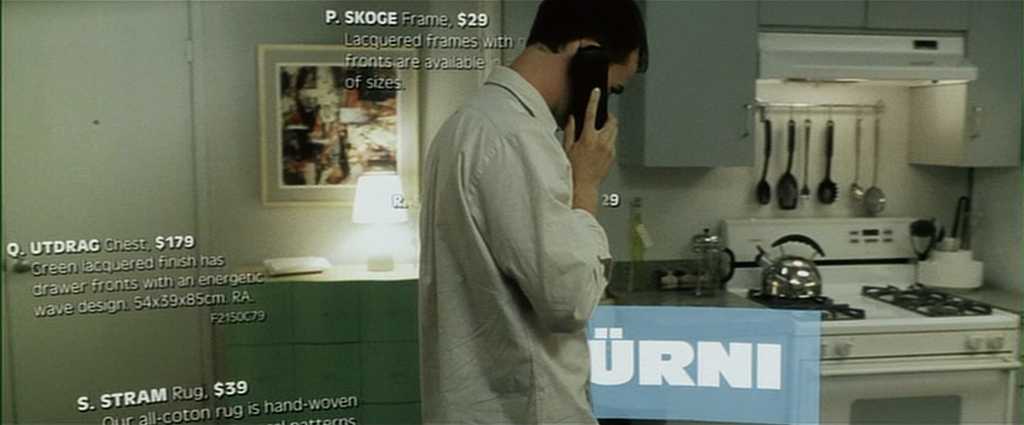
In film, chiasmus sharpens emotional impact. In Fight Club (1999), Tyler Durden says, “The things you own end up owning you.” The line reflects the trap of consumerism.
In Sicario (2015), a character says, “We didn’t cross the border. The border crossed us.” That reversal shifts the idea of power, suggesting political forces beyond control.
In The King’s Speech (2010), the quote “I wasted time, and now doth time waste me” is used to reflect on personal failure and aging; it’s taken from Shakespeare’s Richard II.
What Makes Antimetabole Different?
Antimetabole is a stricter form of chiasmus. It repeats the same words in reverse order. All antimetaboles are chiasmi, but not all chiasmi are antimetaboles. The difference comes down to whether the exact wording is flipped or just the structure or meaning.
This table shows the contrast clearly:
| Type | Definition | Example |
|---|---|---|
| Chiasmus | Ideas or grammar flipped | “We shape our buildings, and afterward our buildings shape us.” |
| Antimetabole | Same words reversed | “Ask not what your country can do for you — ask what you can do for your country.” |
In practice, many people use the word “chiasmus” to refer to both. But if you’re writing or analyzing, it helps to know the difference.
Summing Up
Chiasmus is a rhetorical flip that repeats structure or ideas in reverse. It adds rhythm, clarity, and contrast. Whether you use exact words or just mirror ideas, it gives your writing a sense of purpose. Antimetabole is the tighter version that repeats the same words. Both techniques work best when the sentence is short, sharp, and balanced. Use them when you want your line to land hard and stay remembered.
Chiasmus FAQ
What is chiasmus?
A rhetorical device that arranges words or ideas in an A-B-B-A pattern, so the second half mirrors and reverses the first. The name comes from the Greek for “crossing,” like the letter X.
What is an example of chiasmus?
“Ask not what your country can do for you — ask what you can do for your country” (John F. Kennedy), or “a billionaire by day, by night a superhero.”
What is the difference between chiasmus and antimetabole?
Antimetabole repeats the exact same words in reverse, while chiasmus mirrors the structure or ideas without requiring the same words. Every antimetabole is a chiasmus, but not every chiasmus is an antimetabole.
How do you pronounce chiasmus?
It is pronounced ky-AZ-muss, with the stress on the second syllable.
Why do writers use chiasmus?
Its symmetry makes a line rhythmic, memorable, and persuasive — which is why it is common in speeches and punchy film dialogue.
Read Next: Want to dig deeper into screenwriting?
Start with the Screenwriter’s Toolkit on literary devices vs. elements – a deep resource covering every major literary device and element used in writing.
Then explore our collection of practical writing techniques covering dialogue, structure, and pacing.
Or jump into the free screenwriting course to start your first draft today.
You can also head back to the Screenwriting section for more tools, theory, and breakdowns.
